Have you ever stood in a bedding store or shopped online and wondered, “Should I buy a duvet or a comforter?” 🤔 You’re not alone. Many people mix up these two words because both are soft, fluffy blankets used on beds. They look similar, feel cozy, and keep you warm at night — so what’s the real difference?
In this easy guide, you’ll learn exactly what a duvet is, what a comforter is, and how to choose the right one for your bed and lifestyle. We’ll use simple language, real-life examples, and short sentences so anyone — even a 4th-grade student — can understand. By the end, you’ll never feel confused about duvet or comforter again. Let’s make bedtime shopping simple and stress-free! 🛏️✨
What Does Each Word Mean?
Let’s start with simple meanings.
What Is a Duvet?
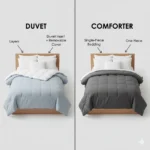
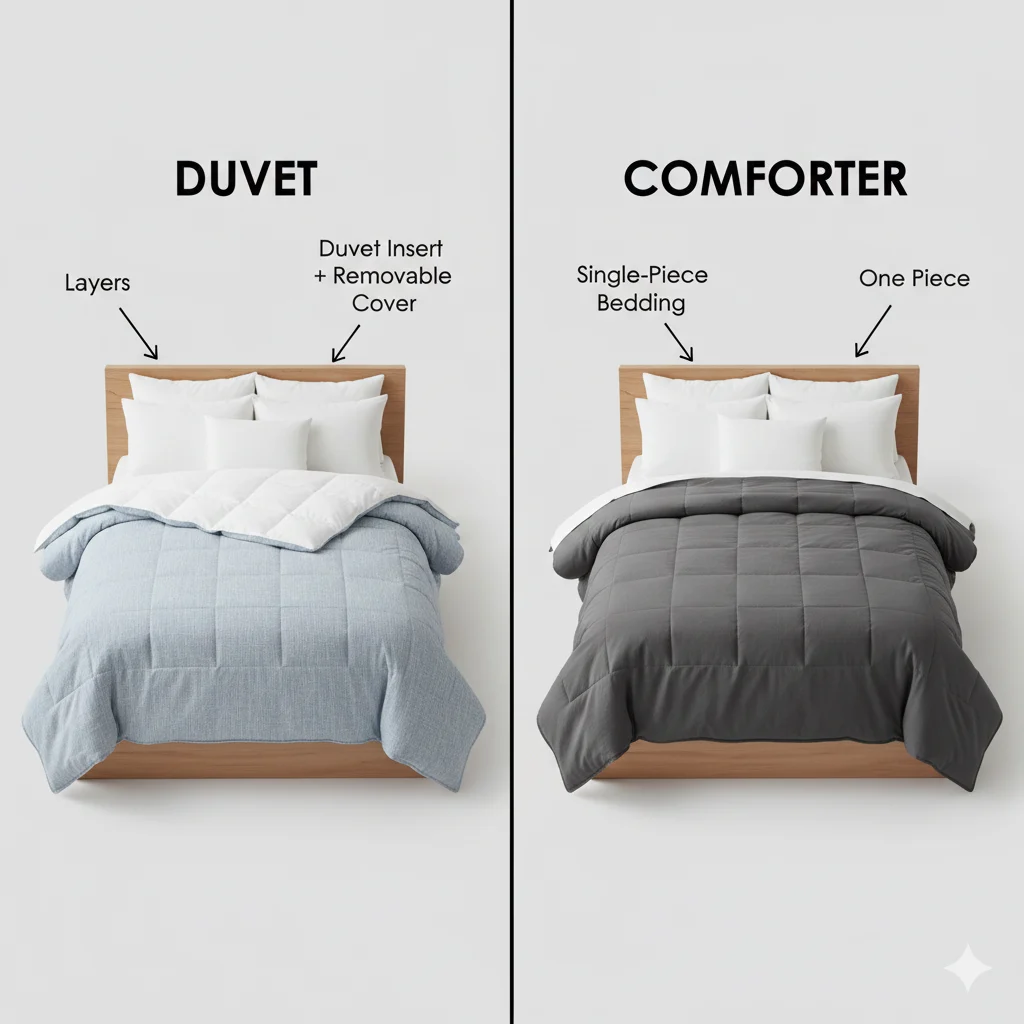
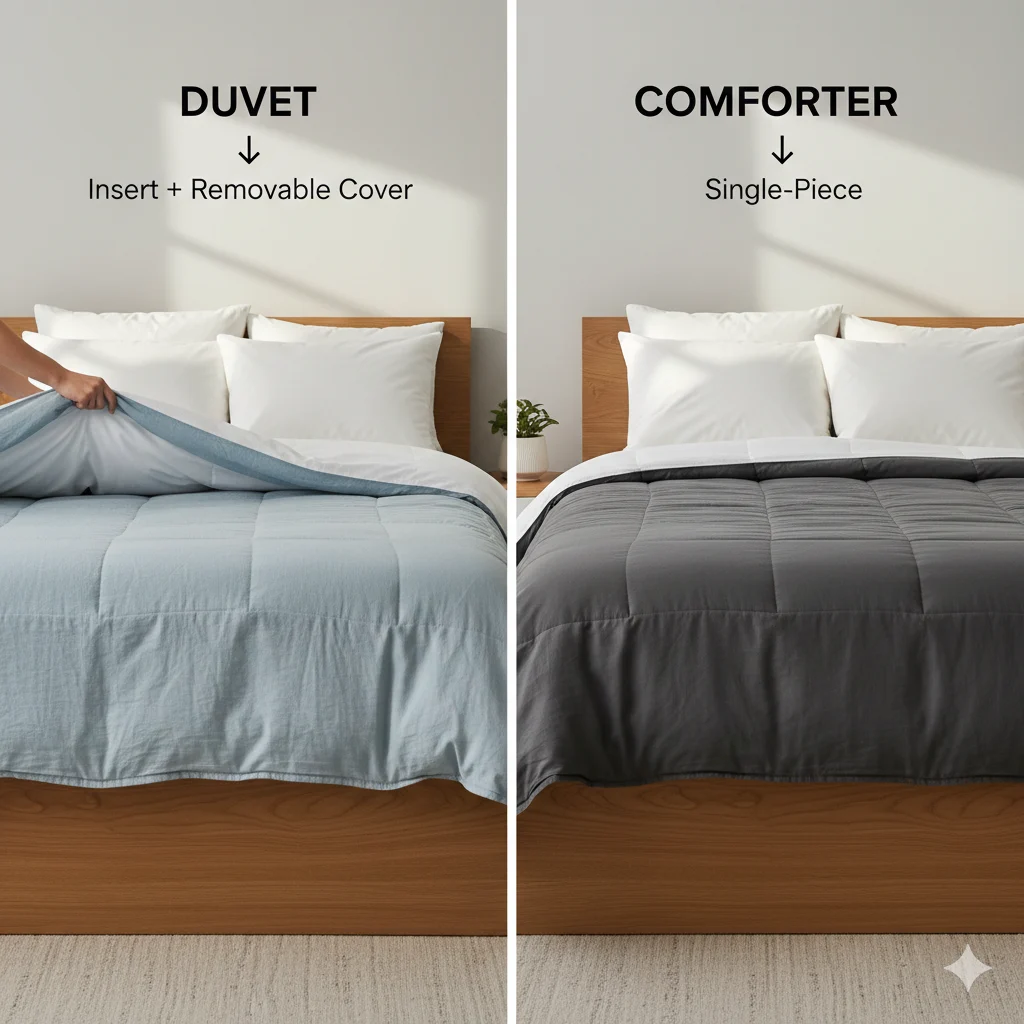
A duvet is a soft, flat bag filled with feathers, down, or synthetic fibers. It usually goes inside a removable cover, just like a pillow goes inside a pillowcase.
Part of speech: Noun (a thing)
Easy examples:
- I washed my duvet cover today.
- My duvet feels warm and light.
- She changed her duvet cover to match her curtains.
Memory story:
Think of a duvet like a big pillow for your whole body. You take off the cover, wash it, and put it back on — easy and clean!
What Is a Comforter?
A comforter is a thick, quilted blanket filled with soft material. It usually comes ready to use, with its design stitched on the outside. You place it directly on your bed without a cover.
Part of speech: Noun (a thing)
Easy examples:
- I bought a blue comforter for my bed.
- Her comforter is warm and heavy.
- He folded the comforter after waking up.
Memory story:
Think of a comforter like a jacket you wear straight away. No extra cover needed — just put it on and use it!
The Key Difference Between Duvet and Comforter
Both duvets and comforters keep you warm, but they are used differently. The biggest difference is the cover.
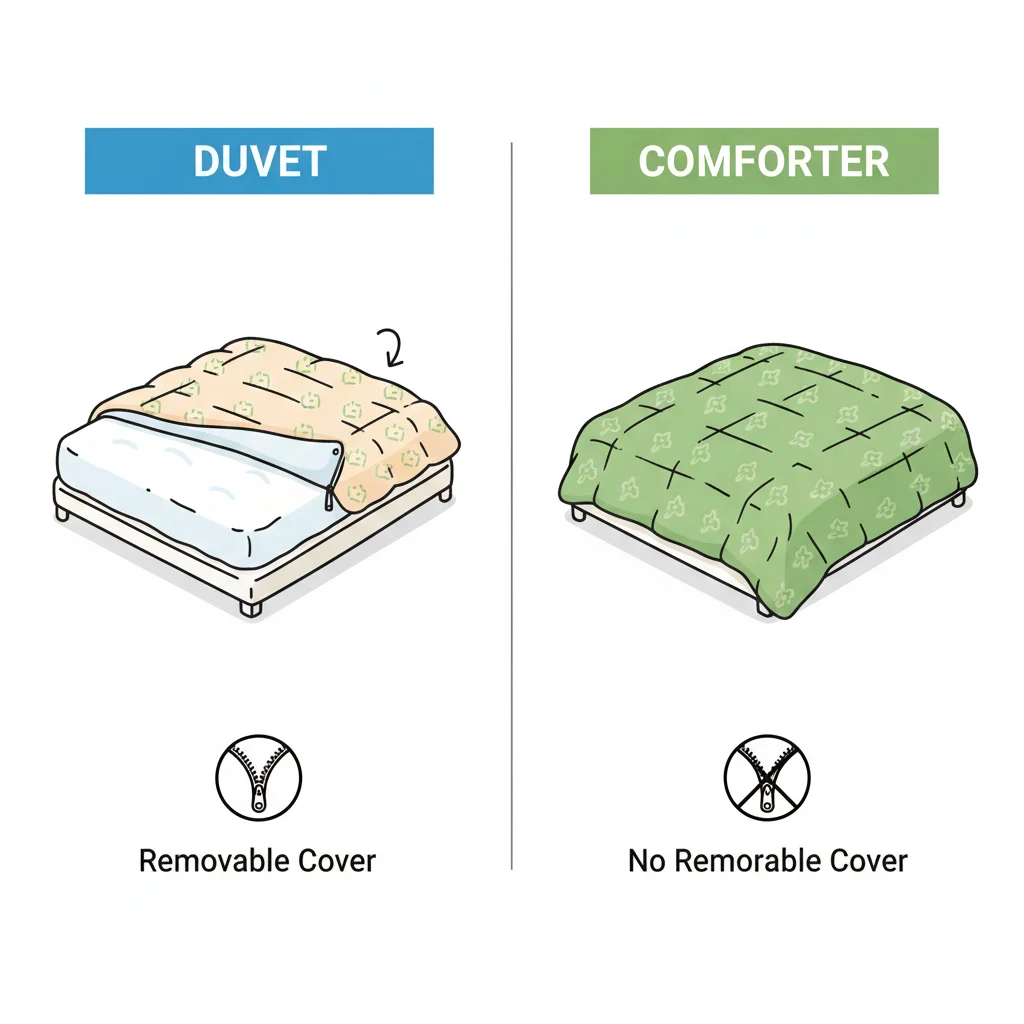
Here’s a simple comparison table:
| Feature | Duvet | Comforter |
|---|---|---|
| Cover | Needs a removable cover | No cover needed |
| Cleaning | Wash the cover, not always the insert | Wash the whole comforter |
| Style | Change look by changing cover | Style stays the same |
| Feel | Often lighter and fluffier | Often heavier and stitched |
| Use | Common in hotels and Europe | Common in homes in the USA |
Quick Tip to Remember
🛏️ Duvet = Cover on top
🛌 Comforter = Ready to use
If it needs a cover, it’s a duvet. If it doesn’t, it’s a comforter.
Common Mistakes and How to Avoid Them
Let’s look at some mistakes people often make — and how to fix them.
❌ Mistake 1: Calling a comforter a duvet
- Wrong: I bought a duvet, but I don’t use a cover.
- Right: I bought a comforter, and I use it directly.
Why it happens:
People use the word “duvet” for any thick blanket. But a real duvet needs a cover.
❌ Mistake 2: Washing the duvet insert too often
- Wrong: I wash my duvet every week.
- Right: I wash my duvet cover every week.
Why it happens:
People forget that the cover is meant to be cleaned, not the insert.
❌ Mistake 3: Thinking they are exactly the same
- Wrong: Duvets and comforters are the same thing.
- Right: Duvets and comforters are similar, but used differently.
How to avoid mistakes:
Always ask: Does it have a removable cover? If yes, it’s a duvet. If no, it’s a comforter.

When to Use a Duvet
Use a duvet when you want easy cleaning and flexible style.
Best Situations for a Duvet
- If you like to change room colors often
You can change the duvet cover instead of buying a new blanket. - If you want easy washing
Washing a thin cover is easier than washing a big, heavy blanket. - If you live in a colder place
Duvets often feel warmer and fluffier. - If you like hotel-style beds
Many hotels use duvets because they look neat and feel cozy. - If you want a light but warm blanket
Duvets are usually lighter than comforters.
Simple Example Sentences
- I use a white duvet with a blue cover.
- She bought a new duvet cover for winter.
- The hotel bed had a soft duvet.
- My duvet feels light but very warm.
- I changed my duvet cover today.
When to Use a Comforter
Use a comforter when you want something simple and ready to use.
Best Situations for a Comforter
- If you don’t want extra covers
Just put it on your bed and sleep. - If you like heavier blankets
Comforters often feel thicker and weighty. - If you want a fixed design
The pattern stays the same and looks neat. - If you prefer simple bedding care
One item. One wash. No cover to remove. - If you want budget-friendly bedding
Comforters are often cheaper than buying a duvet plus covers.
Simple Example Sentences
- I bought a gray comforter for my room.
- His comforter is warm and soft.
- She washed her comforter last weekend.
- The comforter matches the curtains.
- I sleep better with a heavy comforter.
Memory Hack
🧥 Comforter = Like a jacket. Wear it as is.
🛌 Duvet = Like a pillow. Needs a cover.
Quick Recap: Duvet vs Comforter
Let’s make this super easy to remember:
- ✅ Duvet
- Needs a cover
- Easy to change style
- Often lighter and fluffier
- Wash the cover, not always the insert
- ✅ Comforter
- No cover needed
- Ready to use
- Often heavier
- Wash the whole blanket
🛏️ Short rule:
If it has a cover, it’s a duvet.
If it doesn’t, it’s a comforter.
Advanced Tips (Optional)
A Little History
The word duvet comes from a French word meaning “down,” which is the soft feather filling inside. Duvets became popular in Europe long ago and later spread to hotels and homes around the world.
The word comforter comes from the idea of comfort — something that makes you feel warm, safe, and relaxed. Comforters became popular in American homes because they were easy to use and care for.
Use in School Writing and Exams
In school essays or exams:
- Use duvet when talking about bedding with a removable cover.
- Use comforter when talking about a thick blanket used directly on the bed.
Example:
✔️ “The hotel provided a duvet with a clean white cover.”
✔️ “She folded her comforter neatly in the morning.”
In Texting and Online Writing
People often say:
- “I love my duvet” (even if they mean comforter)
- “My comforter is so fluffy” (even if it’s a duvet)
In casual chats, this is okay. But in writing, shopping, or speaking clearly, using the correct word helps avoid confusion — especially when buying bedding online.
Mini Quiz: Test Yourself 🧠
Fill in the blanks with duvet or comforter.
- I washed my ______ cover today.
- She bought a thick ______ for winter.
- Hotels often use a ______ with a white cover.
- My ______ is heavy and stitched.
- He changed his ______ cover to blue.
- I don’t use a cover with my ______.
- A ______ insert goes inside a cover.
Answers
- duvet
- comforter
- duvet
- comforter
- duvet
- comforter
- duvet
Great job if you got most right! 🎉
Frequently Asked Questions (FAQs)
1. Is a duvet the same as a comforter?
No. A duvet needs a removable cover, while a comforter does not. Both keep you warm, but they are used differently.
2. Which is easier to wash: duvet or comforter?
A duvet is usually easier because you only wash the cover. With a comforter, you wash the whole blanket.
3. Which is warmer: duvet or comforter?
Both can be warm. Duvets often feel lighter but warmer. Comforters feel heavier but cozy.
4. Do hotels use duvets or comforters?
Most hotels use duvets with white covers because they are easy to clean and look neat.
5. Can I use a comforter as a duvet?
Not really. Comforters are not designed to go inside covers. But you can layer them like regular blankets.
Conclusion
Now you know the clear difference between a duvet and a comforter. A duvet needs a cover and is easy to change and clean. A comforter is ready to use and simple to care for. Both are cozy. Both are great. The right choice depends on your comfort, style, and lifestyle.
Next time you shop for bedding or talk about your bed, you’ll use the right word with confidence. Keep practicing, keep learning, and remember — improving your English happens one simple step at a time! 🌟

Rose Tremain is a British novelist known for richly detailed historical fiction, complex characters, and award-winning literary storytelling worldwide.