Many writers and English learners often pause when deciding whether to write “parent’s” or “parents.” Although these two forms look almost identical, they serve different purposes in English grammar. A small punctuation mark can completely change the meaning of a sentence, which is why understanding the correct usage is important for clear and accurate writing.
The word “parents” is simply the plural form of “parent,” referring to both a mother and a father or to more than one parent. For example: “My parents always encourage me to work hard.” In contrast, “parent’s” is the possessive form, which shows that something belongs to one parent. For instance: “This is my parent’s opinion about the decision.” The apostrophe in “parent’s” indicates ownership.
Learning the difference between parent’s and parents helps you avoid common grammar mistakes and makes your writing clearer and more professional. When you use the correct form in the right situation, your sentences become easier to understand and more reliable for readers.
What Does Each Word Mean?
Let’s break it down into simple terms so you can remember them easily.
Parent’s
Meaning: Shows that one parent owns or is associated with something.
Part of Speech: Possessive noun
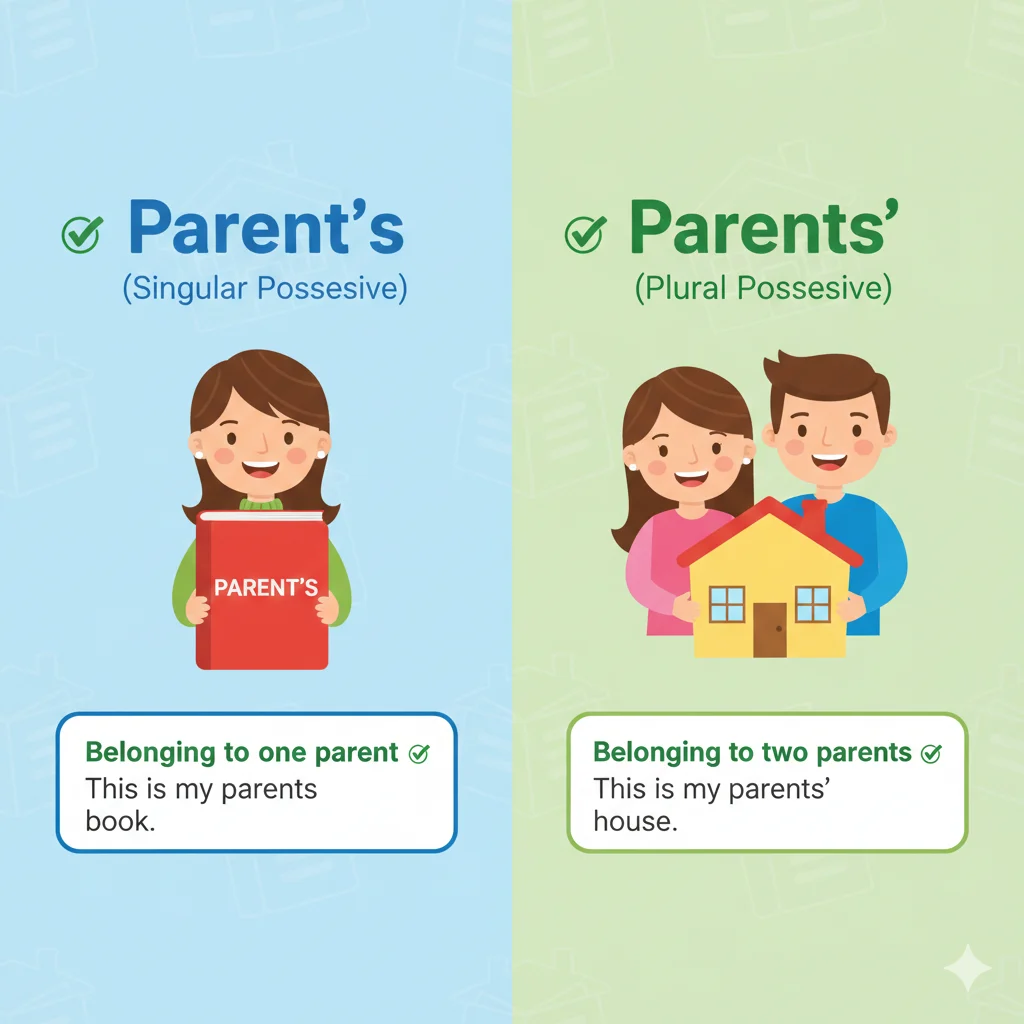
Examples:
- This is my parent’s car. (The car belongs to one parent.)
- I borrowed my parent’s laptop.
- The parent’s advice was very helpful.
Mini Story: Imagine your mom gives you a book. That book is your parent’s book — it belongs to her.
Parents’
Meaning: Shows that more than one parent owns or is associated with something.
Part of Speech: Possessive plural noun
Examples:
- These are my parents’ cars. (Both parents own cars.)
- I like my parents’ house.
- The parents’ meeting starts at 5 PM.
Mini Story: Think of your mom and dad together. If they share something, like a car or house, it’s your parents’ car or house.
The Key Difference Between Parent’s and Parents’
| Word | Meaning | Usage | Example |
|---|---|---|---|
| Parent’s | Belongs to one parent | Singular possessive | My parent’s advice helped me. |
| Parents’ | Belongs to both parents | Plural possessive | My parents’ car is new. |
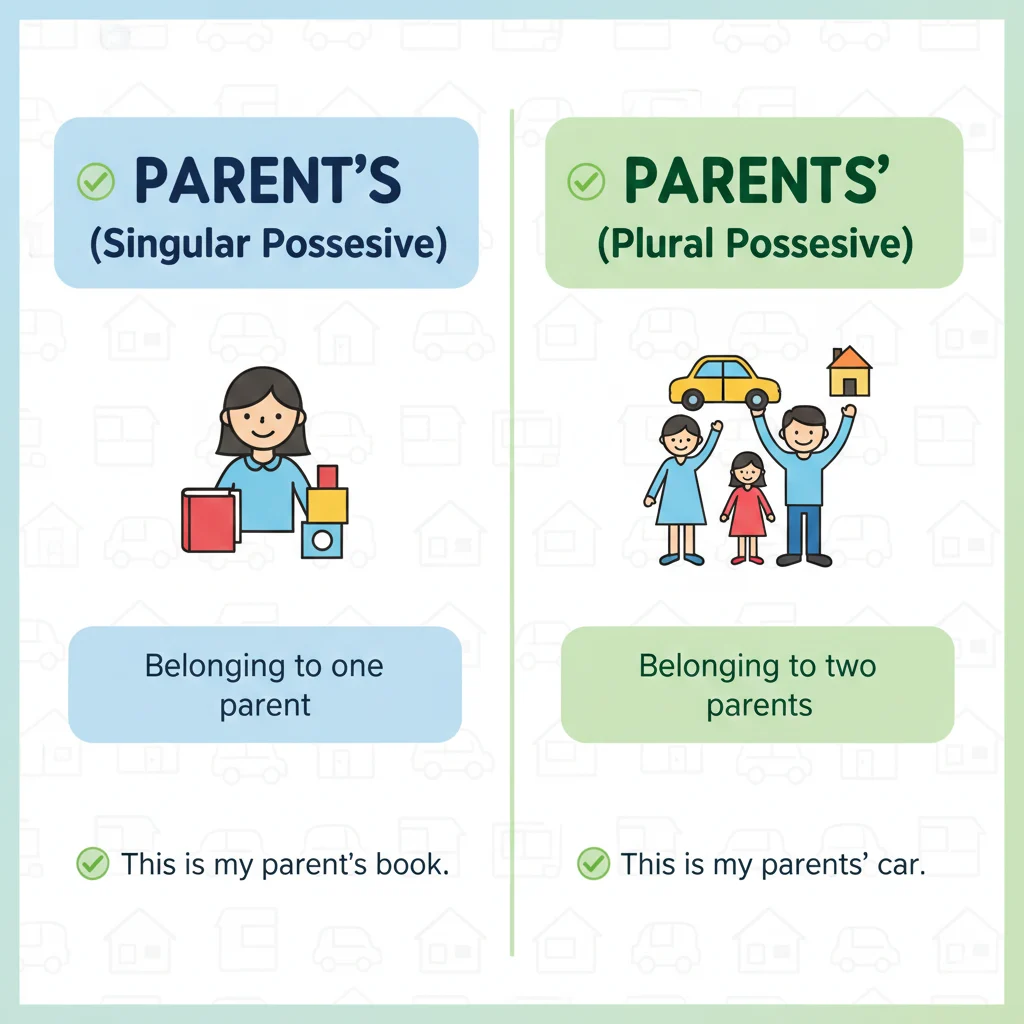
Quick Tip:
- One parent → parent’s (singular apostrophe before s)
- Two or more parents → parents’ (plural apostrophe after s)
Totaling or Totalling: Meaning, Difference, and Correct Usage
Common Mistakes and How to Avoid Them
Mistakes happen when people confuse singular and plural possession.
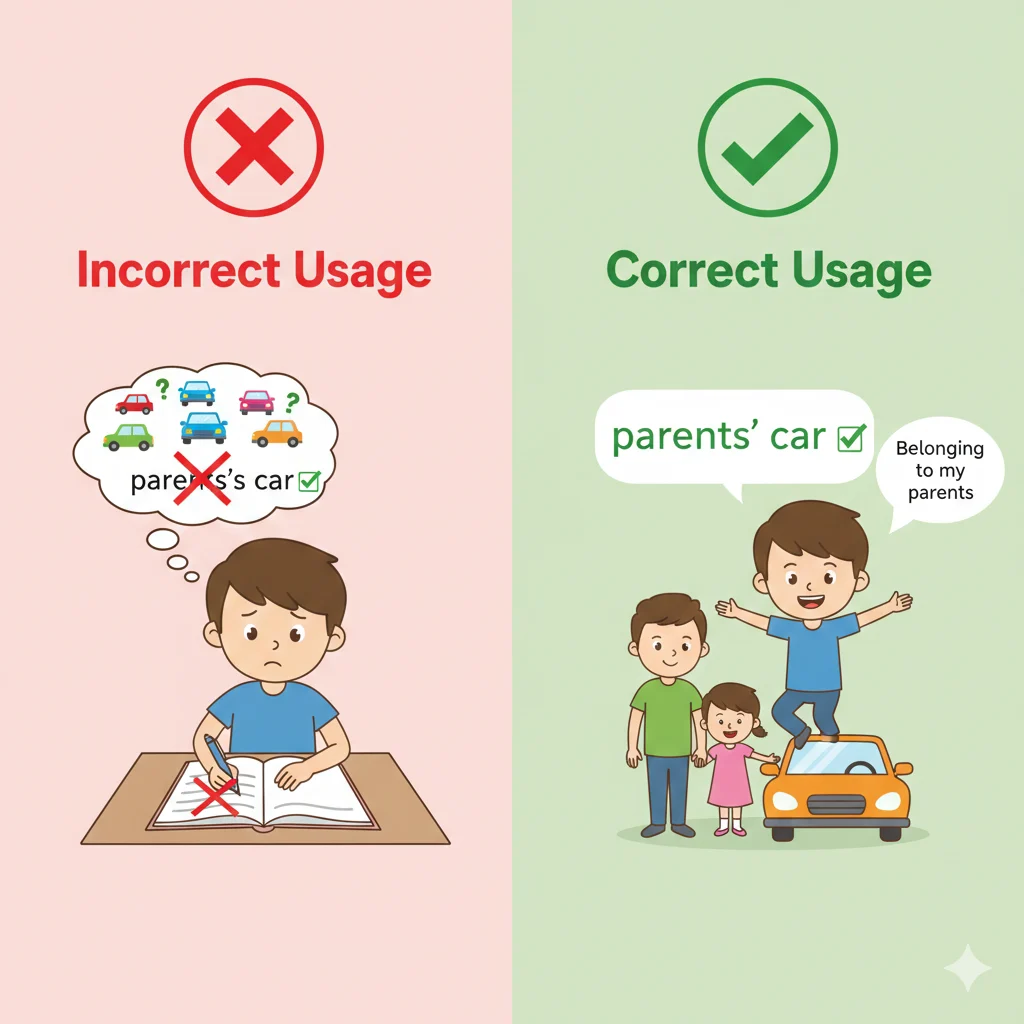
Mistake 1: My parents’s car is new.
Correction: My parents’ car is new.
Mistake 2: I like my parent’ house.
Correction: I like my parents’ house.
Why it happens: People try to add an extra apostrophe or forget the rules of singular vs plural possession. The fix is to remember: apostrophe placement depends on number.
When to Use Parent’s
Use parent’s when talking about one parent.
Examples in Real Life:
- I read my parent’s letter.
- My parent’s advice helped me decide.
- This is my parent’s favorite recipe.
- I borrowed my parent’s backpack.
- The parent’s signature is required.
Memory Hack: Think “single parent → apostrophe before s.”
When to Use Parents’
Use parents’ when talking about both parents.
Examples in Real Life:
- I love my parents’ home.
- The parents’ meeting is tomorrow.
- My parents’ advice is always useful.
- We parked in my parents’ garage.
- I read my parents’ emails together.
Memory Hack: Think “multiple parents → apostrophe after s.” Visualize two people holding the item together.
Quick Recap: Parent’s vs Parents’
- Parent’s: Singular possessive → belongs to one parent
- Parents’: Plural possessive → belongs to more than one parent
- Tip: One parent → apostrophe before s; two or more → apostrophe after s
- Use examples from daily life like letters, advice, or cars to practice
- Avoid common mistakes by checking if you mean one or more parents
Advanced Tips
- Origin: Both words come from the noun “parent” + apostrophe to show possession.
- Formal Writing: Always double-check in essays or letters; misplacing apostrophes looks unprofessional.
- Online Writing: Misusing can confuse readers. For example, “parents’ rules” vs “parent’s rules” can completely change meaning.
Elses or Else’s: Difference, Meaning, and Correct Usage Explained
Mini Quiz
Fill in the blanks with parent’s or parents’:
- I borrowed my ___ phone yesterday.
- My ___ house is near the park.
- The ___ advice saved me.
- We visited our ___ friends last weekend.
- My ___ signature is required here.
Answers:
- parent’s
- parents’
- parent’s
- parents’
- parent’s
FAQs
1. Is it “parent’s” or “parents’” for a single parent?
- Use parent’s. Singular possession always goes before the s.
2. Can “parents’” be used for one parent?
- No, parents’ is always plural.
3. Why do people confuse these two words?
- Because both sound similar, and apostrophe placement is tricky.
4. Can I use “parents” without an apostrophe?
- Yes, but only if you are not showing possession. Example: “My parents are kind.”
5. What’s an easy way to remember the difference?
- One parent → apostrophe before s. Two or more → apostrophe after s.
Conclusion
Now you know the difference between parent’s and parents’, how to use them correctly, and common mistakes to avoid. With daily practice, these rules will become second nature. Remember, apostrophe placement shows ownership, and a small change can make a big difference. Keep practicing with examples from school, home, or hobbies. Soon, using “parent’s” or “parents’” will be easy, and your writing will look professional and clear.
Elizabeth Gaskell was a Victorian English novelist and biographer, celebrated for social realism, strong female characters, and industrial age themes. era life.