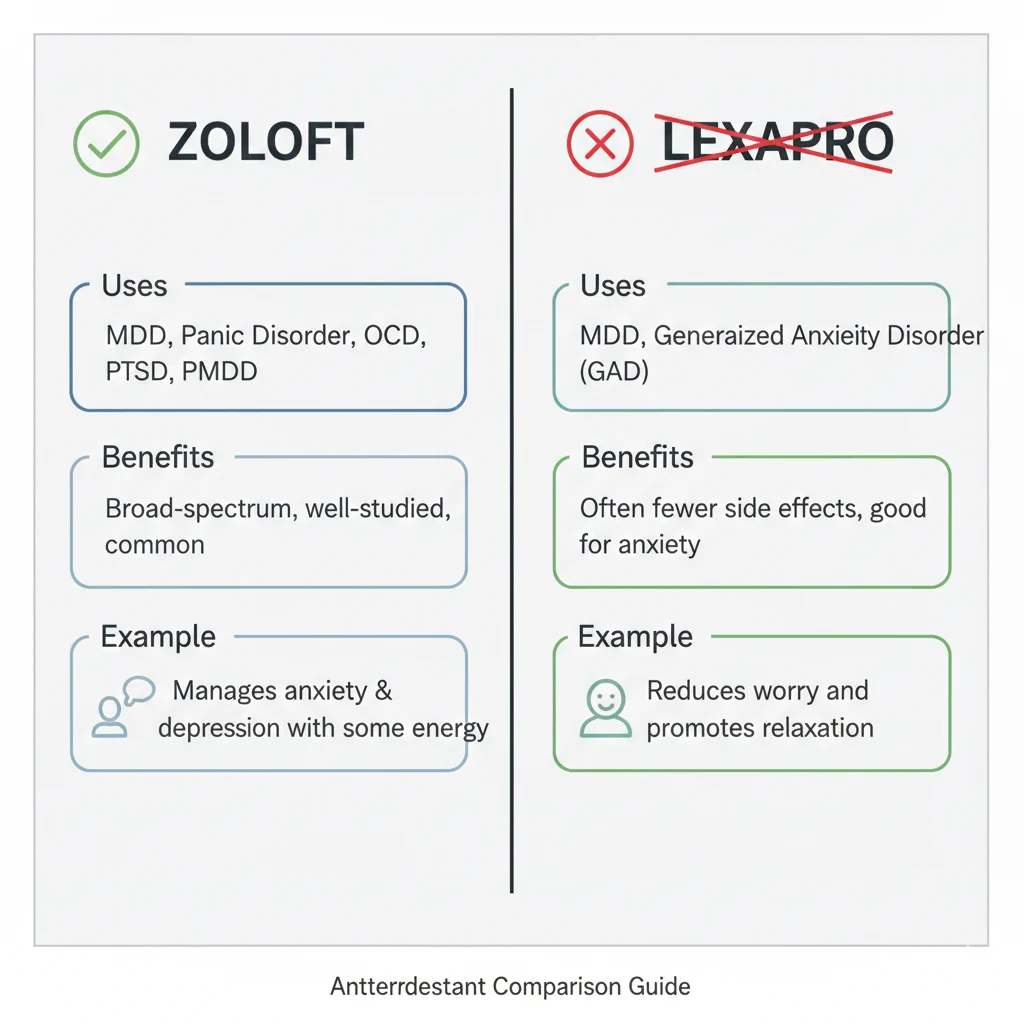
Confused between Zoloft and Lexapro? You’re not alone! These two popular antidepressants are prescribed for depression, anxiety, and other mood disorders, but they work in slightly different ways. Understanding which one fits your needs can make a huge difference in treatment effectiveness and overall well-being. Choosing the wrong medication without guidance can lead to unwanted side effects or delayed recovery.
Zoloft (sertraline) is often recommended for panic disorders, PTSD, and OCD, while Lexapro (escitalopram) is preferred for generalized anxiety and depression. Each medication has unique strengths, dosage guidelines, and potential side effects, including mild nausea, headaches, or sleep changes. Knowing these differences ensures you make the safest and most effective choice.
By understanding the distinctions between Zoloft and Lexapro, you can take control of your mental health journey, make informed decisions, and achieve better results. Proper knowledge not only improves treatment adherence but also boosts confidence and trust in your healthcare choices, making your recovery smoother and safer.
What Does Each Word Mean?
Let’s start by understanding what Zoloft and Lexapro actually are.
What Is Zoloft?
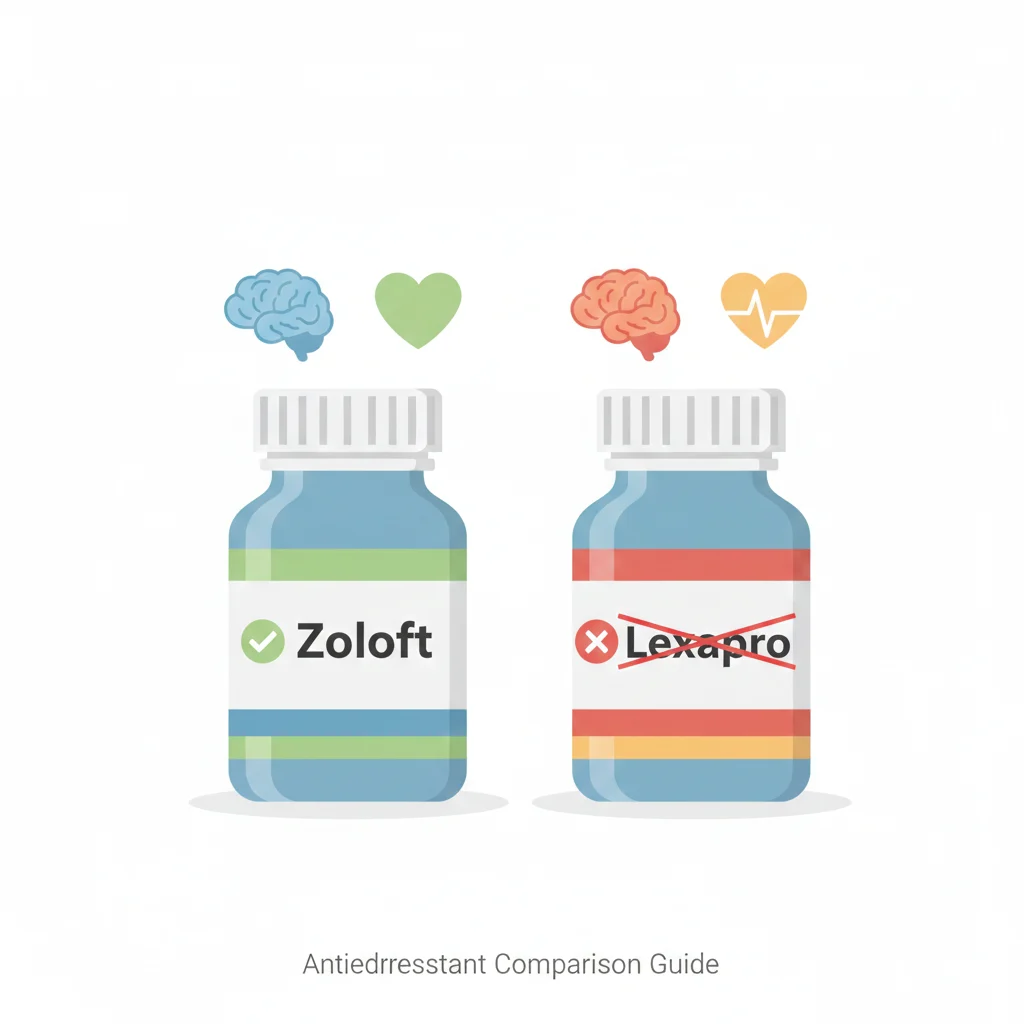
Zoloft is the brand name for a medicine called sertraline. It belongs to a group of medicines called SSRIs. These medicines help balance chemicals in the brain that affect mood, sleep, and feelings.
Doctors often prescribe Zoloft for:
- Depression
- Anxiety
- Panic attacks
- Obsessive-compulsive disorder (OCD)
- Post-traumatic stress disorder (PTSD)
Simple examples:
- “My doctor gave me Zoloft to help with anxiety.”
- “Zoloft made it easier for me to sleep.”
- “She started Zoloft after feeling sad for many weeks.”
Think of Zoloft like a helper that slowly lifts heavy emotional feelings.
What Is Lexapro?
Lexapro is the brand name for escitalopram. Like Zoloft, it is also an SSRI medicine. It works in a similar way by helping the brain use serotonin better.
Doctors often prescribe Lexapro for:
- Depression
- Generalized anxiety disorder
- Stress-related mood problems
Simple examples:
- “Lexapro helped calm my worried thoughts.”
- “My sister takes Lexapro for depression.”
- “The doctor suggested Lexapro for daily anxiety.”
You can think of Lexapro as a calm coach that helps your mind relax and feel steady.
The Key Difference Between Zoloft and Lexapro
Even though both medicines treat similar problems, they are not exactly the same. Let’s look at the difference between Zoloft and Lexapro in a simple way.
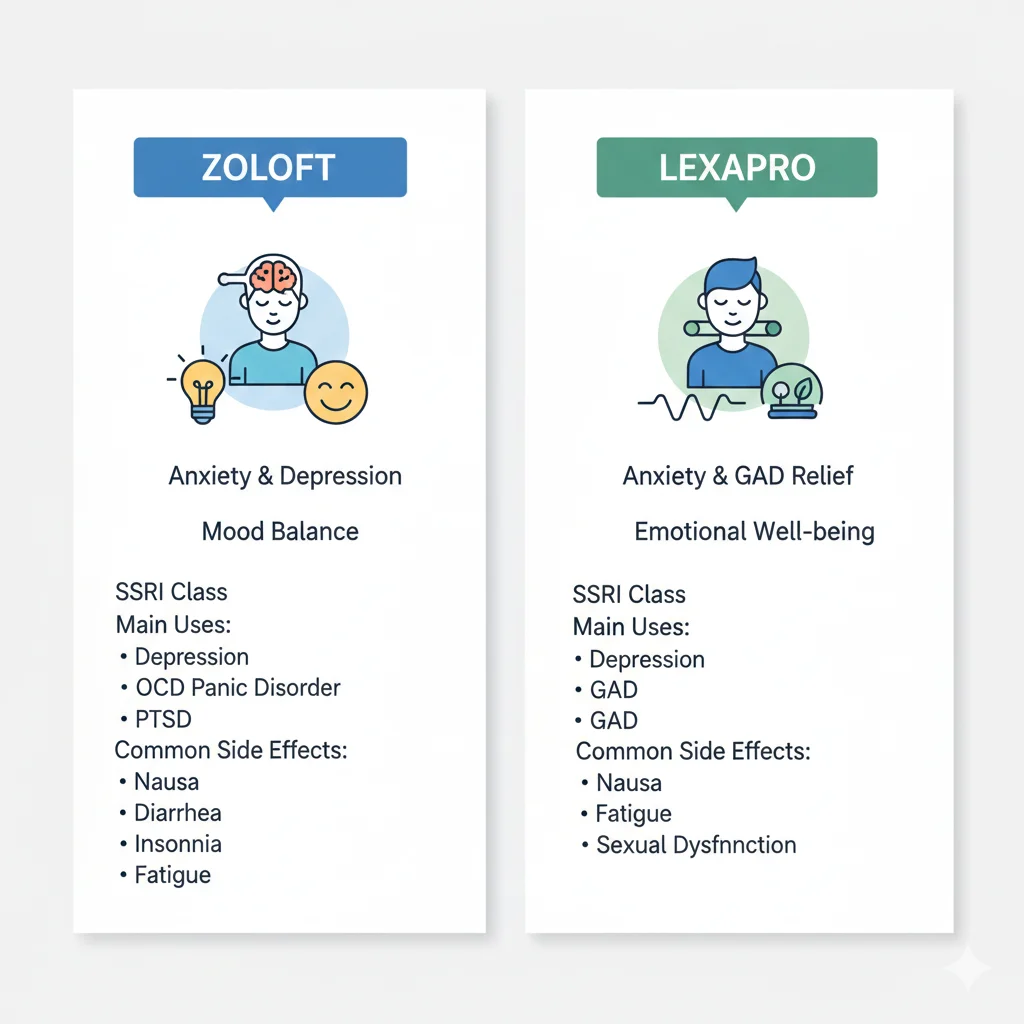
Comparison Table: Zoloft vs Lexapro
| Feature | Zoloft | Lexapro |
|---|---|---|
| Generic name | Sertraline | Escitalopram |
| Common uses | Depression, anxiety, OCD, PTSD, panic disorder | Depression, anxiety |
| How activating it feels | Can feel more energizing for some people | Often feels calmer and smoother |
| Side effects | Nausea, sleep changes, stomach upset | Fatigue, nausea, headache |
| Typical starting dose | Often starts low and increases slowly | Usually starts at a small steady dose |
| Best for | People with mixed anxiety and mood symptoms | People with steady anxiety or depression |
Quick Tip to Remember
- Think Zoloft = energy and action (good for people with anxiety plus other symptoms).
- Think Lexapro = calm and balance (good for steady anxiety or sadness).
Common Mistakes and How to Avoid Them
Even though these are medicines, people still make common mistakes when talking about or using them.
❌ Mistake 1: Thinking They Are Exactly the Same
✔️ Correction: They are similar but not identical. Each works a little differently in the body.
Why it happens: Both treat anxiety and depression, so people assume they do the same job.
❌ Mistake 2: Switching Without a Doctor
✔️ Correction: Never change from Zoloft to Lexapro (or the other way) without medical advice.
Why it happens: Some people think one pill is like another. But doses and effects are different.
❌ Mistake 3: Expecting Instant Results
✔️ Correction: Both medicines take time — usually 2 to 6 weeks — to show full effects.
Why it happens: People expect fast results, but brain chemistry changes slowly.

When to Use Zoloft
Doctors usually suggest Zoloft in certain situations, especially when symptoms are mixed or complex.
Zoloft Is Often Used When:
- A person has depression plus anxiety
- Someone has panic attacks or OCD
- PTSD symptoms are present
- A person feels low energy and needs emotional lift
Easy Real-Life Examples:
- “Ali feels anxious and sad at school. His doctor recommends Zoloft.”
- “Sara has panic attacks, so Zoloft is suggested.”
- “Zoloft helps me focus better at work.”
- “My friend uses Zoloft to manage stress after trauma.”
- “Zoloft helped balance my mood over time.”
Simple memory trick:
Zoloft often works well when emotions feel heavy and busy at the same time.
When to Use Lexapro
Lexapro is often chosen when anxiety or sadness is steady and long-lasting but not extreme.
Lexapro Is Often Used When:
- Someone has ongoing anxiety
- A person feels low, tired, or hopeless
- Stress affects sleep and daily life
- A calmer, smoother medicine is preferred
Easy Real-Life Examples:
- “Lexapro helps me stay calm during exams.”
- “My cousin takes Lexapro for daily anxiety.”
- “Lexapro made my mood more stable.”
- “My doctor chose Lexapro because I felt tense all the time.”
- “Lexapro helped me enjoy life again.”
Memory hack:
Think Lexapro = relax + pro — a helper for calm feelings.
Quick Recap: Zoloft vs Lexapro
- Zoloft is sertraline.
✔ Best for mixed symptoms like anxiety, panic, OCD, and PTSD.
✔ Can feel more energizing. - Lexapro is escitalopram.
✔ Best for steady anxiety and depression.
✔ Often feels smoother and calming.
Both medicines:
- Belong to the SSRI family
- Help balance brain chemicals
- Take a few weeks to work fully
- Should only be taken as prescribed by a doctor
Advanced Tips (Optional)
History and Background
Zoloft and Lexapro were both developed to improve mental health treatment by reducing side effects compared to older antidepressants. Over time, they became two of the most commonly prescribed SSRIs worldwide.
Use in School, Exams, and Work
Doctors sometimes prefer Lexapro for students or workers who need calm focus. Zoloft may be chosen when energy and motivation are also low.
Online and Texting Confusion
Some people casually say, “I switched meds,” without knowing the names or effects. This can cause misunderstandings. Always use the correct medicine name when talking to healthcare providers.
Mini Quiz: Test Your Understanding
Fill in the blanks:
- Zoloft’s generic name is __________.
- Lexapro is often used for steady __________ and depression.
- Both Zoloft and Lexapro belong to the __________ family of medicines.
- You should never change medicines without talking to a __________.
- Zoloft may feel more __________ for some people.
- Lexapro often feels more __________ and calming.
- These medicines usually take __________ to __________ weeks to fully work.
(Answers: 1. Sertraline, 2. Anxiety, 3. SSRI, 4. Doctor, 5. Energizing, 6. Smooth, 7. 2 to 6)
Frequently Asked Questions (FAQs)
1. What is the main difference between Zoloft and Lexapro?
The main difference is how they feel and what symptoms they target best. Zoloft is often used for mixed anxiety and mood problems, while Lexapro is commonly used for steady anxiety and depression.
2. Is Zoloft stronger than Lexapro?
Not exactly. Both work well, but they affect people differently. One may work better for one person, while the other works better for someone else.
3. Can I take Zoloft and Lexapro together?
No. These medicines should not be taken together unless a doctor specifically says so, because that could cause serious side effects.
4. Which one works faster: Zoloft or Lexapro?
Both usually take about 2 to 6 weeks to show full effects. Some people may notice small changes earlier.
5. Is Lexapro safer than Zoloft?
Both are considered safe when used as prescribed. The best choice depends on your notice and how your body reacts.
Conclusion
Understanding Zoloft or Lexapro becomes easy when you look at their meanings, uses, and differences in simple words. Both medicines help improve mood and reduce anxiety, but they are chosen for different reasons. Zoloft often helps with mixed or intense symptoms, while Lexapro is usually better for steady anxiety or sadness. The most important thing to remember is that only a doctor can decide which one is right for you. Keep learning, asking questions, and practicing healthy habits — every small step helps you feel better each day.
Elizabeth Gaskell was a Victorian English novelist and biographer, celebrated for social realism, strong female characters, and industrial age themes. era life.