Many English learners and writers often get confused between “while” and “whilst.” Although both words are used to indicate time or contrast, their usage depends on the style and context of writing. Using the wrong word can make sentences seem outdated or inconsistent, so understanding the difference is important for clear and polished writing.
The word “while” is the most commonly used form in modern English and works in both formal and informal writing. For example: “She read a book while waiting for the train.” In contrast, “whilst” is more formal and traditional, primarily used in British English. For example: “Whilst he was busy, she completed the project on her own.” Both words convey similar meanings, but choosing the right one depends on tone, audience, and style.
Knowing the difference between while and whilst helps writers maintain clarity and professionalism. Using the correct form ensures that your sentences are precise, easy to read, and stylistically appropriate for your audience, making your writing more polished and effective.
What Does Each Word Mean?
Let’s look at each word separately and understand them in simple language.
What Does While Mean?
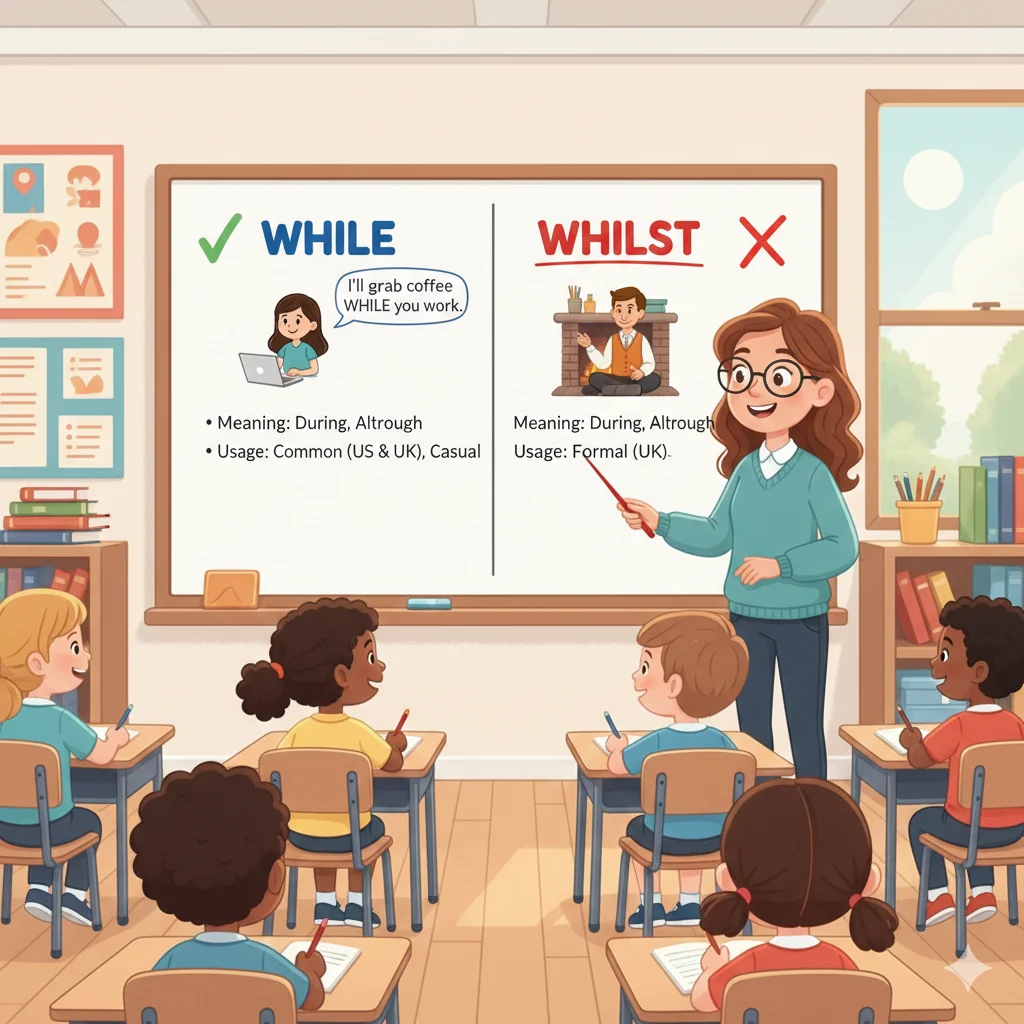
While is a very common English word. It is mostly used to talk about two things happening at the same time. It can also mean “during the time that” or sometimes “although.”
Part of speech:
- Conjunction (most common)
- Noun (sometimes)
- Verb (rarely)
Easy Examples of While
- I was watching TV while my sister was doing homework.
(Two actions happening at the same time.) - Please wait here for a while.
(“A while” means a short time.) - While I like ice cream, I don’t eat it every day.
(Shows contrast, like “although.”)
💡 Memory idea:
Think of while as “at the same time” or “during.”
What Does Whilst Mean?
Whilst means almost the same thing as while. It is also used to show that two things happen at the same time or to show contrast. However, whilst is more common in British English and in formal writing.
Part of speech:
- Conjunction
Easy Examples of Whilst
- She was cooking whilst he was cleaning the room.
(Two actions at the same time.) - He listened to music whilst doing his homework.
- Whilst I understand your point, I disagree.
(Shows contrast, like “although.”)
💡 Memory idea:
Think of whilst as a more formal or British-style version of while.
The Key Difference Between While and Whilst
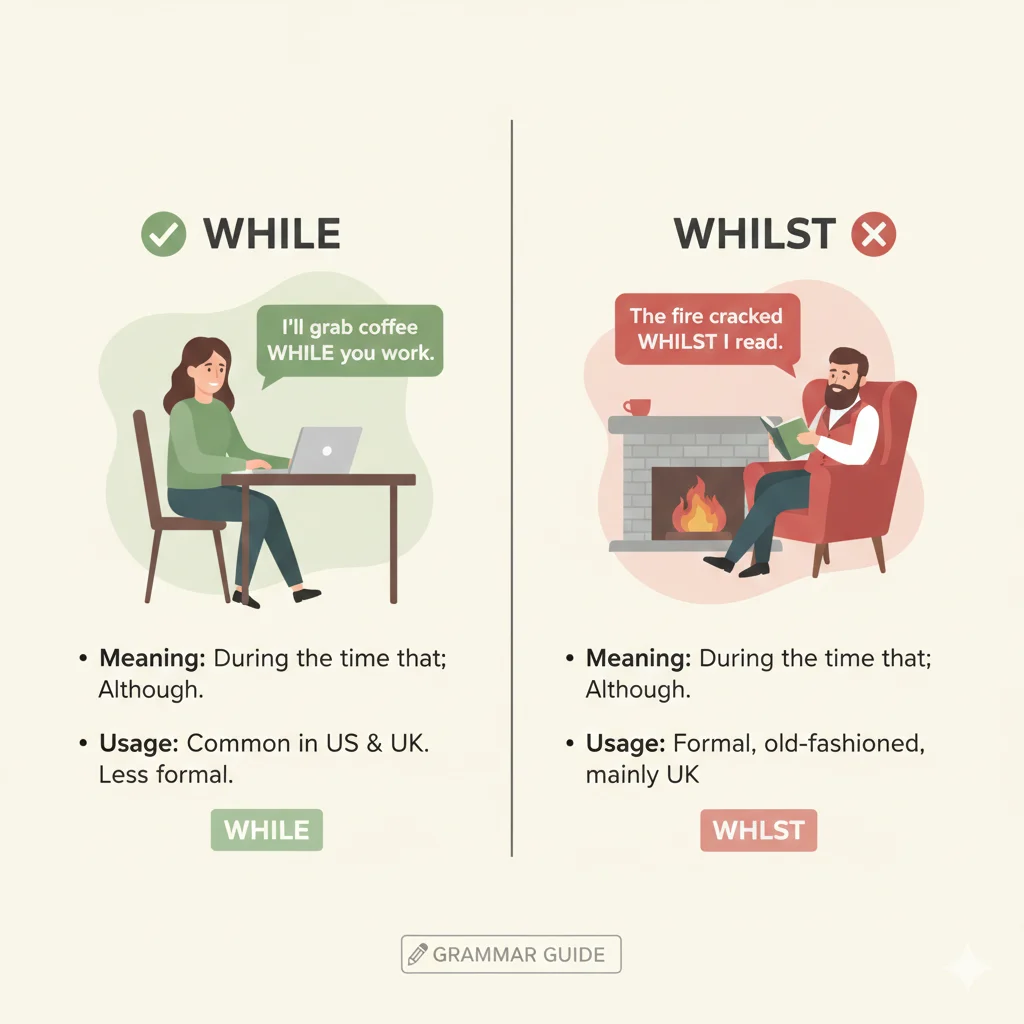
The main difference between while and whilst is style and region, not meaning.
Both words usually mean the same thing. But:
- While is used more in American English and everyday writing.
- Whilst is used more in British English and formal writing.
Comparison Table: While vs Whilst
| Feature | While | Whilst |
|---|---|---|
| Meaning | During the time that / at the same time / although | Same meaning |
| Common Use | Everyday speech and writing | More formal and British style |
| Popular In | American English | British English |
| Example | I read while eating dinner. | I read whilst eating dinner. |
✅ Quick Tip:
If you are unsure, use while. It works in all situations and sounds natural everywhere.
Common Mistakes and How to Avoid Them
Let’s look at some mistakes people often make and how to fix them.
❌ Mistake 1: Thinking One Is Always Wrong
Wrong idea:
“Whilst is incorrect English.”
✅ Correct:
Both while and whilst are correct. They are just used in different styles.
❌ Mistake 2: Using Both Together
Wrong:
❌ Whilst while I was studying, the phone rang.
✅ Correct:
✔ While I was studying, the phone rang.
or
✔ Whilst I was studying, the phone rang.
❌ Mistake 3: Using “Whilst” in Very Casual Texts
Wrong (too formal for texting):
❌ I was eating whilst watching YouTube.
✅ Better:
✔ I was eating while watching YouTube.
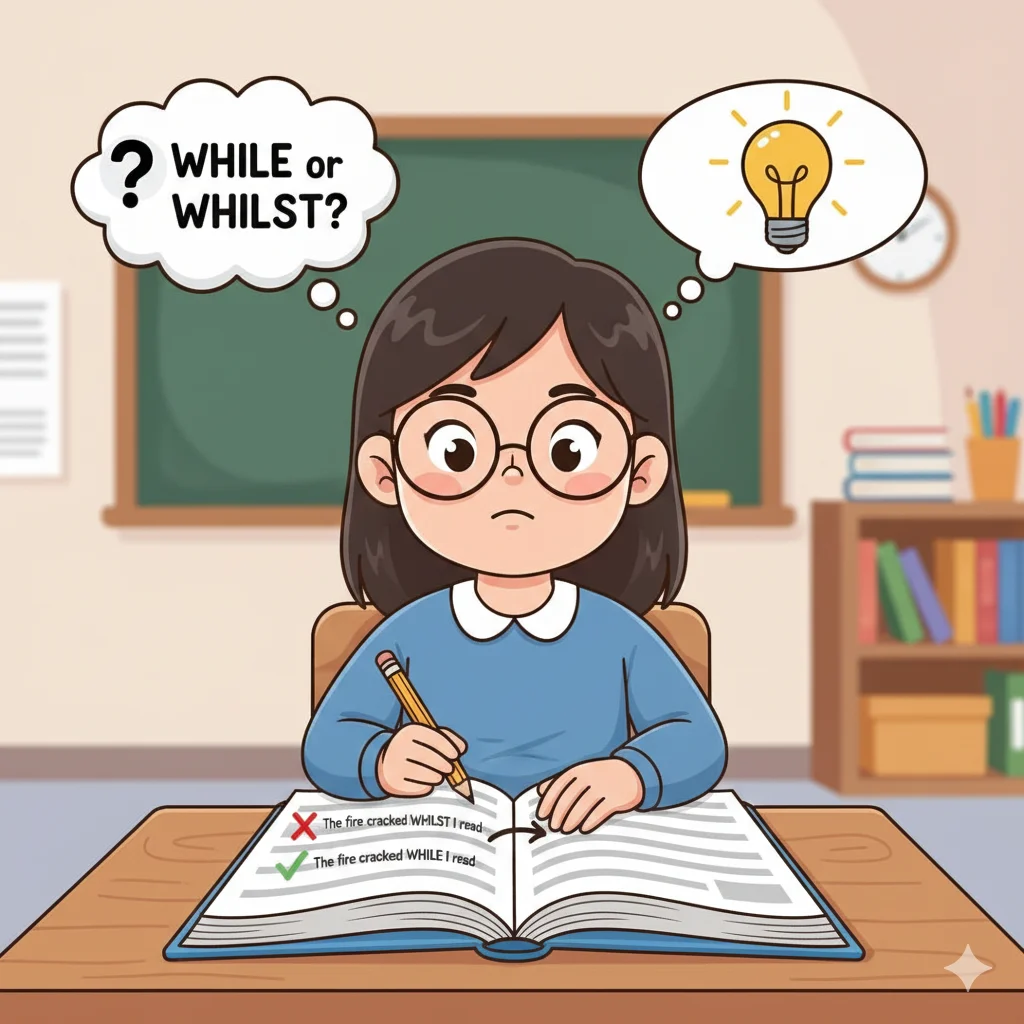
💡 Why these mistakes happen:
People overthink the words or try to sound “more English.” The fix is simple: use while in daily life and whilst in formal or British-style writing.
When to Use While
Use while in most everyday situations. It sounds natural in speaking, texting, emails, and school writing.
Situations Where While Fits Best
- When two things happen at the same time
- When you mean “during”
- When showing contrast (like “although”)
- In casual and formal writing
Easy Examples of While
- I listened to music while doing my homework.
- She was smiling while talking to her friend.
- Please stay here while I get your bag.
- While I like pizza, I prefer burgers.
- The baby slept while the rain fell outside.
🏫 School example:
While the teacher explained the lesson, the students took notes.
🏠 Home example:
Mom cooked dinner while Dad set the table.
When to Use Whilst
Use whilst in formal writing or when using British English. It is common in books, essays, news writing, and official documents in the UK.
Situations Where Whilst Fits Best
- Formal essays or reports
- British English writing
- When you want a more polished tone
Easy Examples of Whilst
- He read a book whilst waiting for the bus.
- She smiled whilst speaking to the guests.
- The children played outside whilst it was sunny.
- Whilst I respect your opinion, I disagree.
- He worked on his project whilst listening to music.
🧠 Memory Hack:
Think:
Whilst = While + Suit 👔
Meaning: “While” dressed in formal clothes.
Quick Recap: While vs Whilst
- While and whilst mean almost the same thing.
- Both are used when two things happen at the same time.
- While is more common and casual.
- Whilst is more formal and British.
- If unsure, choose while — it always works.
Advanced Tips (Optional)
Word History (Simple)
- While comes from Old English and has been used for hundreds of years.
- Whilst is just an older or extended form of while, mostly kept in British English.
In Exams and Formal Writing
- In school essays, both are correct.
- In British exams, whilst is often preferred.
- In American exams, while is safer.
In Texting and Online Writing
- People almost always use while.
- Using whilst in texts may sound too formal or strange.
Mini Quiz: Test Yourself!
Fill in the blanks with while or whilst.
- I was brushing my teeth _____ listening to music.
- She was cooking _____ her brother was cleaning.
- _____ I like chocolate, I don’t eat it every day.
- He read a book _____ waiting for the train.
- The kids played outside _____ their mom made lunch.
- _____ I understand your point, I still disagree.
Answers:
- while
- while / whilst
- While / Whilst
- while / whilst
- while
- Whilst / While
(Yes — many answers work both ways!)
FAQs
1. Are while and whilst the same?
Yes, they usually mean the same thing. The difference is mostly in style and region.
2. Which is more common: while or whilst?
While is more common worldwide, especially in American English and daily conversation.
3. Can I always replace whilst with while?
Yes, in most sentences, you can replace whilst with while without changing the meaning.
4. Is whilst wrong in American English?
No, it is not wrong, but it sounds formal or unusual in casual American writing.
5. Which word should beginners use?
Beginners should use while because it is simple, common, and always correct.
Conclusion
Now you know the meaning, difference, and correct usage of while and whilst. Both words talk about things happening at the same time or show contrast. The main difference is style: while is everyday and global, while whilst is more formal and British.
If you ever feel unsure, just use while — it will always sound right. Keep practicing with simple sentences in daily life, schoolwork, and writing. The more you use English, the better you become.
Small steps like learning one word pair at a time can make a big difference. Keep going — you’re doing

Elizabeth Gaskell was a Victorian English novelist and biographer, celebrated for social realism, strong female characters, and industrial age themes. era life.