Do you ever wonder whether to write totaling or totalling? These two words look very similar and even sound almost the same, which can make English learners and even native speakers confused. The confusion usually comes from differences in American and British English, as well as small spelling rules.
In this guide, we will break down totaling vs totalling in the simplest way. You’ll learn their exact meanings, parts of speech, and how to use each word correctly. Plus, we’ll provide clear examples, common mistakes, and memory tricks so that you can write confidently in school, work, or daily life.
By the end of this article, even beginners will feel confident knowing when to use totaling or totalling, and you’ll never mix them up again.
What Does Each Word Mean?
Totaling
Meaning: “Totaling” means adding numbers together to get a sum or the total. It is commonly used when calculating scores, money, or amounts.
Part of Speech: Verb (present participle of “total”)
Examples:
- She is totaling all the expenses for the party.
- The cashier is totaling your purchase.
- He spent the afternoon totaling the points scored in the game.
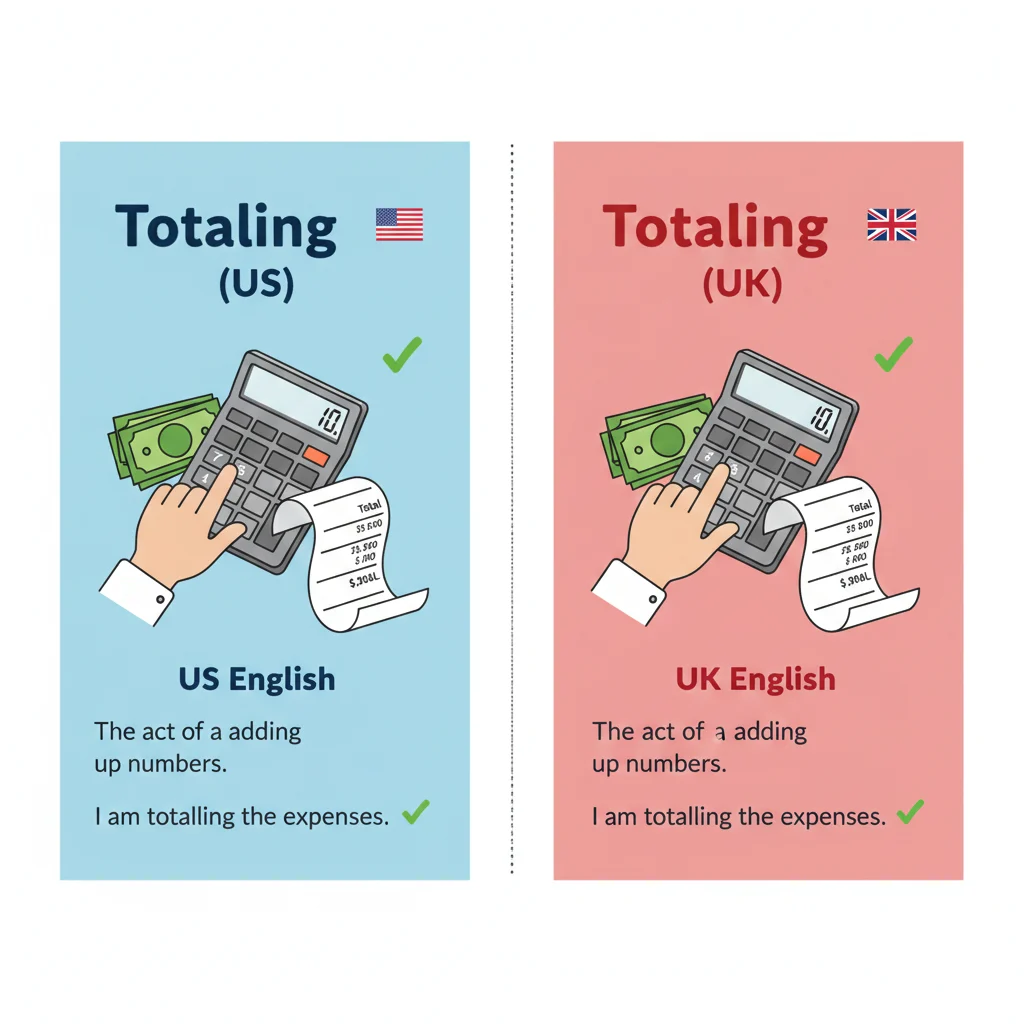
Think of it as “adding up everything” so you know the complete amount.
Totalling
Meaning: “Totalling” is the British English spelling of the same verb “totaling.” It has exactly the same meaning: adding things together to find a total.
Part of Speech: Verb (present participle of “total”)
Examples:
- He is totalling the bills for the week.
- The accountant spent hours totalling the invoices.
- She enjoys totalling her monthly savings.
Essentially, the only difference between totaling and totalling is spelling preference: American English uses totaling, while British English uses totalling.
The Key Difference Between Totaling and Totalling
| Feature | Totaling (American English) | Totalling (British English) |
|---|---|---|
| Meaning | Adding numbers together | Adding numbers together |
| Spelling | One “l” | Two “l’s” |
| Usage Examples | He is totaling his expenses. | He is totalling his expenses. |
| Region Preference | United States | United Kingdom |
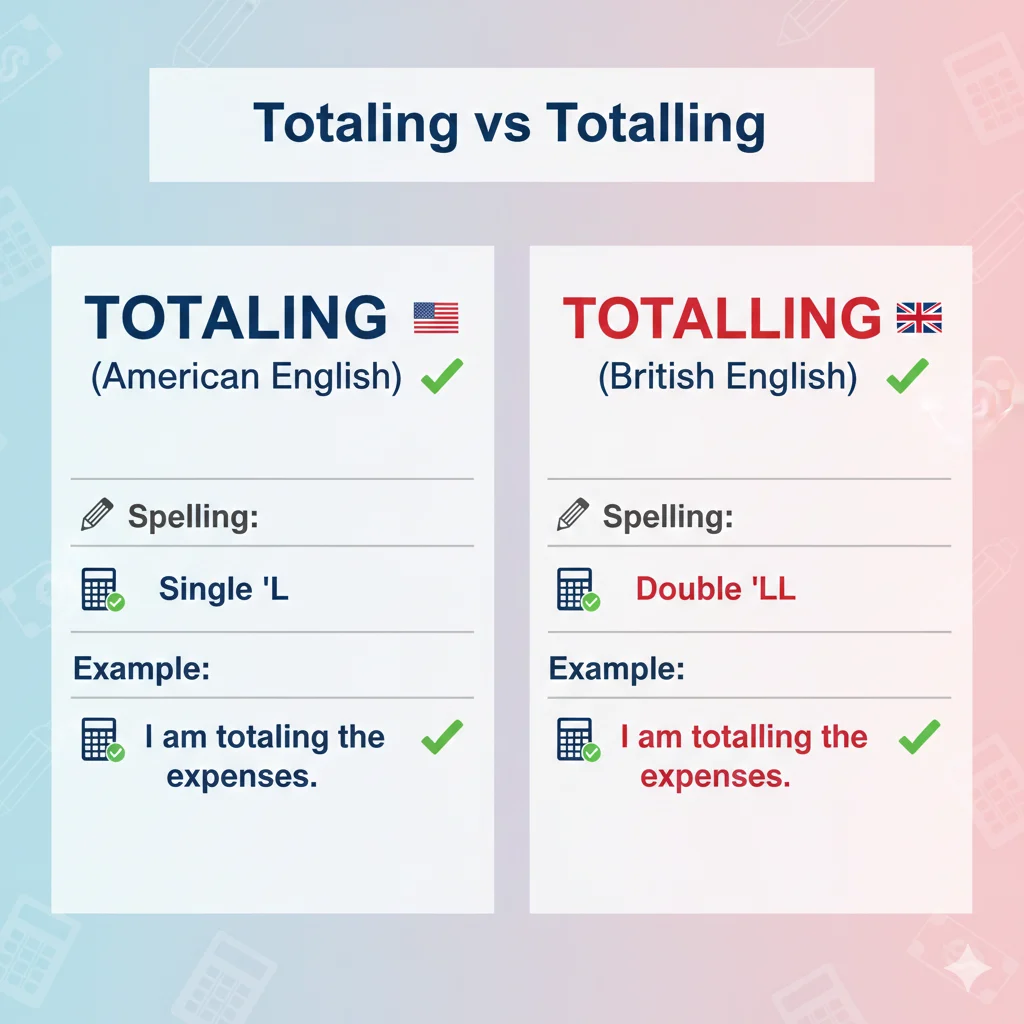
Quick Tip: If you’re writing for an American audience, use totaling. For British readers, use totalling.
Elses or Else’s: Difference, Meaning, and Correct Usage Explained
Common Mistakes and How to Avoid Them
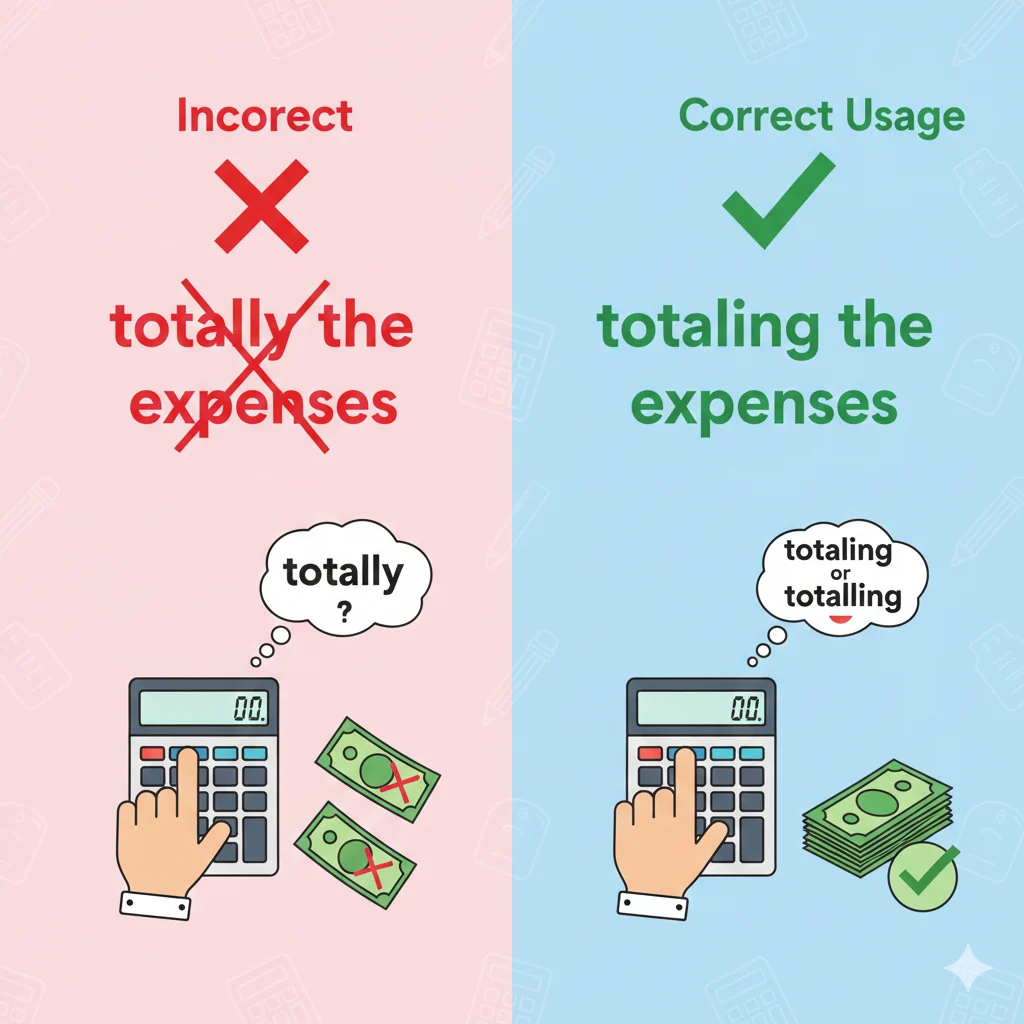
Many people confuse these words or mix them with unrelated words like “totally.” Here are some examples:
- ❌ Incorrect: She is totally all the scores.
✅ Correct: She is totaling all the scores.
Why it happens: “Totally” is an adverb meaning “completely,” not “adding numbers.” - ❌ Incorrect: He is totaling the bills. (in UK English)
✅ Correct: He is totalling the bills.
Why it happens: Spelling differs in British English.
Pro Tip: Always check your audience and purpose — American or British — before choosing totaling or totalling.
When to Use Totaling
Use totaling in situations where you are adding numbers or amounts, especially in American English.
Examples:
- I am totaling the scores of the game.
- The software is totaling all your expenses automatically.
- She is totaling her grocery bills before checkout.
- The accountant is totaling the monthly sales.
Memory Trick: Think of the “one L” in totaling as one country — the USA.
When to Use Totalling
Use totalling the same way, but follow British English spelling.
Examples:
- He is totalling the school expenses.
- She spent the morning totalling the invoices.
- The teacher is totalling the marks for the class.
- We are totalling the costs for the project.
Memory Hack: Picture two L’s in totalling like two lines on the UK flag — it reminds you it’s British.
Quick Recap: Totaling vs Totalling
- Totaling: American English, one “l,” used when adding numbers.
- Totalling: British English, two “l’s,” same meaning as totaling.
- Rule of Thumb: Check your audience and stick to the preferred spelling.
- Tip: Do not confuse either word with “totally,” which means “completely.”
Advanced Tips
- Origin: Both words come from the verb “total,” which is derived from Latin totalis, meaning “whole.”
- Formal Writing: In essays or business reports, use totaling for American English and totalling for British English.
- Online Usage: Misusing these words in texting (like “totally” instead of totaling/totalling) can confuse the meaning. Always double-check!
Mini Quiz
Fill in the blanks with totaling or totalling:
- She is _______ all her expenses for the month.
- He spent hours _______ the scores of the tournament.
- We are _______ the costs for our school trip.
- The accountant is _______ invoices from different clients.
- I am _______ my savings to see how much I have.
Answers: 1. totaling 2. totaling/totalling 3. totalling 4. totaling/totalling 5. totaling
FAQs
1. Is totaling or totalling correct?
Both are correct. Use totaling for American English and totalling for British English.
2. Can I use totally instead?
No. “Totally” means “completely” and does not refer to adding numbers.
3. Why do British and American spellings differ?
Because American English often simplifies spelling by using fewer letters.
4. Are there other words with similar spelling differences?
Yes. For example, “travelling” (UK) vs “traveling” (US) and “cancelled” (UK) vs “canceled” (US).
5. How do I remember which spelling to use?
Think “one L for America, two L’s for UK” — a simple visual trick to keep it in mind.
Conclusion
Now you know the difference between totaling and totalling! Both words mean the same thing — adding numbers together — but the spelling depends on whether you’re using American or British English. By practicing these examples and remembering simple tricks, you can confidently use the right word every time.
Next time you calculate bills, school scores, or expenses, pay attention to your audience and choose the correct spelling. Remember, even small spelling differences can make your writing look polished and professional. Keep practicing, and soon using totaling or totalling will feel natural. Your English keeps improving one word at a time!

Elizabeth Gaskell was a Victorian English novelist and biographer, celebrated for social realism, strong female characters, and industrial age themes. era life.