Many English learners and even native speakers sometimes wonder: should it be “sneek” or “sneak”? These two words may sound similar, but one is correct, and the other is a common misspelling. Using the wrong version can make your writing look unprofessional, especially in schoolwork, emails, or social media posts.
In this guide, we will explain the meaning of sneek and sneak, show the key differences, and give easy-to-remember examples. You’ll also learn common mistakes, tips to avoid them, and how to use the correct word in real-life situations. By the end of this article, even beginners will confidently know which word to use. Think of this as a friendly guide to mastering one small but important part of English grammar.
What Does Each Word Mean?
Sneek
First, let’s look at sneek. Actually, sneek is not a standard English word. If you see it in writing, it’s usually a typo for sneak. Some people type it by mistake because the pronunciation can be confusing.
- Part of speech: ❌ Not recognized in formal English
- Usage: Should be avoided in writing or formal contexts
Incorrect examples people often make:
- I will sneek out of the room.
- Don’t sneek behind me!
- He tried to sneek a cookie from the jar.
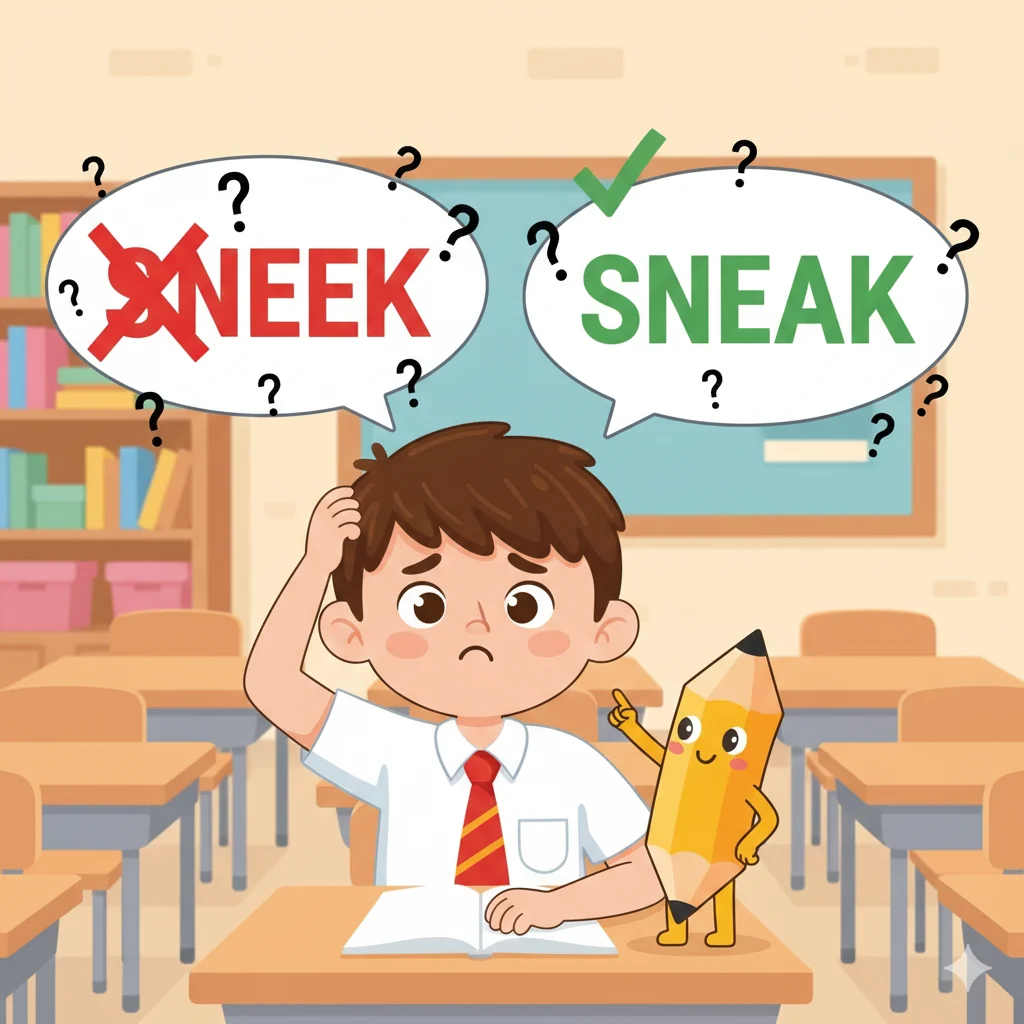
All of these should actually use sneak.
Sneak
Sneak is the correct word. It is a verb meaning to move quietly or secretly so that you are not noticed.
- Part of speech: Verb
- Usage: Talking about quiet, secret actions
Examples:
- The cat tried to sneak past the sleeping dog.
- I sneaked out of class to meet my friend.
- He always sneaks snacks when no one is watching.
A quick story to remember: Imagine a ninja moving quietly — that’s exactly what “sneak” means!
The Key Difference Between Sneek and Sneak
| Word | Meaning | Usage Example | Correct? |
|---|---|---|---|
| Sneek | Often a misspelling of “sneak” | I will sneek out of the room. | ❌ No |
| Sneak | Move quietly or secretly; verb | I will sneak out of the room. | ✅ Yes |
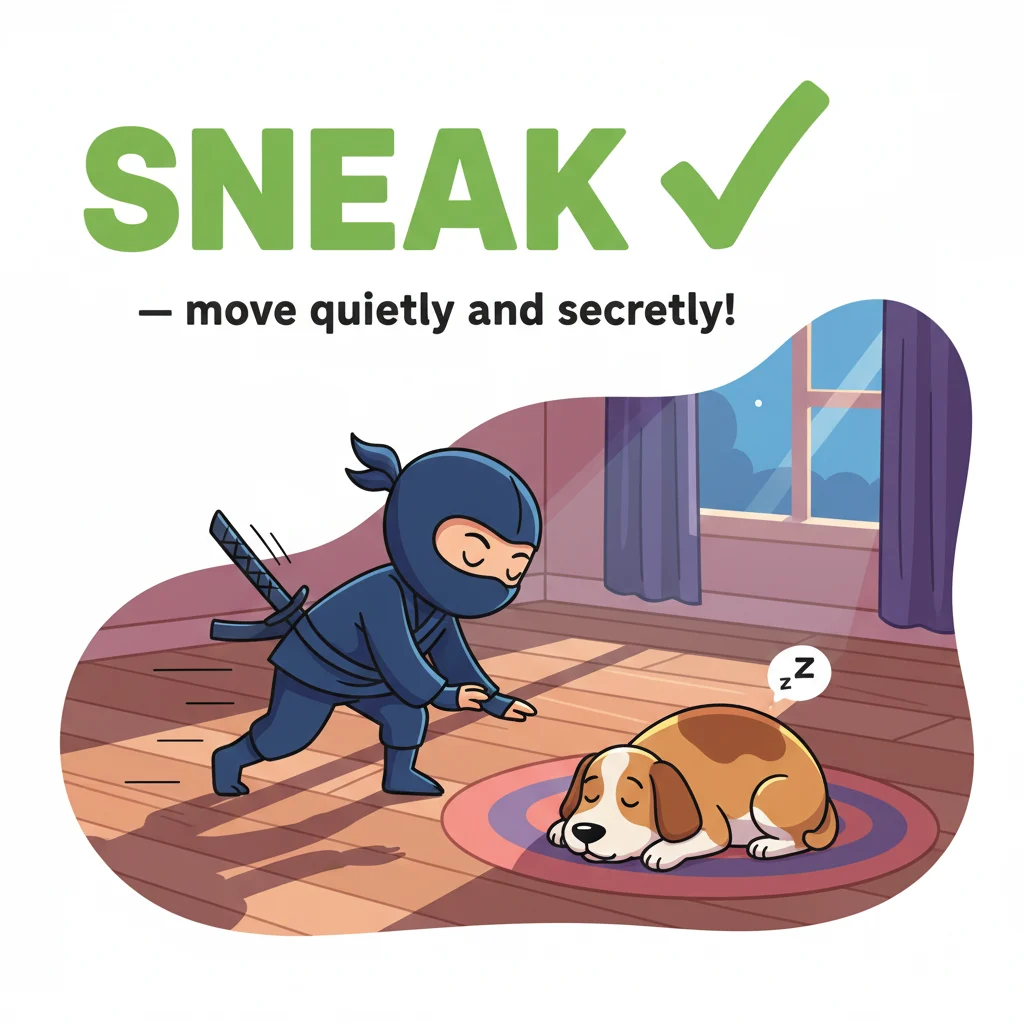
Quick tip: If you are thinking about being quiet or secret, always use sneak. If you see sneek, it’s almost always a typo.
Common Mistakes and How to Avoid Them
- Incorrect: I will sneek to the kitchen.
Correct: I will sneak to the kitchen.
Why it happens: People type what they hear. - Incorrect: Don’t sneek around the teacher.
Correct: Don’t sneak around the teacher.
Tip to fix: Remember, “ea” makes the long “ee” sound in sneak. - Incorrect: He sneeked into the room.
Correct: He sneaked into the room.
Note: Spelling is key in past tense — never replace with “sneeked.”
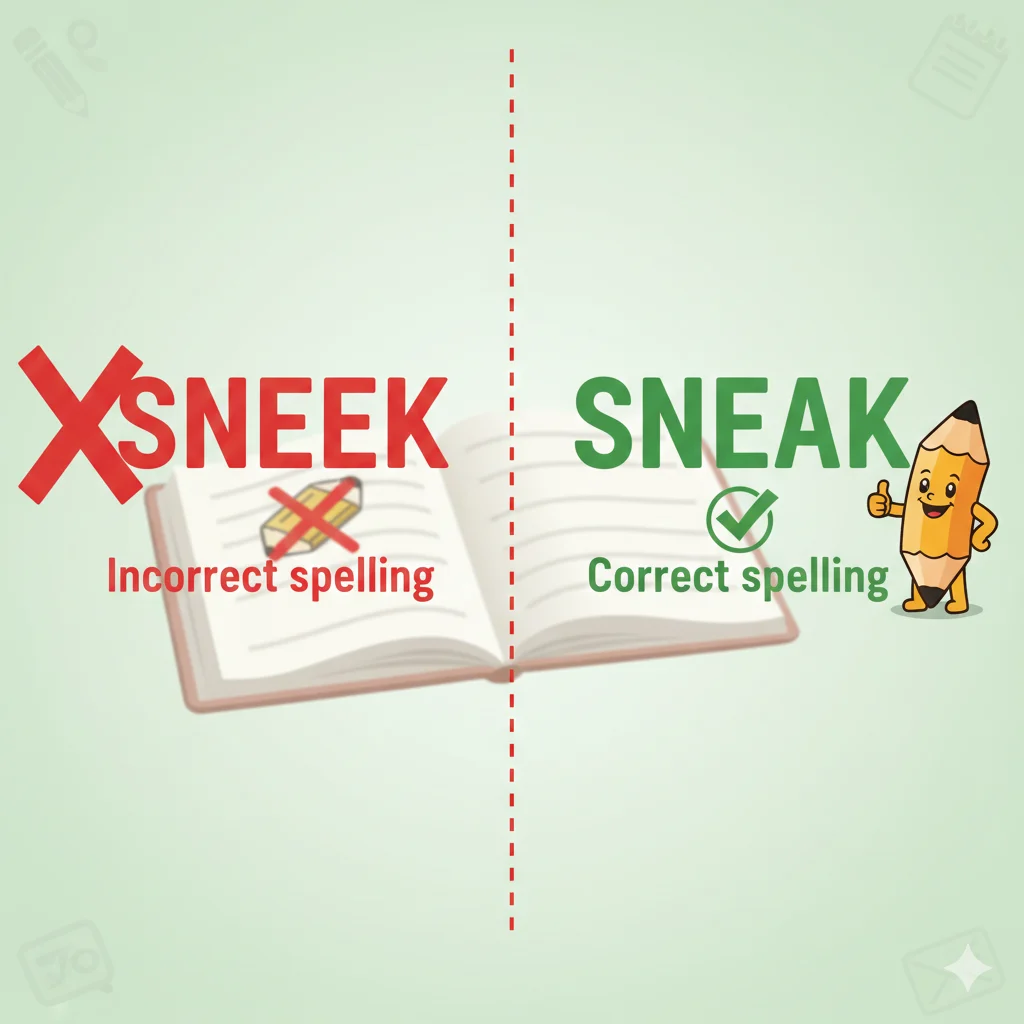
When to Use Sneek
Technically, you should not use sneek in any formal writing. It only appears as a typo. However, if someone types it online, it’s clear they mean sneak.
Remember: Avoid using it in emails, essays, reports, or messages you want to look professional.
Examples (corrected to sneak):
- ❌ I will sneek to the party. → ✅ I will sneak to the party.
- ❌ She tried to sneek the note to me. → ✅ She tried to sneak the note to me.
Memory hack: Imagine the correct word has “a” for action — sneak is an action you do quietly.
When to Use Sneak
Use sneak whenever you talk about moving quietly, doing something secretly, or slipping somewhere unnoticed.
Examples in daily life:
- I tried to sneak cookies without my mom seeing.
- The dog sneaked into the kitchen.
- She sneaked a look at the surprise gift.
- He always sneaks out of boring meetings.
- We sneaked into the movie theater.
Visual trick: Think of a shadow moving silently — that’s sneak.
Quick Recap: Sneek vs Sneak
- Sneek: ❌ Misspelling, not used in proper English
- Sneak: ✅ Verb, move quietly or secretly
- Always check spelling — sneak has ea in it
- Past tense: sneaked or snuck (both correct)
- Memory trick: Sneak = action, sneek = typo
Advanced Tips
- Origin: Sneak comes from Old English snīcan, meaning to creep or move stealthily.
- Formal writing: Use sneaked in essays, reports, or stories about secret actions.
- Online/texting: People may type “sneek” by mistake, which is understood but incorrect. Always correct in professional writing.
Mini Quiz
Fill in the blanks with sneak:
- I tried to ______ out of class quietly.
- The cat ______ past the dog.
- Don’t ______ into my room!
- She ______ a peek at the birthday gift.
- We ______ into the cinema without tickets.
Answers: 1. sneak, 2. sneaked/sneaks, 3. sneak, 4. sneaked/sneaks, 5. sneaked/sneak
FAQs
- Is “sneek” ever correct?
❌ No, it is a common misspelling of “sneak.” - Can I use “sneak” in past tense?
✅ Yes, both sneaked and snuck are acceptable. - Why do people type “sneek”?
It’s often because of pronunciation confusion or typing quickly. - Is “sneak” formal English?
✅ Yes, it is standard and correct in writing and speech. - Any memory trick for “sneak”?
Imagine a ninja moving quietly — sneak is all about secret movement.
Conclusion
Now you know the difference between sneek and sneak. Remember, sneek is a typo, while sneak is the correct verb to use when talking about moving quietly or secretly. With these tips, examples, and memory tricks, you can confidently write and speak without mistakes. Always double-check spelling, especially in emails, essays, and social posts. The more you practice using sneak in real-life situations, the easier it becomes. Even small words like this can make a big difference in your English. Keep learning, practicing, and improving every day — your English skills are growing with every sentence!

Dorothy Whipple was an English novelist and short story writer, famed for emotional realism, domestic themes, and sharp insight into women’s lives. worldwide UK