Many writers and readers often get confused when deciding between “Jesus’” and “Jesus’s.” Both forms are used to show possession, but using the wrong one can make sentences look unpolished or inconsistent. Knowing the proper usage helps you write clearly, professionally, and accurately.
The form “Jesus’s” follows the standard rule of adding ’s to indicate possession and is widely recommended in modern English style guides. For example: “Jesus’s teachings have influenced millions of people worldwide.” Meanwhile, “Jesus’” is a traditional form that omits the extra “s” and is still accepted in certain religious or classical writing styles. Both are technically correct, but context and style guide preference determine which one to use.
Understanding the difference between Jesus’ and Jesus’s allows you to write confidently and consistently. Using the correct form throughout your writing makes your sentences clearer, more professional, and easier for readers to understand, ensuring your content is accurate and polished.
What Does Jesus’ and Jesus’s Mean?
Before learning the difference, let’s understand what these forms mean.
Meaning of Jesus’
Jesus’ shows ownership or belonging.
It means something that belongs to Jesus.
Example idea:
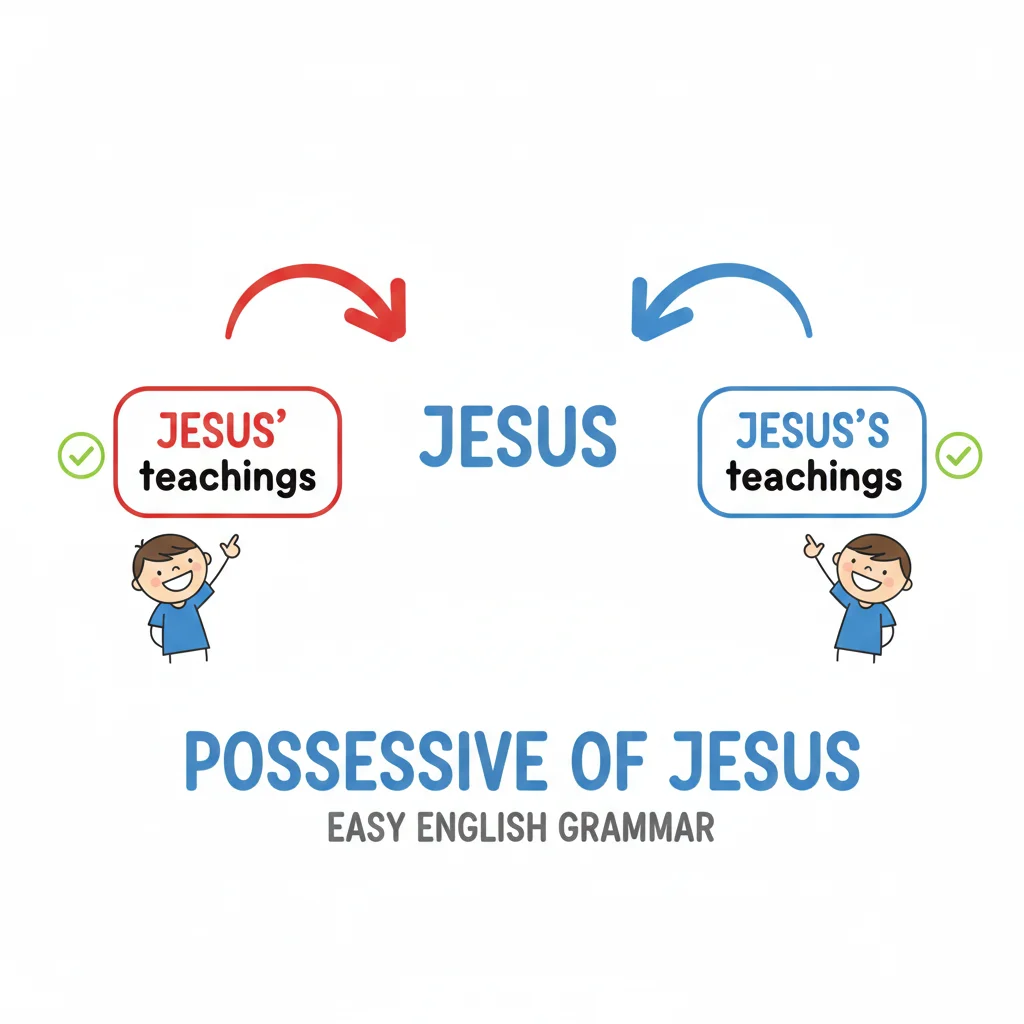
👉 Jesus’ teachings = the teachings that belong to Jesus
Jesus’ is the possessive form of the name Jesus. It is often used when writers want a cleaner or more traditional look.
Easy examples:
- Jesus’ message was about love.
- People follow Jesus’ teachings.
- Jesus’ disciples traveled far.
Think of Jesus’ like saying:
➡️ “This belongs to Jesus.”
Meaning of Jesus’s
Jesus’s also shows ownership or belonging.
It means the same thing as Jesus’.
Example idea:
👉 Jesus’s teachings = the teachings that belong to Jesus
The only difference is how the possessive is written, not the meaning.
Easy examples:
- Jesus’s message changed many lives.
- Jesus’s words are remembered today.
- Jesus’s life inspires millions.
So remember:
✔️ Jesus’ and Jesus’s mean the same thing
❌ They do not change meaning
The Key Difference Between Jesus’ and Jesus’s
The difference between Jesus’ and Jesus’s is not about meaning. It is about grammar style rules.
Some grammar styles prefer adding only an apostrophe, while others prefer adding apostrophe + s.
Simple Comparison Table
| Feature | Jesus’ | Jesus’s |
|---|---|---|
| Meaning | Shows possession | Shows possession |
| Spoken sound | Often sounds the same | Often sounds the same |
| Grammar style | Traditional or religious writing | Modern or academic writing |
| Example | Jesus’ teachings | Jesus’s teachings |

Quick Tip to Remember
👉 If you say the extra “-es” sound, use Jesus’s
👉 If you do not say the extra sound, use Jesus’
Why Do People Get Confused?
The confusion happens because:
- The name Jesus already ends in “s”
- Different grammar books teach different rules
- Religious writing often follows older traditions
- Teachers and editors may prefer different styles
This makes learners think one form is wrong — but both are accepted in standard English.
Common Mistakes and How to Avoid Them
Even though both forms are correct, people still make mistakes.
Mistake 1: Thinking One Form Is Always Wrong
❌ Jesus’s is incorrect grammar.
✅ Both forms are correct depending on style.
Why it happens:
People are taught only one rule and think it applies everywhere.
Fix:
Choose one style and stay consistent.
Mistake 2: Mixing Styles in One Sentence
❌ Jesus’ teachings and Jesus’s words are powerful.
✅ Jesus’ teachings and Jesus’ words are powerful.
Why it happens:
Writers switch styles without noticing.
Fix:
Pick Jesus’ OR Jesus’s and use it the same way throughout your writing.
Mistake 3: Forgetting the Apostrophe
❌ Jesus teachings were important.
✅ Jesus’ teachings were important.
Why it happens:
People rush while writing.
Fix:
Always check for the apostrophe when showing possession.

When to Use Jesus’
You should use Jesus’ when following traditional, classical, or religious writing styles.
This form is common in:
- Bible translations
- Church materials
- Religious books
- Traditional essays
Simple Examples
- Jesus’ teachings focus on love.
- Jesus’ message spread quickly.
- Jesus’ disciples followed him.
- Jesus’ life changed history.
- Jesus’ sacrifice is remembered.
Real-Life Example
A church poster might say:
➡️ Learn from Jesus’ teachings today.
Memory Hack
🧠 Old style = shorter form
Traditional writing likes Jesus’
When to Use Jesus’s
You should use Jesus’s when following modern grammar rules.
This form is common in:
- Academic essays
- School writing
- Modern books
- General English writing
Simple Examples
- Jesus’s message inspired hope.
- Jesus’s teachings guide many people.
- Jesus’s story is well known.
- Jesus’s followers spread his words.
- Jesus’s life shows kindness.
Real-Life Example
A student essay might say:
➡️ Jesus’s teachings emphasize forgiveness.
Memory Hack
🧠 Say the extra sound? Add the “s”
If you hear Je-sus-ez, write Jesus’s
Quick Recap: Jesus’ vs Jesus’s
- Both show possession
- Both are grammatically correct
- Meaning is the same
- Style choice decides which one to use
Use Jesus’ if:
- Writing religious or traditional text
- Following older grammar rules
Use Jesus’s if:
- Writing modern English
- Following most school grammar guides
Advanced Tips (Optional)
A Little History
In older English, names ending in “s” often added only an apostrophe. That is why Jesus’ became common in religious writing.
Modern English grammar now prefers apostrophe + s, which explains Jesus’s.
Formal Writing and Exams
Most teachers accept Jesus’s in school essays.
Some religious studies teachers prefer Jesus’.
👉 Always check your style guide.
Texting and Online Writing
Online writing is more relaxed. Both forms appear often.
But mixing styles can look careless. Choose one and stay consistent.
Mini Quiz: Test Yourself
Fill in the blanks.
- ______ teachings are followed worldwide.
- Many people respect ______ message.
- The story of ______ life is inspiring.
- Churches often teach ______ words.
- Students write about ______ influence.
Answers
- Jesus’ / Jesus’s
- Jesus’ / Jesus’s
- Jesus’ / Jesus’s
- Jesus’ / Jesus’s
- Jesus’ / Jesus’s
✅ Both answers are correct if style stays consistent.
Frequently Asked Questions (FAQs)
1. Is Jesus’ or Jesus’s more correct?
Both are correct. The difference depends on grammar style.
2. Which form does the Bible use?
Most Bible translations use Jesus’.
3. What should students use in exams?
Most teachers prefer Jesus’s, but both are often accepted.
4. Do Jesus’ and Jesus’s sound different?
Usually no. Most people pronounce them the same.
5. Can I switch between Jesus’ and Jesus’s?
No. Choose one style and use it consistentl
Conclusion
Understanding the difference between Jesus’ and Jesus’s does not have to be confusing. Both forms are correct, and both show possession. The real difference comes from grammar style, not meaning. Traditional writing often uses Jesus’, while modern English prefers Jesus’s.
The most important rule is to stay consistent in your writing. Once you choose a style, use it everywhere. With practice, this choice will become easy and natural.
Keep learning, keep practicing, and remember — improving English happens one small step at a time.

Elizabeth Gaskell was a Victorian English novelist and biographer, celebrated for social realism, strong female characters, and industrial age themes. era life.