English has many word pairs that look similar but confuse even good writers. One of the most common is shined or shone. Both come from the verb “shine,” and both talk about light or brightness. Because they sound related and come from the same root word, people often wonder: Which one is correct? 🤔
The truth is—both words are correct, but they are used in different situations. Choosing the wrong one can make your sentence sound strange or incorrect, especially in school writing, exams, or professional English.
In this easy guide, you will learn the meaning of shined and shone, the difference between shined and shone, and the correct usage of each word. We use simple words, short sentences, and real-life examples, so even a 4th-grade student can understand. By the end, you will feel confident using shined or shone correctly every time.
🔑 Before Writing: Keyword Overview (Auto-Generated)
Primary Keywords
- Shined or Shone
- Shined vs Shone
- Difference between shined and shone
Secondary Keywords
- Correct usage of shined and shone
- Grammar difference between shined and shone
- Common mistake shined or shone
- Meaning of shined and shone
- Shined or shone examples
- English grammar tips
Semantic Keywords
- How to use shined or shone
- What’s the difference
- Simple explanation
- Grammar rule
- Which word is correct
- Past tense of shine
What Does Each Word Mean?
To understand shined or shone, we must first understand the verb shine.
🌟 What Does “Shine” Mean?
“Shine” means:
- To give light
- To glow
- To reflect brightness
- To polish something so it looks bright
Now let’s look at shined and shone one by one.
✅ Meaning of Shined
Shined is the past tense and past participle of shine when it means:
- To polish something
- To make something clean and bright by rubbing
Part of speech: Verb (past tense)
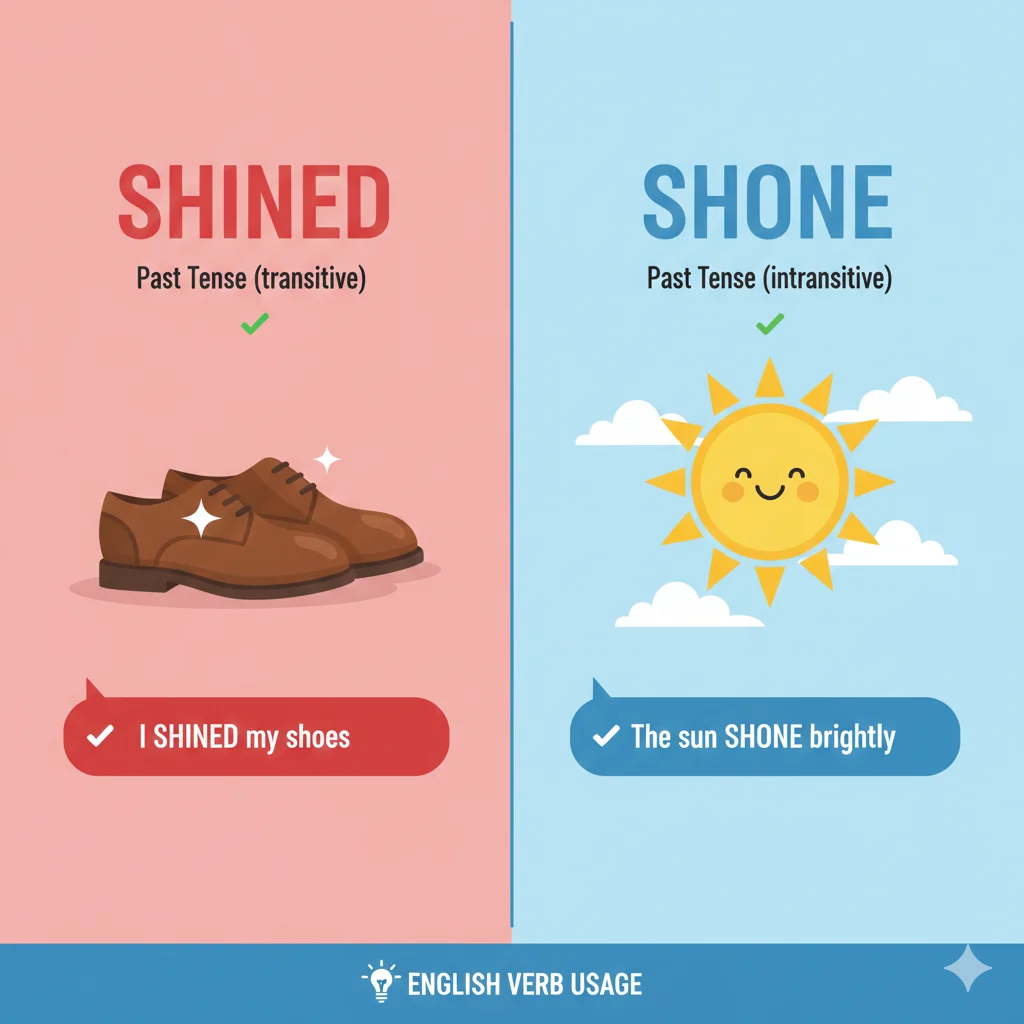
Easy Examples of Shined
- I shined my shoes before school.
- She shined the table with a cloth.
- Dad shined the car until it looked new.
👉 Tip: If you can replace shine with polish, use shined.
✅ Meaning of Shone
Shone is the past tense and past participle of shine when it means:
- To give off light
- To glow naturally
Part of speech: Verb (past tense)
Easy Examples of Shone
- The sun shone brightly in the sky.
- Her eyes shone with happiness.
- The moon shone all night.
👉 Tip: If something gives light by itself, use shone.
⭐ The Key Difference Between Shined and Shone
The main difference between shined or shone is how the brightness happens.
📊 Comparison Table: Shined vs Shone
| Feature | Shined | Shone |
|---|---|---|
| Meaning | Made bright by polishing | Gave off light |
| Action | Someone does the action | Light happens naturally |
| Common use | Shoes, cars, floors | Sun, moon, stars |
| Example | He shined his shoes | The sun shone |
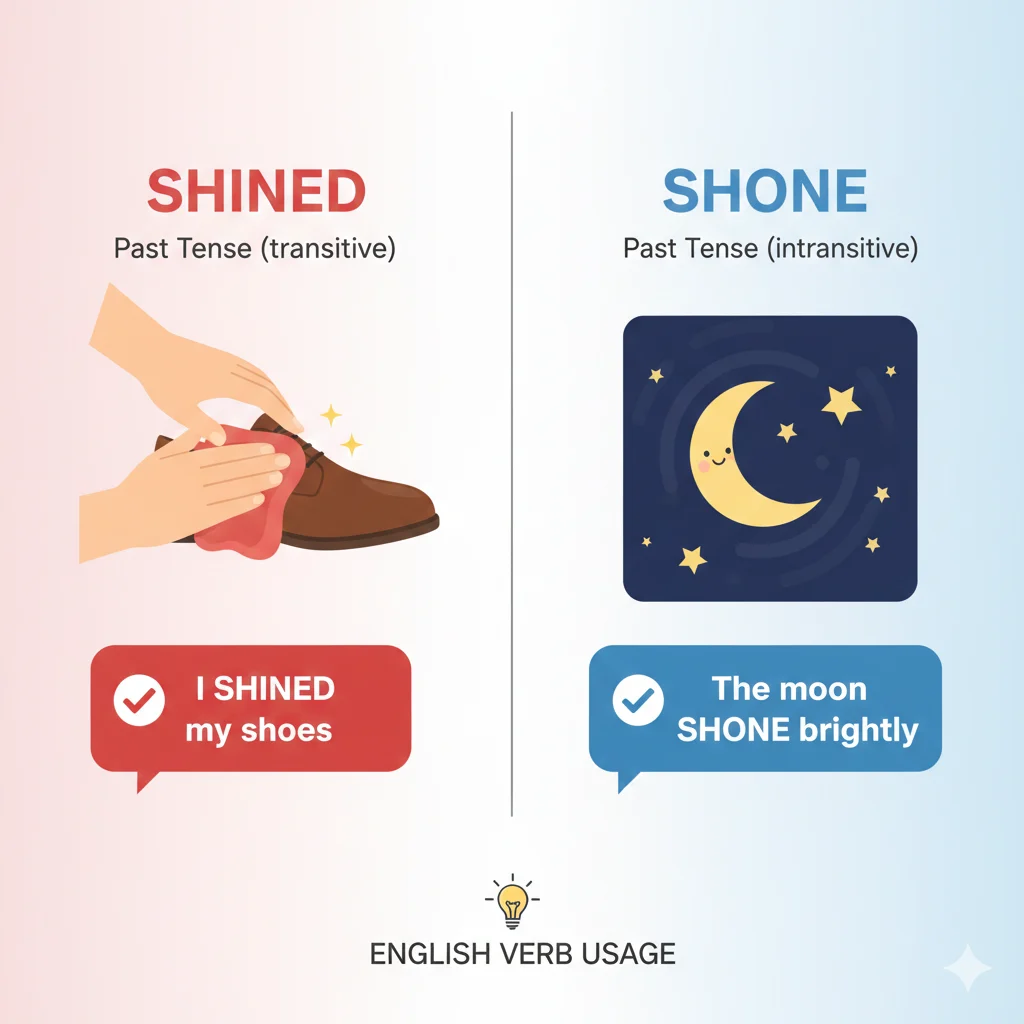
🧠 Quick Memory Tip
- Hands involved? → Shined ✋
- Light involved? → Shone 🌞
❌ Common Mistakes and How to Avoid Them
Many learners mix up shined or shone because both come from shine. Let’s fix that.
Mistake 1
❌ The sun shined brightly.
✅ Correct: The sun shone brightly.
👉 Why? The sun gives light naturally.
Mistake 2
❌ He shone his shoes.
✅ Correct: He shined his shoes.
👉 Why? Shoes do not glow. They are polished.
Mistake 3
❌ She shined like a star.
✅ Correct: She shone like a star.
👉 Why? This talks about glowing, not polishing.
✔ How to Avoid These Mistakes
Ask yourself:
- Am I polishing something? → Shined
- Is something giving off light? → Shone
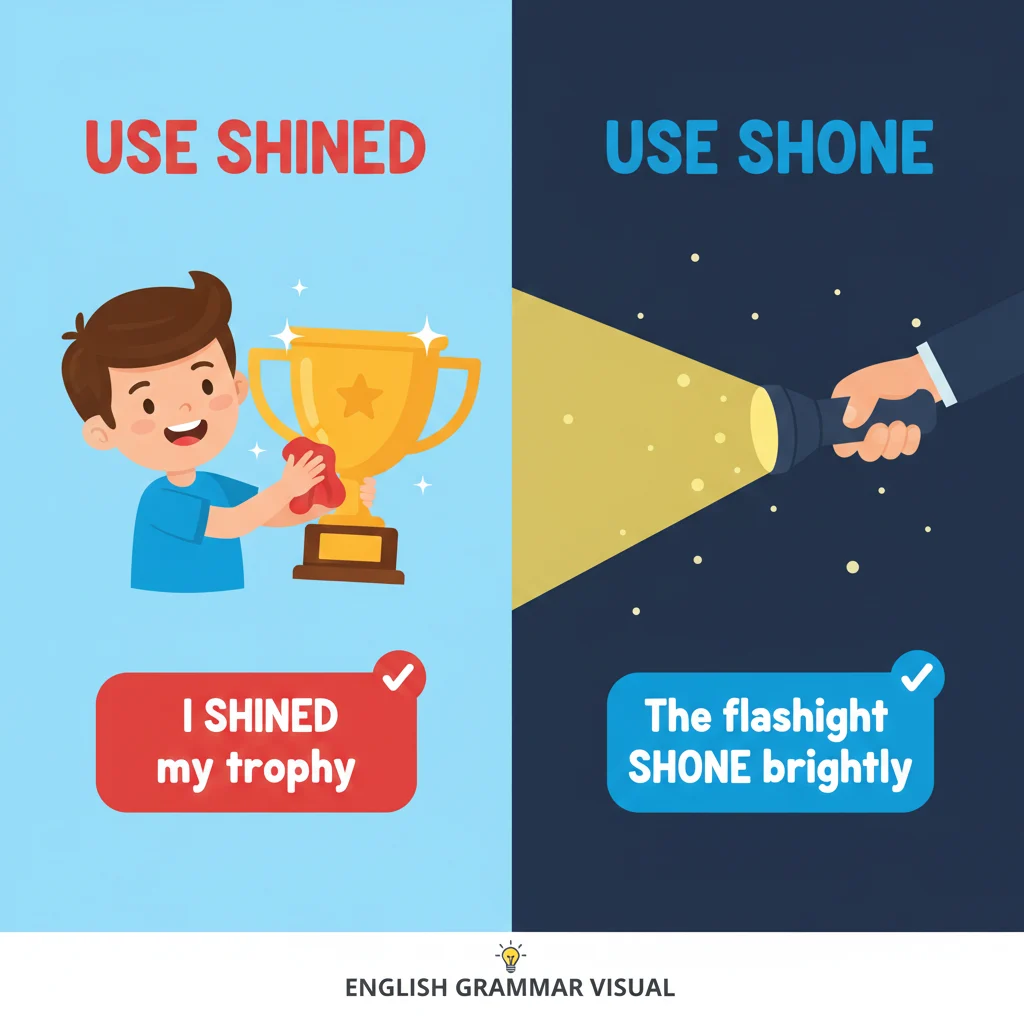
🟢 When to Use Shined
Use shined when:
- You clean something
- You polish something
- You make something bright by rubbing
Real-Life Examples
- I shined my school shoes.
- Mom shined the silver plate.
- He shined the window until it sparkled.
- She shined the trophy for the shelf.
- We shined our bikes before the race.
👉 These all involve action and effort.
🔵 When to Use Shone
Use shone when:
- Something gives light
- Something glows
- Something looks bright on its own
Real-Life Examples
- The stars shone in the sky.
- His face shone with pride.
- The flashlight shone in the dark.
- The moon shone through the window.
- Her smile shone brightly.
🧠 Memory Hack
Think of sun, moon, stars → all use shone 🌙⭐
🔁 Quick Recap: Shined vs Shone
- Shined
- Used for polishing
- Needs action
- Example: I shined my shoes.
- Shone
- Used for light or glow
- Happens naturally
- Example: The sun shone.
👉 One action, two meanings. Choose wisely!
🧠 Advanced Tips (Optional)
Word History (Simple)
- Both words come from Old English.
- Over time, English separated meanings.
- American and British English both follow this rule.
In Exams & Formal Writing
- Teachers prefer shone for light.
- Use shined only when polishing is clear.
Texting & Online Writing
- Many people wrongly type shined for light.
- Correct use makes your writing look smart and confident.
📝 Mini Quiz: Test Yourself
Fill in the blanks with shined or shone.
- The sun ______ all day.
- I ______ my shoes for school.
- Her eyes ______ with joy.
- He ______ the old lamp.
- The moon ______ brightly.
- Mom ______ the table.
Answers:
- shone
- shined
- shone
- shined
- shone
- shined
❓ FAQs: Shined or Shone
1. Is shined or shone correct?
Both are correct. Use shined for polishing and shone for light.
2. What is the difference between shined and shone?
Shined needs action. Shone means natural light.
3. Can I say “the sun shined”?
No. The correct form is the sun shone.
4. Is shone used in American English?
Yes. Both American and British English use shone.
5. How can I remember shined vs shone?
Think: hands = shined, light = shone.
Conclusion
Understanding the difference between shined or shone is easier than it seems. Both words come from shine, but they are used in different ways. Use shined when you clean or polish something with effort. Use shone when something gives off light naturally. Simple rules and clear examples make this choice easy.
Practice using both words in daily sentences. The more you use them, the more confident you will feel. Remember, learning English is a journey, and every small step makes you better. Keep practicing, keep smiling, and keep shining! ✨

Wilkie Collins was a Victorian English novelist and playwright, pioneer of detective fiction and sensation novels, blending mystery, suspense, and social critique.