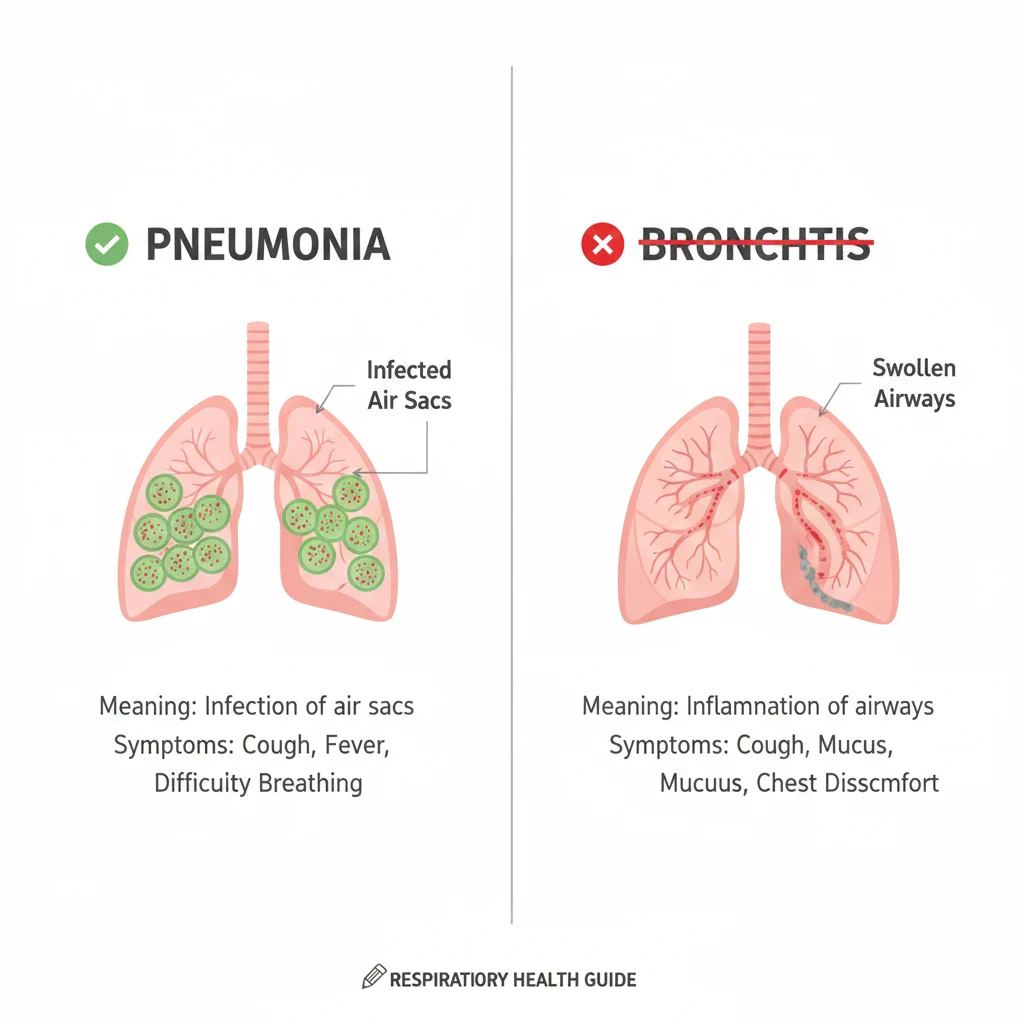
Many people confuse pneumonia and bronchitis, but understanding the difference is critical for proper treatment and recovery. Pneumonia is a serious lung infection that inflames the air sacs, usually caused by bacteria, viruses, or fungi. Bronchitis, on the other hand, is the inflammation of the bronchial tubes that carry air to the lungs, most often caused by viral infections or irritants such as smoke. Using the right diagnosis ensures timely care and prevents complications.
Symptoms can overlap, making it easy to mix up the two. Pneumonia often brings high fever, chills, chest pain, and difficulty breathing, while bronchitis usually causes a persistent cough, mucus production, and mild fatigue. Recognizing these differences early helps doctors provide the correct treatment and improves recovery outcomes.
Knowing whether you are dealing with pneumonia or bronchitis allows you to take quick, effective action, avoid serious health risks, and protect your lungs. Clear understanding builds confidence, ensures proper care, and keeps your respiratory health on track.
What Does Each Word Mean?
Let’s start with clear and simple meanings.
What Is Pneumonia?
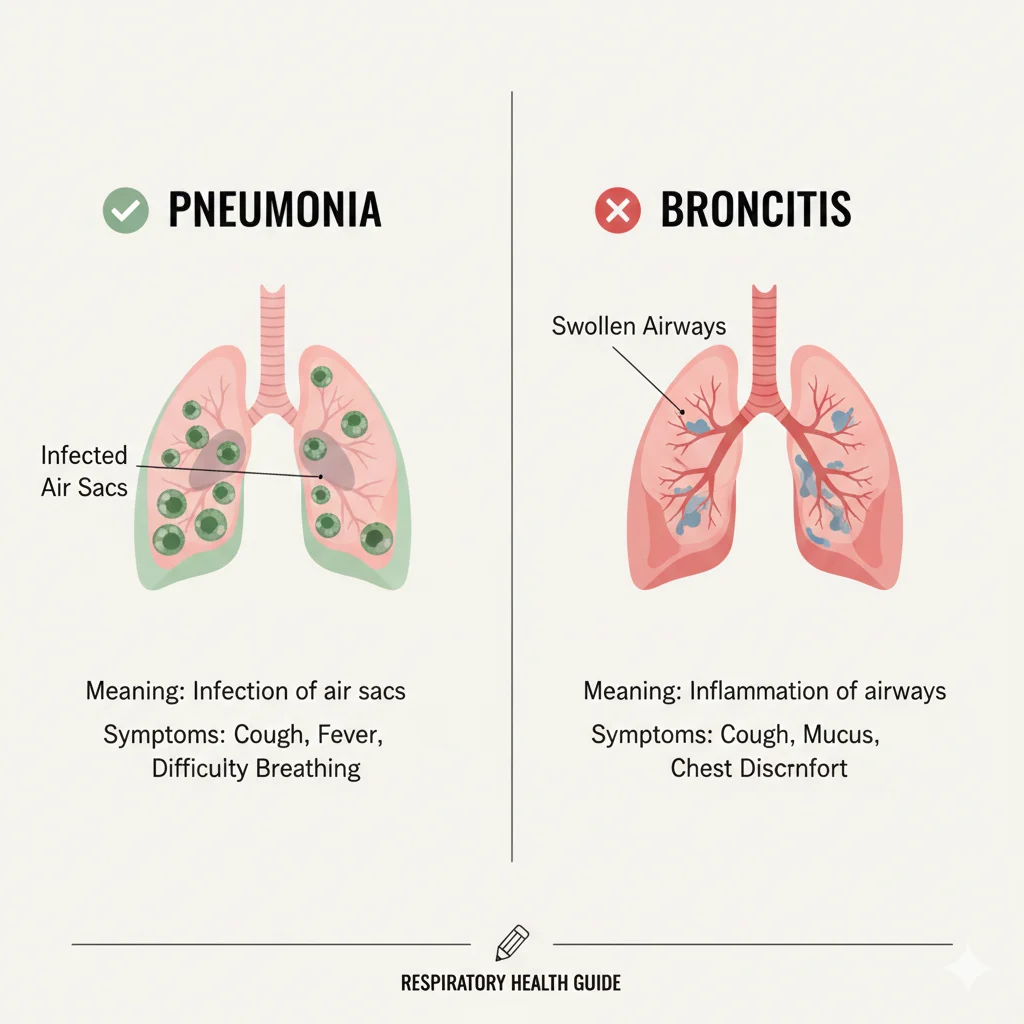
Pneumonia is an infection in the lungs. It makes the air sacs in the lungs fill with fluid or pus. This makes breathing hard and can cause fever, chest pain, and a deep cough.
Part of speech: Noun (name of a disease)
Easy examples:
- The doctor said my grandfather has pneumonia, so he needs rest and medicine.
- She missed school for a week because of pneumonia.
- Walking felt hard when he had pneumonia because breathing was painful.
Simple story:
Think of your lungs like soft balloons that fill with air. In pneumonia, these balloons get wet inside, so it becomes hard to breathe properly.
What Is Bronchitis?
Bronchitis is inflammation (swelling) of the bronchial tubes. These tubes carry air in and out of your lungs. When they are swollen, you cough a lot and feel tightness in your chest.
Part of speech: Noun (name of a disease)
Easy examples:
- She has bronchitis, so her cough won’t go away.
- The doctor said his chest cold turned into bronchitis.
- Smoking can increase the risk of bronchitis.
Simple story:
Imagine air traveling through pipes to reach balloons (lungs). In bronchitis, those pipes get swollen and narrow, so air has trouble moving.
The Key Difference Between Pneumonia and Bronchitis
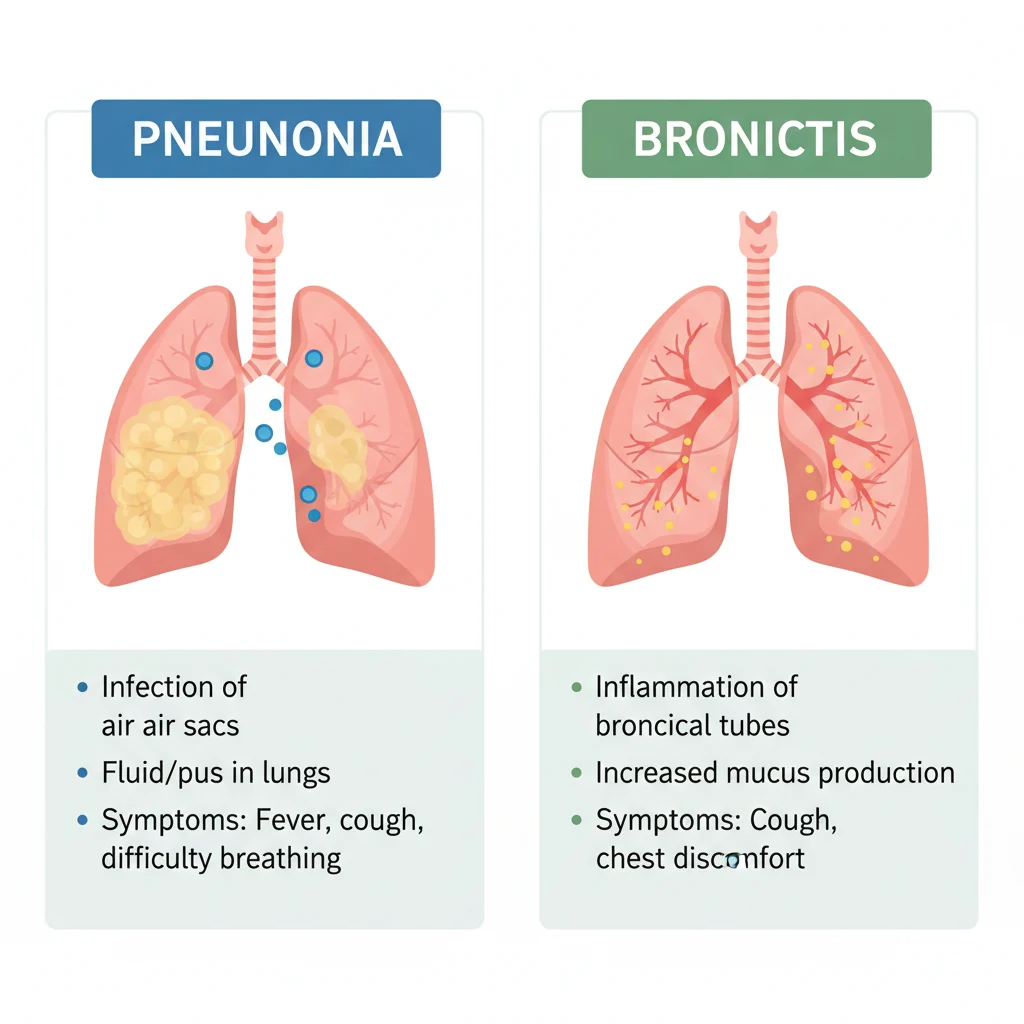
Both illnesses affect breathing, but they are not the same. Here is a clear comparison to help you understand.
| Feature | Pneumonia | Bronchitis |
|---|---|---|
| What it affects | Air sacs inside the lungs | Bronchial tubes (airways) |
| Main problem | Infection and fluid in lungs | Swollen airways |
| Common symptoms | Fever, chest pain, shortness of breath | Long cough, chest tightness, mucus |
| How serious | Often more serious | Usually milder |
| Treatment | Antibiotics or antivirals, rest | Rest, fluids, cough medicine |
Quick Tip to Remember:
👉 Pneumonia = problem inside the lungs.
👉 Bronchitis = problem in the breathing tubes.
Common Mistakes and How to Avoid Them
People often confuse these two words because both involve coughing and chest problems. Let’s fix some common mistakes.
❌ Mistake 1:
“I have pneumonia, so I just need cough syrup.”
✅ Correct:
“I have bronchitis, so I just need cough syrup.”
Why: Pneumonia usually needs stronger treatment, sometimes even hospital care. Bronchitis is often treated at home.
❌ Mistake 2:
“He stayed in the hospital with bronchitis for two weeks.”
✅ Correct:
“He stayed in the hospital with pneumonia for two weeks.”
Why: Pneumonia is more serious and often needs hospital care. Bronchitis usually does not.
❌ Mistake 3:
“Pneumonia is just a long cough.”
✅ Correct:
“Bronchitis is often a long cough.”
Why: Pneumonia causes fever, pain, and breathing trouble, not just coughing.
When to Use Pneumonia
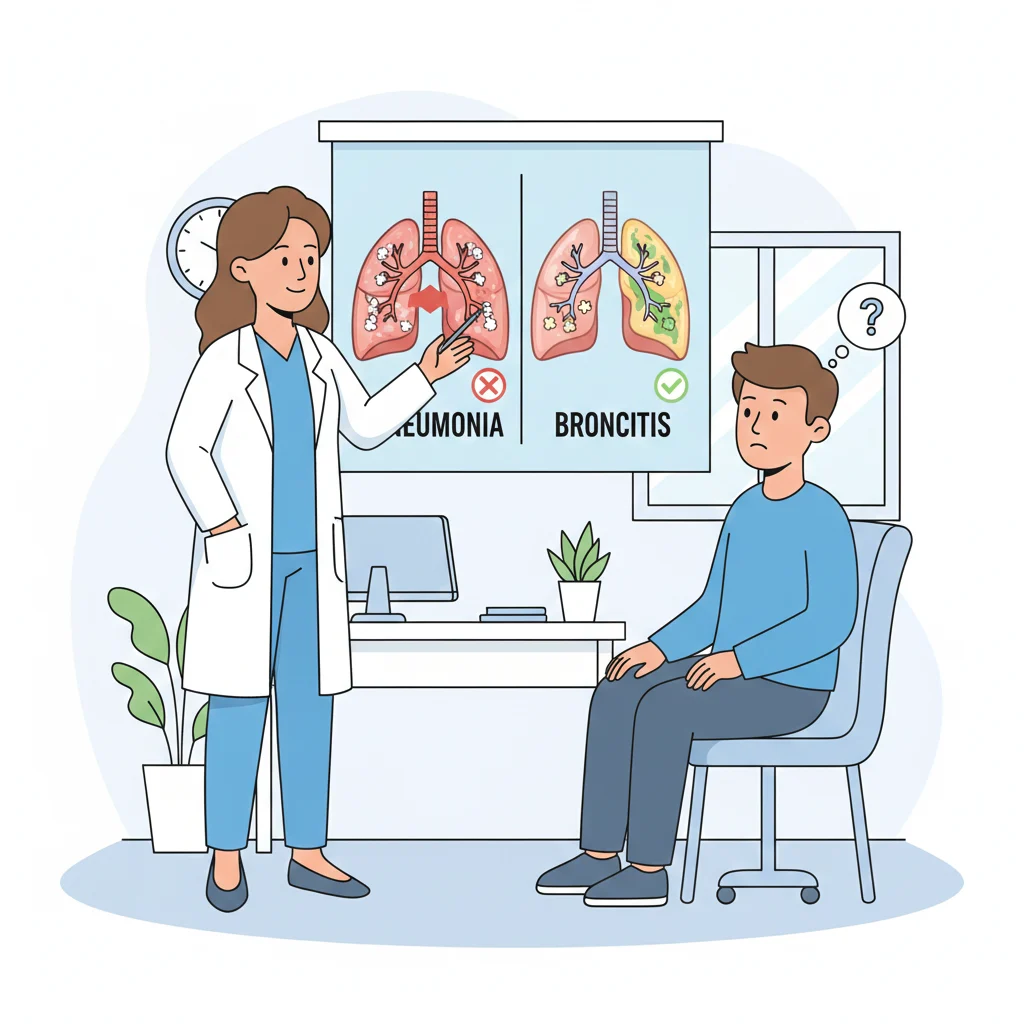
Use pneumonia when talking about a serious lung infection that affects breathing deeply and often causes fever and chest pain.
Common situations:
- Doctor visits
- Hospital treatment
- Serious illness discussions
- Medical reports
- Health articles
Simple examples:
- The child was admitted to the hospital with pneumonia.
- Older adults are more at risk of pneumonia.
- She recovered from pneumonia after taking medicine for ten days.
- The doctor listened to his lungs to check for pneumonia.
- Getting vaccines can help prevent pneumonia.
Real-life example:
If someone has a high fever, chest pain, and trouble breathing, a doctor might say, “This looks like pneumonia.”
When to Use Bronchitis
Use bronchitis when talking about swollen airways that cause a long cough, chest tightness, and mucus, especially after a cold.
Common situations:
- Talking about chest colds
- Long-lasting coughs
- Doctor visits for breathing problems
- Health conversations
Simple examples:
- His cold turned into bronchitis after one week.
- She stayed home from work because of bronchitis.
- Smoking can make bronchitis worse.
- The doctor said her cough was due to bronchitis.
- Drinking warm fluids helps people with bronchitis feel better.
Memory Hack:
👉 Bronchitis starts with “bronch,” like “breathing tubes.”
This helps you remember it affects the airways, not the lung sacs.
Quick Recap: Pneumonia vs Bronchitis
- Pneumonia
- Infection inside the lungs
- Often serious
- Causes fever, chest pain, shortness of breath
- Bronchitis
- Swelling of breathing tubes
- Usually milder
- Causes long cough and chest tightness
👉 Think:
Pneumonia = deep lung problem
Bronchitis = airway problem
Advanced Tips (Optional)
Word Origins (Simple History)
- Pneumonia comes from a Greek word meaning “lung.”
- Bronchitis comes from “bronchus,” meaning airway, plus “-itis,” meaning swelling.
In School and Exams
In exams or essays, use pneumonia when writing about serious lung infections. Use bronchitis when writing about chest colds or airway problems.
In Texting and Online Writing
People sometimes use these words wrongly online. Saying “I have pneumonia” when you only have a cough can cause unnecessary worry. Using the correct word makes your message clear and helpful.
Mini Quiz: Test Your Understanding
Fill in the blanks with pneumonia or bronchitis.
- The doctor said her lungs were infected, so she had ________.
- His long cough after the cold turned into ________.
- Older adults should be careful about getting ________.
- Smoking can make ________ worse.
- Fever and chest pain are common signs of ________.
- A chest cold that lasts weeks is often ________.
- She stayed in the hospital because of ________.
Answers:
- pneumonia
- bronchitis
- pneumonia
- bronchitis
- pneumonia
- bronchitis
- pneumonia
Frequently Asked Questions (FAQs)
1. What is the main difference between pneumonia and bronchitis?
Pneumonia is an infection inside the lungs, while bronchitis is swelling of the airways that carry air to the lungs.
2. Which is more serious: pneumonia or bronchitis?
Pneumonia is usually more serious and may need hospital care. Bronchitis is often milder and treated at home.
3. Can bronchitis turn into pneumonia?
Yes, in some cases, untreated bronchitis or weak immunity can lead to pneumonia.
4. Do both cause coughing?
Yes, both cause coughing, but pneumonia also causes fever, chest pain, and breathing trouble more often.
5. Should I use pneumonia and bronchitis interchangeably?
No. They mean different illnesses and should be used correctly for clear communication
Conclusion
Now you know the clear difference between pneumonia and bronchitis. Pneumonia is a serious lung infection that affects breathing deeply, while bronchitis is swelling of the airways that causes a long cough. They may sound similar, but they describe different health problems.
Using the right word helps you speak clearly, understand doctors better, and write correctly in school or online. Keep practicing with examples from daily life, and soon these words will feel easy and natural to use.
Every small step you take improves your English — keep learning and growing every day

Arthur Machen was a Welsh writer known for supernatural fiction, blending horror, mysticism, and folklore, and influencing modern weird literature worldwide Art