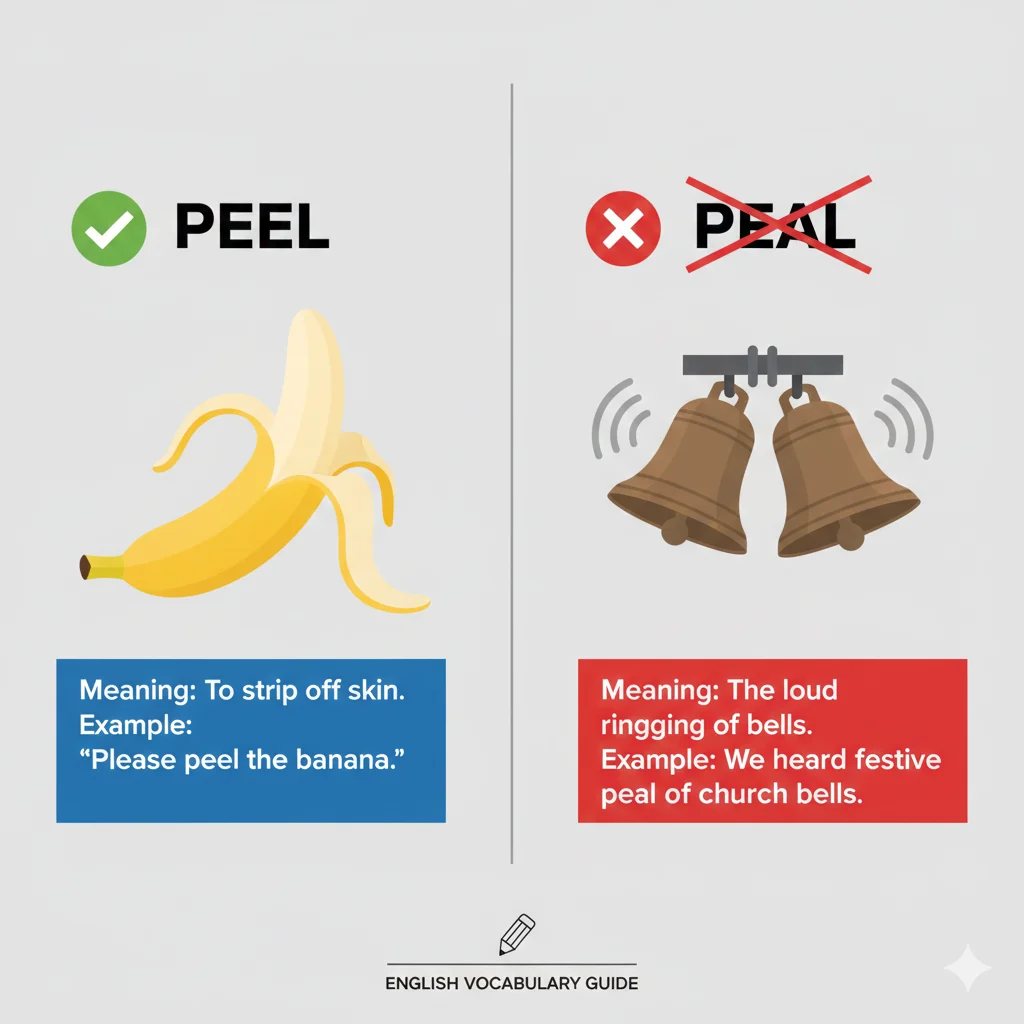
Have you ever paused while writing and wondered whether the correct word is “peel” or “peal”? Many English learners and writers become confused because these two words sound exactly the same. However, their meanings are completely different. Using the wrong word can change the meaning of a sentence and make your writing unclear or less professional.
The word “peel” usually refers to removing the outer layer of something, especially fruits or vegetables. For example, people often peel an orange before eating it or peel a potato before cooking. In contrast, “peal” refers to a loud ringing sound, most commonly associated with bells. You might hear a joyful peal of church bells during a celebration.
Understanding the difference between peel and peal helps you avoid common spelling mistakes and improves the clarity of your writing. When you use the correct word in the right context, your sentences become clearer, more natural, and easier for readers to understand.
What Does Each Word Mean?
Let’s start by learning the meaning of each word in the simplest way.
What Does Peel Mean?
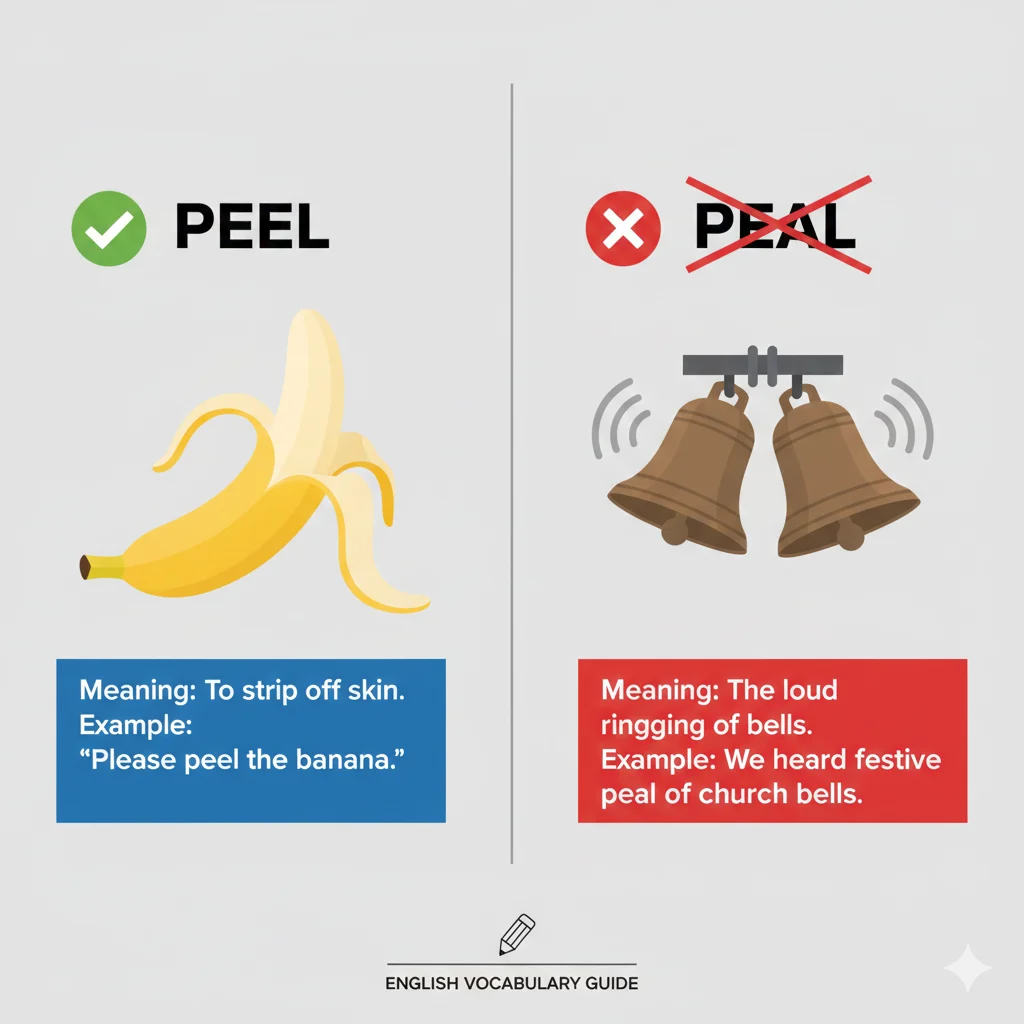
Peel means to remove the outer skin or covering of something, especially fruits and vegetables. It can be used as a verb (action word) or a noun (thing).
Part of Speech
- Verb: to peel an apple
- Noun: the peel of an orange
Easy Examples
- She peeled the banana before eating it.
- Please peel the potatoes for dinner.
- The orange peel was on the table.
💡 Memory Tip: If it’s about food skin, think peel.
What Does Peal Mean?
Peal means a loud ringing sound, especially made by bells. It can also mean a burst of loud laughter or thunder. It is mostly used as a noun, but sometimes as a verb too.
Part of Speech
- Noun: a peal of thunder
- Verb: bells pealed across the town
Easy Examples
- We heard a peal of thunder in the sky.
- Church bells rang in a joyful peal.
- Her laughter came in a loud peal.
💡 Memory Tip: If it’s about sound, think peal.
The Key Difference Between Peel and Peal
The main difference between peel and peal is simple:
- Peel = Remove skin or outer layer (mostly food)
- Peal = Loud ringing sound (mostly bells or thunder)
Let’s look at a clear comparison table.
| Feature | Peel | Peal |
|---|---|---|
| Meaning | To remove the skin or outer layer | A loud ringing sound |
| Used for | Food, fruits, vegetables, labels | Bells, thunder, laughter |
| Part of speech | Verb and noun | Mostly noun, sometimes verb |
| Example | She peeled the apple. | We heard a peal of thunder. |
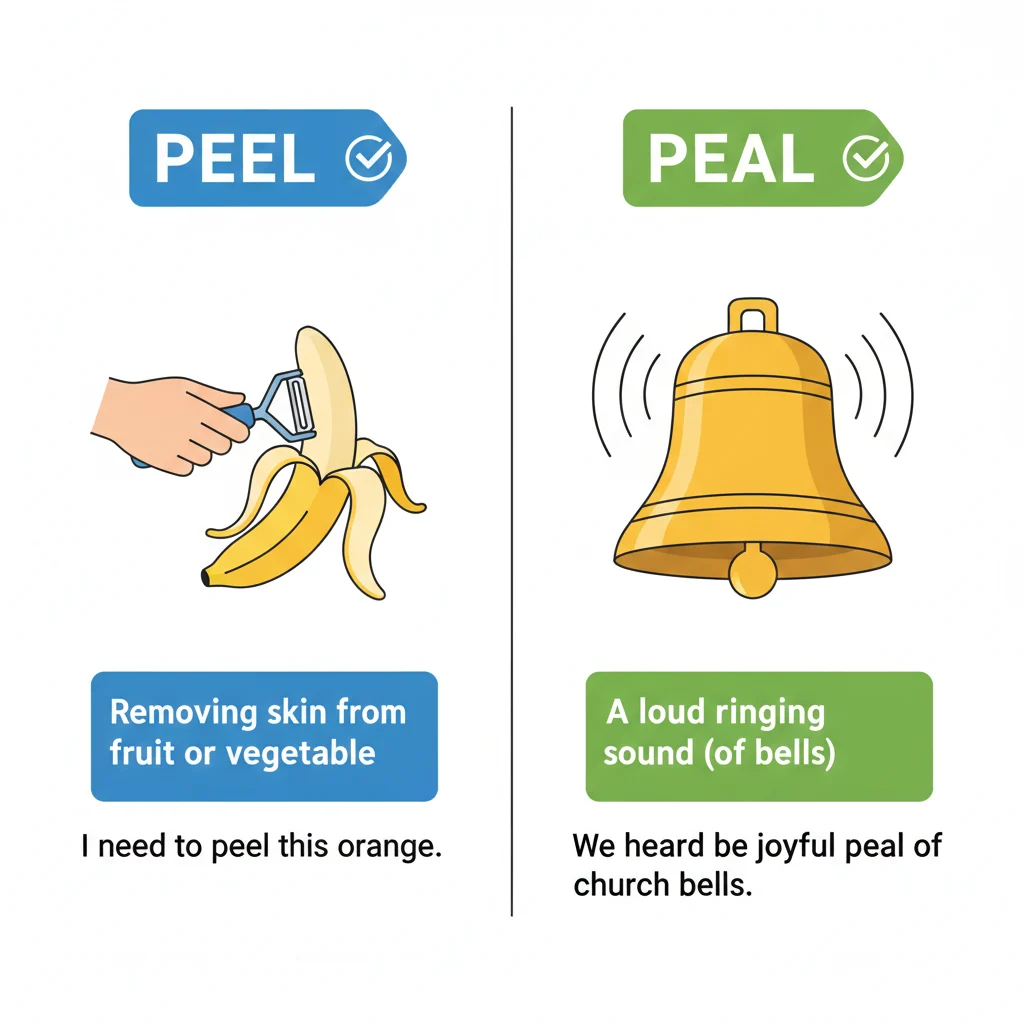
✅ Quick Tip to Remember:
If you can eat it → Peel
If you can hear it → Peal
Common Mistakes and How to Avoid Them
Because peel or peal sound the same, people often choose the wrong spelling. Let’s fix some common mistakes.
❌ Mistake 1:
She pealed the orange before eating it.
✅ Correct:
She peeled the orange before eating it.
👉 Why? Because oranges have skin, not sound.
❌ Mistake 2:
A loud peel of thunder scared the children.
✅ Correct:
A loud peal of thunder scared the children.
👉 Why? Because thunder makes sound, not skin.
❌ Mistake 3:
He heard church bells peel in the morning.
✅ Correct:
He heard church bells peal in the morning.
👉 Why? Bells ring, so we use peal.
How to Avoid These Mistakes
- Ask yourself: Am I talking about skin or sound?
- Skin → Peel
- Sound → Peal
This simple question can save you from most errors.

📌 Peeled vs Pealed – Past Tense Confusion
The same rule applies to past tense:
- If you removed skin → peeled
✅ She peeled the potato. - If bells rang or thunder roared → pealed
✅ The bells pealed joyfully.
❌ Wrong: He pealed the banana.
✅ Right: He peeled the banana.
❌ Wrong: Thunder peeled in the sky.
✅ Right: Thunder pealed in the sky.
When to Use Peel
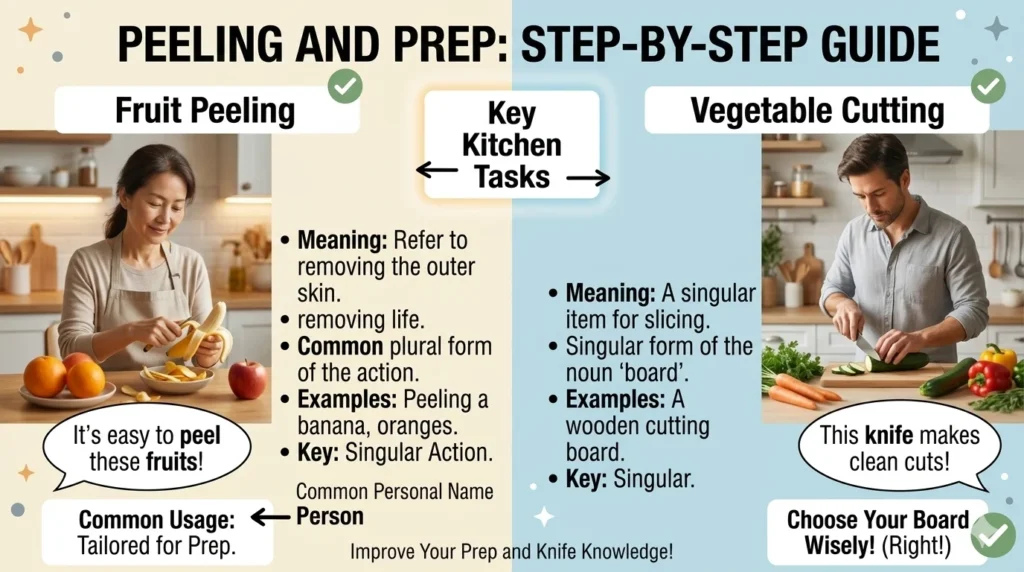
Use peel when you talk about removing the outer layer of something. This is very common in cooking, eating, and daily life.
Common Situations to Use Peel
- Fruits and vegetables
- Stickers or labels
- Paint or skin coming off
Easy Example Sentences
- I peeled the mango before cutting it.
- Mom asked me to peel the onions.
- The paint began to peel from the wall.
- He peeled the sticker off the book.
- She threw the banana peel in the trash.
📘 Mini Story:
Ali was hungry. He took an orange. First, he peeled it. Then, he ate it happily. Simple!
When to Use Peal
Use peal when you talk about loud ringing sounds, especially from bells, thunder, or laughter.
Common Situations to Use Peal
- Church bells
- Thunder in storms
- Loud laughter
Easy Example Sentences
- A peal of thunder shook the windows.
- The bells rang in a joyful peal.
- Her laughter came in a loud peal.
- We heard a sudden peal during the storm.
- Wedding bells pealed across the town.
🧠 Memory Hack:
Peal has “ea” — think of your ears hearing sound.
Peel and Peal in a Sentence:
Here are examples showing both words used correctly in sentences:
Peel (remove skin):
- I need to peel the potatoes before boiling them.
- She threw the banana peel in the compost bin.
- The paint started to peel off the old wall.
Peal (loud sound):
- A loud peal of thunder woke us up at midnight.
- The church bells began to peal for the wedding.
- Her joke caused a peal of laughter from the crowd.
Both Words in One Sentence:
- While I peel the oranges, we can hear the bells peal in the distance.
- She peeled the apple as a peal of thunder echoed outside.
Quick Recap: Peel vs Peal
Let’s make this super easy to remember:
- Peel → Remove skin (banana peel, apple peel)
- Peal → Loud sound (bell peal, thunder peal)
One-line trick:
If you touch it → Peel
If you hear it → Peal
Advanced Tips (Optional)
Word Origins (Simple History)
- Peel comes from an old word meaning “to strip off.”
- Peal comes from a word meaning “to shout or cry loudly.”
Use in Formal Writing
- In essays:
“A loud peal of thunder interrupted the ceremony.” - In instructions:
“Peel the potatoes before boiling them.”
In Texting and Online Writing
Many people write fast and type the wrong word. Writing peal instead of peel can confuse the reader. Always check: skin or sound?
Mini Quiz: Test Your Understanding
Fill in the blanks with peel or peal.
- Please ______ the apple before eating it.
- We heard a loud ______ of thunder last night.
- She threw the banana ______ in the bin.
- Church bells ______ across the village.
- He helped his mom ______ the potatoes.
- A happy ______ of laughter filled the room.
Answers:
- peel
- peal
- peel
- pealed
- peel
- peal
Great job if you got most of them right! 🎉
Frequently Asked Questions (FAQs)
1. What is the main difference between peel and peal?
Peel means to remove skin, while peal means a loud ringing sound.
2. Can peel and peal be used as verbs?
Yes.
- You can peel a fruit.
- Bells can peal loudly.
3. Is peel related only to food?
Mostly yes, but it can also mean paint or skin coming off something.
4. Is peal only used for bells?
No. It can also be used for thunder or loud laughter.
5. How can I remember peel or peal easily?
If it’s about skin, use peel.
If it’s about sound, use peal.
Conclusion
Now you know the clear difference between peel or peal. Peel is used when talking about removing skin or outer layers, especially from food. Peal is used when talking about loud ringing sounds, like bells or thunder.
With simple examples, memory tricks, and practice, these two confusing words won’t trouble you again. Try using them in your daily speaking and writing to build confidence. English becomes easier when you learn one word at a time — and you’re doing great already! 🌟

Wilkie Collins was a Victorian English novelist and playwright, pioneer of detective fiction and sensation novels, blending mystery, suspense, and social critique.