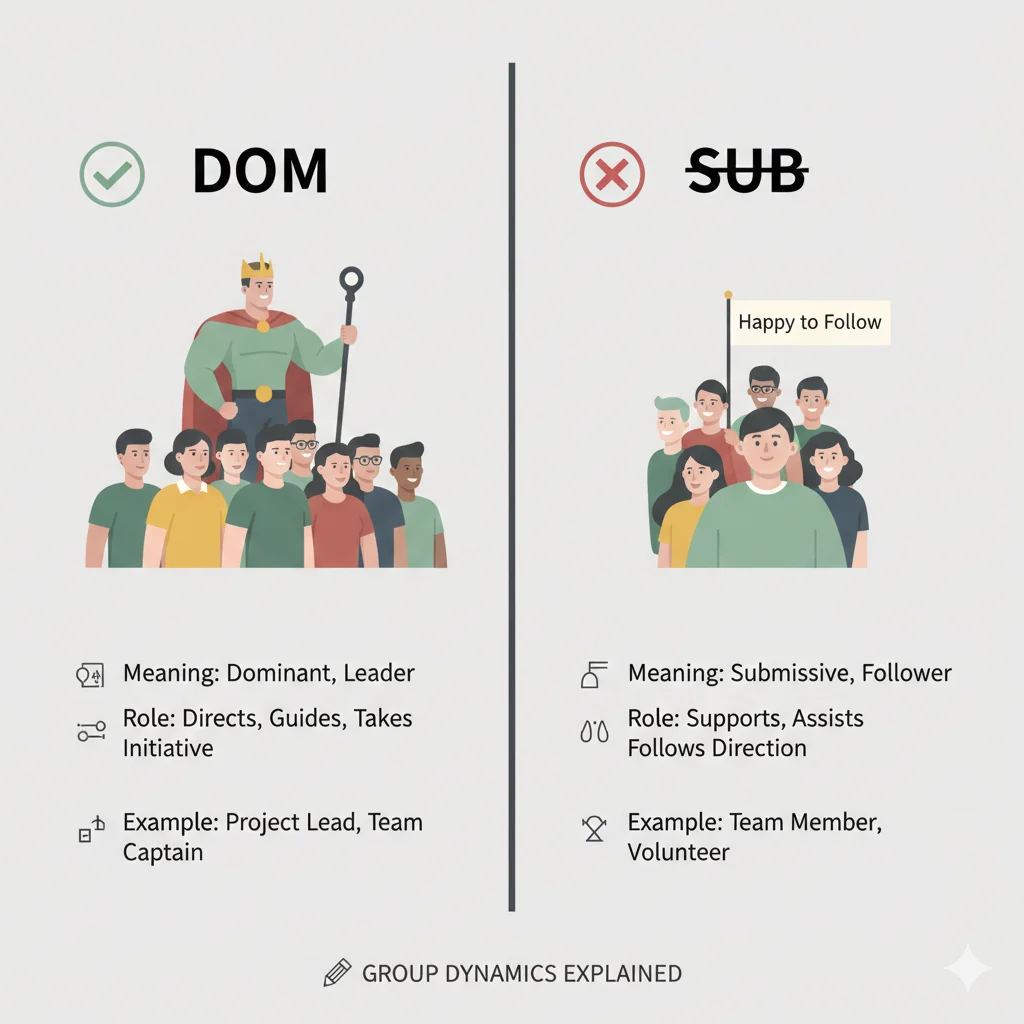
Have you ever seen the words dom and sub online and wondered what they really mean? You’re not alone. Many people see these words in chats, stories, or social media but feel confused about how they are different and when to use each one.
Both words come from longer terms and are often used as short forms. They are popular in online communities, storytelling, psychology talks, and even casual conversations. But because they sound similar and are connected, people often mix them up.
In this easy guide, you’ll learn the meaning of dom and sub, the difference between them, and how to use each one correctly. We’ll use simple words, real-life examples, and short sentences so even a class 4 student can understand. By the end, you’ll feel confident using both words the right way. 😊
What Does Each Word Mean?
Let’s start by understanding each word clearly and simply.
What Does “Dom” Mean?
Dom is short for dominant.
It describes a person who likes to lead, guide, or be in control in a relationship, activity, or situation — with consent and agreement.
It can be used as:
- A noun (a person): “He is a dom.”
- An adjective (describing someone): “She has a dom personality.”
Simple idea:
A dom is someone who likes to take charge in a respectful and agreed way.
Easy examples:
- In the game, Ali acted like a dom and led the team.
- She enjoys being the dom in role-play stories.
- The coach took a dom role during practice.
Mini story:
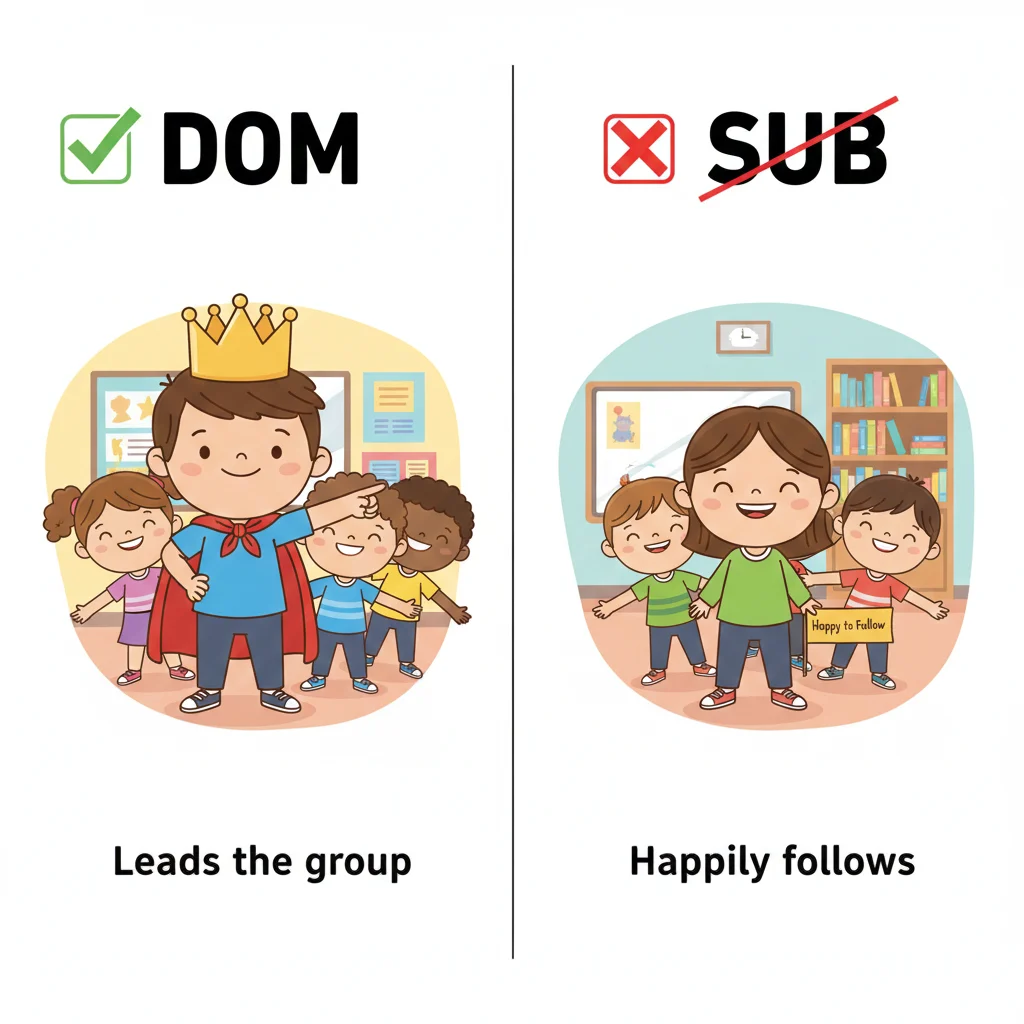
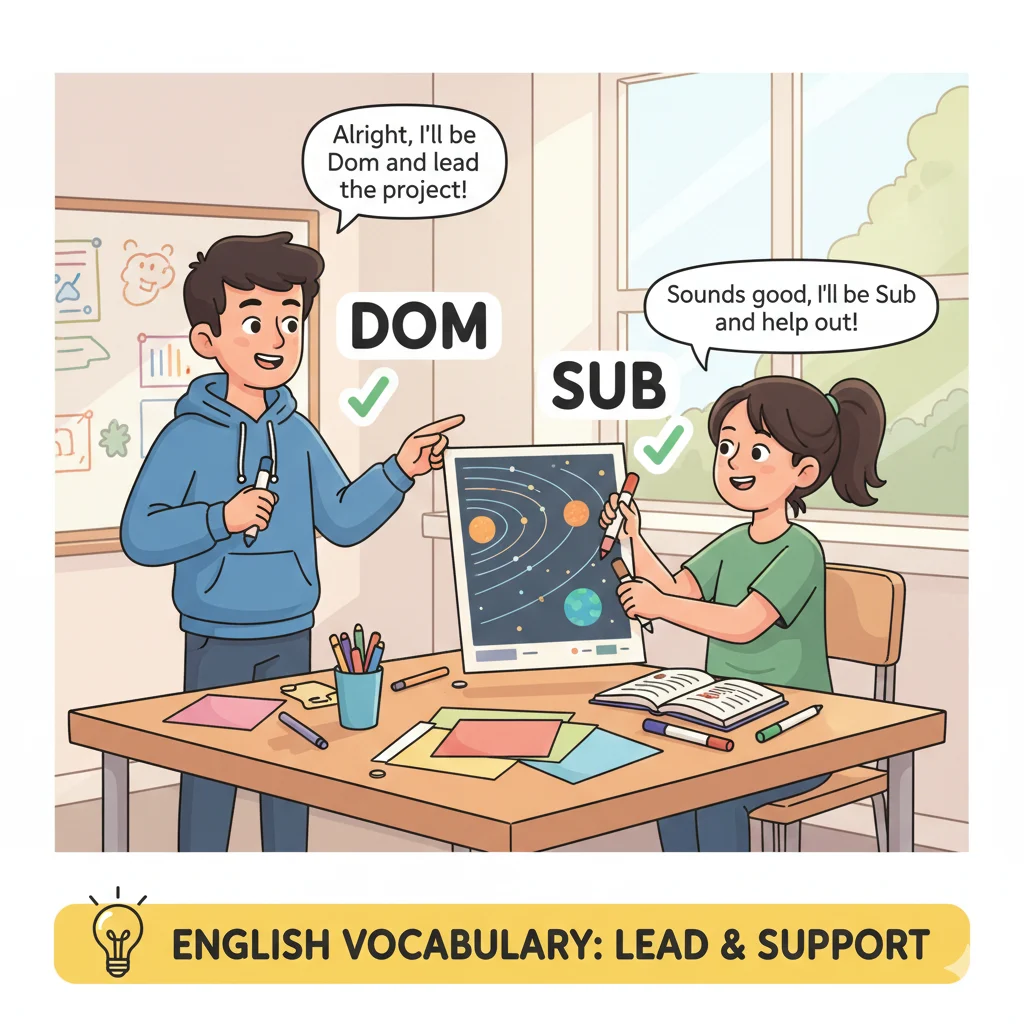
In a school project, Sara plans the work and tells everyone what to do. Her friends agree and like her leadership. Sara is acting like a dom — a leader.
What Does “Sub” Mean?
Sub is short for submissive.
It describes a person who likes to follow, listen, or let someone else lead — again, with consent and comfort.
It can also be:
- A noun: “He is a sub.”
- An adjective: “She has a sub role.”
Simple idea:
A sub is someone who prefers to follow instead of lead.
Easy examples:
- He chose to be the sub in their story.
- She enjoys a sub role in games and teamwork.
- In the play, I was the sub character.
Mini story:
In the same school project, Ayaan follows Sara’s plan and helps with tasks. He is happy doing this. Ayaan is acting like a sub — a follower.
The Key Difference Between Dom and Sub
The main difference is simple:
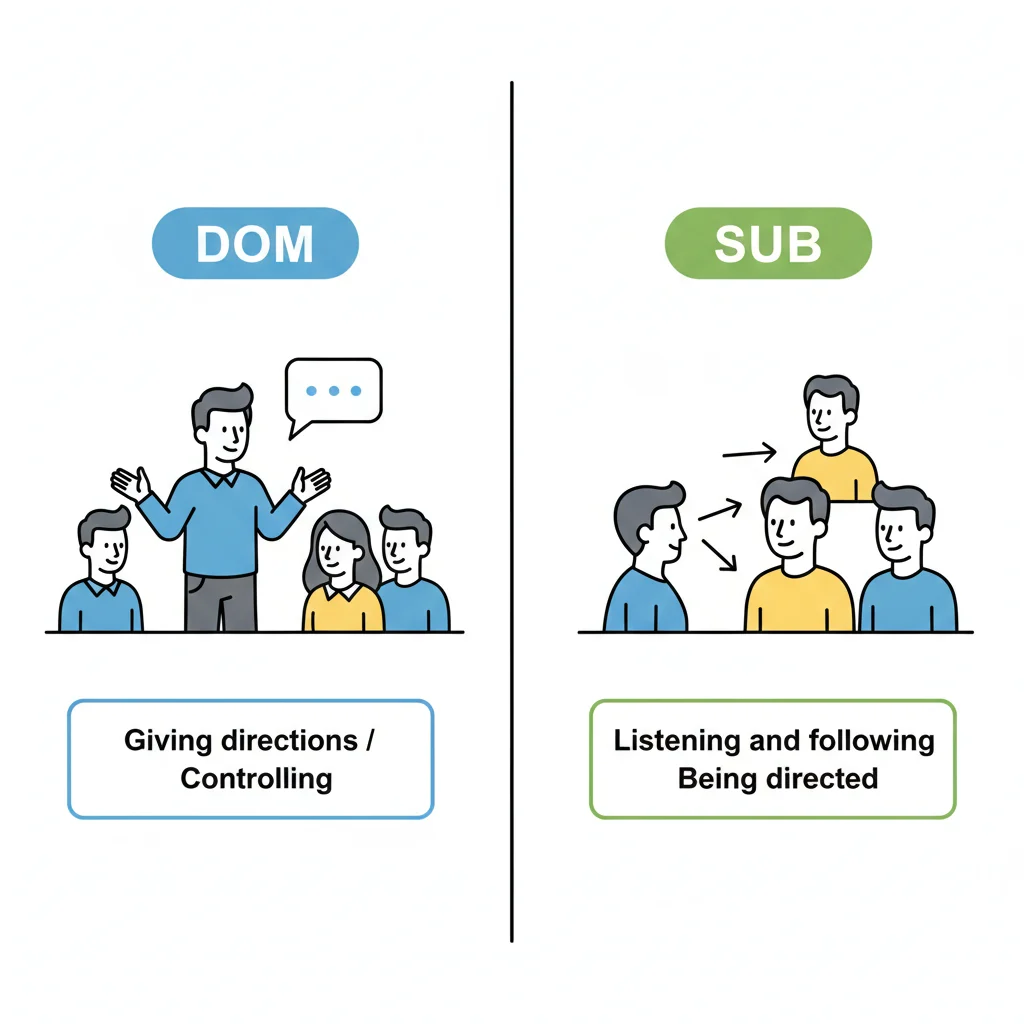
- A dom likes to lead or guide.
- A sub likes to follow or receive guidance.
Both roles are about choice, trust, and agreement. One is not better than the other. They just describe different preferences.
Dom vs Sub Comparison Table
| Feature | Dom | Sub |
|---|---|---|
| Basic meaning | Leader or guide | Follower or listener |
| Full form | Dominant | Submissive |
| Role in a situation | Takes control | Gives control |
| Example sentence | She is the dom in the story. | He is the sub in the story. |
| Personality style | Direct, guiding | Supportive, trusting |
Quick Tip to Remember
👉 Dom = Dominates (leads)
👉 Sub = Submits (follows)
If you remember this, you’ll almost never get confused again.
Common Mistakes and How to Avoid Them
Let’s look at some mistakes people often make and how to fix them.
❌ Mistake 1:
“She is a sub because she tells everyone what to do.”
✅ Correct:
“She is a dom because she tells everyone what to do.”
Why?
Telling others what to do means leading, which matches dom, not sub.
❌ Mistake 2:
“He likes being a dom because he enjoys following.”
✅ Correct:
“He likes being a sub because he enjoys following.”
Why?
Following is the role of a sub, not a dom.
❌ Mistake 3:
“Dom and sub mean the same thing.”
✅ Correct:
“Dom and sub have opposite meanings.”
Why?
One leads, the other follows. They are connected but not the same.
How to avoid mistakes:
Ask yourself:
- Is this person leading? → Use dom
- Is this person following? → Use sub
When to Use “Dom”
Use dom when talking about someone who:
- Likes to lead
- Makes decisions
- Guides others
- Takes charge (with consent)
Real-life examples:
- In our group project, Areeba was the dom and planned everything.
- The story shows a brave dom character who protects others.
- He feels confident when he plays a dom role in games.
- The coach took a dom position during training.
- She prefers being the dom in teamwork situations.
Everyday situation:
When one friend decides what movie to watch and others agree, that friend is acting like a dom.
When to Use “Sub”
Use sub when talking about someone who:
- Likes to follow
- Feels comfortable listening
- Enjoys letting others lead
- Supports instead of directs
Real-life examples:
- I was happy being the sub in our class play.
- He chose a sub role in the story.
- She enjoys being the sub when working with strong leaders.
- In the game, I stayed sub and followed instructions.
- He feels calm and safe as a sub.
Memory Hack 🧠
Think:
- Dom = Driver (leads the car)
- Sub = Passenger (goes along)
This picture makes it easy to remember!
Quick Recap: Dom vs Sub
- Dom means someone who leads or guides.
- Sub means someone who follows or supports.
- Both roles are based on choice and comfort.
- One is not better than the other — they are just different styles.
- Ask yourself: “Who is leading?” and you’ll know the right word.
Advanced Tips (Optional)
1. Word Origins
- Dom comes from the word dominant, which means “having control.”
- Sub comes from submissive, which means “willing to follow.”
Both words come from Latin roots and have been used for many years in psychology, relationships, and storytelling.
2. Use in Writing and Exams
In essays or stories, these words are often used to describe personality types or character roles.
Example:
- “The dom character protected the group.”
- “The sub character trusted others easily.”
Using the correct word helps your writing sound clear and mature.
3. Use in Online Chats and Texting
People often shorten words online, so you’ll see dom and sub in comments, fan fiction, and messages.
Be careful:
- Using the wrong one can change the meaning.
- Always think about who is leading and who is following.
Mini Quiz: Test Yourself ✏️
Fill in the blanks with dom or sub.
- She likes to lead, so she is a ______.
- He prefers to follow, so he is a ______.
- In the story, the brave ______ protects the group.
- I feel comfortable being the ______ in team projects.
- The ______ makes decisions with care.
- The ______ trusts others easily.
- A leader role matches ______, not ______.
Answers:
- dom
- sub
- dom
- sub
- dom
- sub
- dom, sub
FAQs
1. What is the main difference between dom and sub?
A dom leads, and a sub follows. That’s the main difference.
2. Are dom and sub bad words?
No. They are neutral words that describe roles or preferences. They are not insults.
3. Can someone be both dom and sub?
Yes. Some people like leading in some situations and following in others.
4. Are dom and sub only used in relationships?
No. They can also be used in stories, games, teamwork, and personality descriptions.
5. How can I remember dom vs sub easily?
Remember: Dom = Dominates (leads), Sub = Submits (follows).
Conclusion
Now you clearly know the meaning of dom and sub, the difference between them, and how to use each word correctly. A dom likes to lead, while a sub likes to follow. Both roles are about comfort, choice, and teamwork. Neither is better — they just describe different styles.
By using the simple tips, examples, and memory tricks in this guide, you can avoid common mistakes and speak or write with confidence. Keep practicing these words in daily life, stories, and conversations. Little steps like this make your English stronger every day. 🌟

Dorothy Whipple was an English novelist and short story writer, famed for emotional realism, domestic themes, and sharp insight into women’s lives. worldwide UK