Have you ever typed “wich” when you really meant “which”? You are not alone. Many people mix up wich or which every day. This confusion happens because the words look and sound very similar. But here is the big surprise: only one of them is correct in standard English.
In this easy guide, you will learn the difference between wich and which, their meanings, and the correct usage with clear examples. Everything is explained in very simple English. Even a 4th-grade student can understand it. 😊
By the end of this article, you will know:
- What which really means
- Why wich is usually wrong
- How to use which correctly in sentences
- How to avoid this common grammar mistake forever
Let’s make English simple and fun!
What Does Each Word Mean?
What Does Which Mean?
Which is a real English word.
It is used to ask questions or give extra information about things or choices.
Part of speech:
- Pronoun
- Determiner
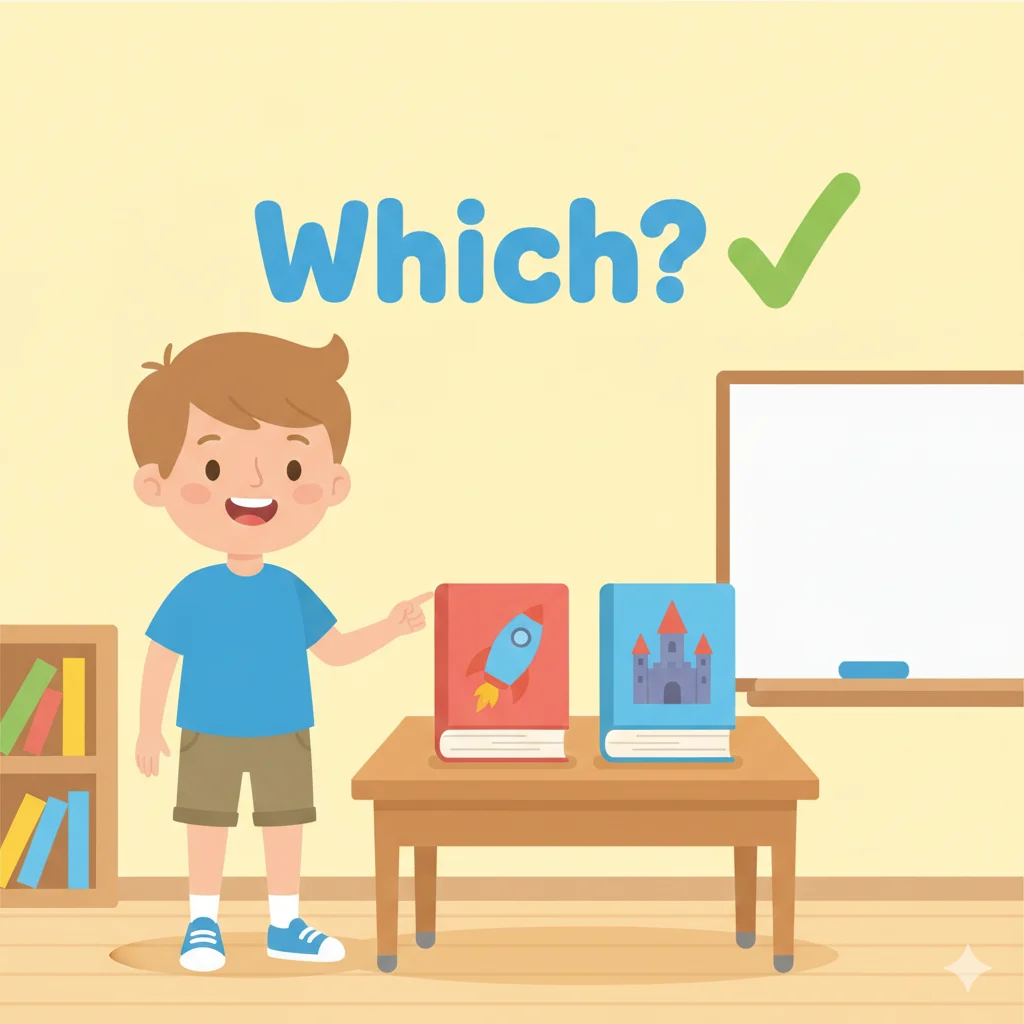
In simple words, which helps us choose or talk about one thing from many.
Easy Examples of Which
- Which book do you like best?
- This is the phone which I bought yesterday.
- Which color should we use for the wall?
👉 Think of which as a “choice word.”
What Does Wich Mean?
Here is the truth many learners don’t know:
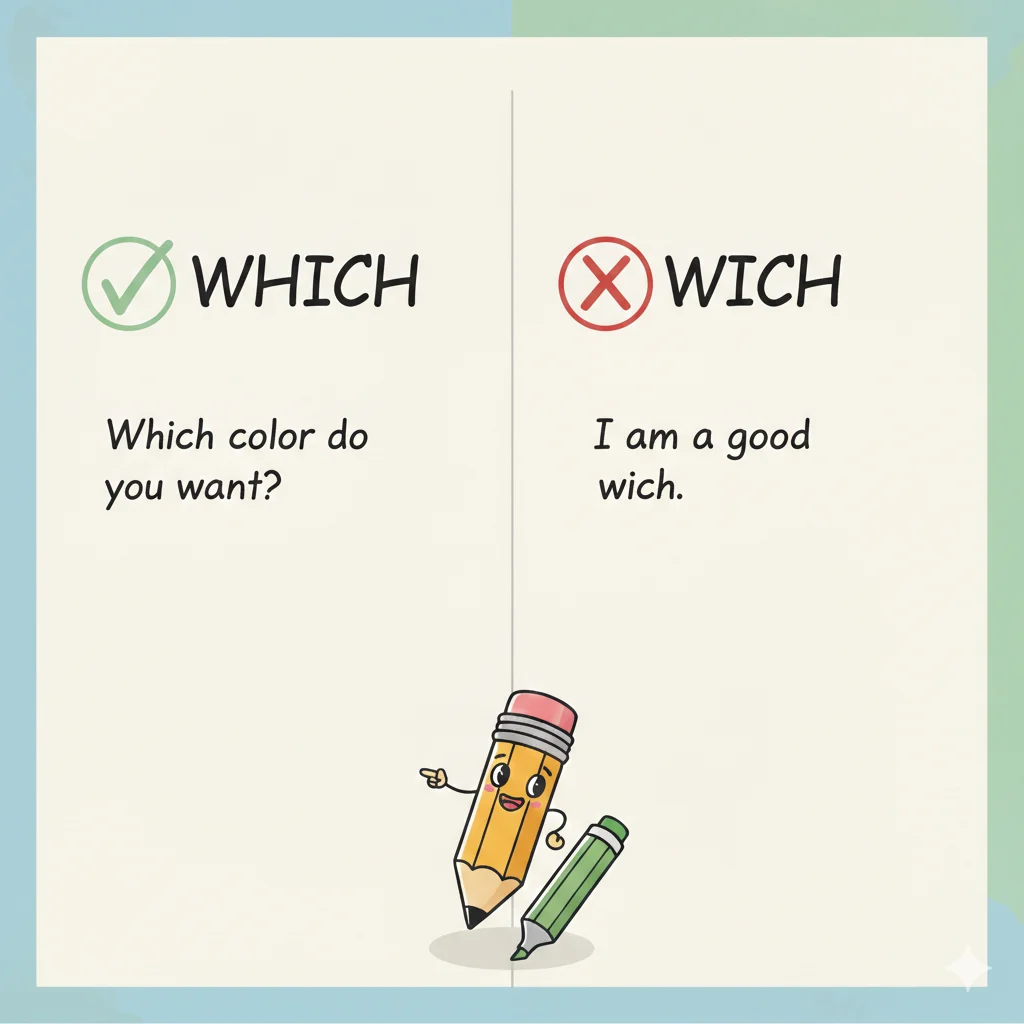
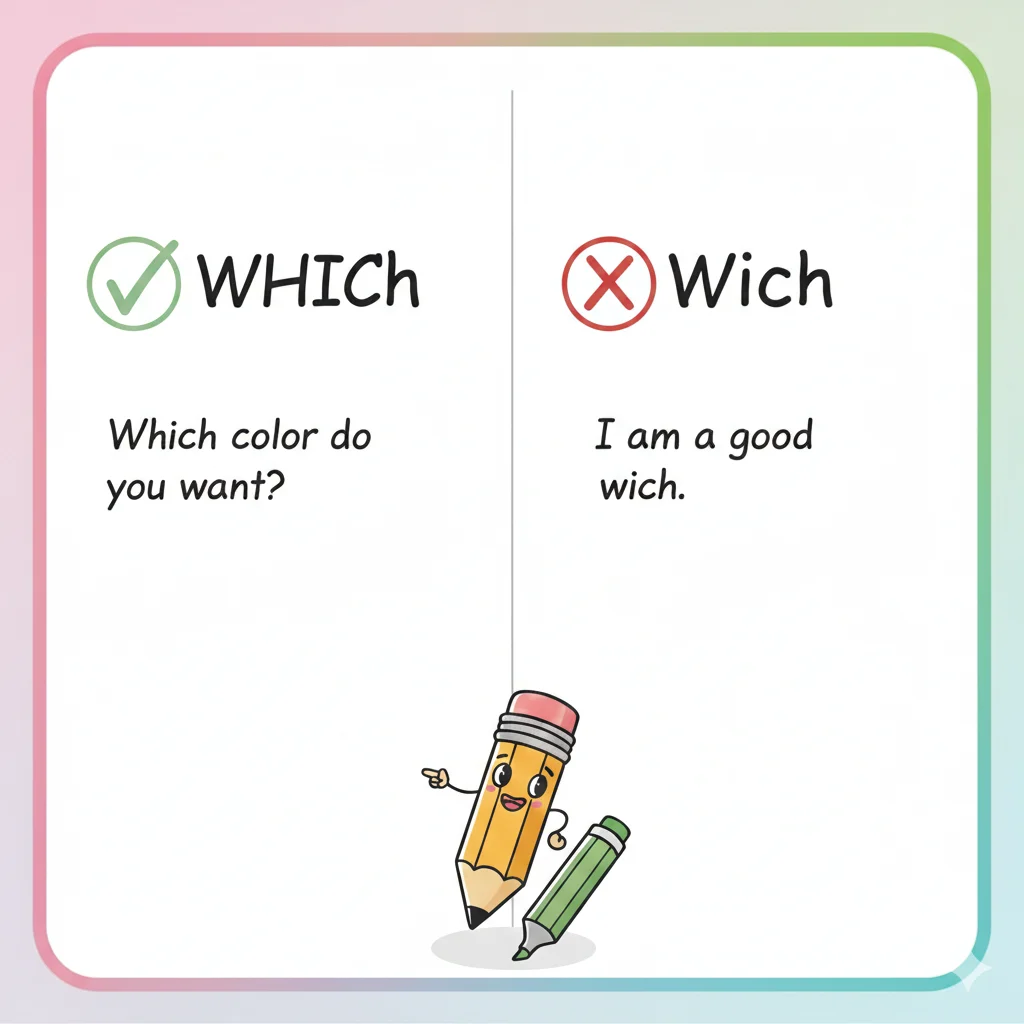
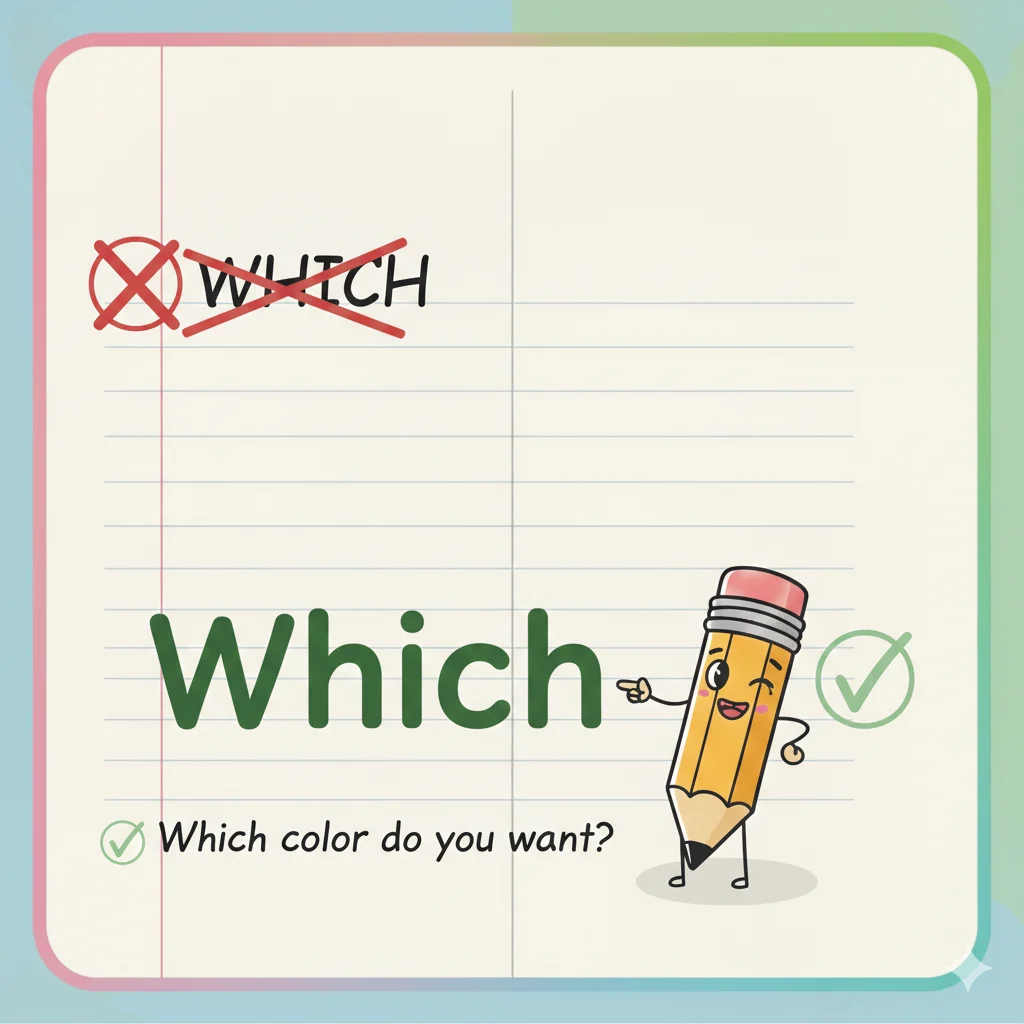
❌ Wich is NOT a correct English word in modern, everyday English.
Most of the time, wich is just a spelling mistake of which.
There are a few very old or rare meanings of wich in history (like old place names), but you should not use “wich” in normal writing or speaking.
Incorrect Examples of Wich
❌ Wich movie do you like?
❌ This is the game wich I told you about.
✔️ Correct version:
- Which movie do you like?
- This is the game which I told you about.
The Key Difference Between Wich and Which
The difference between wich and which is very simple.
Comparison Table: Wich vs Which
| Feature | Which | Wich |
|---|---|---|
| Is it correct English? | ✅ Yes | ❌ No |
| Used in questions | ✅ Yes | ❌ No |
| Used in sentences | ✅ Yes | ❌ No |
| Common in daily English | ✅ Very common | ❌ Not used |
| Example | Which one is yours? | ❌ Wich one is yours? |
Quick Tip to Remember
👉 If you are choosing, asking, or explaining — always use “which.”
👉 Never use “wich” unless you are copying an old name or spelling.
Common Mistakes and How to Avoid Them
Many learners make the same mistake again and again. Let’s fix it.
Mistake 1: Using wich instead of which
❌ Wich dress should I wear?
✔️ Which dress should I wear?
Why it happens:
People type fast or forget the “h”.
How to fix it:
Always remember: WH + ICH = WHICH
Mistake 2: Thinking wich is an alternative spelling
❌ I thought “wich” and “which” are the same.
✔️ They are NOT the same.
Truth:
- Which = correct word
- Wich = spelling error
Mistake 3: Using wich in exams or formal writing
Using wich in school exams, emails, or essays can lower your marks.
✔️ Always double-check spelling before submitting work.
When to Use Which
You should use which in many everyday situations.
1. Asking Questions
Use which when you want to choose between options.
Examples:
- Which ice cream do you want?
- Which bus goes to the mall?
- Which subject do you like most?
2. Giving Extra Information
Use which to add more details about something.
Examples:
- I read a book which was very funny.
- She bought a bag which was on sale.
- He lost his phone, which made him sad.
3. In School and Homework
Teachers expect correct grammar.
Examples:
- Which answer is correct?
- Which chapter is homework?
4. In Daily Conversation
Examples:
- Which movie are we watching?
- Which road should we take?
5. In Writing and Stories
Examples:
- He saw a dog which looked friendly.
- She wore a dress which was blue.
When to Use Wich
Simple Rule:
👉 Do NOT use “wich” in normal English.
There is no daily situation where wich is correct for learners.
Rare Exception (Advanced Note)
- Some old English place names or historical words contain wich.
Example: Greenwich (pronounced “Gren-itch”).
But you do not need this for normal writing or speaking.
Memory Hack 🧠
Imagine the letter H in which stands for “Helpful.”
Without H, the word is not helpful — it’s wrong!
Quick Recap: Which vs Wich
- Which ✅
- Correct English word
- Used in questions and sentences
- Helps choose or explain
- Wich ❌
- Spelling mistake
- Not used in modern English
👉 Always choose “which.”
Advanced Tips (Optional but Helpful)
Word History (Very Simple)
- Which comes from Old English and has always been a question word.
- Wich disappeared from modern usage.
In Exams and Formal Writing
- Writing wich instead of which is considered a grammar error.
- Always proofread essays and emails.
In Texting and Social Media
- Auto-correct may not catch this mistake.
- Wrong spelling can confuse readers or look careless.
Mini Quiz: Test Yourself 🎯
Fill in the blanks with which.
- ______ pencil is yours?
- This is the movie ______ I told you about.
- ______ road should we take?
- She wore a dress ______ was red.
- ______ answer is correct?
Answers:
- Which
- Which
- Which
- Which
- Which
Great job! 🎉
FAQs: People Also Ask
1. Is wich ever correct?
No. Wich is not correct in modern English writing.
2. What is the difference between wich and which?
Which is correct. Wich is a spelling mistake.
3. Can I use wich in exams?
No. Always use which.
4. Why do people confuse wich or which?
Because they sound similar and typing mistakes are common.
5. How can I remember the correct word?
Remember: WHICH has an “H” — and it’s always right.
Conclusion
Now you clearly understand the difference between wich or which. The rule is simple: “which” is correct, and “wich” is wrong in everyday English. By learning this small detail, you can avoid a very common grammar mistake and write with more confidence.
Practice using which in your daily speaking and writing. Read your sentences again before sending messages or homework. Small steps like this make your English better every day.

Elizabeth Gaskell was a Victorian English novelist and biographer, celebrated for social realism, strong female characters, and industrial age themes. era life.