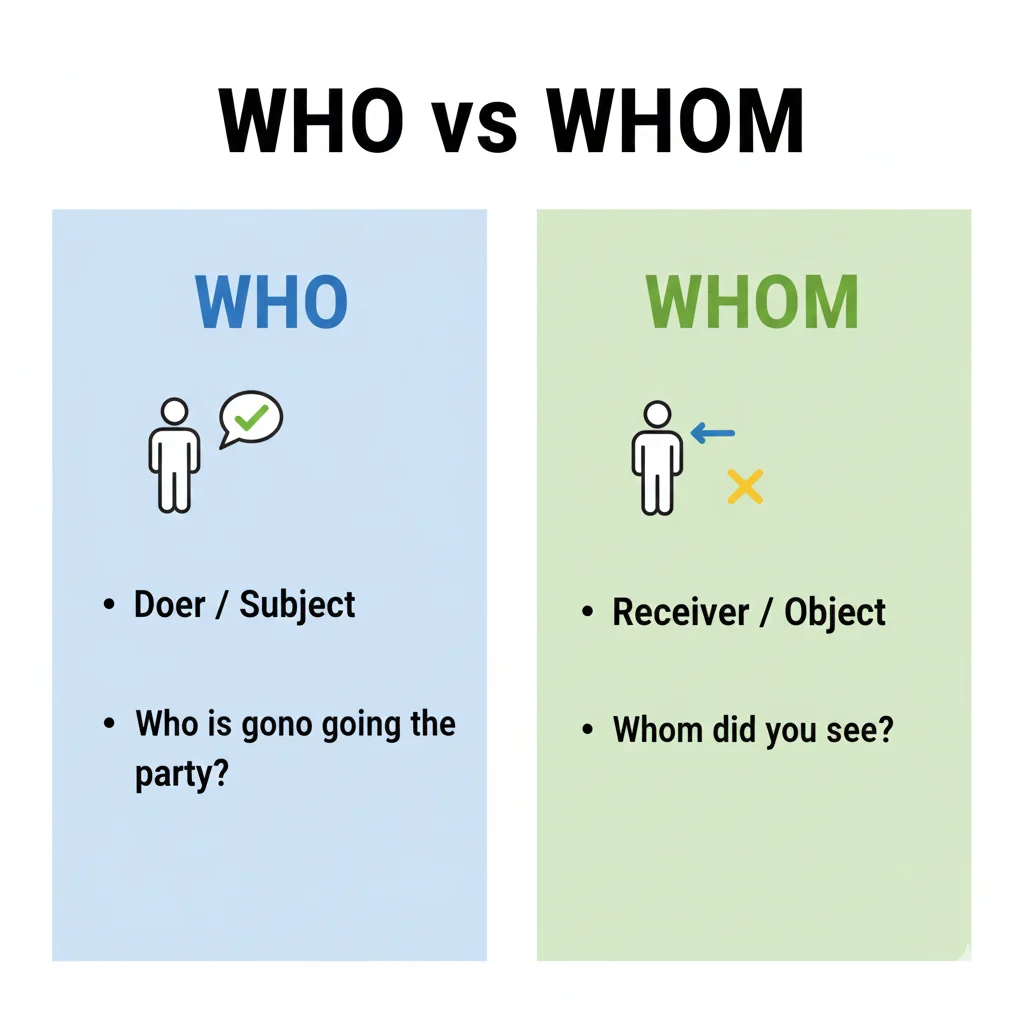
Who or whom is one of the most confusing grammar questions in English. Even adults, writers, and teachers sometimes stop and think before choosing the right word. The reason is simple: both words talk about people, and they sound very similar. In daily speaking, many people use who everywhere and forget about whom.
But don’t worry. This guide is here to make things easy. You will learn the meaning, difference, and correct usage of who and whom using plain English. No hard grammar terms. No confusion. Just clear rules, simple tricks, and real-life examples.
By the end, even a beginner or a class 4 student will confidently know when to use who and when to use whom.
What Does Each Word Mean?
Meaning of Who
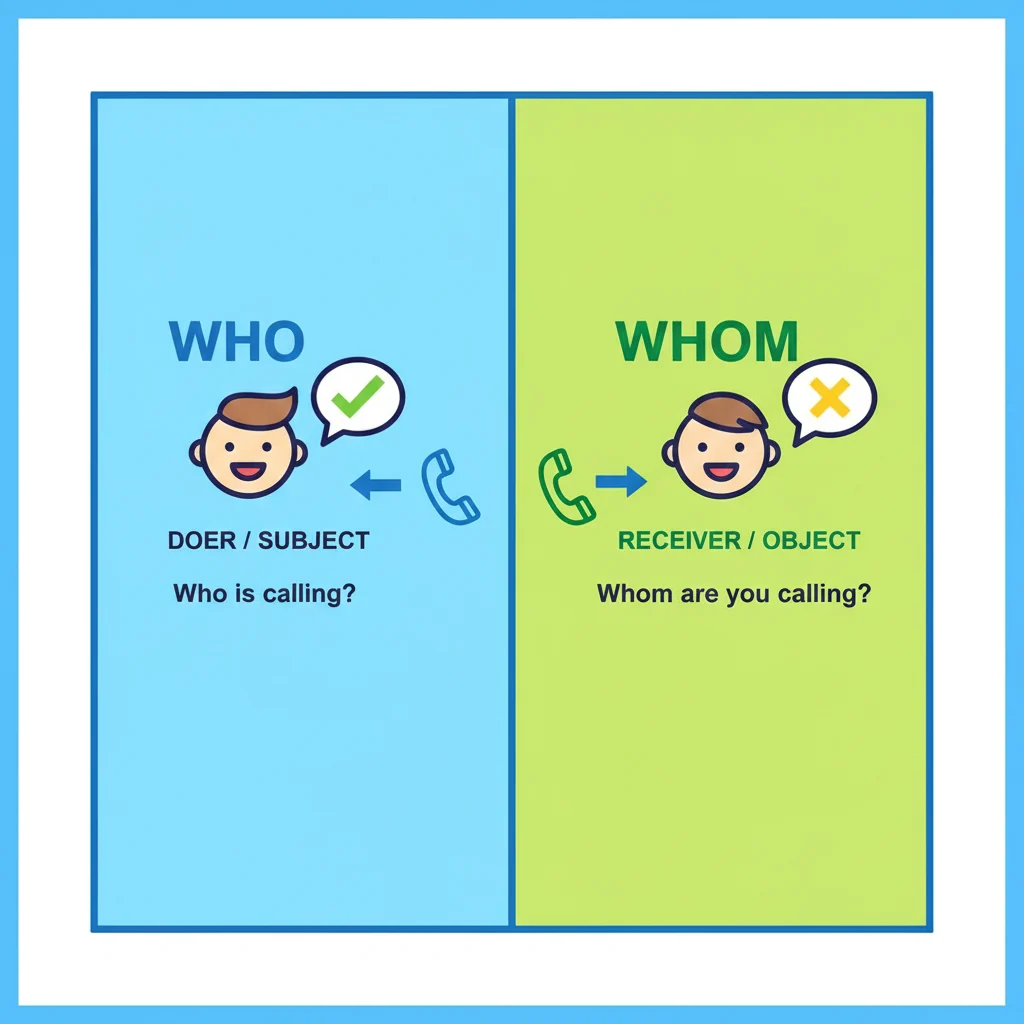
Who is used for the person doing an action.
- Think of who as the doer.
- It answers the question: Who did it?
Part of speech: Pronoun
Easy Examples:
- Who is calling me?
- Who broke the window?
- Who wants ice cream?
Mini Story:
👉 Who ate the cake?
(The person ate the cake. They did the action.)
Meaning of Whom
Whom is used for the person receiving an action.
- Think of whom as the receiver.
- It answers the question: To whom? or Whom did someone affect?
Part of speech: Pronoun
Easy Examples:
- Whom did you call?
- Whom are you helping?
- Whom should I invite?
Mini Story:
👉 You called whom?
(The person received the call.)
The Key Difference Between Who and Whom
Simple Rule to Remember
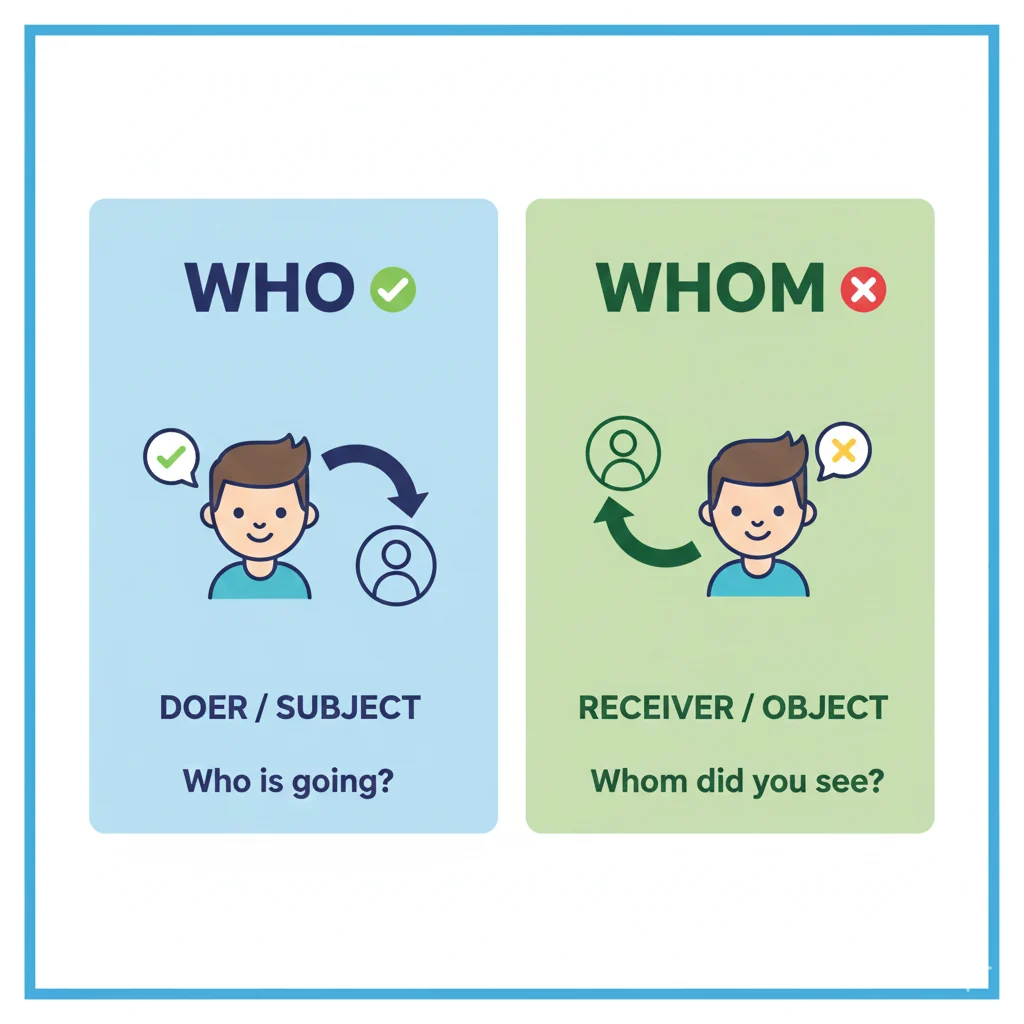
- Who = He / She / They (doer)
- Whom = Him / Her / Them (receiver)
Comparison Table: Who vs Whom
| Feature | Who | Whom |
|---|---|---|
| Used for | Doer of action | Receiver of action |
| Replaces | He / She / They | Him / Her / Them |
| Common position | Subject | Object |
| Example | Who is speaking? | Whom did you meet? |
⭐ Quick Tip
Replace the word with he or him:
- If he sounds right → use who
- If him sounds right → use whom
Common Mistakes and How to Avoid Them
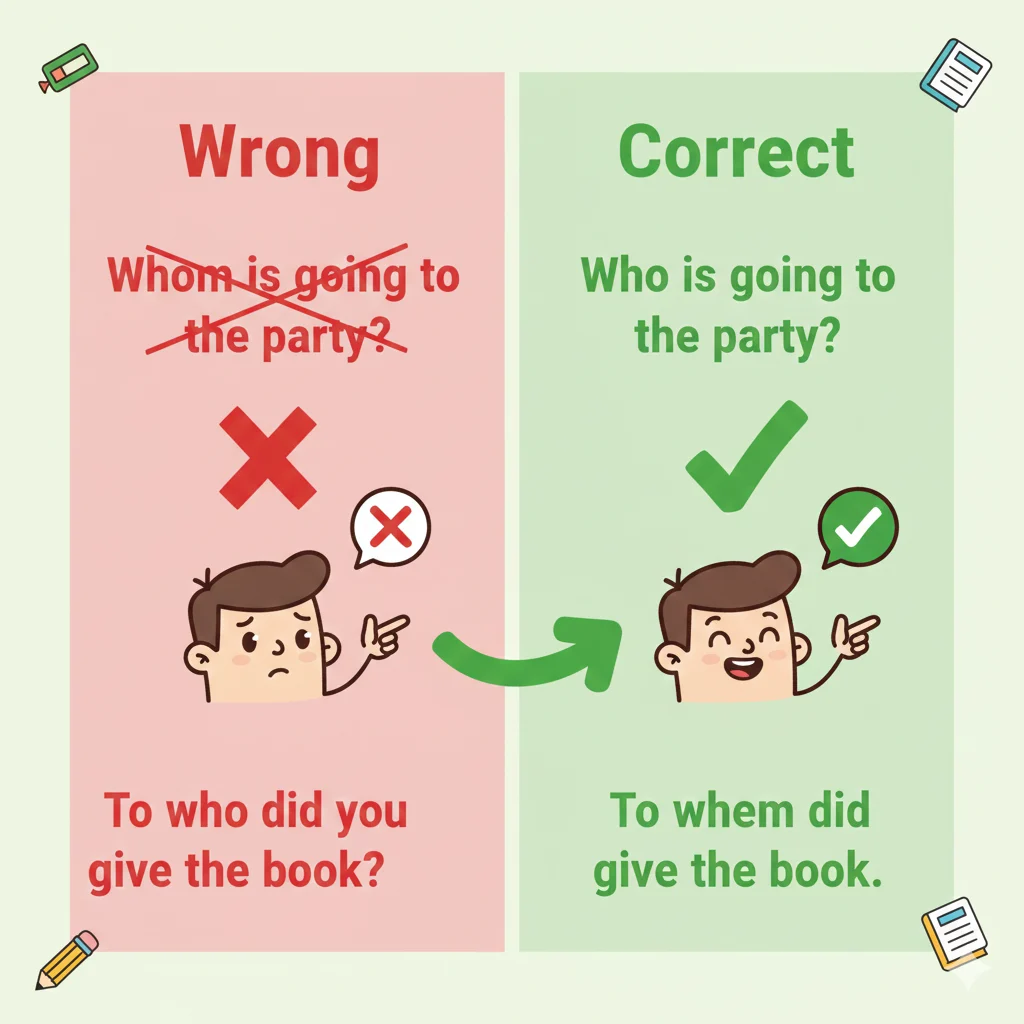
❌ Mistake 1
Incorrect: Whom is coming to the party?
Correct: Who is coming to the party?
Why?
Someone is coming. They are doing the action.
❌ Mistake 2
Incorrect: Who did you help?
Correct: Whom did you help?
Why?
You helped him/her. The person received the action.
❌ Mistake 3
Incorrect: Whom wants to play?
Correct: Who wants to play?
Fix Tip:
Ask: Is this person doing something?
Yes → use who
When to Use Who
Use who when the person does the action.
Situations to Use Who
- Asking questions
- Talking about the subject
- Describing the doer
Simple Examples:
- Who is your best friend?
- Who made this drawing?
- Who is knocking on the door?
- Who teaches English here?
- Who won the game?
Real-Life Example
At school:
👉 Who finished the homework?
When to Use Whom
Use whom when the person receives the action.
Situations to Use Whom
- After verbs like help, call, meet
- After prepositions (to, for, with)
Simple Examples:
- Whom did you meet today?
- Whom are you calling?
- To whom should I give this gift?
- Whom does she trust?
- Whom were you talking to?
🧠 Memory Hack
👉 Whom = Him
If you can answer with him, use whom.
Quick Recap: Who vs Whom
- Who → doer of action
- Whom → receiver of action
- Who = he / she
- Whom = him / her
- Ask: Who did it? → Who
- Ask: Did someone affect him? → Whom
Advanced Tips (Optional)
Origin
- Who and whom come from Old English.
- Whom is slowly disappearing in casual speech.
Formal Writing
- Exams, essays, and formal emails still expect correct use.
- Using whom correctly shows strong grammar skills.
Texting & Online Writing
- Many people use who everywhere.
- In formal writing, misuse can look unprofessional.
Truly or Truely: The Hidden Truth Behind the Correct Spelling
Mini Quiz: Test Yourself
Fill in the blanks:
- ___ is your teacher?
- ___ did you invite?
- ___ is knocking at the door?
- To ___ should I speak?
- ___ won the match?
- ___ are you helping?
✅ Answers
- Who
- Whom
- Who
- Whom
- Who
- Whom
.
FAQs
1. What is the main difference between who and whom?
Who is for the doer. Whom is for the receiver.
2. Is “whom” still used today?
Yes, mainly in formal writing and exams.
3. Can I always use “who” instead of “whom”?
In casual speech, yes. In formal writing, no.
4. How can I remember whom easily?
Replace it with him. If it fits, use whom.
5. Which is correct: who did you call or whom did you call?
Whom did you call is correct.
Conclusion
Now you know the difference between who and whom in a clear and simple way. Remember, who is for the person doing something, and whom is for the person receiving something. Use the he/him trick whenever you feel confused. With a little practice, choosing the correct word will become natural.
English improves step by step. Small grammar wins like this make a big difference in writing and speaking. Keep learning, keep practicing, and enjoy your journey toward better English every day 🌟

Elizabeth Gaskell was a Victorian English novelist and biographer, celebrated for social realism, strong female characters, and industrial age themes. era life.