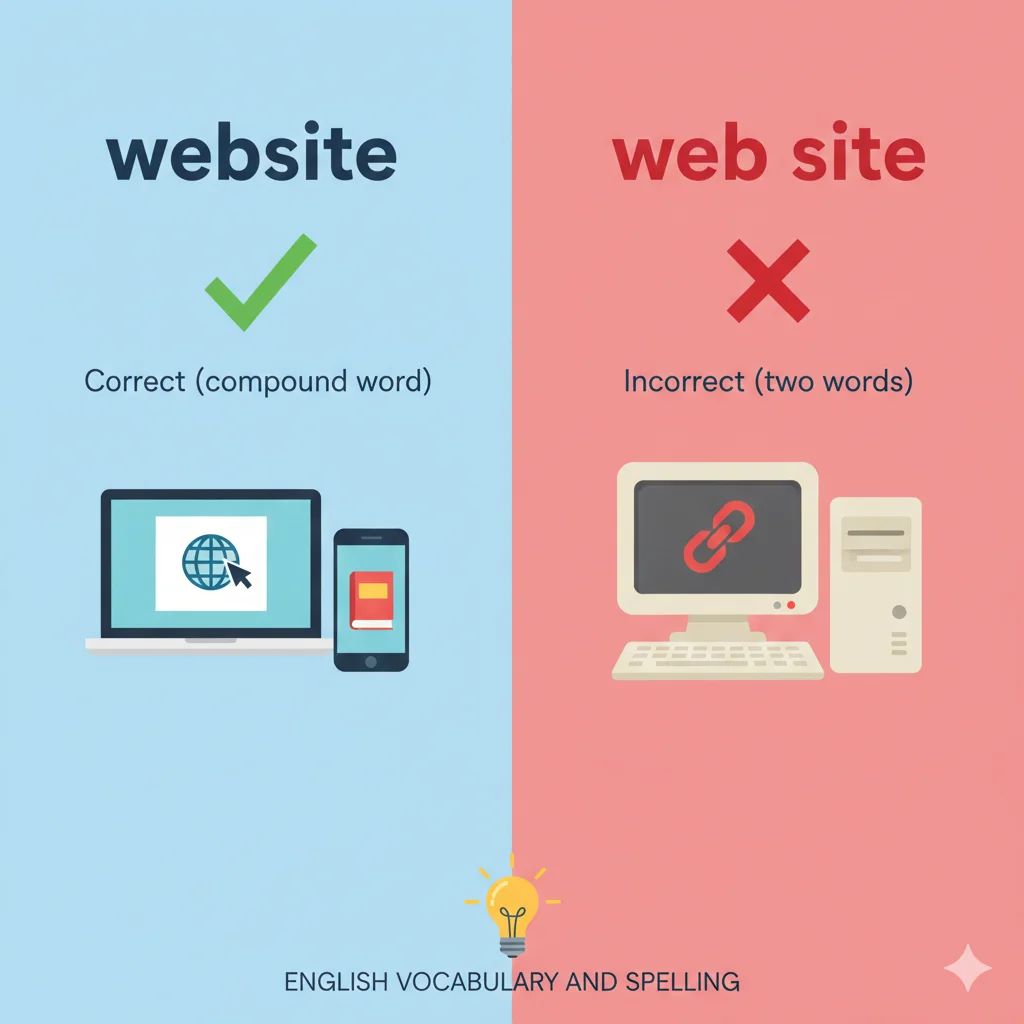
Have you ever stopped while writing and wondered whether to use “website” or “web site”? It may seem like a small detail, but choosing the right spelling shows attention to detail and professionalism. A simple mistake can make your writing look outdated or confusing, especially when presenting information about the internet, business, or digital content.
Originally, people wrote “web site” as two words when the internet was new. Over time, language has evolved, and today “website” as a single word is widely accepted and preferred. Using the correct form keeps your writing modern, clear, and easy to read.
Understanding this difference ensures your content looks polished and trustworthy. Using “website” correctly gives readers confidence in your writing, encourages them to read further, and leaves a professional impression that makes your content stand out.
What Does Each Word Mean?
What Does “Web Site” Mean?
Web site is the older form of the word. It is made of two parts:
- Web – short for the World Wide Web
- Site – a place or location
So, web site means “a place on the web.”
Years ago, when the internet was new, people treated it like a physical place. That is why they wrote it as two separate words.
Part of speech:
It is a noun. A noun is a naming word.

Easy examples:
- This web site has pictures of animals.
- Our school web site shows holiday dates.
- I found a fun game on that web site.
Think of web site like saying “play ground.” At first, people used two words.
What Does “Website” Mean?
Website means the same thing as web site, but it is written as one word. Over time, English changed. People started using the word more often, so it became shorter and simpler.
Today, website is the most common and accepted form.
Part of speech:
It is also a noun.
Easy examples:
- I visit this website every day.
- Her website teaches kids math.
- The shopping website is very popular.
Think of website like “playground.” At first, it had two words. Now it has one.
The Key Difference Between Website and Web Site
The main difference is how they are written, not what they mean.
Simple Comparison Table
| Point | Website | Web Site |
|---|---|---|
| Meaning | A place on the internet | A place on the internet |
| Number of words | One word | Two words |
| Modern usage | Very common | Rare |
| Seen in | Blogs, apps, companies | Old books, early internet texts |
| Recommended today | Yes | No (mostly outdated) |
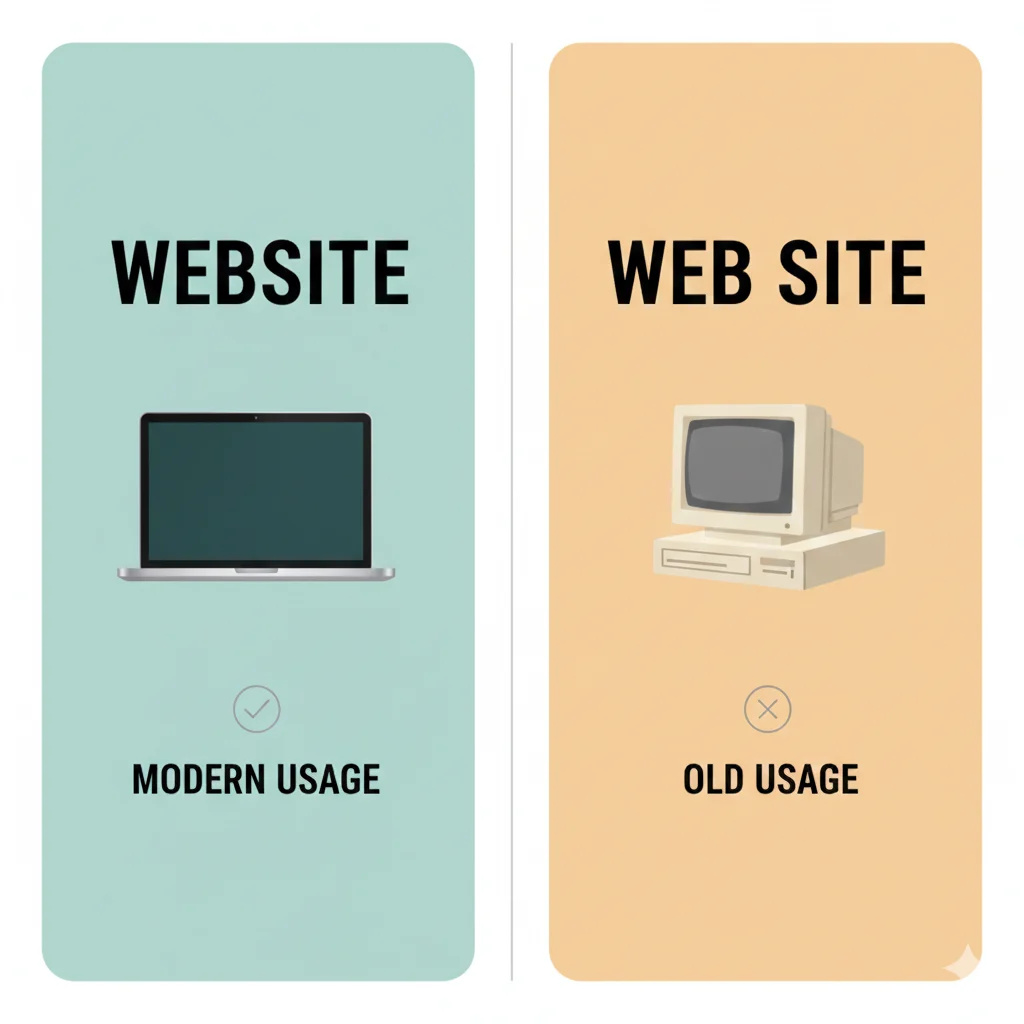
Quick Tip to Remember
👉 If you are writing today, always choose website.
👉 If you are reading something very old, you might see web site.
Common Mistakes and How to Avoid Them
Even though this seems simple, people still make mistakes.
Mistake 1: Mixing both styles in one text
❌ Our web site is fast. This website loads quickly.
✅ Our website is fast. This website loads quickly.
Why it happens:
People copy from different sources.
How to fix it:
Pick one style and stay with it. Use the modern one.
Mistake 2: Thinking one is wrong
❌ Web site is incorrect English.
✅ Web site is old-style English.
Why it happens:
People think only one form ever existed.
How to fix it:
Remember that language changes over time.
Mistake 3: Using “web site” in modern writing
❌ Visit our web site for updates.
✅ Visit our website for updates.
Why it happens:
Some people learned English from old books.
How to fix it:
Use the one-word form in new writing.

When to Use “Website”
You should use website in almost all situations today.
Use it when:
- Writing school homework
- Writing blog posts
- Creating business pages
- Sending emails
- Writing exams
- Posting on social media
Simple examples:
- My favorite website helps me learn English.
- The teacher shared a website for homework.
- This website sells clothes.
- I built my own website last year.
- The news website updates every hour.
Real-life story:
Imagine telling a friend, “Check my website.” That sounds natural and modern. Saying “Check my web site” sounds old-fashioned.
When to Use “Web Site”
You will almost never need to write “web site” today.
You may see it when:
- Reading old textbooks
- Reading early internet articles
- Quoting historical content
Examples from older writing:
- This web site was launched in 1998.
- The company web site was simple at first.
Easy Memory Trick
🧠 Old time = two words
🧠 Modern time = one word
If it feels new, use one word.
Quick Recap: Website vs Web Site
- Both mean the same thing
- Both name a place on the internet
- One is old, one is modern
- One word is preferred today
Remember:
- ✔ Use website in modern English
- ❌ Avoid web site unless quoting old text
Advanced Tips (Optional)
A Short History
When the internet started in the 1990s, English speakers treated online terms as new ideas. They wrote them as separate words. Over time, as these ideas became normal, the words joined together.
Other examples:
- E-mail → email
- On-line → online
Formal Writing and Exams
Most style guides today accept website as the correct form. Using web site in exams or professional writing may look outdated.
Online and Texting
In texting and digital writing, shorter words are preferred. That is another reason website became popular.
Feening or Feigning: The Spelling Mistake Everyone Makes
Mini Quiz: Test Yourself
Fill in the blanks:
- I learned coding from a helpful ________.
- Our school ________ has exam dates.
- This shopping ________ is easy to use.
- The company updated its ________ yesterday.
- I found the answer on a science ________.
Answers:
- website
- website
- website
- website
- website
FAQs
1. Are website and web site the same?
Yes. They have the same meaning, but one is modern and one is old.
2. Which one should I use today?
You should use website.
3. Is web site wrong?
No. It is just outdated.
4. Do exams accept website?
Yes. It is the preferred form.
5. Why did the spelling change?
Because English simplifies words over time.
Conclusion
Now you know the clear difference between website and web site. They mean the same thing, but modern English prefers the one-word form. The two-word form belongs to the early days of the internet and is rarely used today. If you want your writing to look fresh, correct, and professional, always choose website. Keep practicing by reading, writing, and noticing how words change over time. Improving English is a daily journey, and every small step makes you better and more confident.

Rose Tremain is a British novelist known for richly detailed historical fiction, complex characters, and award-winning literary storytelling worldwide.