English can be tricky sometimes. One small spelling change can make people stop and think, “Is this right?” A very common example is tying or tieing. Many learners, students, and even native speakers get confused when writing this word. They ask questions like: Is it tying or tieing a knot? Which spelling is correct in English? Why does the word change?
If you have ever paused while typing or writing because of tying vs tieing, you are not alone. This guide is here to help. In this article, you will learn the meaning, difference, and correct usage of tying and tieing in a very simple way.
We will use short sentences, clear rules, and real-life examples that even a 4th-grade student can understand. By the end, you will feel confident using the correct word every time. 😊
What Does Each Word Mean?
Before we compare them, let’s understand what each word means in simple English.
What Does Tying Mean?
Tying comes from the verb tie.
It means making a knot or joining things together using a string, rope, or lace.
Part of speech:
- Verb (present participle of tie)
Simple meaning:
- Making a knot
- Fastening things together
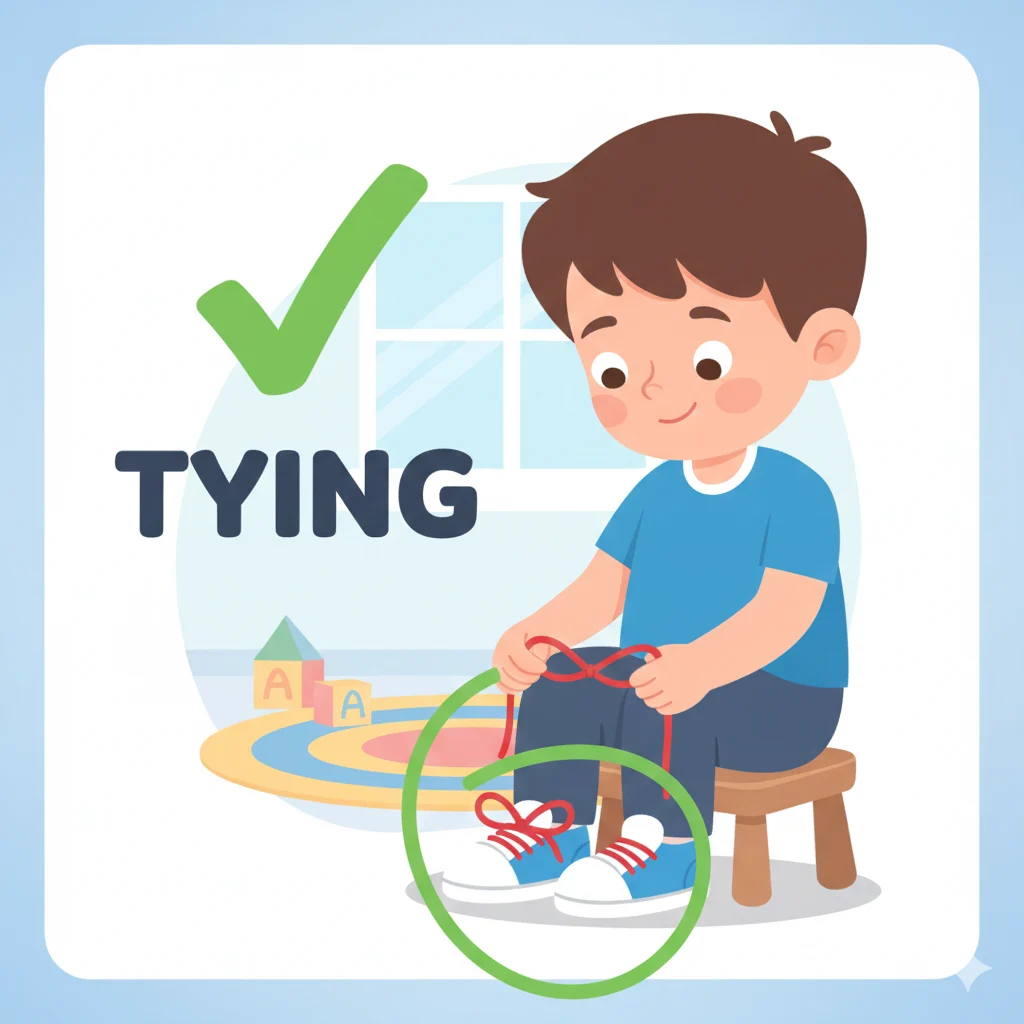
Easy examples of tying:
- She is tying her shoes before school.
- Dad is tying the rope to the tree.
- I am tying a ribbon on the gift.
Mini story:
Imagine a child getting ready for school. He bends down and starts tying his shoelaces. He pulls, crosses, and makes a knot. That action is called tying.
What Does Tieing Mean?
This part is very important.
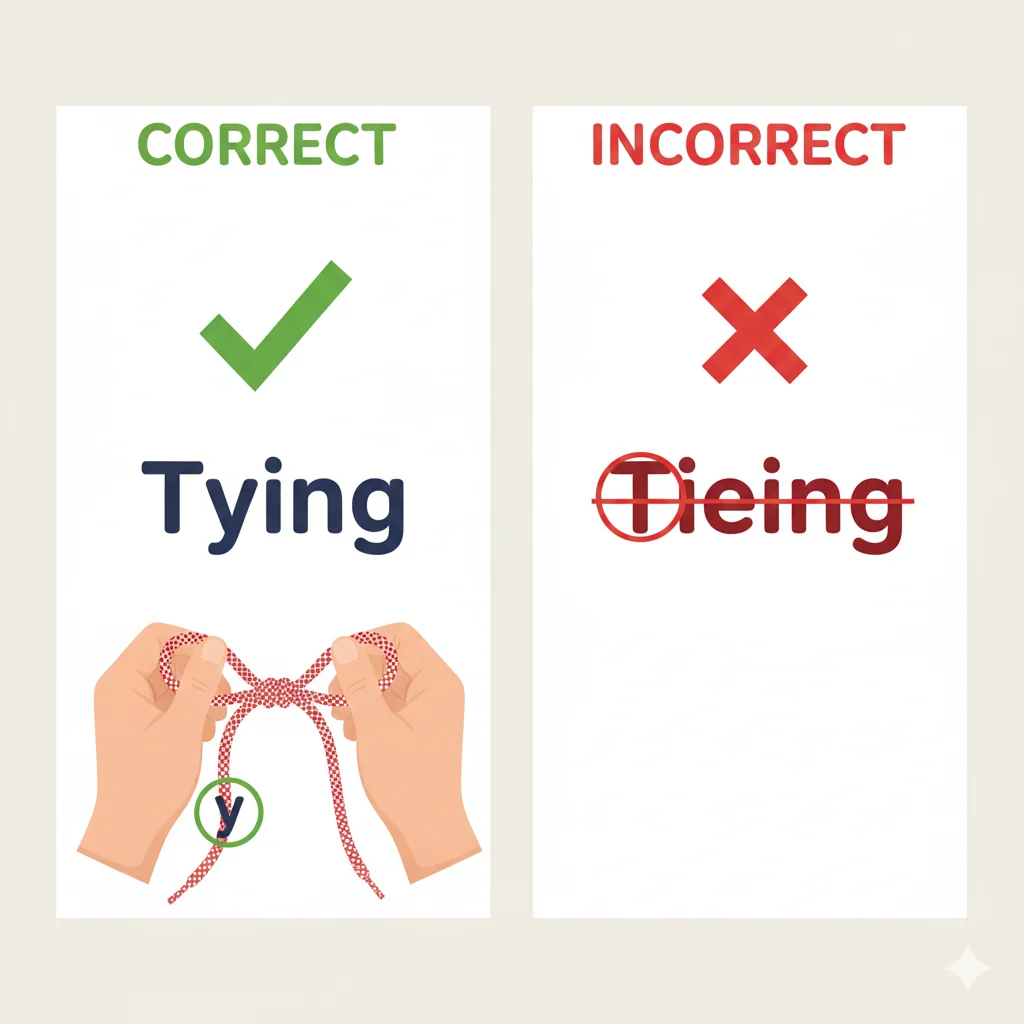
Tieing is NOT a correct spelling in standard English.
There is no real meaning for tieing in normal English writing. It is a common spelling mistake people make when they try to add -ing to the word tie.
Why does this mistake happen?
Because people think:
- tie + ing = tieing ❌
But English has a special spelling rule that changes tie to tying.
The Key Difference Between Tying and Tieing
The main difference is simple:
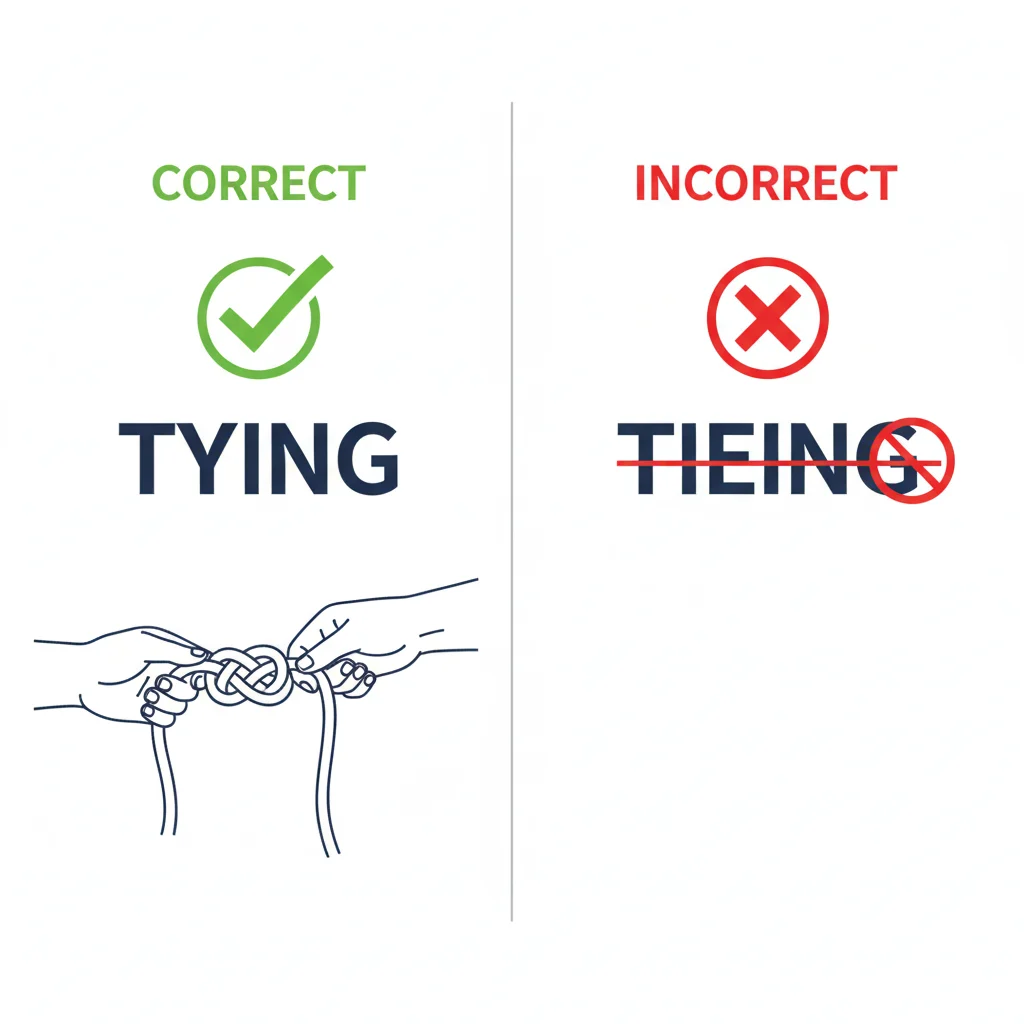
👉 Tying is correct.
👉 Tieing is incorrect.
There is no situation where tieing is the right word.
Comparison Table: Tying vs Tieing
| Feature | Tying | Tieing |
|---|---|---|
| Correct spelling | ✅ Yes | ❌ No |
| Meaning | Making a knot or fastening | No meaning |
| Used in English | Yes, very common | No, considered wrong |
| Example | Tying my shoes | ❌ Tieing my shoes |
Quick Tip to Remember
💡 Drop the “E” rule
When a verb ends in -ie, change ie to y before adding -ing.
- tie → tying
- lie → lying
- die → dying
So always remember:
It’s tying, never tieing.
Common Mistakes and How to Avoid Them
Many people make mistakes with tying and tieing. Let’s look at common errors and fix them.
Mistake 1
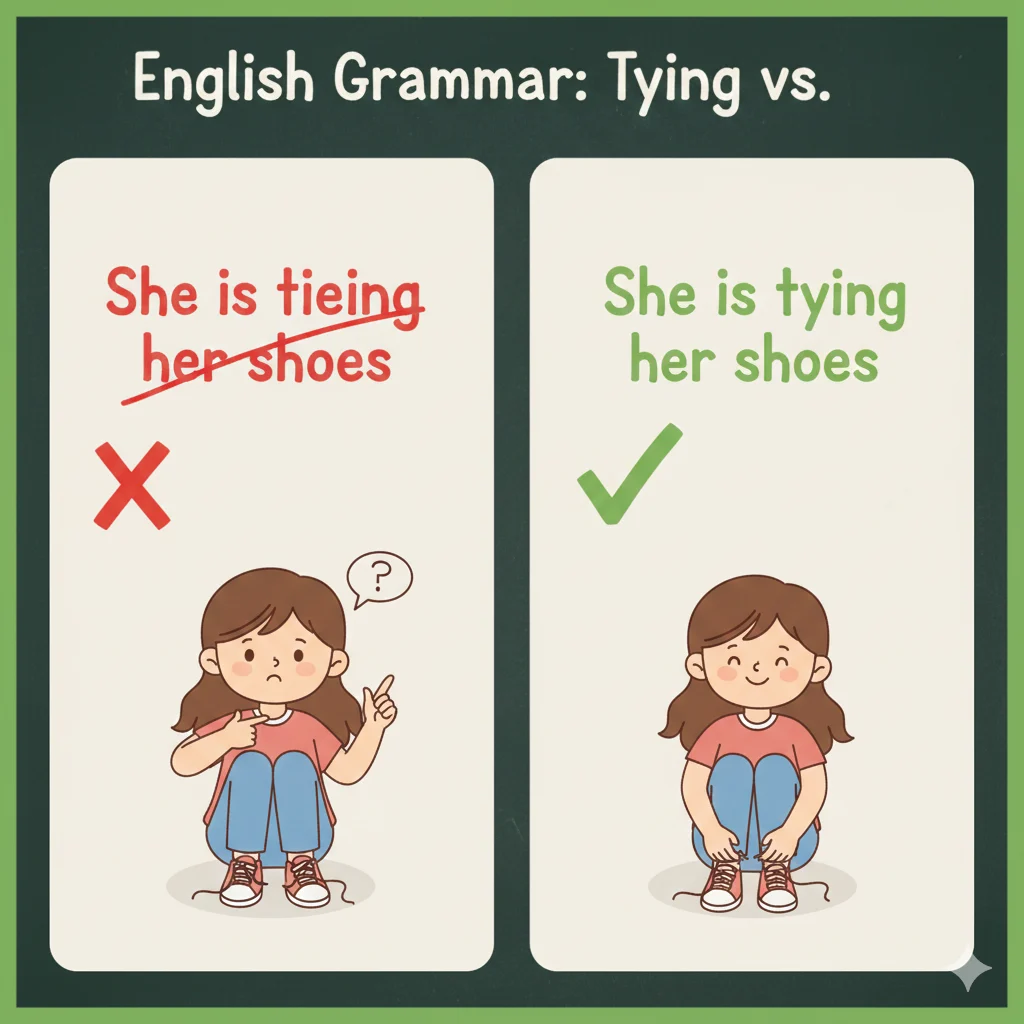
❌ She is tieing her hair.
✅ She is tying her hair.
Why this mistake happens:
People forget to remove the e and change ie to y.
Mistake 2
❌ He is tieing a knot.
✅ He is tying a knot.
How to avoid it:
Say the word out loud. It sounds like ty-ing, not tie-ing.
Mistake 3
❌ I am tieing the ribbon.
✅ I am tying the ribbon.
Easy fix:
Remember: No English dictionary accepts “tieing.”
When to Use Tying
You should use tying whenever you talk about fastening, joining, or making a knot.
Situations where tying is used
- Shoes and laces
- Ropes and strings
- Hair, ribbons, or belts
- Knots in daily life
Simple real-life examples
- I am tying my shoes.
- She is tying her hair before class.
- He is tying the dog to the gate.
- Mom is tying a bow on the gift.
- The sailor is tying the rope tightly.
Grammar tip:
“Tying” is used when an action is happening now or continuously.
When to Use Tieing
Here is a short and honest section:
👉 You should never use tieing.
There is no correct situation for this spelling in modern English.
Memory Hack 🧠
Picture the word tie changing clothes:
- The letters i and e change into y when -ing is added.
So:
- tie → tying ✅
- tie → tieing ❌ (wrong outfit!)
Why Does “Tie” Change to “Tying”?
Let’s explain this very simply.
The Easy Grammar Rule
When a verb ends in -ie:
- Remove ie
- Add y
- Then add -ing
Examples you already know
- tie → tying
- lie → lying
- die → dying
This rule helps English words look and sound better.
Quick Recap: Tying vs Tieing
Let’s make it super easy to remember.
- Tying ✔️
- Correct spelling
- Means making a knot or fastening
- Used in daily English
- Tieing ❌
- Incorrect spelling
- No real meaning
- Common mistake
📌 Always use “tying.”
Advanced Tips (Optional but Helpful)
Word History (Simple)
The word tie comes from old English and old German words meaning to fasten or bind. Over time, English created spelling rules to make words easier to read. That’s why tie changes to tying.
Use in School and Exams
Teachers and examiners expect:
- tying ✔️
- Not tieing ❌
Using the wrong spelling can cost marks in:
- School exams
- Essays
- Competitive tests
Texting and Online Writing
In fast typing, people often write tieing by mistake. But even online, tying is the correct form. Wrong spelling can change how professional your writing looks.
Mini Quiz: Test Your Understanding ✏️
Fill in the blanks with tying.
- She is ______ her shoes.
- Dad is ______ the rope.
- I am ______ a ribbon on the box.
- The boy is ______ his tie.
- Mom is ______ the bag tightly.
Answers
- tying
- tying
- tying
- tying
- tying
Great job if you got them all right! 🎉
Frequently Asked Questions (FAQs)
1. Is tieing ever correct?
No. Tieing is always incorrect in standard English.
2. Why do people confuse tying and tieing?
Because they forget the -ie to -y spelling rule.
3. What is the correct spelling: tying or tieing?
The correct spelling is tying.
4. Does tying have different meanings?
It always relates to fastening, joining, or making a knot.
5. How can I remember the correct usage?
Remember: ie changes to y before adding -ing.
Conclusion
Now you know the full truth about tying vs tieing. The difference is simple but important. Tying is the correct word used when you talk about making a knot or fastening something. Tieing is just a common spelling mistake and should never be used. By remembering the easy rule—change “ie” to “y” before adding -ing—you can avoid this error forever. Keep practicing, read more, and don’t be afraid of small grammar rules. Every day you use English, you get better at it. 🌟

Dorothy Whipple was an English novelist and short story writer, famed for emotional realism, domestic themes, and sharp insight into women’s lives. worldwide UK