English can be tricky, especially when two words sound the same but mean different things.
“To” and “too” are perfect examples. They sound exactly alike, but they are not the same. Many students, beginners, and even fluent writers mix them up in schoolwork, exams, emails, and social media posts.
The good news?
Once you understand their meanings and see a few easy examples, the confusion disappears.
In this complete guide, you will learn:
- The meaning of to and too
- The difference between to and too
- Correct usage with simple examples
- Common mistakes and how to avoid them
- Easy memory tricks anyone can remember
This guide is written in plain English, with short sentences and real-life examples, so even a 4th-grade student can understand it easily.
What Does Each Word Mean?
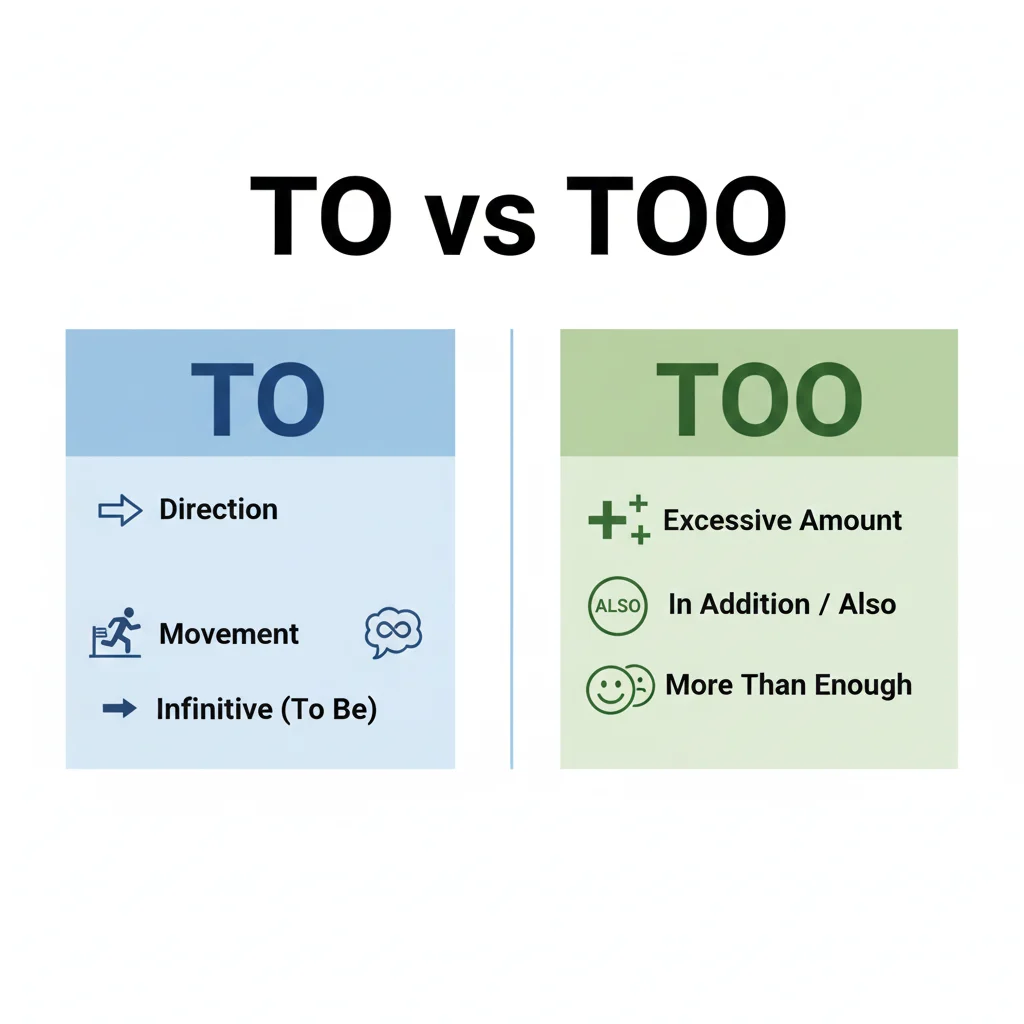
✅ What Does To Mean?
“To” is a very common word in English.
It is usually used to:
- Show direction
- Show a goal
- Come before a verb
Part of Speech:
- Preposition
- Part of an infinitive verb (to eat, to go)
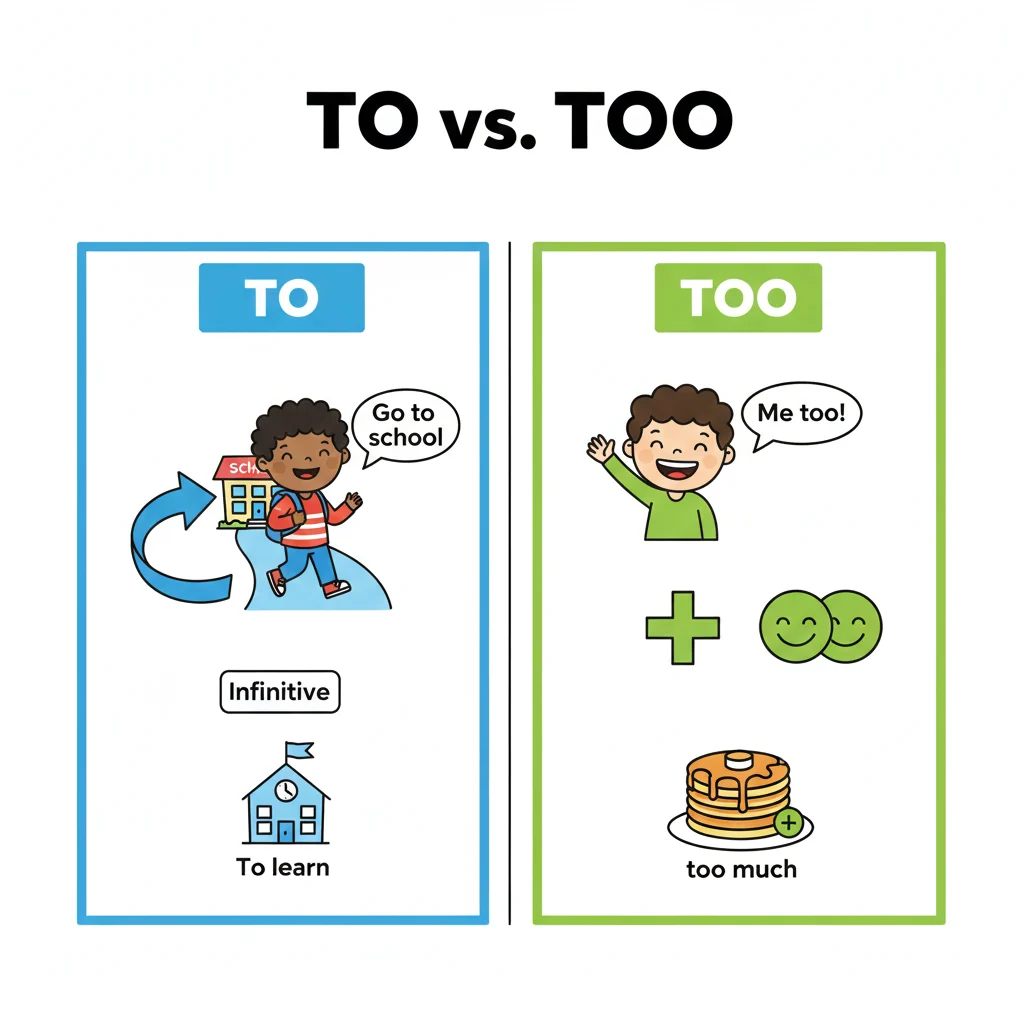
Simple Meaning of To
Think of to as meaning:
➡️ going somewhere
➡️ doing something
Easy Examples of To
- I am going to school.
- She wants to read a book.
- Give this gift to your friend.
📖 Mini Story:
Ali wants to play cricket. He walks to the park to meet his friends.
✅ What Does Too Mean?
“Too” has a very different meaning.
It is used to mean:
- Also
- More than enough
Part of Speech:
- Adverb
Simple Meaning of Too
Think of too as:
➕ extra
➕ also
Easy Examples of Too
- I want ice cream too.
- This bag is too heavy.
- She is too tired to run.
📖 Mini Story:
Sara ate cake, cookies, and chocolate too. Now she is too full!
The Key Difference Between To and Too
🆚 Comparison Table: To vs Too
| Feature | To | Too |
|---|---|---|
| Meaning | Direction or action | Also / Extra |
| Part of Speech | Preposition / Verb helper | Adverb |
| Used For | Going or doing | Adding or excess |
| Example | Go to school | I want it too |
| Memory Tip | One “O” = one direction | Two “O’s” = extra |
⭐ Quick Tip to Remember
- To → One “o” → One direction or action
- Too → Two “o’s” → Too much or me too
Common Mistakes and How to Avoid Them
❌ Mistake 1
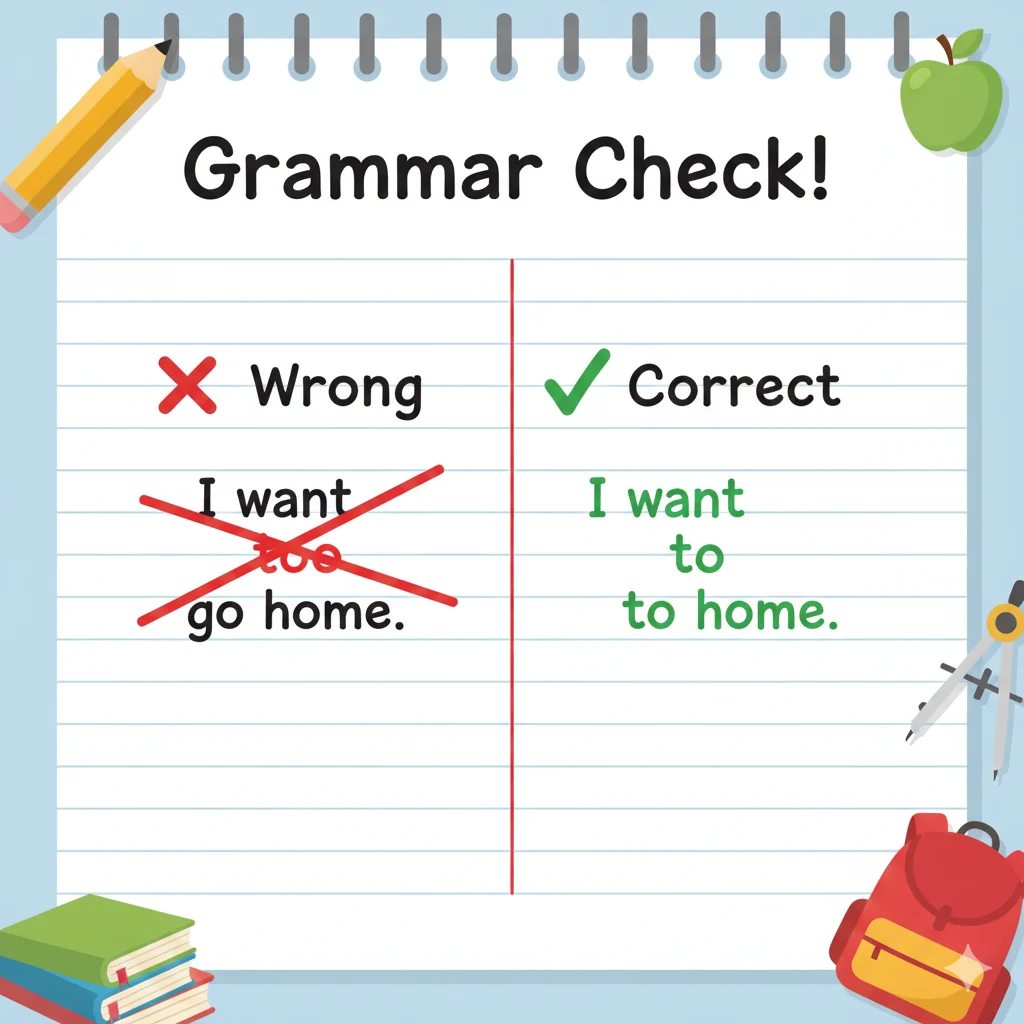
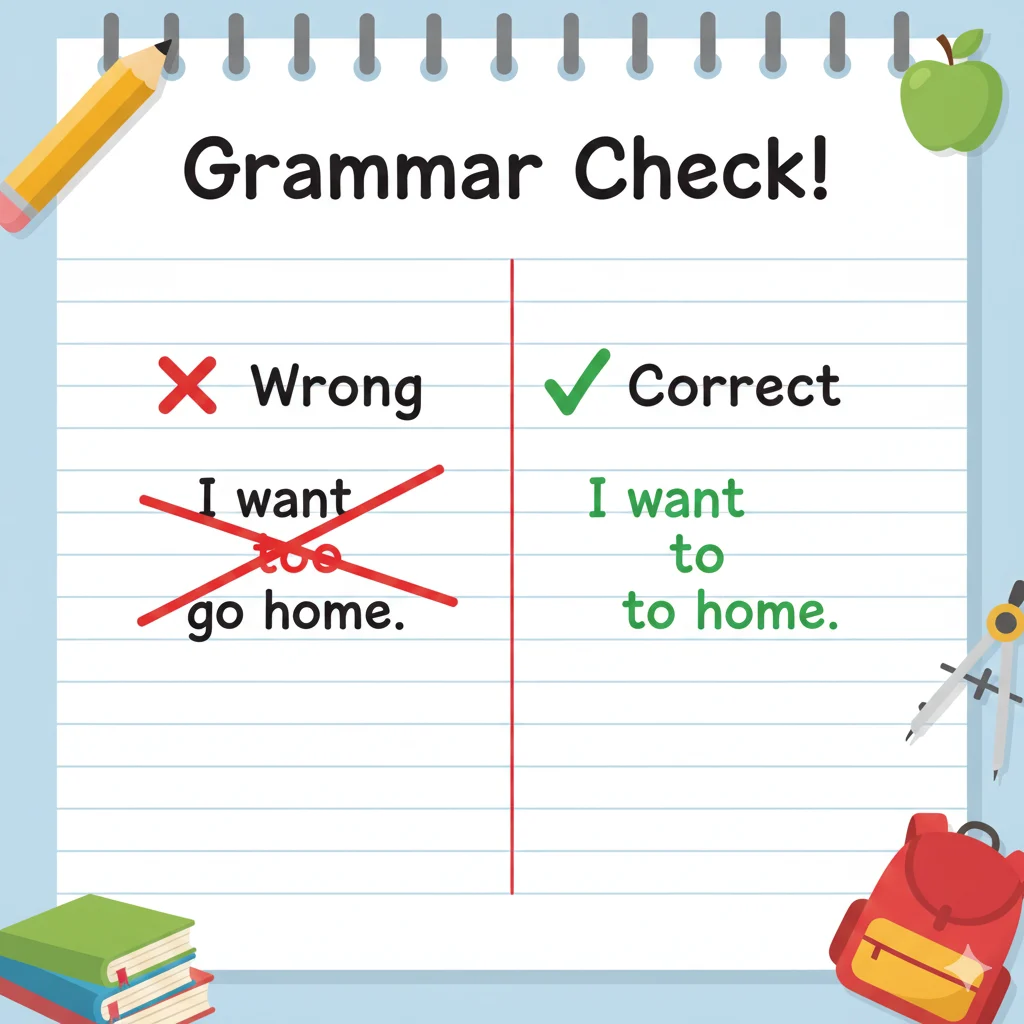
Wrong: I want too go home.
Correct: I want to go home.
👉 Why?
“Go” is a verb. Verbs need to, not too.
❌ Mistake 2
Wrong: She is going to.
Correct: She is going too.
👉 Why?
The sentence means “also,” so we use too.
❌ Mistake 3
Wrong: This box is to heavy.
Correct: This box is too heavy.
👉 Why?
Heavy means more than enough → use too.
When to Use To
Use to when:
- You are going somewhere
- You are doing something
- A verb comes after it
✅ Examples of To
- I walk to school every day.
- She wants to learn English.
- Give this pen to your brother.
- We plan to visit grandma.
- He needs to study tonight.
🏫 Real Life Tip:
If you can put a verb after the word, you almost always need to.
When to Use Too
Use too when:
- You mean also
- You mean more than needed
✅ Examples of Too
- I like apples too.
- The tea is too hot.
- He is too young to drive.
- Can I come too?
- This bag is too big.
🧠 Memory Hack:
Too has two O’s → think “too much” or “me too”.
Quick Recap: To vs Too
- To
- Shows direction or action
- Comes before verbs
- Example: I want to eat
- Too
- Means also or extra
- Shows excess
- Example: I want ice cream too
📌 Golden Rule:
If you can replace the word with “also”, use too.
Advanced Tips (Optional but Helpful)
📜 Word Origin (Simple)
- To comes from Old English words about direction.
- Too comes from a word meaning “in addition.”
✍️ Formal Writing & Exams
In exams and essays, mixing to and too can:
- Lower your marks
- Change sentence meaning
Teachers notice this mistake quickly.
💬 Texting & Online Writing
- “I want to come too” ✅
- “I want too come” ❌
One small mistake can confuse readers.
Mini Quiz: Test Yourself ✏️
Fill in the blanks with to or too.
- I want ___ eat pizza.
- She is coming ___ the party.
- This shirt is ___ small.
- Can I join ___?
- He went ___ the shop.
- The movie was ___ long.
✅ Answers
- to
- to
- too
- too
- to
- too
Frequently Asked Questions (FAQs)
❓ What is the main difference between to and too?
To shows action or direction.
Too means also or extra.
❓ Can too be used at the end of a sentence?
Yes. Example: I like it too.
❓ Is “too much” always correct?
Yes. “Too much” shows excess.
❓ Why do people confuse to and too?
They sound the same but have different meanings.
❓ Which is correct: “to tired” or “too tired”?
Correct: too tired.
Conclusion
Understanding the difference between to and too is easier than it seems.
To helps us show direction and actions.
Too helps us show extra or say “also.”
With simple rules, clear examples, and easy memory tricks, you can now use both words correctly in school, exams, writing, and daily life. Practice a little every day, read your sentences slowly, and soon this mistake will disappear.
Remember:
Good English is not about being perfect.
It’s about learning one small thing at a time. 🌱

Elizabeth Gaskell was a Victorian English novelist and biographer, celebrated for social realism, strong female characters, and industrial age themes. era life.