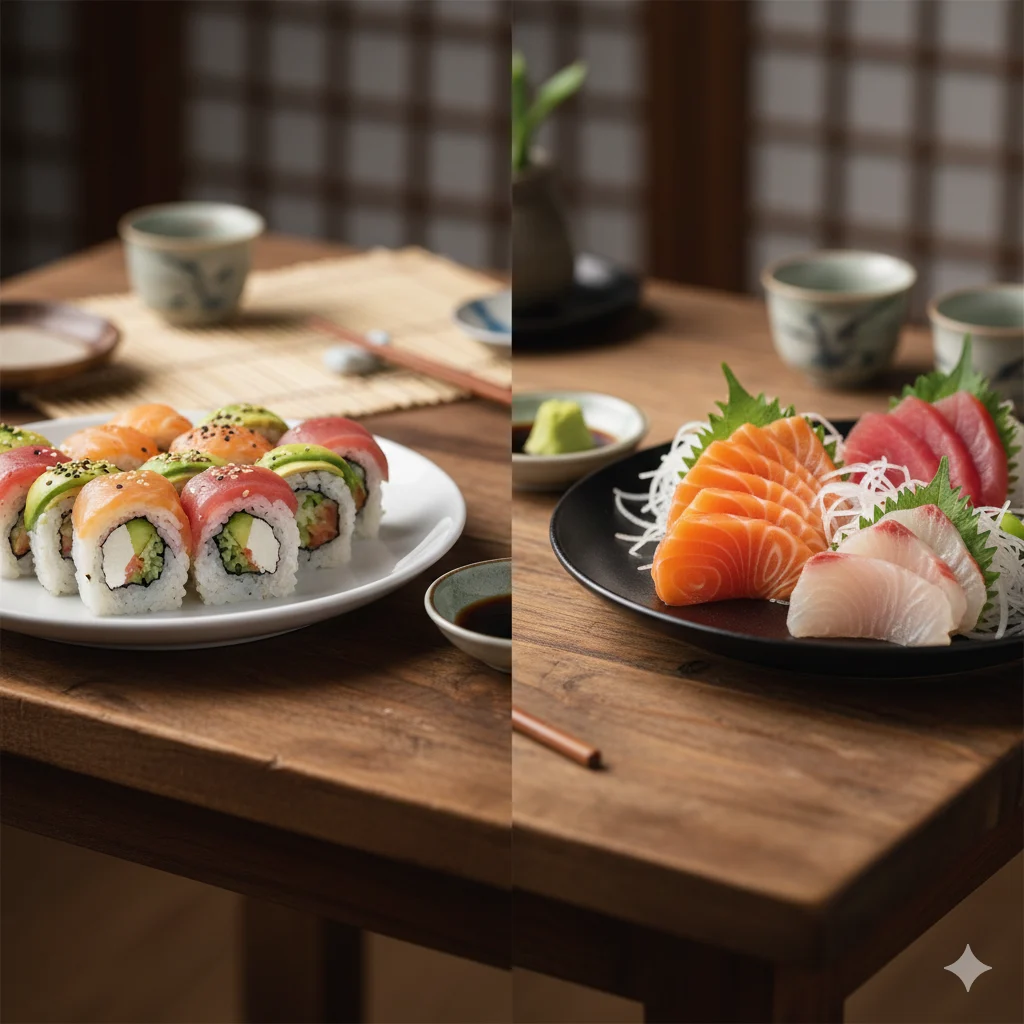
Many people get confused about sushi or sashimi. Are they the same? Is sashimi just another name for sushi? Or is there a real difference between sushi and sashimi?
If you love Japanese food or often see these words on restaurant menus, this guide will help you understand everything clearly. Many beginners think both words mean “raw fish.” But that is not fully correct. There is a small but very important difference.
In this easy guide, you will learn the meaning of sushi and sashimi, the correct usage of each word, simple English examples, and common mistakes people make. Don’t worry. The explanation is so simple that even a 4th-grade student can understand it. Let’s begin!
What Does Sushi Mean?
Sushi is a Japanese dish made with vinegar rice and other ingredients. These ingredients can include raw fish, cooked fish, vegetables, or eggs.
The most important part of sushi is not the fish. It is the rice. The rice is mixed with vinegar, sugar, and salt. That special rice is what makes something sushi.
Part of Speech
“Sushi” is a noun. It is the name of a food.
Simple Examples of Sushi
- I ate sushi for dinner.
- She likes vegetable sushi.
- We ordered sushi at the Japanese restaurant.
Easy Way to Remember
Think of sushi like a sandwich. A sandwich must have bread. Sushi must have vinegar rice. Without the rice, it is not sushi.
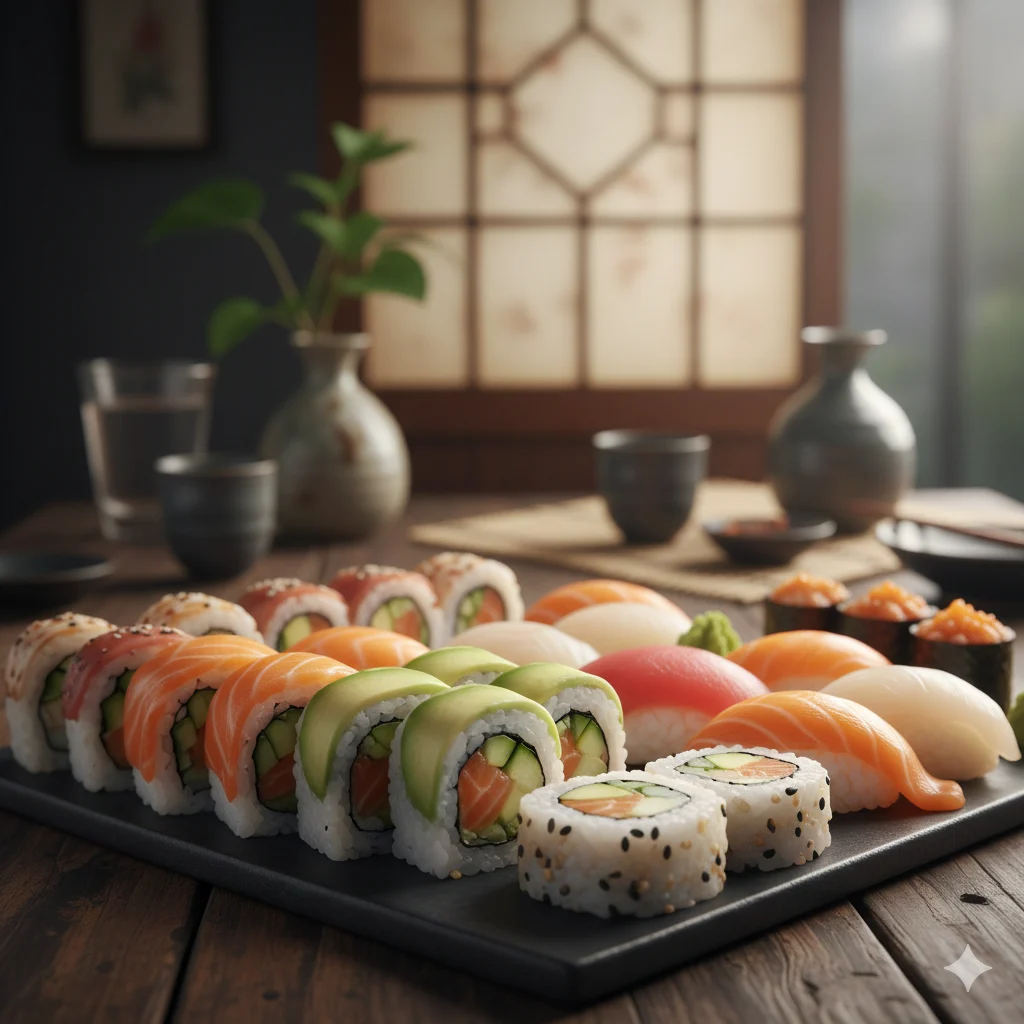
Types of Sushi
Some common types include:
- Nigiri (rice with fish on top)
- Maki (rolled sushi)
- California rolls (rice, crab, avocado)
Not all sushi has raw fish. Some sushi is completely cooked.
What Does Sashimi Mean?
Sashimi is thin slices of raw fish or meat. It does not include rice.
It is usually served alone, often with soy sauce or wasabi. The focus of sashimi is the fresh, high-quality fish.
Part of Speech
“Sashimi” is also a noun. It is the name of a dish.
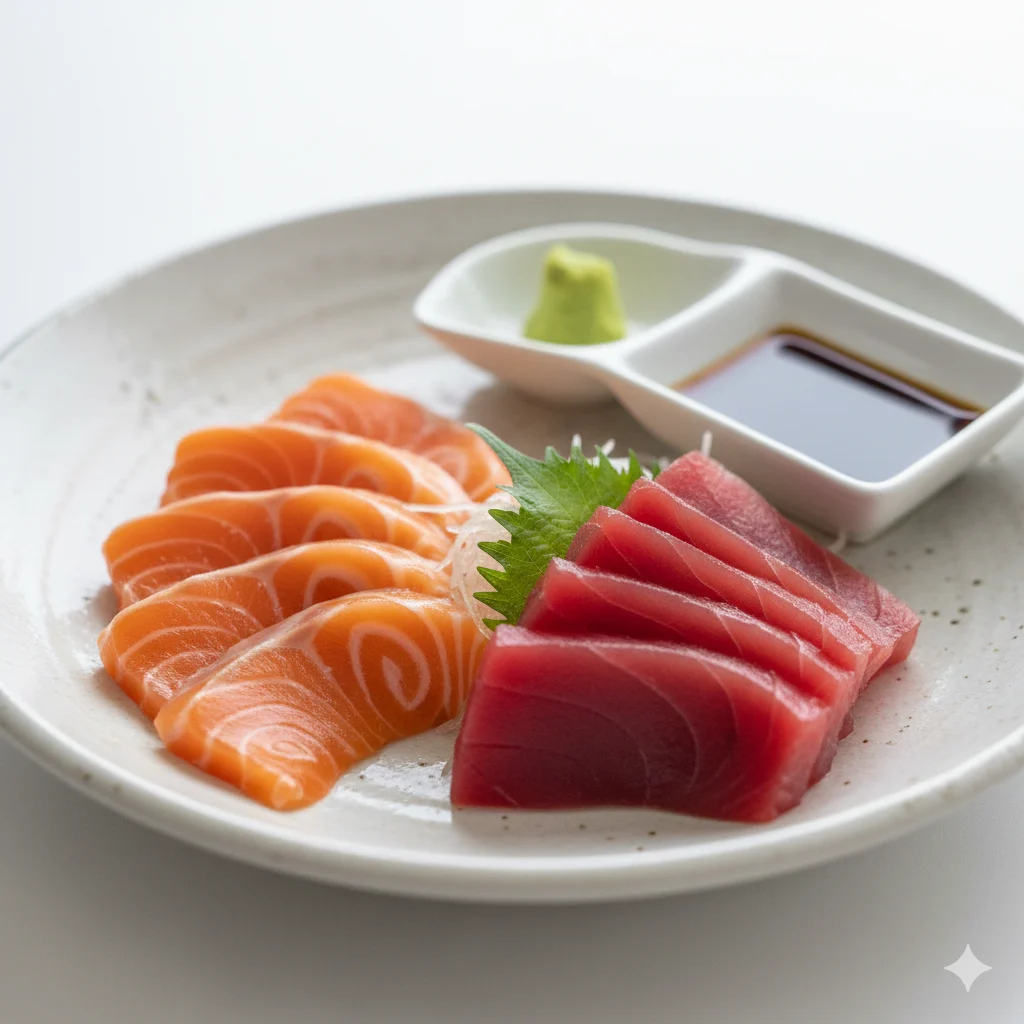
Simple Examples of Sashimi
- He ordered salmon sashimi.
- I tried tuna sashimi for the first time.
- She does not eat sashimi because it is raw.
Easy Way to Remember
Sashimi is just the fish. No rice. No roll. No wrapping. Just clean slices.
Imagine sushi as a full meal with rice, and sashimi as only the main protein.
The Key Difference Between Sushi and Sashimi
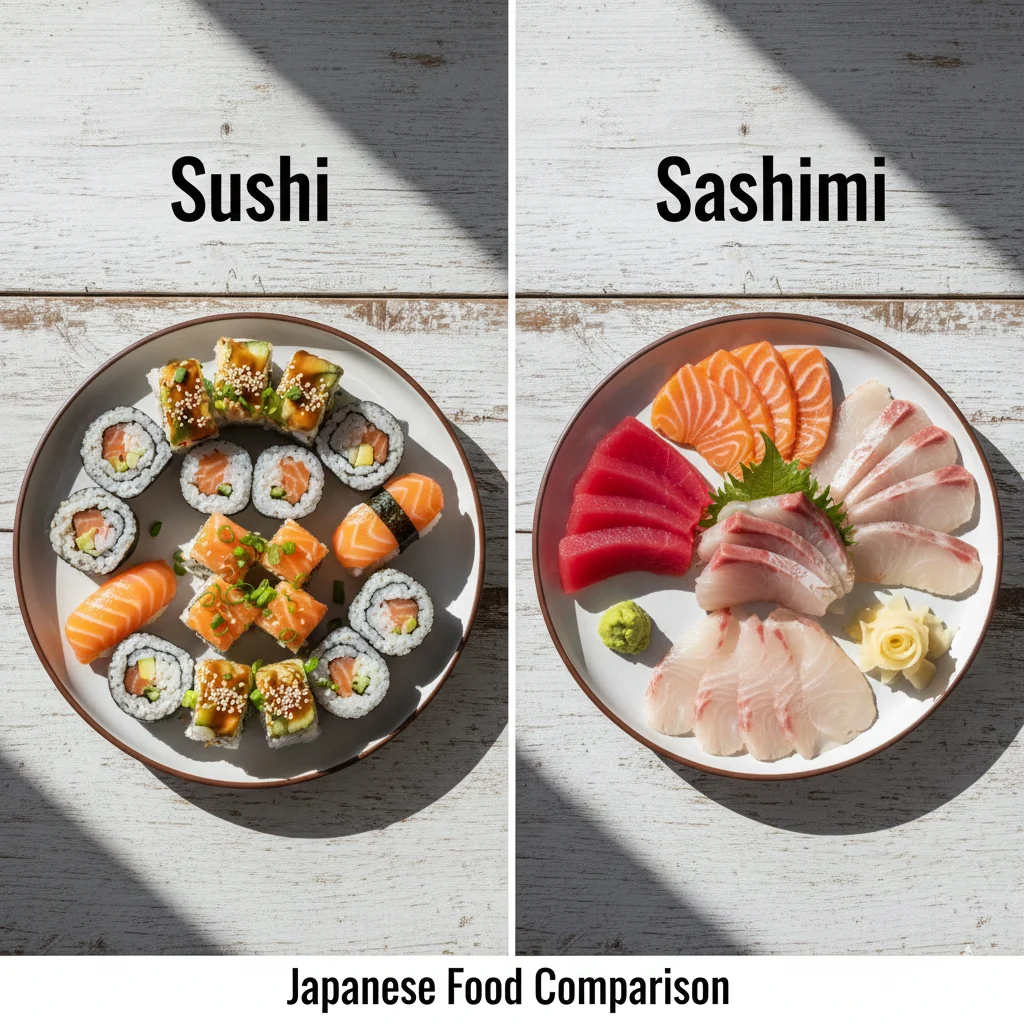
Many people ask, “What’s the difference between sushi and sashimi?” Here is a simple comparison table.
| Feature | Sushi | Sashimi |
|---|---|---|
| Main Ingredient | Vinegar rice | Raw fish or meat |
| Contains Rice? | Yes | No |
| Always Raw? | No | Yes (usually) |
| Example | Tuna roll | Tuna slices |
Quick Tip
If there is rice, it is sushi.
If there is no rice, it is sashimi.
That one rule can help you avoid confusion.
Common Mistakes and How to Avoid Them
Even food lovers make mistakes when using sushi or sashimi. Let’s look at some common errors.
Mistake 1
❌ I ate sashimi rolls.
✔️ I ate sushi rolls.
Why? Rolls always include rice. That makes them sushi, not sashimi.
Mistake 2
❌ Sushi is always raw fish.
✔️ Sushi can be raw or cooked.
Many people think sushi means raw fish. But sushi can include cooked shrimp, fried fish, or vegetables.
Mistake 3
❌ Sashimi is a type of sushi.
✔️ Sashimi is different from sushi.
Sashimi does not contain rice, so it is not sushi.
When to Use Sushi
Use the word sushi when talking about food that includes vinegar rice.
Situations Where Sushi Is Correct
- At a restaurant menu
- Talking about rolls
- Describing rice-based Japanese dishes
- Writing a food blog
Example Sentences
- Let’s eat sushi tonight.
- My sister loves avocado sushi.
- This restaurant makes fresh sushi every day.
- We learned how to make sushi at school.
- Sushi is popular all over the world.
Real-Life Example
If you go to a birthday party and see small rice rolls with fish, you can say, “Wow, this sushi looks delicious!”
When to Use Sashimi
Use the word sashimi when talking about thin slices of raw fish or meat without rice.
Situations Where Sashimi Is Correct
- Describing raw fish only
- Ordering fish without rice
- Talking about high-quality seafood
Example Sentences
- He prefers sashimi over sushi.
- The chef served fresh salmon sashimi.
- I tasted tuna sashimi for the first time.
- Sashimi is simple but elegant.
- She eats sashimi with soy sauce.
Memory Hack
Think:
Sashimi = “S” for Slices.
Both words start with “S.” Sashimi means slices of raw fish.
Sushi or Sashimi in Restaurants
When you look at a Japanese menu, you might see both options. Knowing the correct usage helps you order properly.
If you want rice with your fish, say sushi.
If you want only fish, say sashimi.
This small difference can change your entire meal.
Quick Recap: Sushi vs Sashimi
Here is a short and simple review.
Sushi:
- Has vinegar rice
- Can include raw or cooked food
- Often rolled or shaped
- Very popular worldwide
Sashimi:
- No rice
- Only thin slices of raw fish or meat
- Simple and fresh
- Focus on quality seafood
Remember: Rice = Sushi. No rice = Sashimi.
A Little History
Both sushi and sashimi come from Japan.
Sushi started many years ago as a way to preserve fish using fermented rice. Over time, it became the delicious dish we know today.
Sashimi has always focused on fresh, high-quality seafood. In traditional Japanese culture, the appearance and freshness of sashimi are very important.
Today, both dishes are popular in countries like United States, United Kingdom, and Pakistan.
Sushi and Sashimi in Exams and Writing
In English exams, you may need to explain the difference between sushi and sashimi clearly.
A good answer could be:
“Sushi is a Japanese dish made with vinegar rice and other ingredients. Sashimi is thin slices of raw fish served without rice.”
In food blogs or essays, using the correct word shows that you understand the meaning in English properly.
Using the wrong word can confuse readers. For example, calling sashimi a sushi roll would be incorrect.
How Social Media Causes Confusion
On Instagram and TikTok, many people post pictures and write “sushi” even when they are eating sashimi.
This common mistake spreads confusion. That is why knowing the grammar difference between these food terms is helpful.
Clear words make clear communication.
Mini Quiz: Test Your Understanding
Fill in the blanks with sushi or sashimi.
- I ordered tuna ______ without rice.
- She loves vegetable ______ rolls.
- Salmon ______ is served in thin slices.
- We made homemade ______ with rice and cucumber.
- He prefers ______ because it has no rice.
- This ______ includes cooked shrimp and rice.
Answers
- sashimi
- sushi
- sashimi
- sushi
- sashimi
- sushi
How many did you get right?
Frequently Asked Questions (FAQs)
1. What is the main difference between sushi and sashimi?
The main difference between sushi and sashimi is rice. Sushi includes vinegar rice. Sashimi does not include rice.
2. Is sushi always raw?
No. Sushi can be raw or cooked. Some sushi includes fried shrimp or vegetables.
3. Is sashimi healthier than sushi?
It depends. Sashimi has no rice, so it has fewer carbohydrates. Sushi includes rice, which adds calories.
4. Can vegetarians eat sushi?
Yes. There are many vegetable sushi options. But sashimi is usually raw fish, so it is not vegetarian.
5. Why do people confuse sushi and sashimi?
Many people think sushi means raw fish. But that is not correct. Sushi is about the rice, not just the fish.
Conclusion
Now you understand the difference between sushi or sashimi clearly. Sushi includes vinegar rice and other ingredients. Sashimi is thin slices of raw fish without rice.
The key difference is simple: rice means sushi. No rice means sashimi.
By learning the correct usage and meaning in English, you can speak more confidently at restaurants, in exams, or in daily conversations. Small word differences matter. Keep practicing, keep learning, and your English will improve every day!

Elizabeth Gaskell was a Victorian English novelist and biographer, celebrated for social realism, strong female characters, and industrial age themes. era life.