Many English learners often stumble over words like “sung” and “sang”. Both come from the verb “to sing,” but using them incorrectly can make a sentence sound awkward or wrong. Have you ever said, “I have sang a song” or “She sung yesterday” and felt unsure? Don’t worry — you are not alone.
In this complete guide, we will explain what each word means, their part of speech, and the key differences between sung and sang. You’ll also find common mistakes, real-life examples, memory tricks, and even a mini quiz to test yourself.
By the end of this article, you’ll confidently know when to use sung and when to use sang, making your English sound natural and correct. Even beginners and young learners will find this guide easy to follow and fun.
What Does Each Word Mean?
Sang
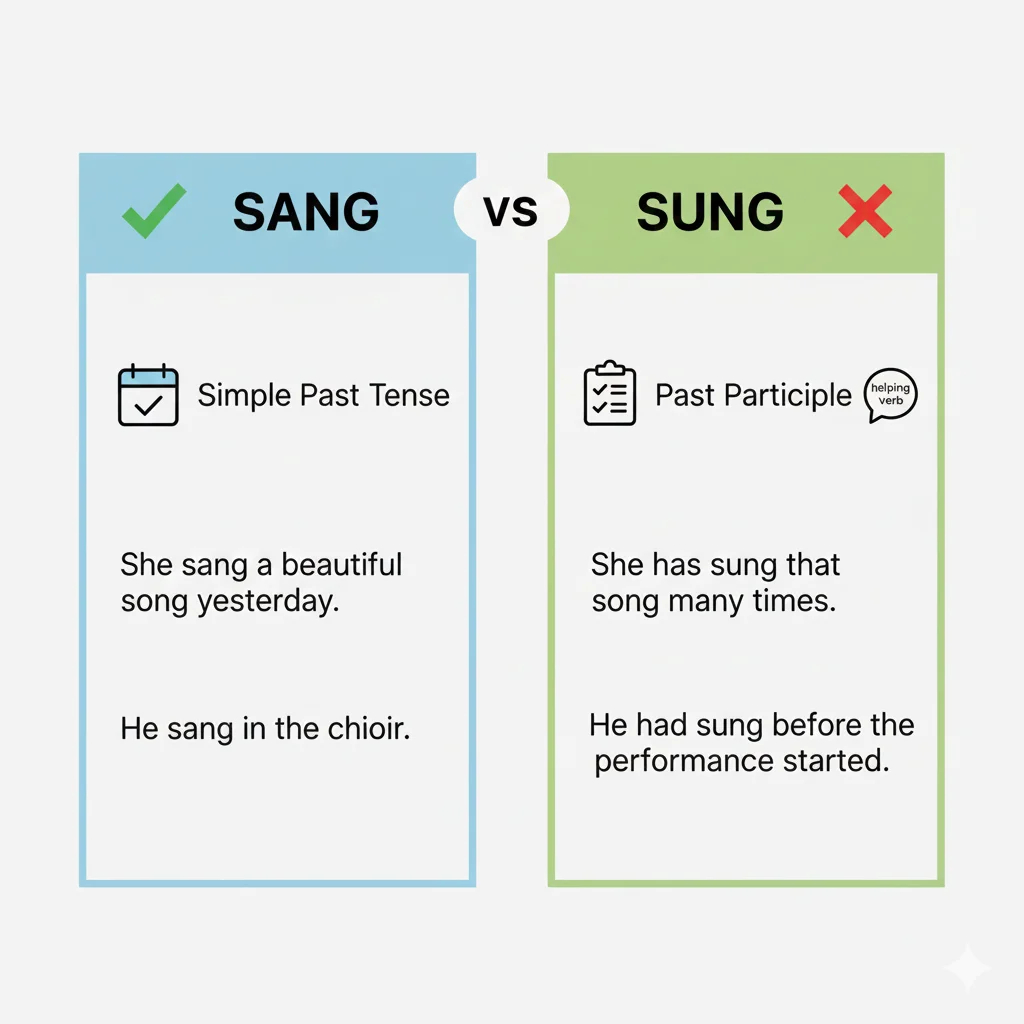
- Meaning: “Sang” is the past tense of the verb “sing.” It is used to describe an action that happened at a specific time in the past.
- Part of Speech: Verb (past tense)
Examples:
- Yesterday, I sang my favorite song at school.
- He sang beautifully at the party last night.
- They sang together during the festival.
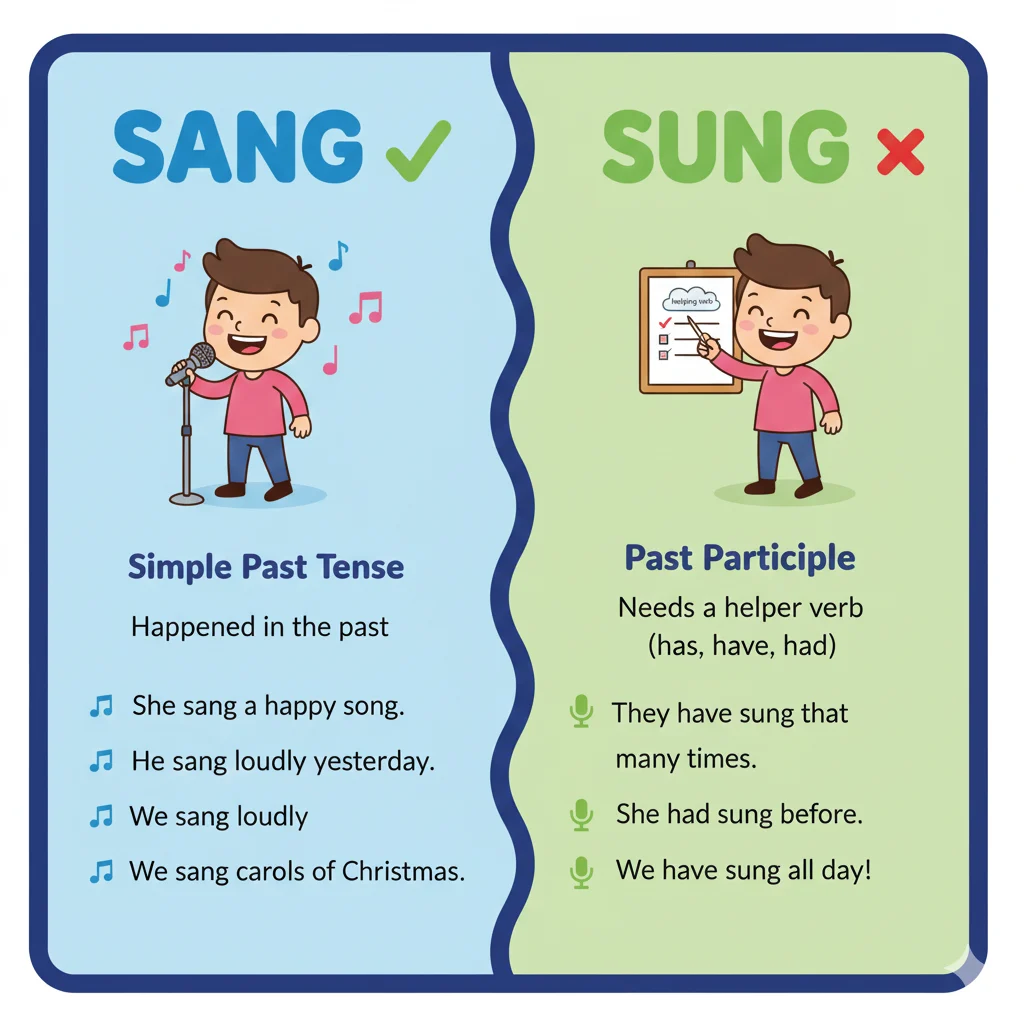
Think of “sang” as the storyteller of the past. It tells what happened yesterday, last week, or even years ago.
Sung
- Meaning: “Sung” is the past participle of “sing.” It is used with have, has, or had to show completed actions or actions connected to the present.
- Part of Speech: Verb (past participle)
Examples:
- I have sung this song many times before.
- She has sung at three different concerts this year.
- They had sung together before the event started.
Think of “sung” as the helper word, often appearing with “have” or “had,” showing the action is done.
The Key Difference Between Sung and Sang
| Feature | Sang | Sung |
|---|---|---|
| Tense | Past simple | Past participle (used with have/has/had) |
| Usage | Action completed in the past | Action connected to past or present with auxiliary verbs |
| Example | I sang a song yesterday. | I have sung this song before. |
| Memory Tip | “Sang” = specific time in the past | “Sung” = needs “have/has/had” |

Quick Tip:
If you can place yesterday, last night, or in 2010 in your sentence, it’s probably sang. If you are talking about an action you have done or completed, choose sung.
Common Mistakes and How to Avoid Them
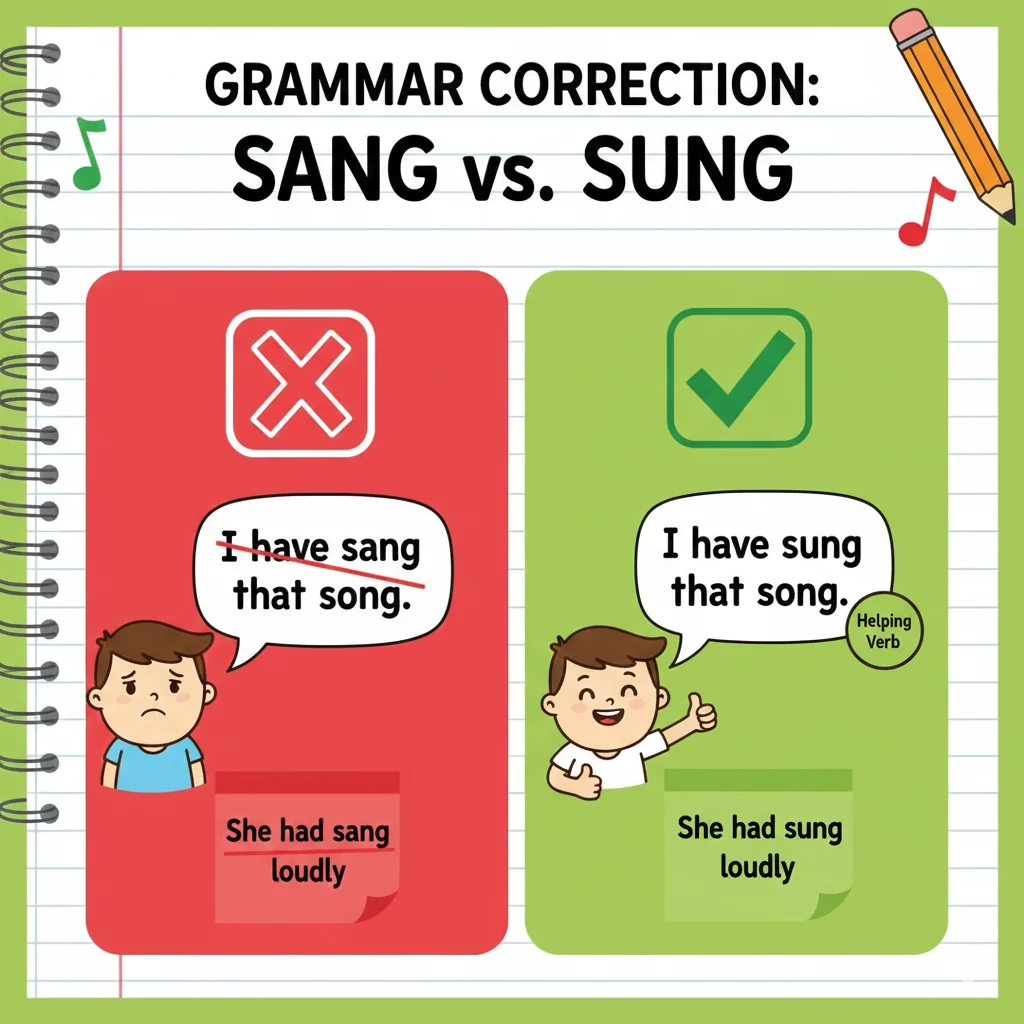
- Incorrect: I have sang this song many times.
Correct: I have sung this song many times.
Why: “Have” requires the past participle, not the simple past. - Incorrect: She sung at the party last night.
Correct: She sang at the party last night.
Why: No auxiliary verb here, so we use simple past “sang.” - Incorrect: They has sang together before.
Correct: They have sung together before.
Why: Subject-verb agreement with “have” + past participle “sung” is needed.
When to Use Sang
Use sang in these situations:
- Actions completed at a specific time in the past.
- Past storytelling or recounting events.
- Talking about yesterday, last week, or any time before now.
Examples:
- I sang at my friend’s birthday party yesterday.
- She sang the national anthem at the school assembly.
- We sang along to the radio while traveling.
- My dad sang in a choir when he was young.
- They sang all the songs from the musical.
Memory Hack: Picture a calendar. “Sang” points to a specific date in the past.
When to Use Sung
Use sung in these situations:
- With have, has, or had for actions completed at an unspecified time.
- For actions that continue into the present or are relevant now.
- Formal writing, storytelling, or reflecting experiences.
Examples:
- I have sung in many school concerts.
- She has sung this song better than anyone else.
- We had sung together before the choir competition.
- My brother has sung in front of thousands of people.
- They have sung beautifully throughout the event.
Visual Trick: Think of “have + sung” as a complete box — the action is done, packed, and ready.
Quick Recap: Sang vs Sung
- Sang: Past tense, used for specific times in the past.
- Sung: Past participle, used with have, has, or had.
- Tip: If you can say “yesterday” or a date, use sang. If you need have/has/had, use sung.
- Common Mistake: Don’t mix simple past and past participle with auxiliary verbs.
Advanced Tips
- Origin: Both words come from Old English “singan.” “Sang” evolved as past tense, “sung” as past participle.
- Formal Writing: Use sung in essays or official documents for correct grammar.
- Texting Mistake: Writing “I have sang” or “She sung yesterday” is wrong and can confuse readers.
Mini Quiz
Fill in the blanks:
- I ____ this song yesterday.
- She has ____ in many concerts.
- We ____ together last week.
- They have never ____ this song before.
- My brother ____ a beautiful song last night.
Answers: 1. sang | 2. sung | 3. sang | 4. sung | 5. sang
FAQs
- Can I use sung instead of sang?
No, sung must follow have, has, or had. - Is sang only for singing songs?
No, “sing” can refer to any act of producing musical voice. - Why do people confuse sang and sung?
Because both are past forms of “sing,” but one is simple past and the other is past participle. - Can I say “I sung yesterday”?
No, the correct form is “I sang yesterday.” - Is sung used in daily conversation?
Yes, but mostly with have/has/had: “I have sung this song many times.”
Conclusion
Now you know the difference between sang and sung. Remember: use sang for specific past actions and sung with have, has, or had for completed actions. With practice, these words will feel natural, and you’ll stop making common mistakes in conversation, writing, or exams.
Start noticing these words in songs, stories, or your daily conversations. Try making your own sentences and using the memory tricks we shared — a calendar for sang and a “completed box” for sung. English grammar becomes easy when you understand the simple rules behind it. Keep practicing, and soon you’ll use sang and sung perfectly every time. Learning a little each day leads to big improvements.

Dorothy Whipple was an English novelist and short story writer, famed for emotional realism, domestic themes, and sharp insight into women’s lives. worldwide UK