Have you ever watched an anime or a foreign movie and heard people say, “I prefer sub,” while others say, “I like dub”? Many English learners get confused about sub or dub because both words are connected to movies and TV shows.
So, what’s the difference between sub and dub? Are they the same? Which one should you choose?
In this complete guide, you will learn:
- The meaning of sub and dub
- The key difference between sub and dub
- Correct usage with simple English examples
- Common mistakes and how to avoid them
- Easy memory tips to remember both words
Don’t worry. This guide is written in very simple English. Even a 4th-grade student can understand it easily. Let’s begin!
What Does “Sub” Mean?
The word sub is short for subtitle.
When you watch a movie in another language and read the words at the bottom of the screen, that is called a sub.
For example:
- A Japanese anime with English text at the bottom is a “sub.”
- A Korean drama with English subtitles is also a “sub.”
Part of Speech
- “Sub” is usually a noun.
- It can also be a short form (abbreviation) of “subtitle.”

Simple Definition
A sub means you hear the original language, but you read the translation on the screen.
Easy Examples of Sub
- I watched the anime with English subs.
- This movie is in Spanish, but it has English subtitles.
- I like sub because I can hear the real voices.
Small Story to Remember
Imagine you are watching a Japanese cartoon. The characters speak Japanese. You cannot understand Japanese. But you see English words at the bottom. Those words help you understand the story. That is sub.
You listen in one language and read in another.
What Does “Dub” Mean?
The word dub comes from “dubbing.”
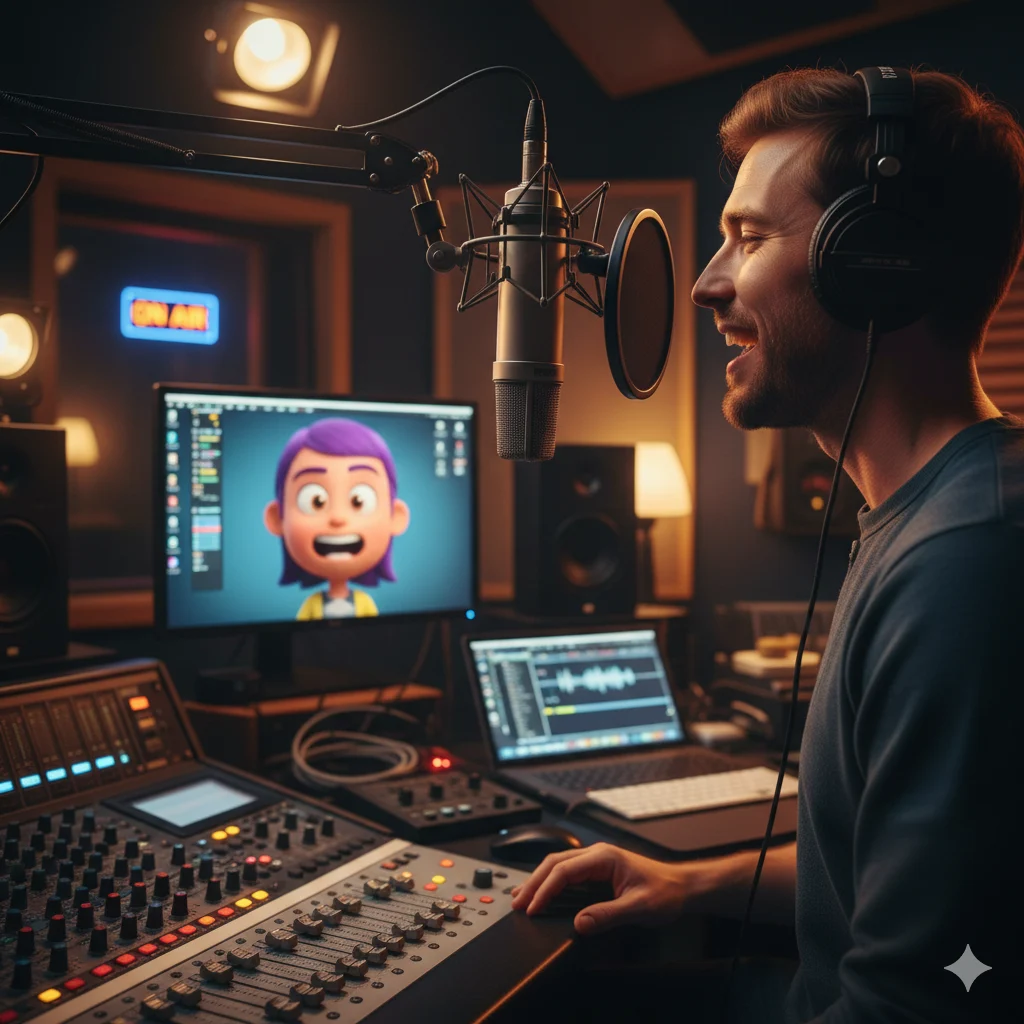
When a movie is dubbed, the original voices are replaced with new voices in another language.
For example:
- A Japanese anime with English voices is a dub.
- A Korean drama with Hindi voices is also a dub.
Part of Speech
- “Dub” is usually a noun.
- It can also be a verb (to dub a movie).
Simple Definition
A dub means the voices are changed into another language.
You hear the translation instead of reading it.
Easy Examples of Dub
- I watched the English dub of the anime.
- This cartoon was dubbed in Urdu.
- My little brother prefers dub because he does not like reading subtitles.
Small Story to Remember
Imagine the same Japanese cartoon. But now, the characters speak English instead of Japanese. Someone recorded new voices. You do not need to read anything. That is dub.
You listen in your language.
The Key Difference Between Sub and Dub
Many people ask: What’s the difference between sub and dub?
Here is a simple comparison table to help you understand clearly:
| Feature | Sub | Dub |
|---|---|---|
| Meaning | Shows text translation on screen | Replaces original voices |
| What You Hear | Original language | Translated language |
| What You Read | Yes, subtitles | No subtitles needed |
| Example | Japanese audio + English text | English audio instead of Japanese |
| Best For | People who want original voices | People who don’t like reading |
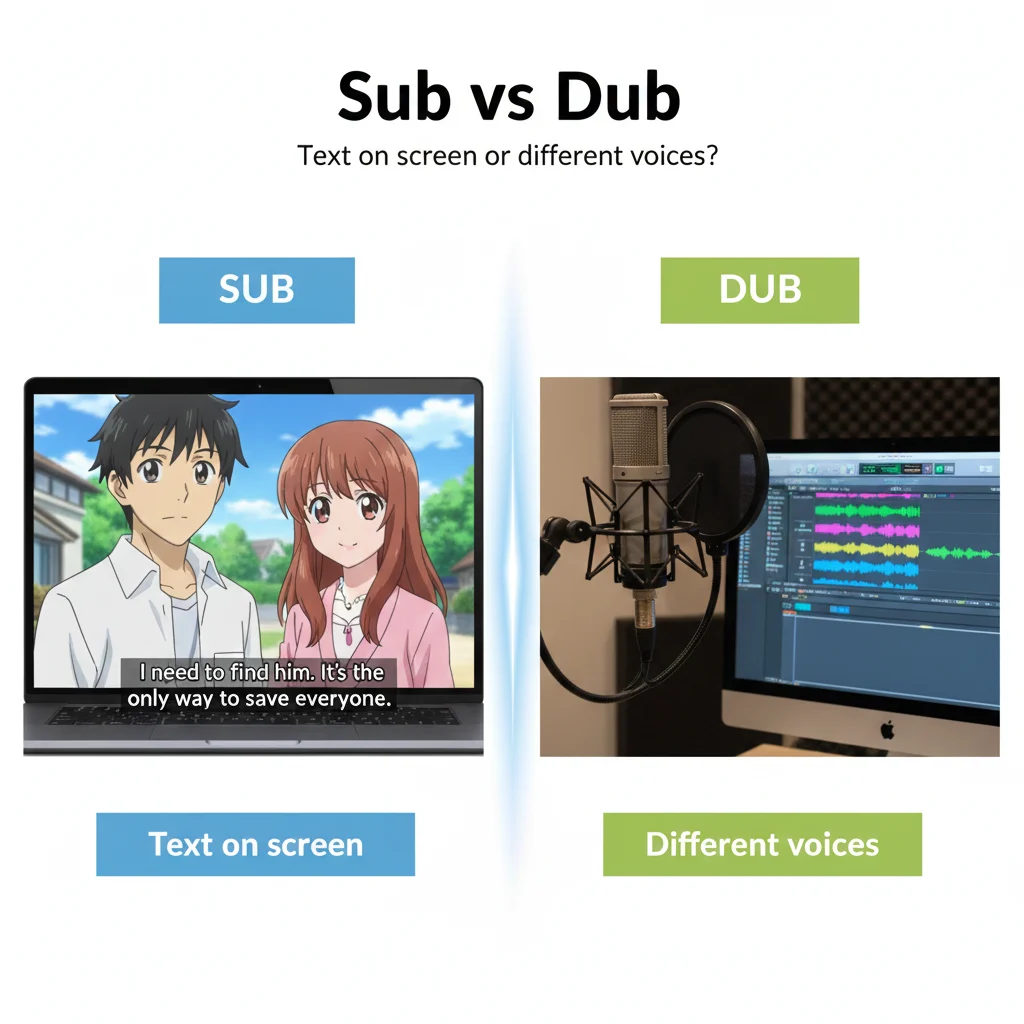
Quick Tip to Remember
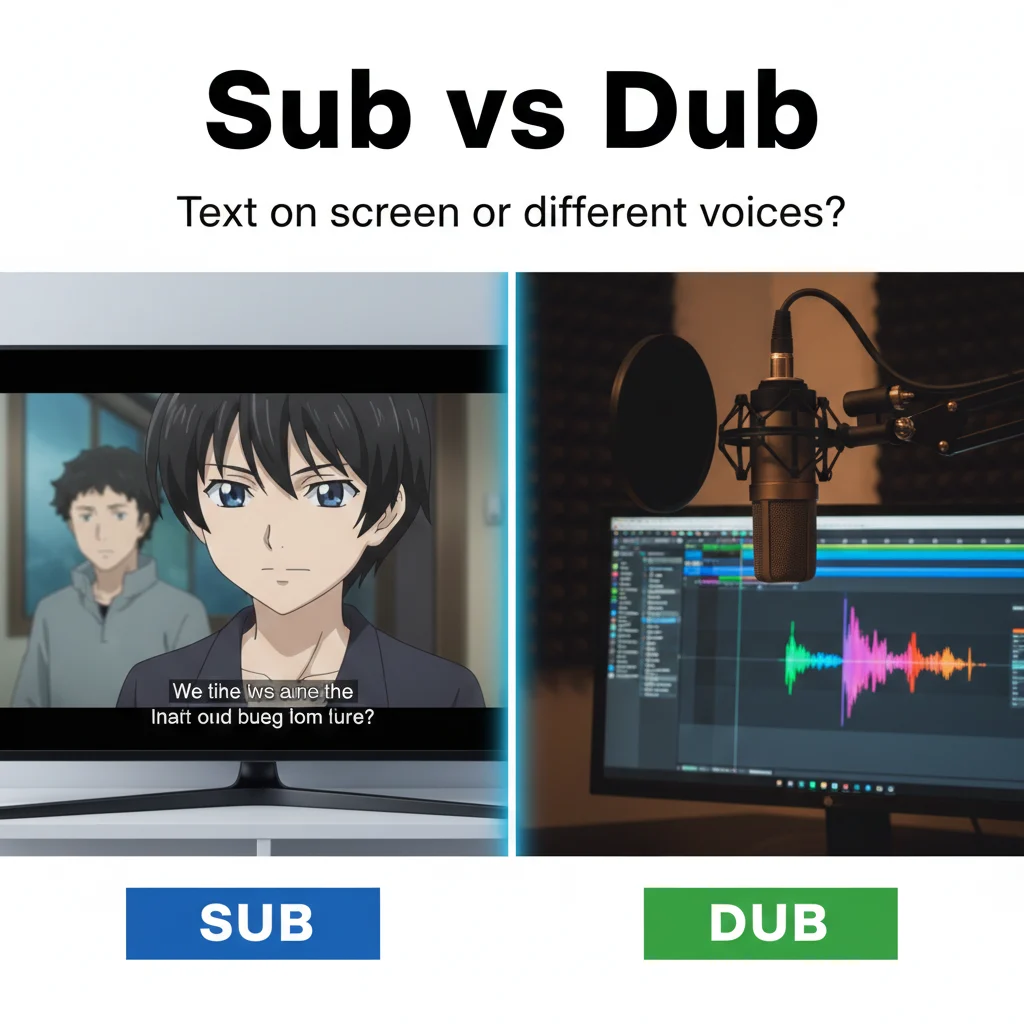
- Sub = See words on Screen
- Dub = Different voices
Sub starts with S → Screen text
Dub starts with D → Different voices
This small trick makes it easy to remember!
Common Mistakes and How to Avoid Them
When learning the difference between sub and dub, people often make small mistakes. Let’s fix them.
Mistake 1
❌ I watched the movie in sub and heard English voices.
✅ I watched the movie in dub and heard English voices.
Why?
If you hear English voices instead of the original language, it is dub, not sub.
Mistake 2
❌ The anime was dubbed, so I had to read subtitles.
✅ The anime had subtitles, so I had to read them.
Why?
If you are reading words on the screen, that is sub, not dub.
Mistake 3
❌ Sub means changing the voices.
✅ Dub means changing the voices.
Remember:
- Sub = text
- Dub = voice change
When to Use “Sub”
You should use sub when talking about subtitles.
Here are common situations:
1. When You Want Original Voices
Many anime fans prefer sub because they like the original acting.
Example:
- I prefer sub because the original voice actors sound better.
2. When Learning a Language
Subtitles can help you learn new words.
Example:
- I watch Korean dramas with English subs to learn Korean.
3. When Talking About Foreign Films
Example:
- This French movie only has English subs.
4. In Online Discussions
Example:
- Do you prefer sub or dub?
5. On Streaming Platforms
Example:
- This show is available in sub and dub.
When to Use “Dub”
You should use dub when talking about changed voices.
1. For Kids
Young children may not like reading subtitles.
Example:
- My sister watches only the dub version.
2. When You Don’t Want to Read
Some people want to relax.
Example:
- I am tired, so I will watch the dub.
3. For Casual Watching
Example:
- The English dub is very good in this series.
4. When Talking About Voice Actors
Example:
- The dub actor did a great job.
5. In School or Conversations
Example:
- Our teacher showed us the dubbed version of the movie.
Quick Recap: Sub vs Dub
Here is a short and simple recap:
- Sub shows translated text.
- Dub changes the voices.
- Sub keeps original language.
- Dub replaces original language.
- Sub is good for language learning.
- Dub is good if you don’t want to read.
Very simple rule:
If you read → Sub
If you only listen → Dub
A Little History (Advanced Tip)
Subtitles have been used for many years, especially in international films. Countries like Japan often keep original voices and add subtitles for other countries.
Dubbing became popular for TV and cartoons so children could understand easily. Today, platforms like Netflix and Crunchyroll offer both sub and dub options.
In formal writing or exams, you might write:
- The film was released with English subtitles.
- The movie was dubbed in multiple languages.
Using the correct word makes your English clear and professional.
Mini Quiz: Test Your Understanding
Fill in the blanks with sub or dub:
- I watched the English ______ of the anime.
- This movie has Spanish audio and English ______.
- My friend prefers ______ because he does not like reading.
- The show was ______ in Hindi.
- I enjoy hearing the original voices, so I choose ______.
(Answers: 1. dub, 2. sub, 3. dub, 4. dubbed, 5. sub)
FAQs About Sub or Dub
1. What is the main difference between sub and dub?
Sub shows text translation. Dub replaces the original voices with another language.
2. Is sub better than dub?
It depends on personal choice. Some people like original voices (sub). Others prefer easy listening (dub).
3. Is dub easier to watch?
Yes. You don’t need to read subtitles, so it feels easier for many people.
4. Does sub help in learning languages?
Yes. Reading subtitles can improve vocabulary and listening skills.
5. Can a movie have both sub and dub?
Yes. Many streaming platforms offer both options.
Conclusion
Now you clearly understand the difference between sub and dub. Sub means you read translated text while hearing the original voices. Dub means the voices are changed into your language.
Both are correct. You just need to choose the right word for the right situation.
Practice using these words in daily conversations. Ask your friends, “Do you prefer sub or dub?” The more you use them, the more confident you will feel.
Keep learning. Keep practicing. Your English will improve every day!

Wilkie Collins was a Victorian English novelist and playwright, pioneer of detective fiction and sensation novels, blending mystery, suspense, and social critique.