Many English learners get confused between stationary and stationery. These two words look very similar and even sound the same. That’s why they are often mixed up in writing and speaking.
If you’ve ever asked yourself, “Which is correct, stationary or stationery?” — you are not alone. This is one of the most common grammar mistakes in English.
In this easy guide, you will learn the stationary or stationery meaning, their correct usage, and simple tricks to remember them forever. We will also cover difference between stationary and stationery with example, pronunciation, and real-life sentences.
Don’t worry — everything is explained in a very simple way. Even a beginner or a class 4 student can understand it easily.
What Does Each Word Mean?
1. Stationary (with “a”)
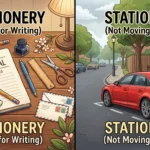
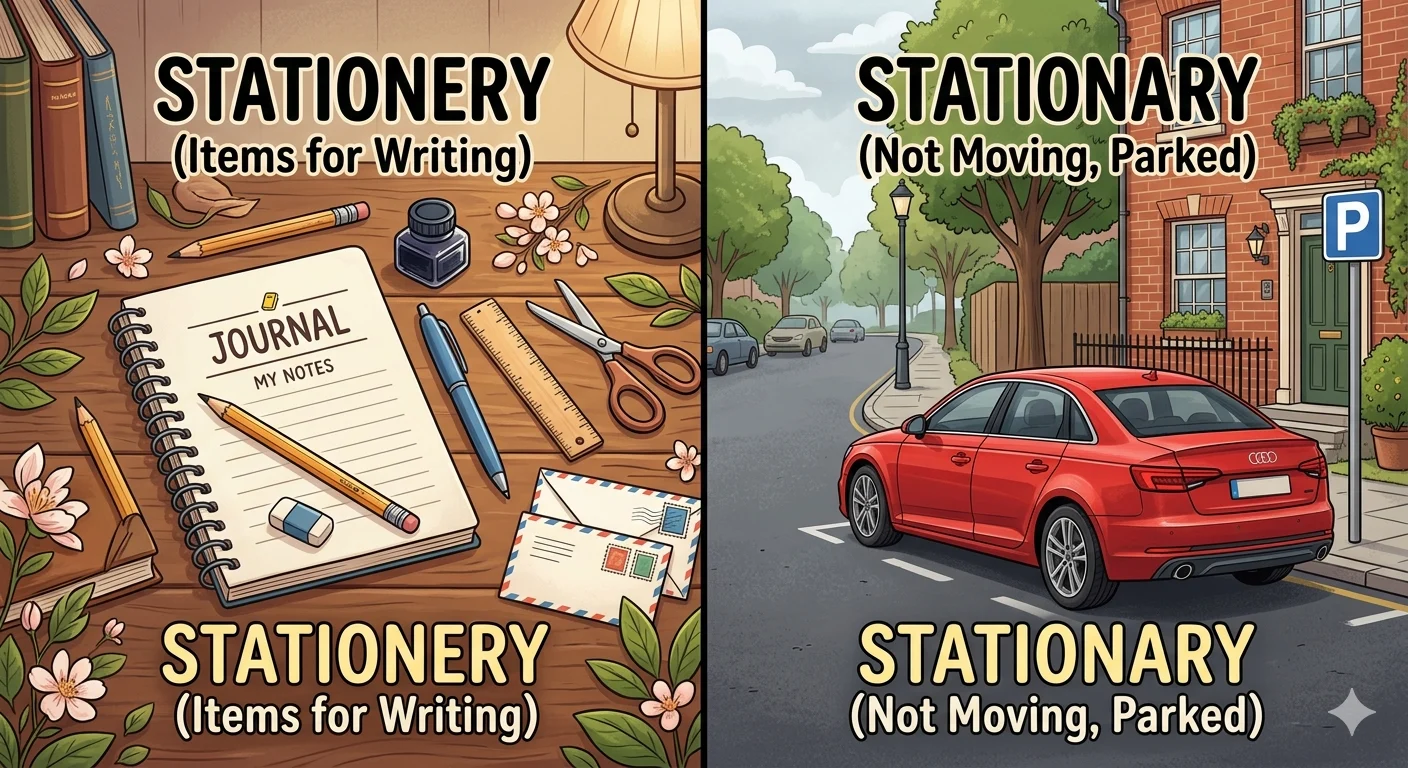
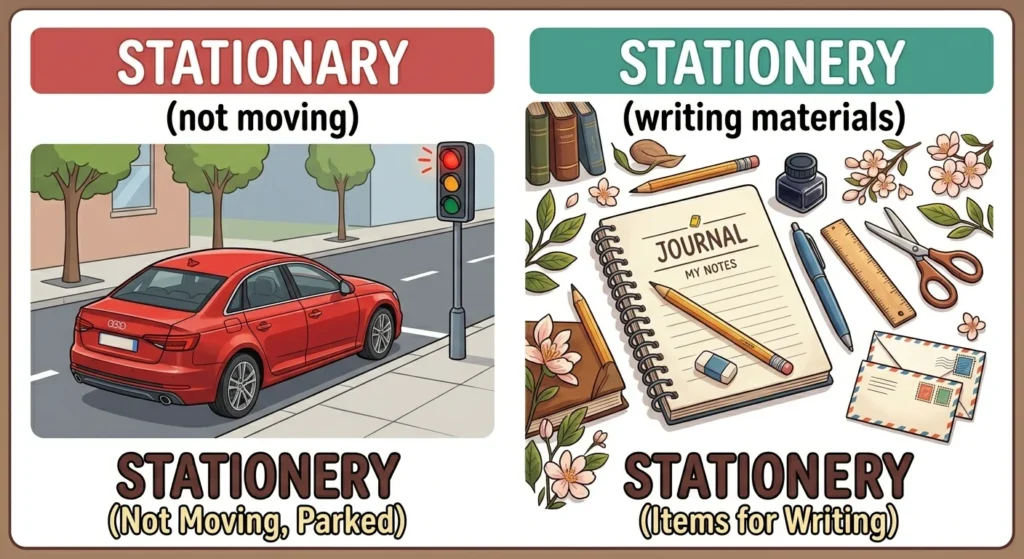
Stationary means not moving or staying in one place.
👉 It is usually used as an adjective.
Easy Examples:
- The car was stationary at the red light.
- The fan stopped and became stationary.
- He stood stationary while waiting for the bus.
Simple Idea:
Think of something that does not move — like a parked car.
2. Stationery (with “e”)
Stationery means paper, pens, pencils, notebooks, and office supplies.
👉 It is used as a noun.
Easy Examples:
- I bought new stationery for school.
- She loves colorful stationery.
- The shop sells office stationery items.
👉 Stationery meaning paper and writing materials.
Fun Way to Remember:
- Stationery = “e” for envelope ✉️
- Envelopes are part of writing supplies!
The Key Difference Between Stationary and Stationery
| Feature | Stationary | Stationery |
|---|---|---|
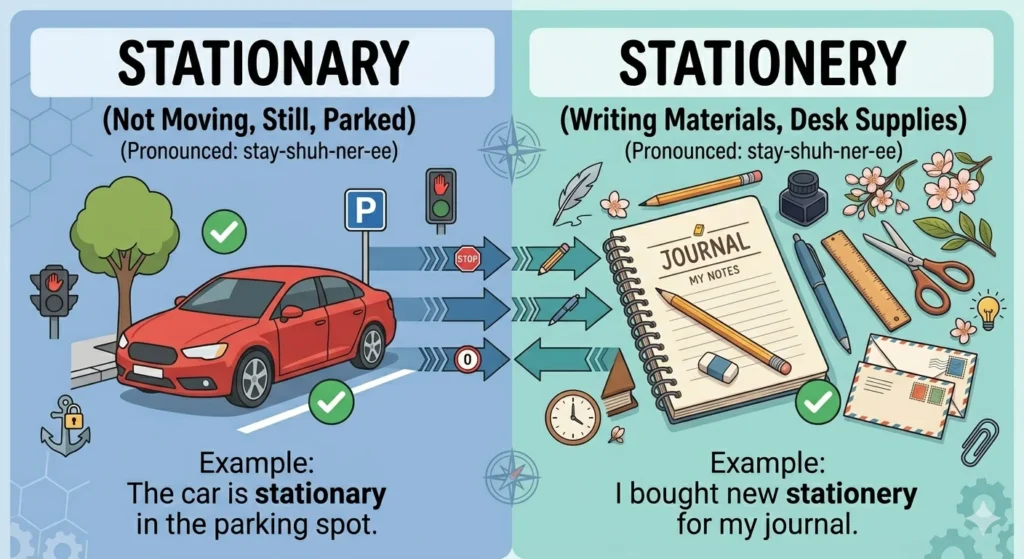
| Meaning | Not moving | Writing materials |
| Type | Adjective | Noun |
| Example | The car is stationary | I bought stationery |
| Use | Describing position | Naming objects |
👉 Quick Tip:
If you are talking about movement, use stationary.
If you are talking about pens, paper, or school items, use stationery.
Stationary and Stationery Pronunciation
Both words sound almost the same:
👉 /ˈsteɪʃəneri/
That’s why stationary and stationery are homophones (words that sound the same but have different meanings).
Common Mistakes and How to Avoid Them
❌ Wrong:
- I bought new stationary for school.
✅ Correct:
- I bought new stationery for school.
👉 Why? Because pens and notebooks are writing items.
❌ Wrong:
- The car is stationery.
✅ Correct:
- The car is stationary.
👉 Why? The car is not moving.
❌ Wrong:
- This shop sells beautiful stationary.
✅ Correct:
- This shop sells beautiful stationery.
👉 Always use stationery for items like paper and pens.
When to Use “Stationary”
Use stationary when talking about something that is not moving.
Real-Life Examples:
- The bike remained stationary after the accident.
- The clock hands were stationary.
- The train was stationary at the station.
- He stayed stationary during the game.
- The ball is stationary on the ground.
👉 You can also say this is a stationary example when describing still objects.
When to Use “Stationery”
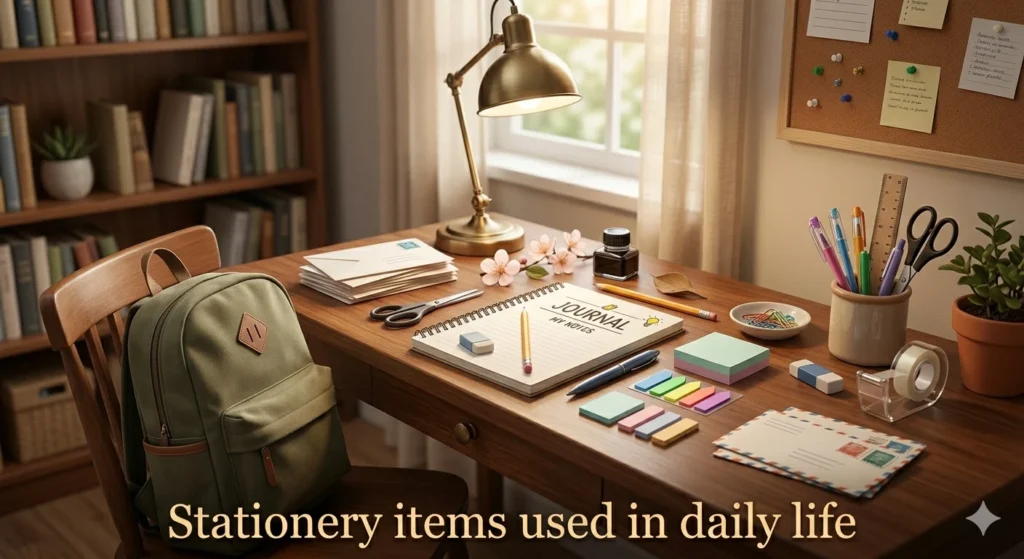
Use stationery when talking about writing or office supplies.
Real-Life Examples:
- I need stationery for my homework.
- The teacher gave us new stationery.
- She collects cute stationery items.
- The office ordered fresh stationery.
- My bag is full of stationery.
👉 This includes:
- Pens
- Paper
- Notebooks
- Envelopes
Memory Hack 🧠
👉 Stationery = “e” = envelope
👉 Envelope = paper = writing items
This trick helps you never forget!
Quick Recap: Stationary vs Stationery
- Stationary
- Means not moving
- Used as an adjective
- Example: The car is stationary
- Stationery
- Means writing materials
- Used as a noun
- Example: I bought stationery
- Both sound the same but have different meanings
- Always check the context before using
Advanced Tips (Optional but Helpful)
1. Origin of the Words
- Stationary comes from the word “station” (a place where something stays).
- Stationery comes from “stationer” (a person who sells paper and writing tools).
2. In Exams and Writing
In school exams, this mistake is very common.
👉 Example:
- Wrong spelling can reduce marks.
So always double-check:
- Writing items → stationery
- Not moving → stationary
3. Online Confusion
Many people search:
- “stationary or stationery reddit”
This shows that even native speakers get confused!
4. Canadian Spelling
👉 How do you spell stationary in Canada?
Answer: The spelling is the same — stationary and stationery are used the same way in Canada.
5. Important Question
👉 Are pens stationery or stationary?
✔️ Correct answer: Stationery
👉 What is a stationary?
It usually describes something that is not moving — not an object like a pen.
Mini Quiz (Test Yourself!)
Fill in the blanks:
- The car was __________ at the signal.
- I bought new __________ for school.
- The train remained __________.
- She loves colorful __________.
- The ball is __________ on the ground.
- My teacher gave me __________ items.
👉 Answers:
- stationary
- stationery
- stationary
- stationery
- stationary
- stationery
FAQs
1. Which is correct, stationary or stationery?
Both are correct, but they have different meanings. Use stationary for “not moving” and stationery for writing materials.
2. Are pens stationery or stationary?
Pens are stationery because they are writing tools.
3. What is a stationary?
“Stationary” describes something that is not moving, like a parked car.
4. What is stationery meaning paper?
Stationery means paper, pens, envelopes, and other writing supplies.
5. Why are stationary and stationery confusing?
Because they sound the same. They are homophones but have different meanings.
Conclusion
Now you clearly understand the difference between stationary and stationery. One means not moving, and the other means writing materials.
This confusion is very common, but with simple tricks like remembering “e for envelope,” you can easily use the correct word every time.
Keep practicing with real-life examples, and soon you won’t make this mistake again. Learning small differences like this can greatly improve your English.

Arthur Machen was a Welsh writer known for supernatural fiction, blending horror, mysticism, and folklore, and influencing modern weird literature worldwide Art