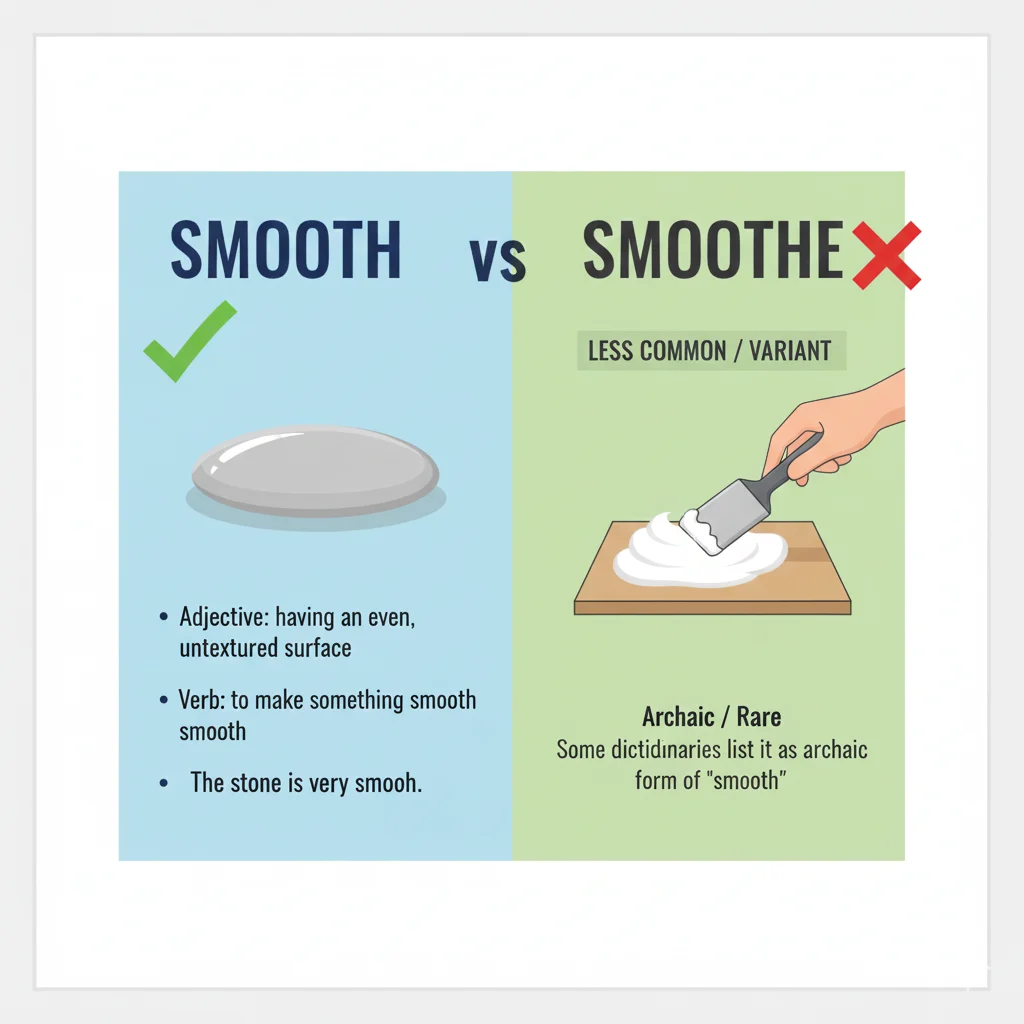
English can be tricky, especially when words sound similar or look almost the same. One pair of words that often confuses learners is smooth or smoothe. Even native speakers sometimes struggle to know which one to use in writing or speech.
In this guide, we will break down the meaning, difference, and correct usage of smooth and smoothe in a way anyone can understand. We’ll explain each word with simple definitions, examples, and even short stories. You’ll also get tips on avoiding common mistakes and tricks to remember which word fits best in different situations.
By the end of this article, you’ll confidently know when to use smooth or smoothe, making your English more polished, clear, and correct. Even beginners and young students can easily follow along.
What Does Each Word Mean?
Smooth
Definition: Smooth is an adjective or verb that describes something having an even surface or free from roughness, bumps, or irregularities. It can also describe an action or experience that is effortless or without difficulty.
Part of Speech: Adjective, Verb
Examples:
- The table has a smooth surface.
- She has a smooth voice that is pleasant to listen to.
- Everything went smoothly during the meeting.
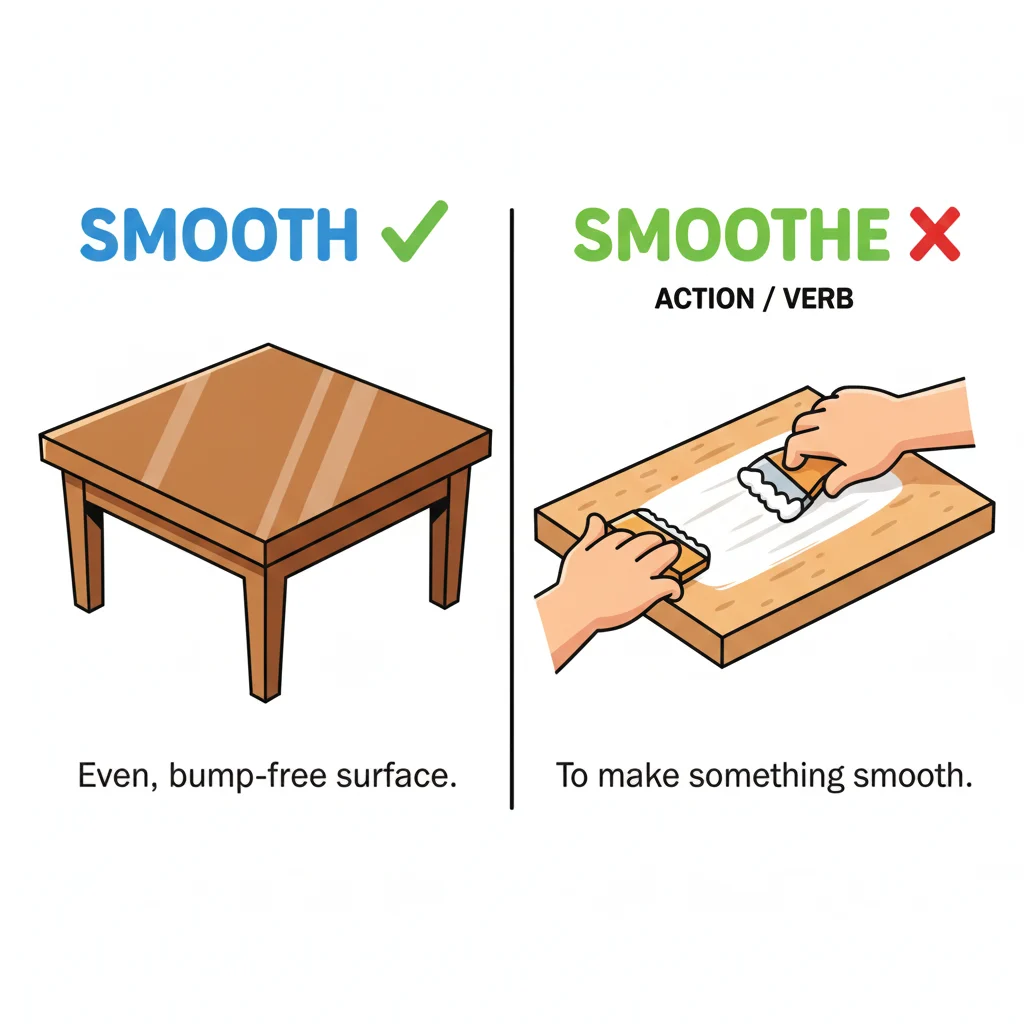
Memory Tip: Think of a calm pond or a polished table. Anything without bumps is smooth.
Smoothe
Definition: Smoothe is a less common verb that means “to make smooth” or “to remove wrinkles or roughness.” It is often used in formal or old-fashioned English.
Part of Speech: Verb
Examples:
- She gently smoothed the wrinkles out of her dress.
- He tried to smoothe the rough edges of the clay.
- Parents often smoothe their child’s hair before school.
Memory Tip: Think of “smoothing” something actively—smoothe is the action of making something smooth.
The Key Difference Between Smooth and Smoothe
| Feature | Smooth | Smoothe |
|---|---|---|
| Part of Speech | Adjective, Verb | Verb |
| Meaning | Having an even surface; free from bumps; effortless | To make something smooth; remove roughness |
| Usage Example | The chocolate is smooth. | He smoothed the frosting on the cake. |
| Common Mistake | Using it as a verb incorrectly | Using it as an adjective incorrectly |
| Quick Tip | Use smooth for states or qualities | Use smoothe for actions |
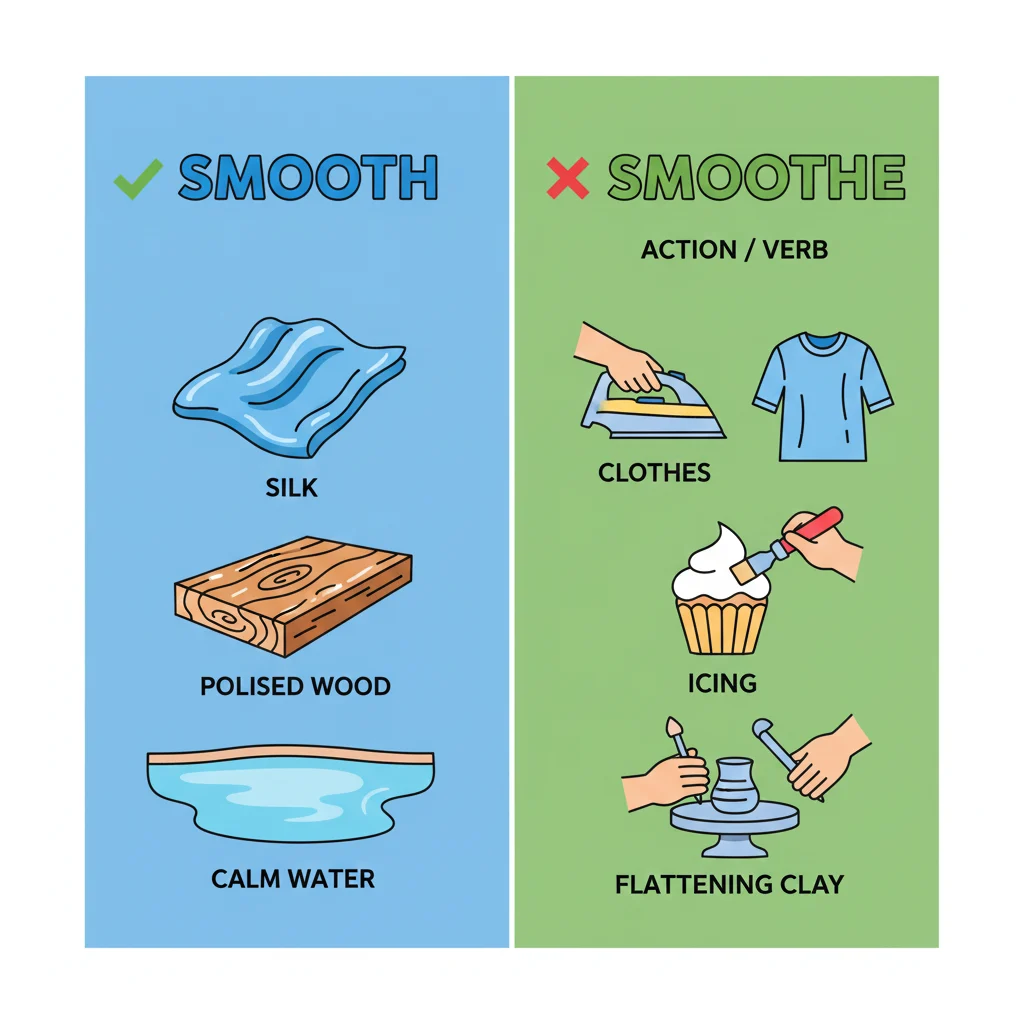
Quick Tip: If you are describing what something is, use smooth. If you are describing what someone does to make it smooth, use smoothe.
Common Mistakes and How to Avoid Them
- Incorrect: I want to smoothe chocolate.
Correct: I want to smooth chocolate.
Why: In modern English, smooth is used more often for qualities rather than the rare smoothe. - Incorrect: Her skin looks very smoothe.
Correct: Her skin looks very smooth.
Why: Adjectives describing a state always use smooth, not smoothe. - Incorrect: He tried to smooth the clay.
Correct: He tried to smoothe the clay.
Why: The verb smoothe fits better when describing the action of making something smooth.
When to Use Smooth
Smooth is versatile but mainly describes qualities and conditions.
Situations to Use:
- Describing texture or surface
- Describing experiences or processes
- General adjectives in daily conversation
Examples:
- The silk scarf feels smooth.
- She has a smooth handwriting style.
- The road was smooth after repairs.
- His explanation was clear and smooth.
- The transition between scenes in the movie was very smooth.
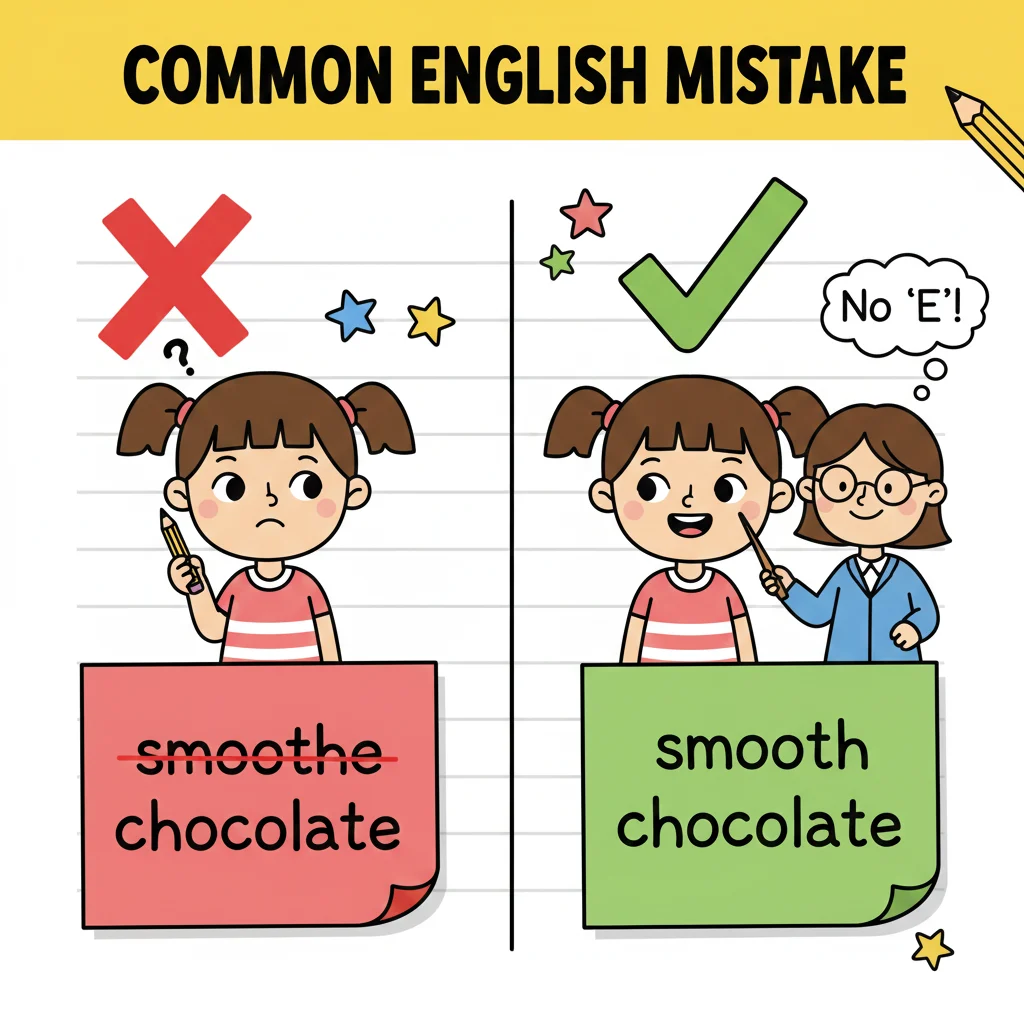
Memory Hack: Imagine running your hand over silk, polished wood, or soft chocolate—that’s all smooth.
When to Use Smoothe
Smoothe is used when you actively make something smooth.
Situations to Use:
- Fixing wrinkles in clothes
- Flattening or leveling surfaces
- Polishing, ironing, or adjusting textures
Examples:
- She smoothed the sheet before making the bed.
- He smoothed the icing on the cake carefully.
- The artist smoothed the clay into a perfect circle.
- Parents often smoothe their child’s hair in the morning.
- The tailor smoothed the fabric before cutting it.
Memory Hack: Picture hands moving over clay or fabric to make it even—that action is smoothe.
Quick Recap: Smooth vs Smoothe
- Smooth: Adjective or verb; describes a state or quality; easy, even, free of bumps.
- Smoothe: Verb; describes an action to make smooth; less common in modern English.
- Tip: If you are talking about what something is, use smooth. If you are talking about what you do to it, use smoothe.
- Common Confusion: Many mistakenly use smoothe as an adjective; always stick to smooth for qualities.
Advanced Tips
- Origin: Smooth comes from Old English smōth, meaning even or flat. Smoothe is a variant of the verb form, used more in historical or formal texts.
- Formal Writing: Use smooth for professional essays, reports, and modern writing. Smoothe is rare but acceptable in literature describing actions.
- Digital Writing: Avoid using smoothe in casual texting; people might misread it as a typo.
Mini Quiz
Fill in the blanks with smooth or smoothe:
- The surface of the marble is very ______.
- She gently ______ the wrinkles from her shirt.
- His voice is so ______ when he sings.
- The artist ______ the clay before painting.
- The road after repairs became very ______.
- He tried to ______ the icing on the cake.
- This silk scarf feels extremely ______.
Answers: 1. smooth 2. smoothed 3. smooth 4. smoothed 5. smooth 6. smoothed 7. smooth
FAQs
- Is smoothe a common word?
No, smoothe is less common today. Most modern writing uses smooth. - Can smooth be used as a verb?
Yes, but it is more commonly used as an adjective. For active actions, smoothe is more precise. - Which one should I use in essays?
Use smooth for adjectives and states. Only use smoothe for actions in formal contexts. - Can smoothe and smooth be interchangeable?
Sometimes in casual speech, but in writing, it’s best to follow the rules: smooth for qualities, smoothe for actions. - Any tips to remember the difference?
Think: Smooth = state, Smoothe = action. Imagine touching vs fixing something.
Conclusion
Now you know the difference between smooth and smoothe. Smooth describes a quality or state—like a soft, even surface or an easy process. Smoothe is the action of making something smooth, like ironing clothes or leveling clay.
By remembering the simple tip—smooth for what it is, smoothe for what you do—you can avoid common mistakes and write English more confidently. Practice with everyday examples like your desk, hair, or homework, and soon using these words will feel natural.
Keep exploring English, stay curious, and remember: every small improvement makes your language stronger and clearer. You’re on the right path to mastering tricky words like these!

Arthur Machen was a Welsh writer known for supernatural fiction, blending horror, mysticism, and folklore, and influencing modern weird literature worldwide Art