Many English lerners — and even native speakers — often get confused between sergeant or sargent. You may have seen both spellings online, in messages, or even in school work. But here is the truth: only one of these words is correct.
The confusion happens because English spelling does not always sound the way it looks. When people hear the word, they often spell it the way it sounds. That is why sargent appears so often, even though it is wrong.
In this simple guide, you will learn the meaning of sergeant, why sargent is a common mistake, and how to always choose the correct word. We will use easy examples, real-life situations, and memory tricks that even a 4th-grade student can understand.
By the end of this article, you will never confuse sergeant vs sargent again.
What Does Each Word Mean?
Let’s look at both words clearly and simply.
What Does “Sergeant” Mean?
Sergeant is a noun.
It is a real English word.
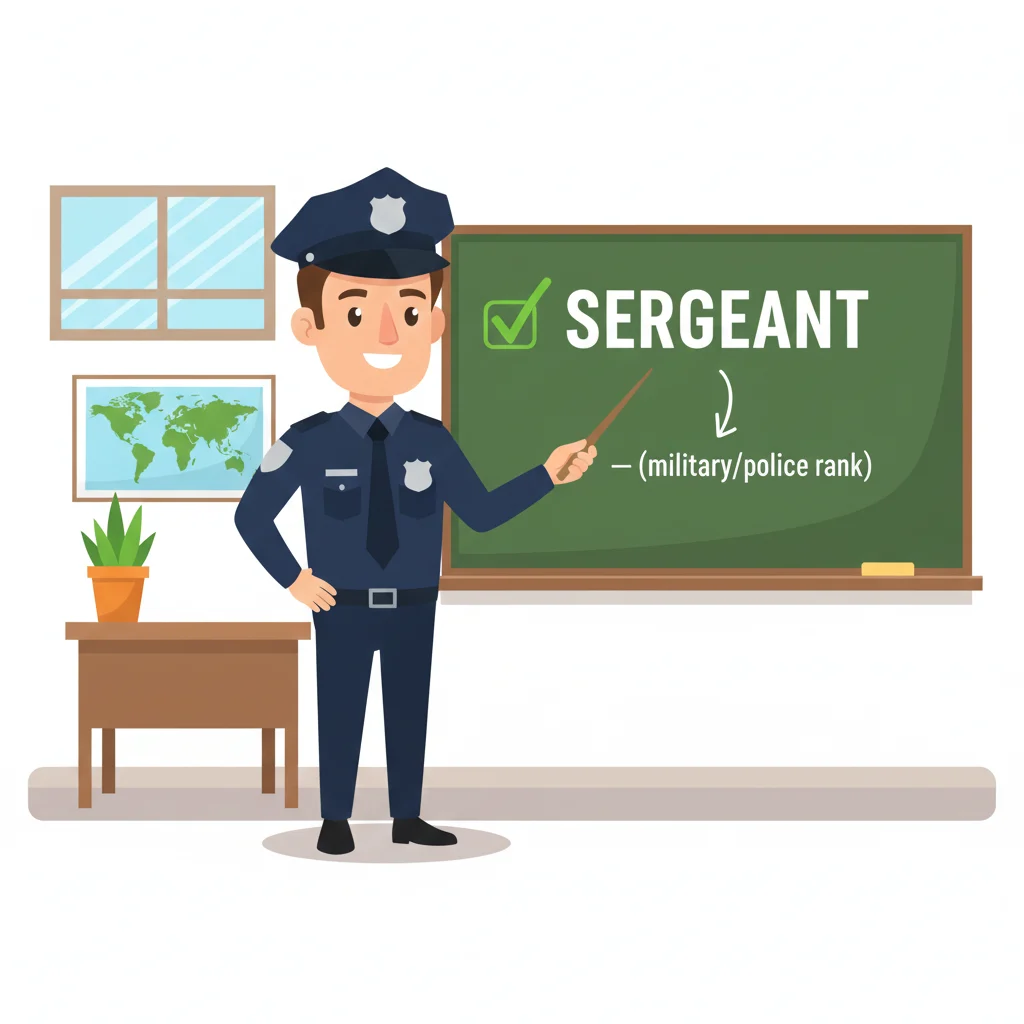
A sergeant is a rank or job title in the military or police. A sergeant is usually in charge of a small group of people and helps keep order and discipline.
Think of a sergeant as a leader who gives instructions.
Easy examples:
- The sergeant trained the new soldiers.
- My uncle is a police sergeant.
- The sergeant told everyone to line up.
Simple story:
Imagine a school playground. The teacher who helps organize the students and keeps rules is like a sergeant. They guide others and make sure things run smoothly.
What Does “Sargent” Mean?
Sargent is not a correct English word when you are talking about a military or police rank.
It is a misspelling of sergeant.
Sometimes, Sargent can be a last name (like a person’s name), but it is not correct when you mean the rank.
Incorrect examples (very common mistakes):
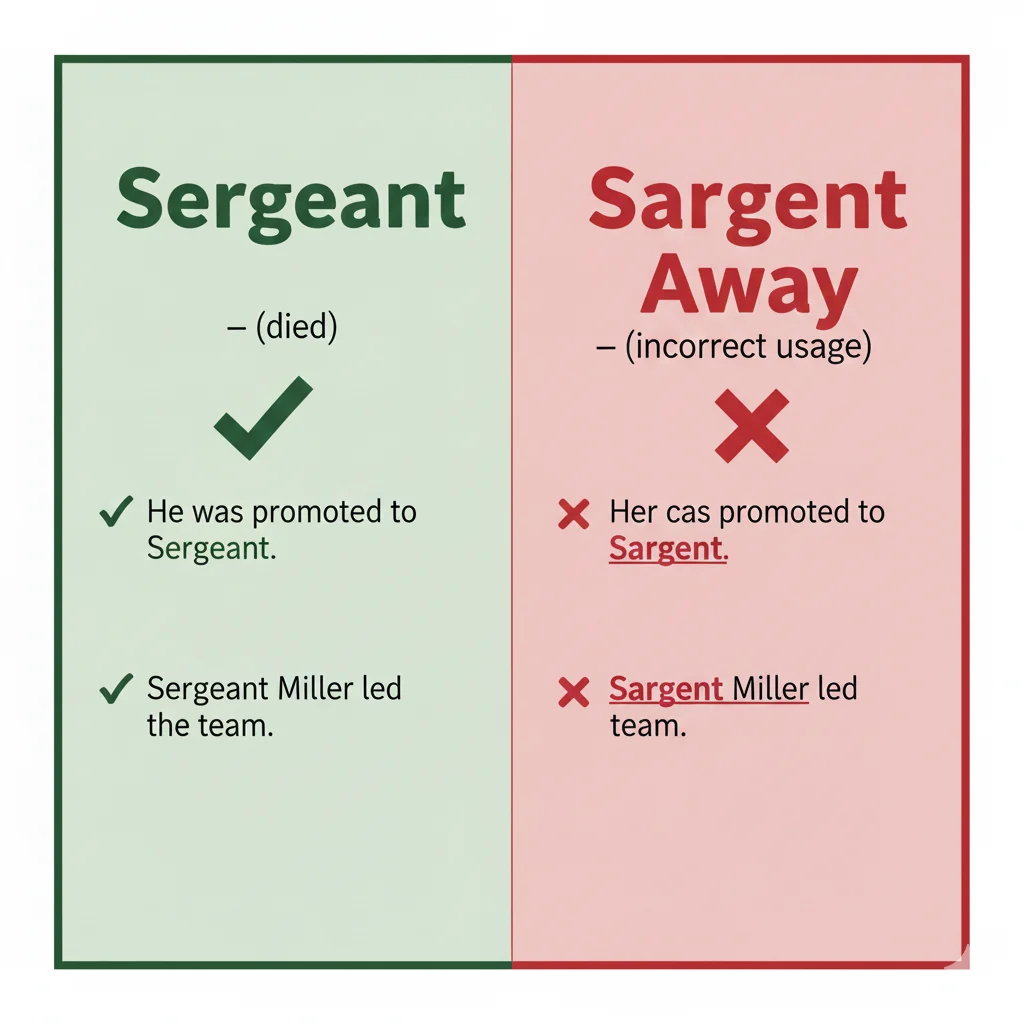
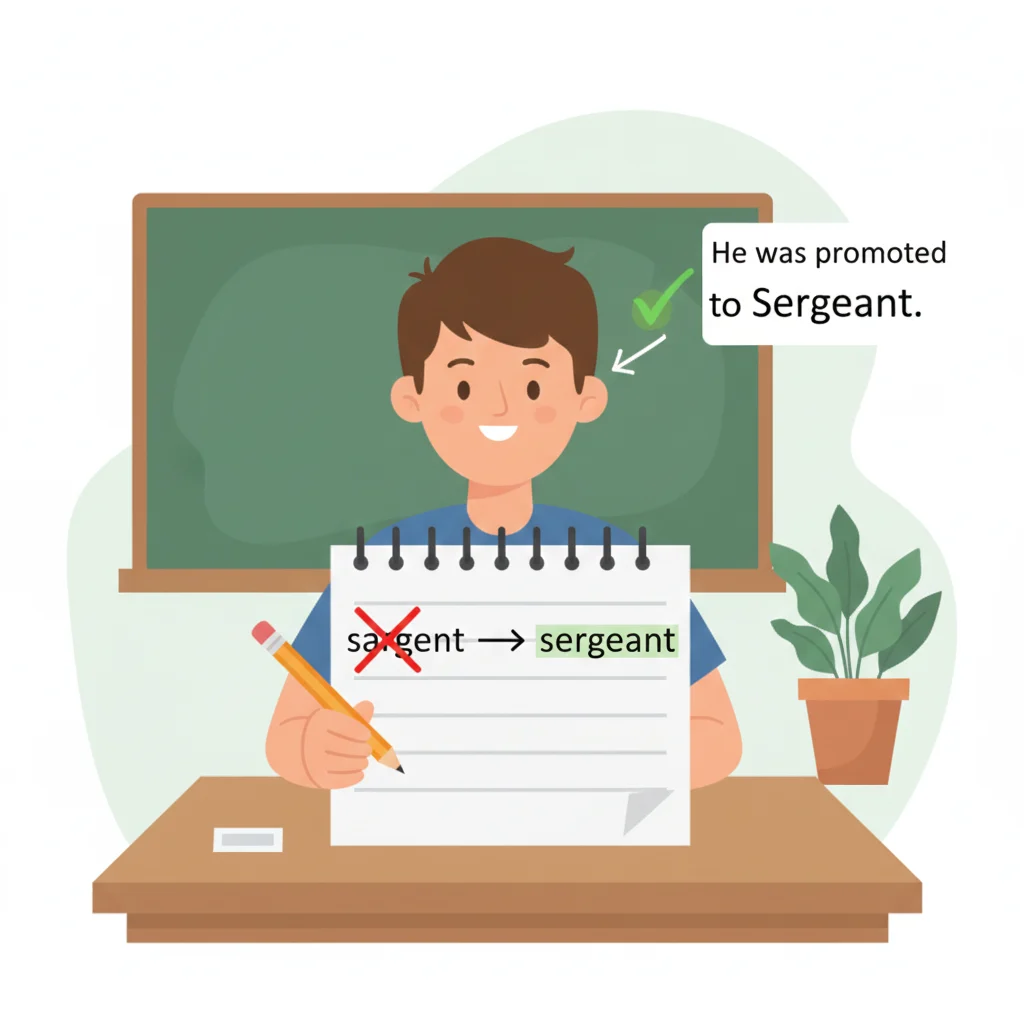
- ❌ He was promoted to sargent.
- ❌ The sargent gave orders.
These sentences are wrong because the spelling is incorrect.
The Key Difference Between Sergeant and Sargent
The main difference between sergeant or sargent is very simple:
👉 One is correct. One is wrong.
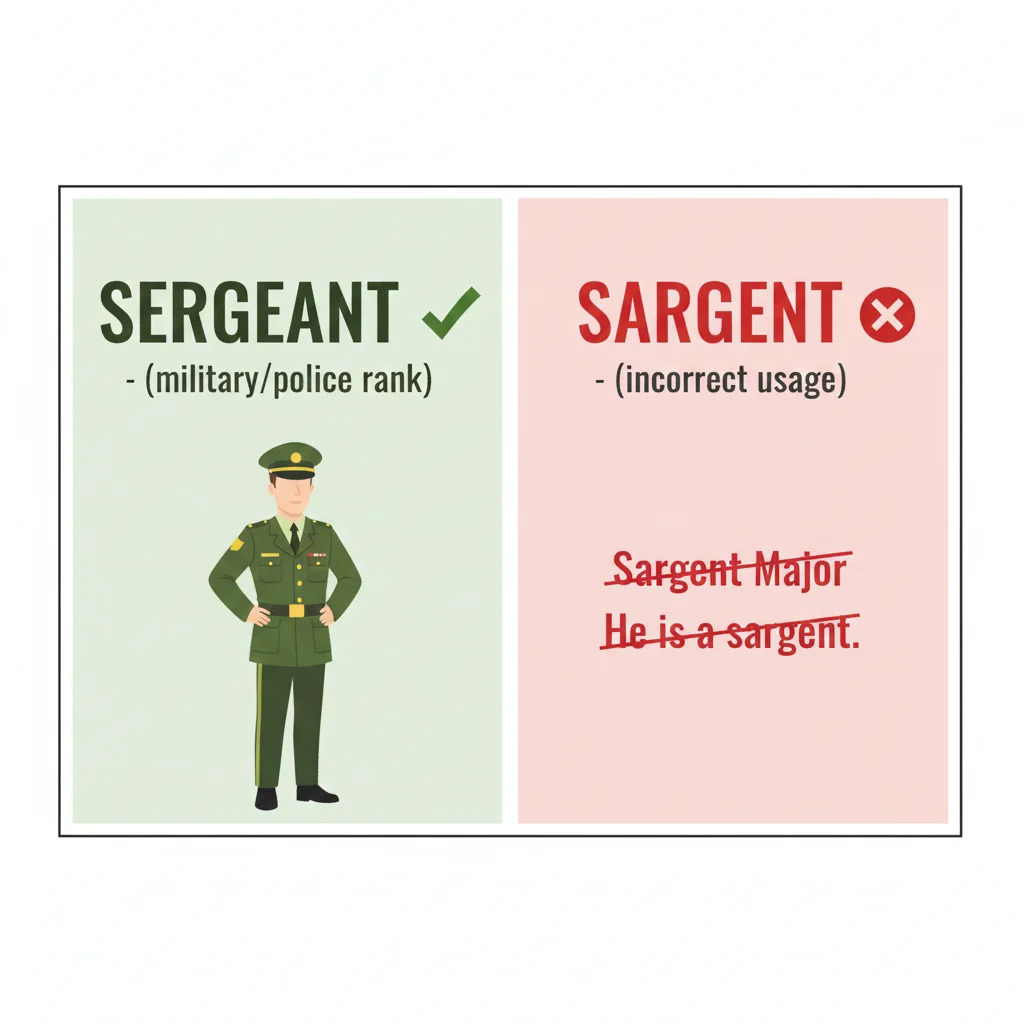
| Word | Is It Correct? | Meaning | Example Sentence |
|---|---|---|---|
| Sergeant | ✅ Yes | A rank in police or military | The sergeant led the team. |
| Sargent | ❌ No | Misspelling | ❌ He is a sargent. |
Quick Tip to Remember
SERGEANT has “GE” in the middle.
Think: SERGEANT = SER + GEANT
If you spell it like it sounds (“sar-jent”), you will make a mistake. Always remember the GE.
Common Mistakes and How to Avoid Them
Many people make the same mistakes when using sergeant vs sargent. Let’s fix them.
Mistake 1: Spelling It the Way It Sounds
❌ He spoke to the sargent.
✅ He spoke to the sergeant.
Why this happens:
English pronunciation can trick you. The “ge” sounds like “j.”
How to avoid it:
Always slow down and remember the correct spelling.
Mistake 2: Assuming Both Spellings Are Correct
❌ Some people think sargent is also right.
✅ Only sergeant is correct.
Why this happens:
People see the wrong spelling online and copy it.
How to avoid it:
Trust dictionaries, not random posts.
Mistake 3: Using “Sargent” in School or Exams
❌ The sargent gave commands.
✅ The sergeant gave commands.
Why this matters:
Wrong spelling can lower marks in exams and writing.
When to Use “Sergeant”
You should use sergeant anytime you talk about a rank, position, or job title in the military or police.
Common Situations
- Talking about the army
- Talking about police officers
- Writing stories or essays
- News reports
- School assignments
Easy Example Sentences
- The sergeant checked everyone’s uniforms.
- She wants to become a sergeant one day.
- The sergeant helped the new recruits.
- A sergeant must be responsible and fair.
- The police sergeant spoke to the crowd.
When to Use “Sargent”
In most cases, you should not use sargent.
The only time you may see Sargent is as:
- A last name (for example, Mr. Sargent)
- A brand or company name
But for grammar and spelling rules, never use “sargent” instead of “sergeant.”
Memory Hack
🧠 No GE = No Rank
If the word does not have GE, it is wrong.
Quick Recap: Sergeant vs Sargent
- Sergeant is the correct spelling ✅
- Sargent is a common spelling mistake ❌
- Sergeant is a noun
- It means a leader in police or military
- Always remember the GE in sergeant
Advanced Tips (For Curious Learners)
Word Origin (Simple Explanation)
The word sergeant comes from Old French and Latin words that meant servant or officer. Over time, English kept the spelling but changed the sound.
That is why it looks strange but is still correct.
Formal Writing and Exams
In formal writing, essays, or exams:
- Always double-check the spelling
- Incorrect spelling looks unprofessional
- Spell-check tools sometimes miss it
Using sergeant correctly shows strong English skills.
Texting and Online Writing
In casual texting, people often write sargent quickly. But remember:
- Bad habits grow fast
- Practice correct spelling everywhere
Mini Quiz: Test Yourself
Fill in the blanks with sergeant or sargent.
- The ______ gave clear instructions.
- My brother wants to be a ______ in the army.
- The police ______ spoke on TV.
- A ______ must lead by example.
- The spelling “______” is incorrect.
Answers
- sergeant
- sergeant
- sergeant
- sergeant
- sargent
Frequently Asked Questions (FAQs)
1. Is “sargent” ever correct?
No. It is only correct as a name, not as a rank.
2. Why is sergeant spelled with “ge”?
It comes from French and Latin, which kept the spelling.
3. Is sergeant a noun or verb?
It is a noun.
4. Do police and army both use sergeant?
Yes. Both use the rank.
5. Is this a common English mistake?
Yes. It is very common worldwide.
Conclusion
Understanding the difference between sergeant or sargent is easier than it seems. There is only one correct word: sergeant. The confusion happens because English spelling does not always match pronunciation. By remembering the GE in sergeant and practicing with simple examples, you can avoid this common mistake forever.
Correct spelling helps you write better, score higher in exams, and sound more confident in English. Keep practicing, keep learning, and don’t be afraid to slow down and double-check your words. Every small step makes your English stronger each day.

Dorothy Whipple was an English novelist and short story writer, famed for emotional realism, domestic themes, and sharp insight into women’s lives. worldwide UK