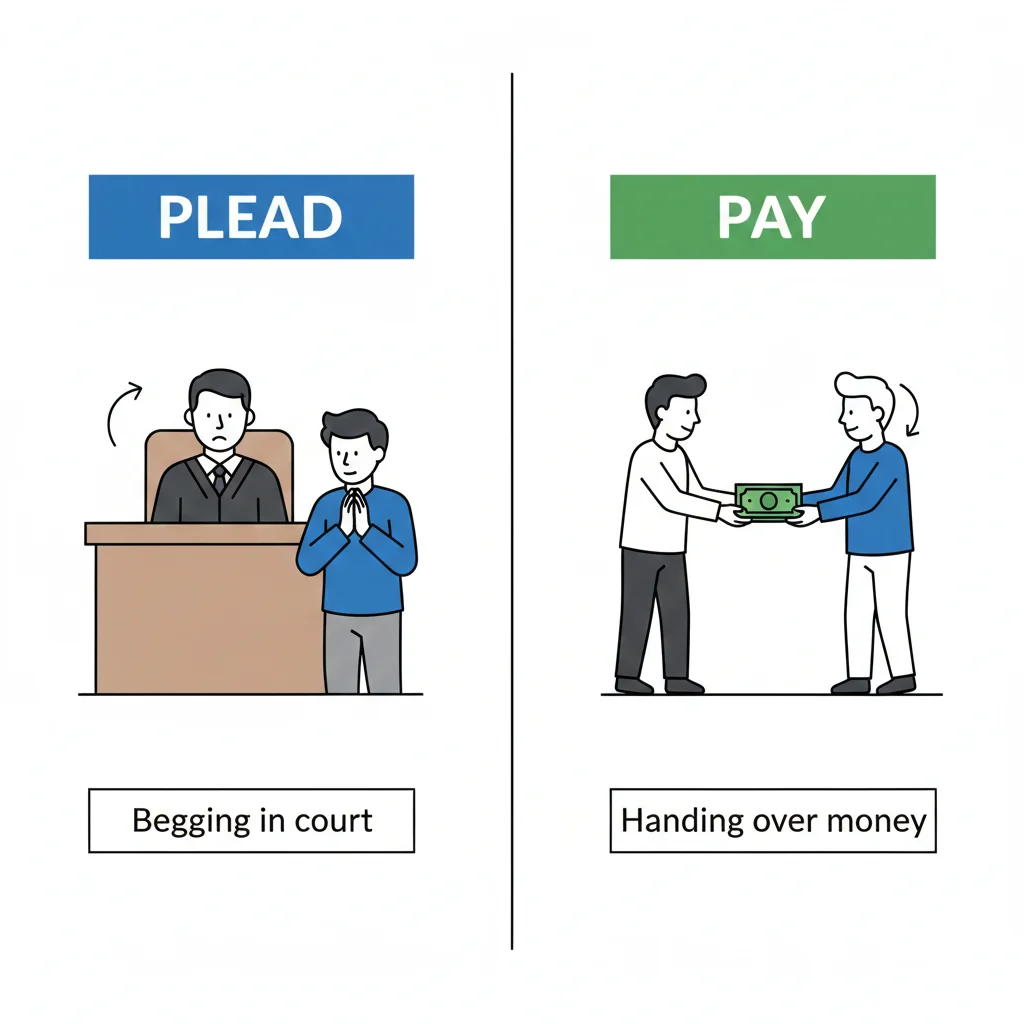
Have you ever heard someone say “plead or pay” and wondered what it really means? These two words — plead and pay — often appear together in legal talk, news headlines, or serious conversations. Because they sound strong and formal, many people feel unsure about how to use them correctly.
Some people mix them up or think they mean the same thing. But they do not. Each word has its own meaning and purpose, and using the wrong one can change the message completely.
In this easy guide, you will learn:
- What plead means
- What pay means
- The clear difference between plead or pay
- How to use each word correctly with simple examples
Don’t worry — everything is explained in plain English, with real-life examples that even a young student can understand. Let’s make it simple and clear 😊
What Does Each Word Mean?
Let’s first understand each word on its own.
✅ What Does Plead Mean?
Plead means to ask seriously, beg, or say something in your defense, especially in court or serious situations.
It often means:
- To request something strongly
- To beg for mercy
- To answer charges in court (like saying guilty or not guilty)
Part of speech: Verb
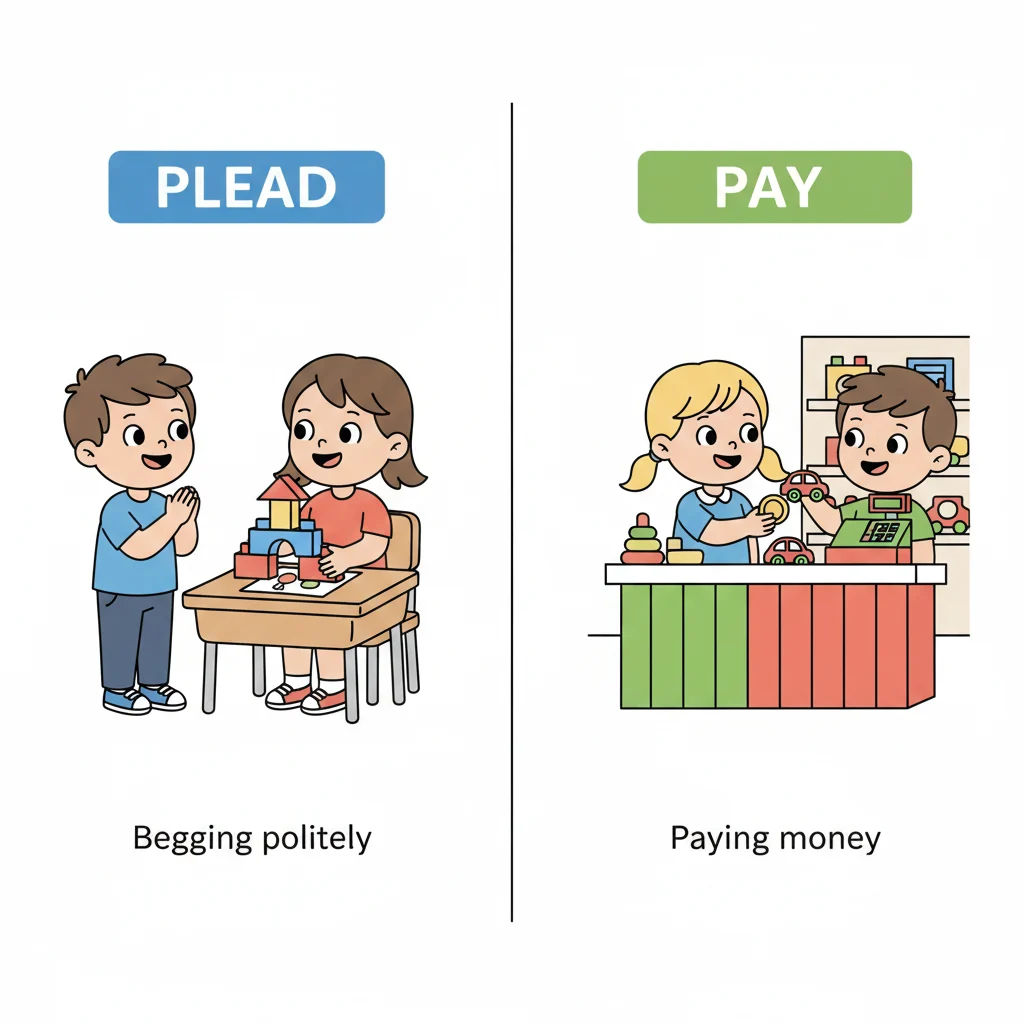
Easy Examples of Plead
- She pleaded with her teacher for extra time.
- The man pleaded not guilty in court.
- The child pleaded with his parents to buy him a toy.
💡 Simple Story:
Ali broke his friend’s pencil. He pleaded, “Please forgive me. I won’t do it again.”
That means Ali begged kindly and seriously.
✅ What Does Pay Mean?
Pay means to give money for something or to return what you owe. It can also mean giving attention or respect.
Part of speech: Verb (sometimes noun)
Easy Examples of Pay
- I will pay for the pizza.
- She paid her school fees.
- Please pay attention in class.
💡 Simple Story:
Sara buys a book. She pays the shopkeeper.
That means she gives money for the book.
The Key Difference Between Plead and Pay
Although plead and pay are sometimes used together, their meanings are very different.
| Feature | Plead | Pay |
|---|---|---|
| Meaning | To beg or request seriously | To give money or return a debt |
| Used in | Court, apologies, emotional requests | Shopping, bills, salaries |
| Action type | Speaking or asking | Giving money |
| Example | He pleaded for forgiveness. | He paid the fine. |
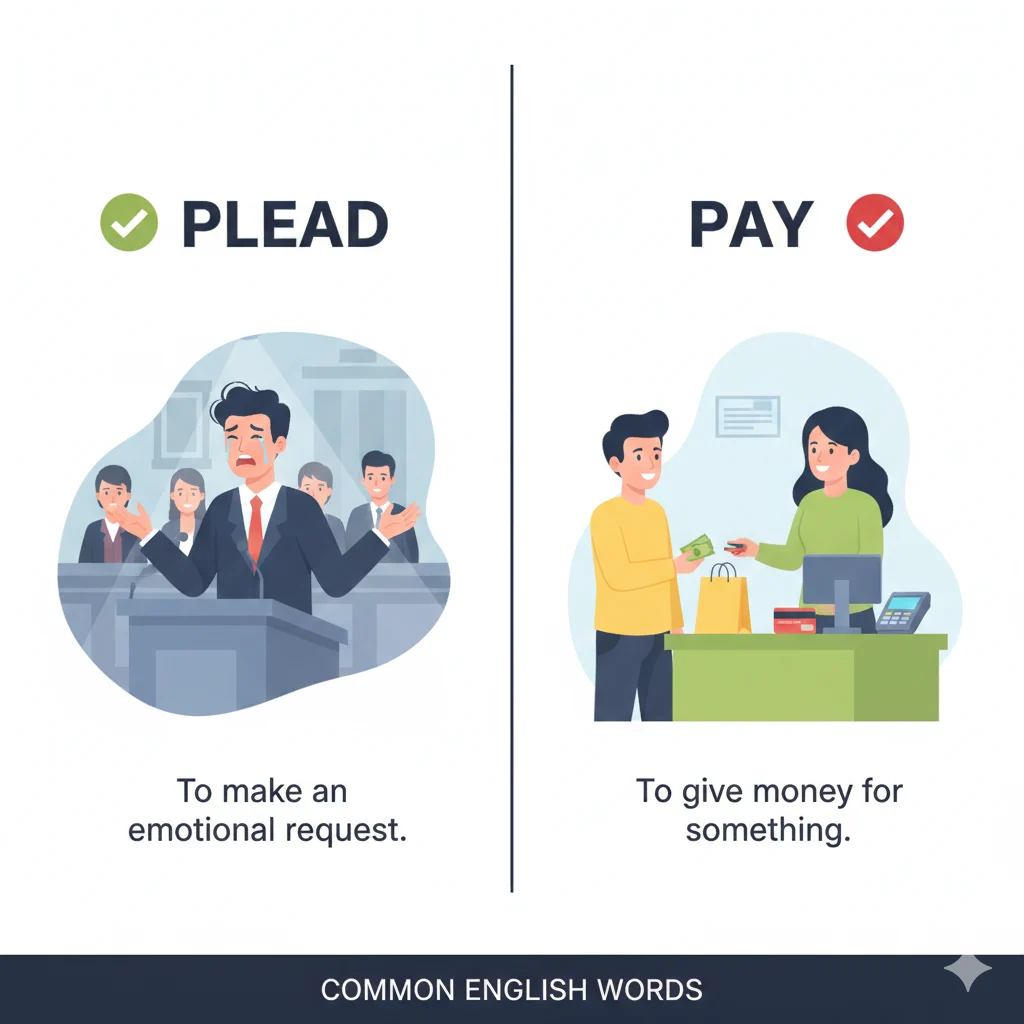
🔑 Quick Tip to Remember
- Plead = Please (They both start with “pl” — you are asking)
- Pay = Payment (You give money)
What Does “Plead or Pay” Mean?
The phrase “plead or pay” means:
👉 You must either explain yourself (plead) or give money (pay).
It is often used in legal or serious situations. For example:
- A person must either defend themselves in court or pay a fine.
- Someone must apologize sincerely or make up for their mistake with money.
Example Sentence:
- “You can plead or pay — explain your actions or pay the penalty.”
So, this phrase gives two choices:
- Speak or defend yourself (plead)
- Give money (pay)
Common Mistakes and How to Avoid Them
Let’s look at some common mistakes people make with plead and pay, and how to fix them.
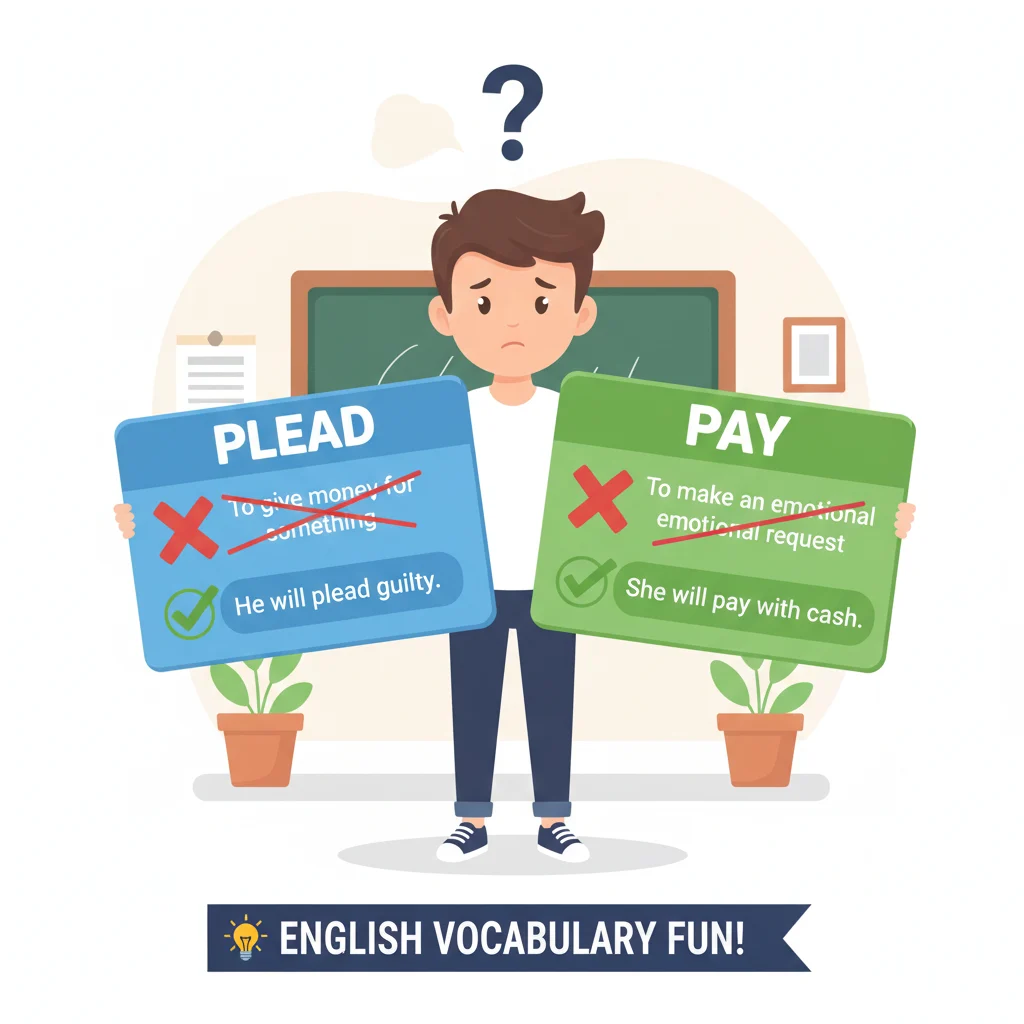
❌ Mistake 1:
“He paid for forgiveness.”
✅ Correct:
“He pleaded for forgiveness.”
🔍 Why?
You don’t give money for forgiveness in normal situations. You ask or beg — that’s plead.
❌ Mistake 2:
“She pleaded the shopkeeper.”
✅ Correct:
“She paid the shopkeeper.”
🔍 Why?
At a shop, you give money — that’s pay, not plead.
❌ Mistake 3:
“He paid guilty in court.”
✅ Correct:
“He pleaded guilty in court.”
🔍 Why?
In court, you plead guilty or not guilty. You don’t pay guilty.
✔ How to Avoid These Mistakes
Ask yourself:
- Am I asking or begging? → Use plead
- Am I giving money? → Use pay
When to Use Plead
Use plead when someone:
- Is begging
- Is asking seriously
- Is speaking in court
- Wants mercy or help
Easy Examples of Plead
- The boy pleaded with his mom to stay home.
- She pleaded for another chance.
- The man pleaded not guilty in court.
- He pleaded with his friend to forgive him.
- The puppy seemed to plead with its eyes for food.
💡 Real-Life Situation:
A student forgot homework. He pleads with the teacher for one more day.
When to Use Pay
Use pay when:
- You give money
- You settle a bill
- You return what you owe
- You show attention or respect
Easy Examples of Pay
- I will pay the shopkeeper today.
- She paid her school fees.
- Please pay attention in class.
- He paid the fine for speeding.
- We paid for our movie tickets.
💡 Real-Life Situation:
You eat at a restaurant. You pay the bill.
Memory Hack to Remember the Difference
Here’s a simple trick:
- Plead = Please + Lead with words
- Pay = Payment
🧠 If your mouth is talking → Plead
💰 If your wallet is talking → Pay
Quick Recap: Plead vs Pay
- Plead
- Means to beg, ask, or defend yourself
- Used in emotional or legal situations
- Example: He pleaded for mercy.
- Pay
- Means to give money or settle a debt
- Used in shopping and daily life
- Example: She paid the bill.
- Plead or Pay
- Means you must either explain yourself or give money
Advanced Tips (Optional)
📜 Word History
- Plead comes from an old French word meaning “to speak in court.”
- Pay comes from a Latin word meaning “to settle a debt.”
✍️ In Formal Writing
- In legal writing:
- “The accused pleaded not guilty.”
- “The defendant must pay the fine.”
- In school essays:
- “She pleaded for help.”
- “They paid for the damage.”
📱 In Texting and Online Writing
Using the wrong word can change meaning:
❌ “I paid him to forgive me.”
✔ “I pleaded with him to forgive me.”
Always choose carefully.
Mini Quiz: Test Yourself 🎯
Fill in the blanks with plead or pay.
- She __________ with her parents to stay longer.
- I will __________ the bill after dinner.
- He __________ not guilty in court.
- Please __________ attention to your teacher.
- The boy __________ for another chance.
- We must __________ the school fees today.
- The man __________ for mercy.
Answers:
- pleaded
- pay
- pleaded
- pay
- pleaded
- pay
- pleaded
Great job if you got them right! 🌟
Frequently Asked Questions (FAQs)
1. What does “plead or pay” mean?
It means you must either explain yourself seriously or give money as a penalty.
2. Can I say “pay guilty”?
No. You say “plead guilty.” You pay fines, not guilt.
3. Is “plead” only used in court?
No. It is also used when begging or asking seriously in daily life.
4. Can “pay” mean something other than money?
Yes. You can pay attention, pay respect, or pay a visit.
5. Why do people confuse plead and pay?
Because both are short action words and often appear in serious situations, especially in law-related topics.
Conclusion
Now you clearly understand the difference between plead and pay, and what plead or pay really means. Plead is about asking, begging, or defending yourself with words. Pay is about giving money or settling a bill. When used together, the phrase means you must either explain yourself or give money.
With the simple rules, examples, and memory tricks in this guide, you can now use both words with confidence. Keep practicing in daily conversations and writing — every small step improves your English skills. You’re doing great! 😊

Rose Tremain is a British novelist known for richly detailed historical fiction, complex characters, and award-winning literary storytelling worldwide.