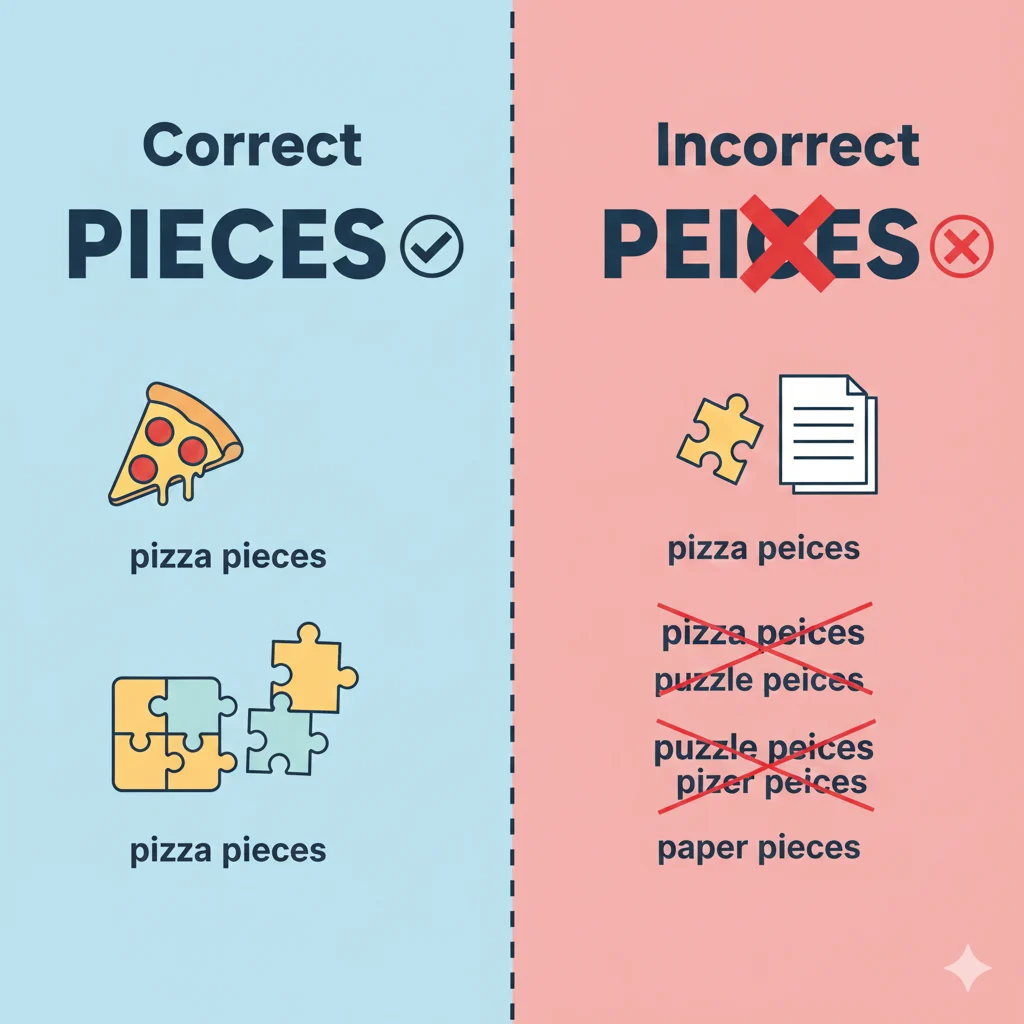
Many people struggle with confusing words in English, and one of the most common mistakes is writing “peices” instead of “pieces.” You might see it in school essays, online posts, or even messages, and it can make your writing look unprofessional. Understanding the difference is simple once you know the rules.
In this guide, you will learn the meaning of “pieces,” why “peices” is always incorrect, and how to use the word properly in sentences. We will also cover common mistakes, practical tips, and easy memory hacks to make sure you never mix them up again. By the end of this article, you will be confident using pieces in your writing and speaking, making your English clear, correct, and professional.
What Does Each Word Mean?
Pieces
Definition: A piece is a part of something larger. It can refer to food, objects, writing, or even abstract ideas like music or art.
Part of speech: Noun
Examples:
- I ate a piece of cake after lunch.
- She bought a piece of jewelry for her sister.
- Can you give me a piece of paper to write on?
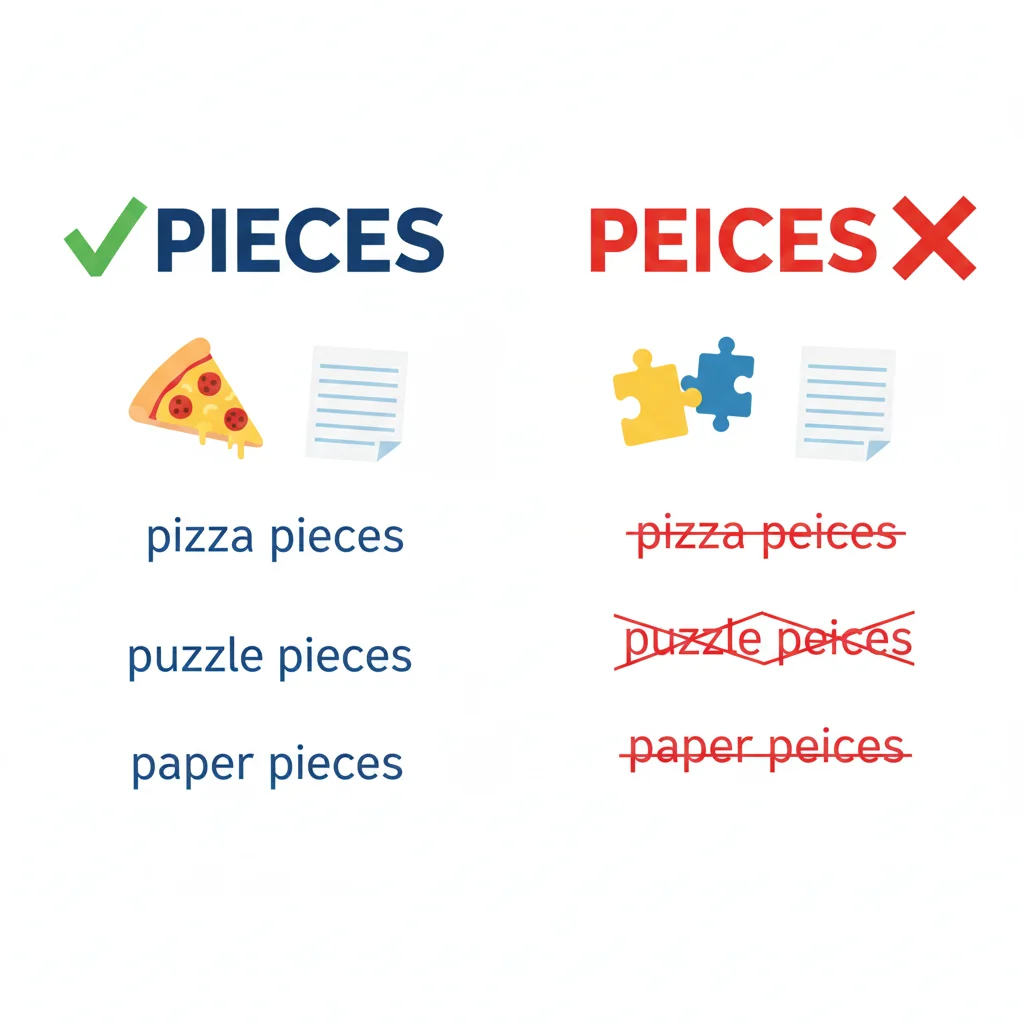
Story trick: Think of a puzzle. Each puzzle block is a piece—part of the whole picture.
Peices
Definition: There is no correct word “peices” in English. It is a common misspelling of pieces.
Part of speech: N/A
Examples:
- ❌ I ate a peices of cake.
- ❌ Please give me a peices of paper.
Memory tip: Remember the correct spelling is pieces, with i before e after c.
The Key Difference Between Peices and Pieces
| Word | Meaning | Usage Example | Correct or Incorrect |
|---|---|---|---|
| Pieces | Parts of a whole | I have three pieces of pizza. | ✅ Correct |
| Peices | No meaning; wrong spelling | I have three peices of pizza. | ❌ Incorrect |
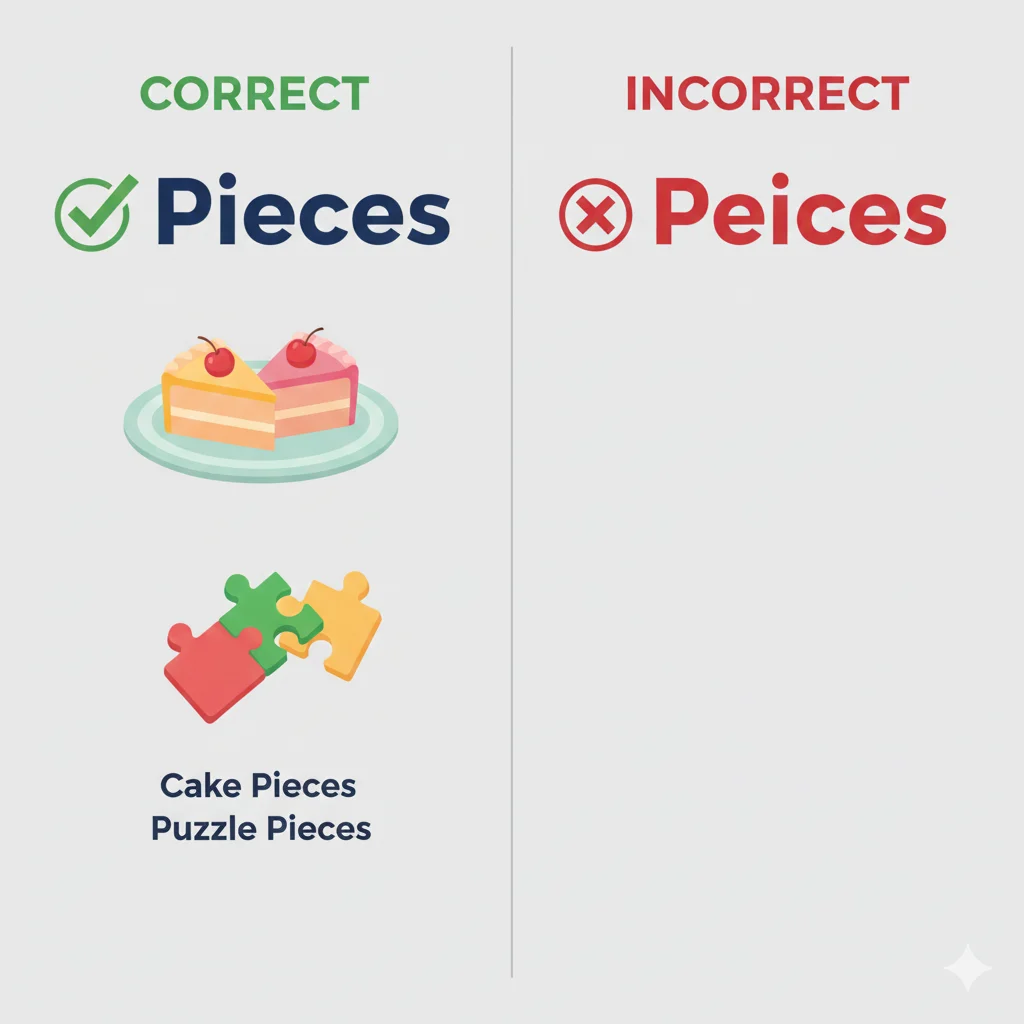
Quick tip: If you’re unsure, just remember the phrase: “i before e after c” → pieces.
Common Mistakes and How to Avoid Them
Mistake 1: Writing peices in school essays
- ❌ She gave me two peices of chocolate.
- ✅ She gave me two pieces of chocolate.
Mistake 2: Typing too fast in messages
- ❌ Can you send me a peices of paper?
- ✅ Can you send me a piece of paper?
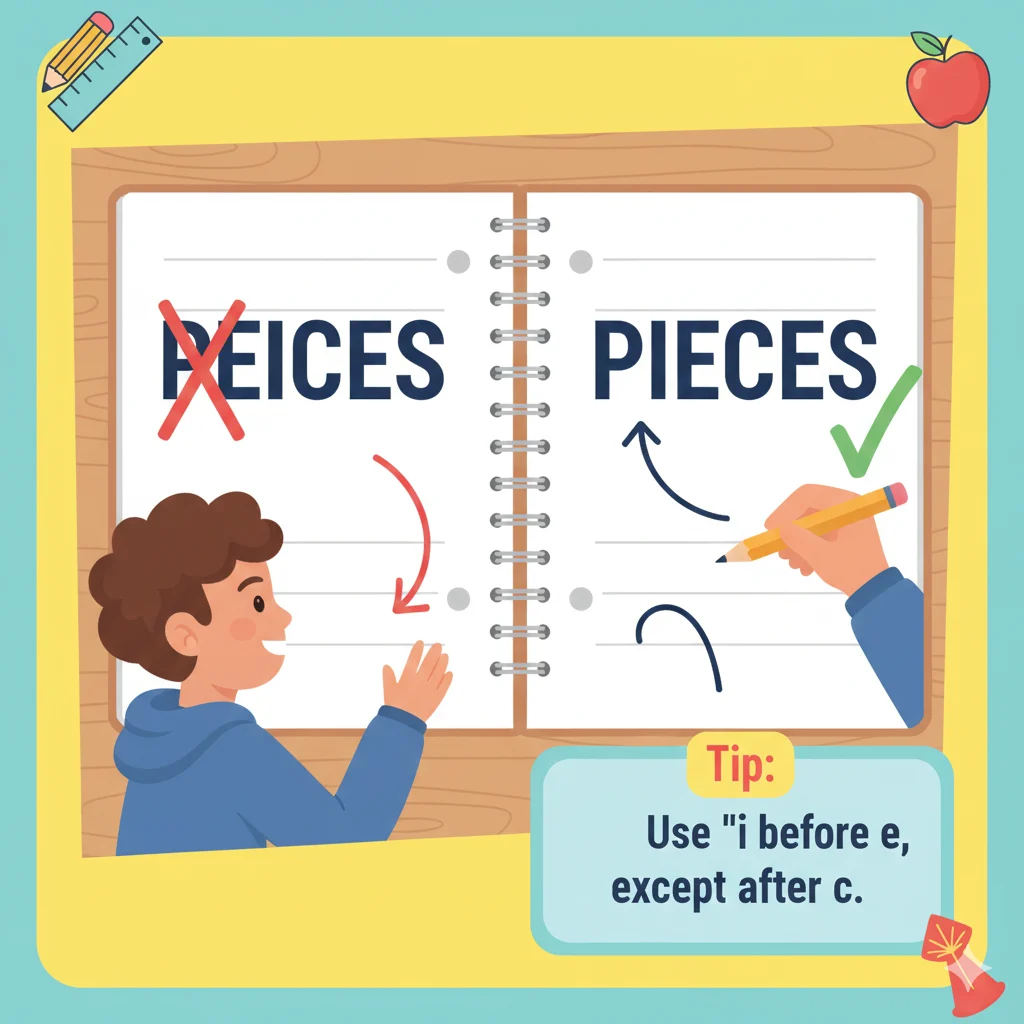
Why it happens: People pronounce it correctly but type it incorrectly. The rule “i before e after c” solves this instantly.
When to Use Pieces
Situations to use pieces:
- Food: “I want a piece of cake.”
- Objects: “This puzzle has 50 pieces.”
- Writing: “She wrote a piece on climate change.”
- Music/Art: “That is my favorite piano piece.”
- General parts: “Can you give me a piece of advice?”
Memory hack: Visualize breaking something into pieces. Pizza, puzzles, or paper all work!
Quick Recap: Peices vs Pieces
- Pieces → correct, means “parts of a whole.”
- Peices → incorrect, common misspelling.
- Tip: Use the phrase “i before e after c” to remember the correct spelling.
- Use pieces for food, objects, writing, music, and abstract parts.
Advanced Tips
- The word pieces comes from the Old French piece, meaning “a bit or portion.”
- In formal writing or exams, peices is always wrong. Using it can lower your grade.
- Online texts or social media messages often include peices, but professional writing should always use pieces.
Mini Quiz
Fill in the blanks with the correct word (pieces or peices):
- I bought three _______ of chocolate.
- She needs a _______ of paper.
- ❌ He wrote two _______ of music.
- Can I have a _______ of your cake?
- ❌ The puzzle has 100 _______.
Answers: 1. pieces 2. piece 3. pieces 4. piece 5. pieces
FAQs
1. Is “peices” ever correct?
No. Peices is always a misspelling of pieces.
2. What does “pieces” mean?
It means parts of a whole, like food, puzzles, or writing.
3. How can I remember the spelling of “pieces”?
Use the rule: “i before e after c.”
4. Can I use “pieces” for advice?
Yes! You can say, “I need a piece of advice.”
5. Are there other words spelled like pieces?
Yes, words like ceiling, receive, and deceive follow the same i before e after c pattern.
Conclusion
Now you know the difference between peices and pieces. While “peices” is always wrong, pieces is correct and useful in many situations—food, puzzles, writing, music, and advice. By following the simple rule “i before e after c” and practicing with everyday examples, you can avoid common mistakes and write confidently. Remember, learning English is a step-by-step process, and every correct word you use brings you closer to fluency. Practice using pieces in sentences daily, and soon it will feel natural. Keep reading, writing, and enjoying English, because every small improvement makes a big difference.

Rose Tremain is a British novelist known for richly detailed historical fiction, complex characters, and award-winning literary storytelling worldwide.