Many English learners and even native speakers feel confused when they see or hear “passed away” and “past away.” They look almost the same. They sound similar. But their meanings are very different. One is correct English. The other is usually a mistake.
The phrase passed away is a gentle and polite way to talk about death. People use it in daily life, stories, news, and formal writing. But past away is often written by mistake because people confuse passed and past.
In this easy guide, you will learn the meaning of passed away, why past away is wrong, and the key difference between passed away and past away. You will also see simple examples, common mistakes, memory tips, and a quick quiz. This guide is written in very simple English, so even a 4th-grade student can understand it easily.
What Does Each Word Mean?
What Does “Passed Away” Mean?
Passed away means to die.
It is a polite and gentle phrase used when talking about death.
People use passed away because it sounds softer and kinder than saying “died.” It shows respect and care for the person and their family.
Part of speech:
- “Passed” is a verb (past tense of pass).
- “Away” is an adverb.
Together, they form a verb phrase.
Easy Examples of “Passed Away”
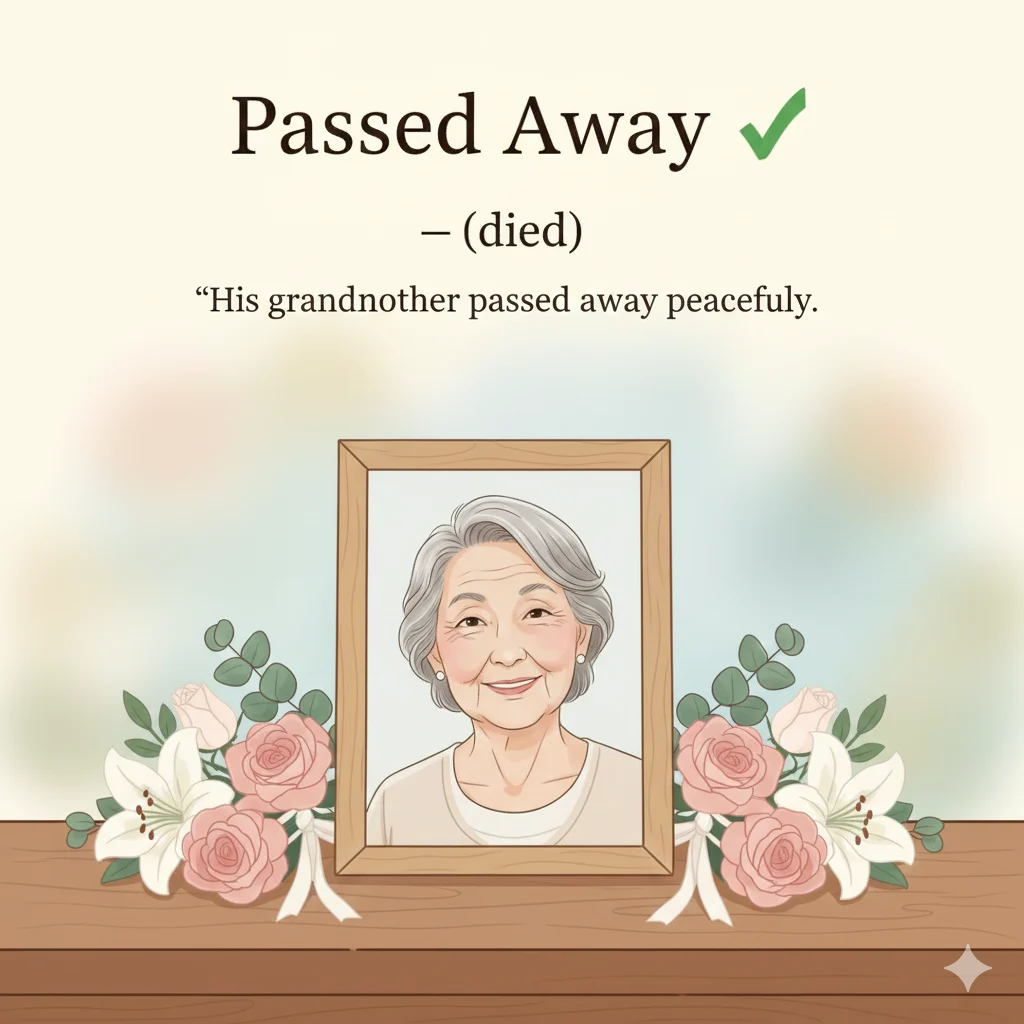
- My grandfather passed away last year.
- The old dog passed away peacefully.
- She was sad when her teacher passed away.
Mini story:
Think of life like a journey. When someone finishes their journey, we gently say they have passed away.
What Does “Past Away” Mean?
Past away is not correct English in this situation.
The word past usually talks about time or position, not death.
Past means:
- A time before now
- Beyond something (like walking past a shop)
Part of speech:
- “Past” can be a noun, adjective, preposition, or adverb
- It is not a verb that means dying
Examples of “Past” (Correct Uses)
- This happened in the past.
- She walked past the school.
- Let’s move past this problem.
❌ Past away does NOT mean death.
It is a common grammar mistake.
The Key Difference Between Passed Away and Past Away
The main difference is simple:
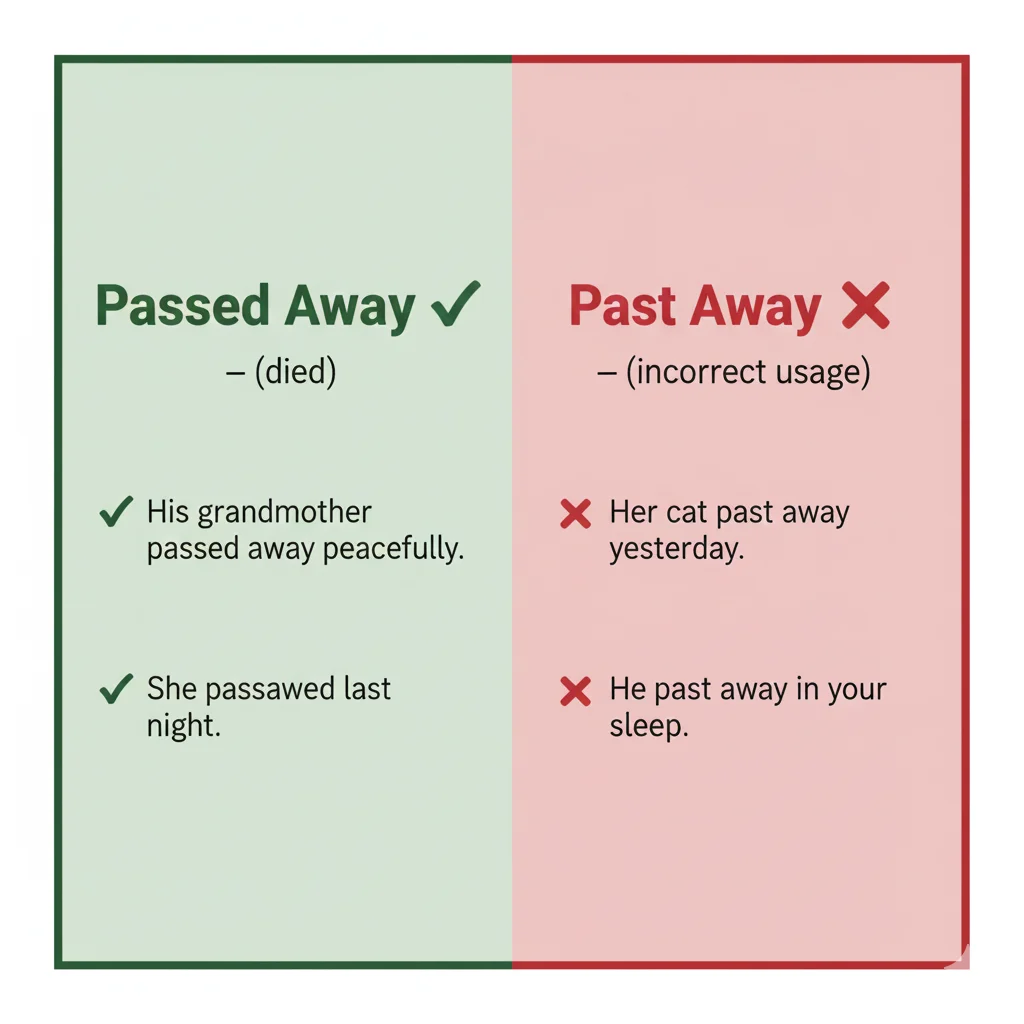
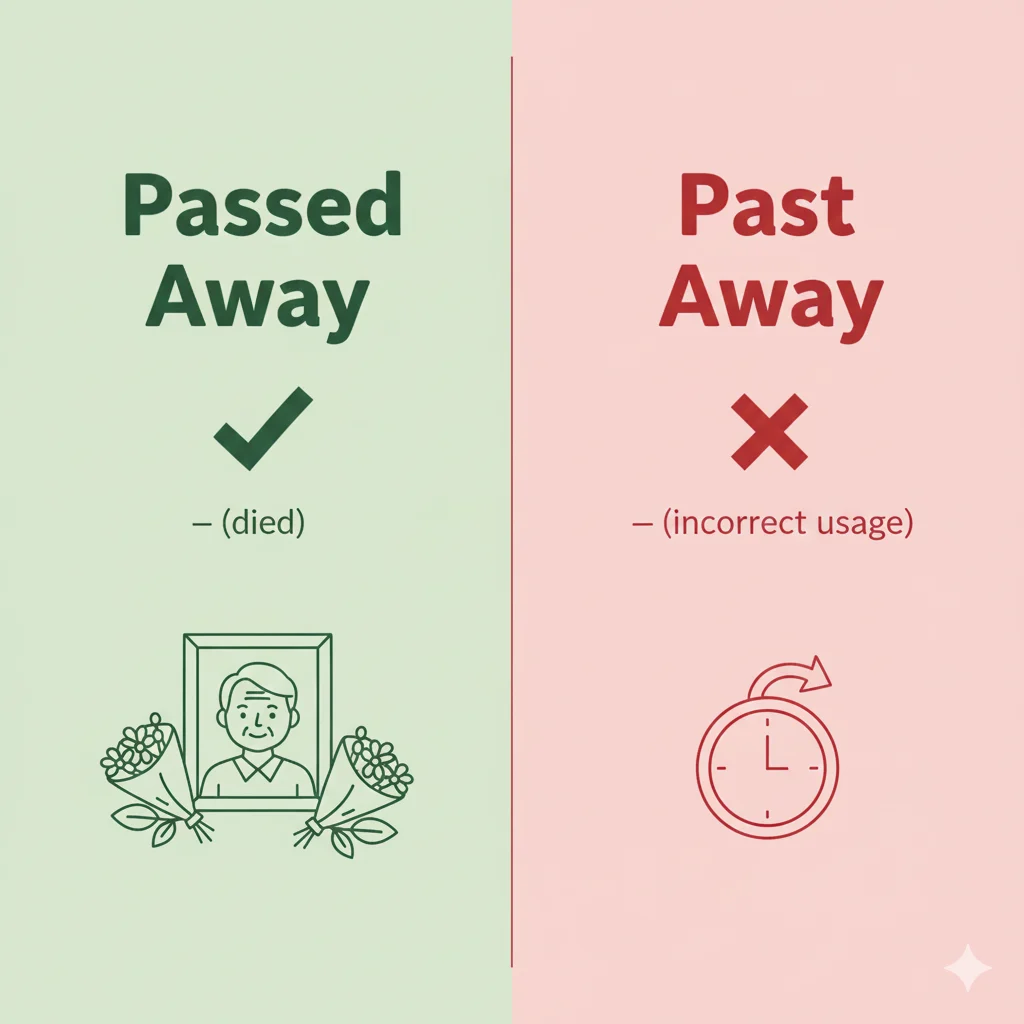
- Passed away = correct phrase meaning someone died
- Past away = incorrect phrase (wrong grammar)
Comparison Table: Passed Away vs Past Away
| Feature | Passed Away | Past Away |
|---|---|---|
| Meaning | To die | No correct meaning |
| Correct English | ✅ Yes | ❌ No |
| Used for death | ✅ Yes | ❌ No |
| Common mistake | Sometimes confused | Often written by error |
| Example | He passed away peacefully. | ❌ He past away. |
Quick Tip to Remember
👉 If you mean death, always use passed away.
👉 Think: “Passed away = passed from life.”
Laying or Lying in Bed: The Tiny Rule Most People Get Wrong
Common Mistakes and How to Avoid Them
Many people make mistakes because passed and past sound similar when spoken.
Mistake 1
❌ My uncle past away last night.
✅ My uncle passed away last night.
Why it happens:
People confuse past (time) with passed (verb).
Mistake 2
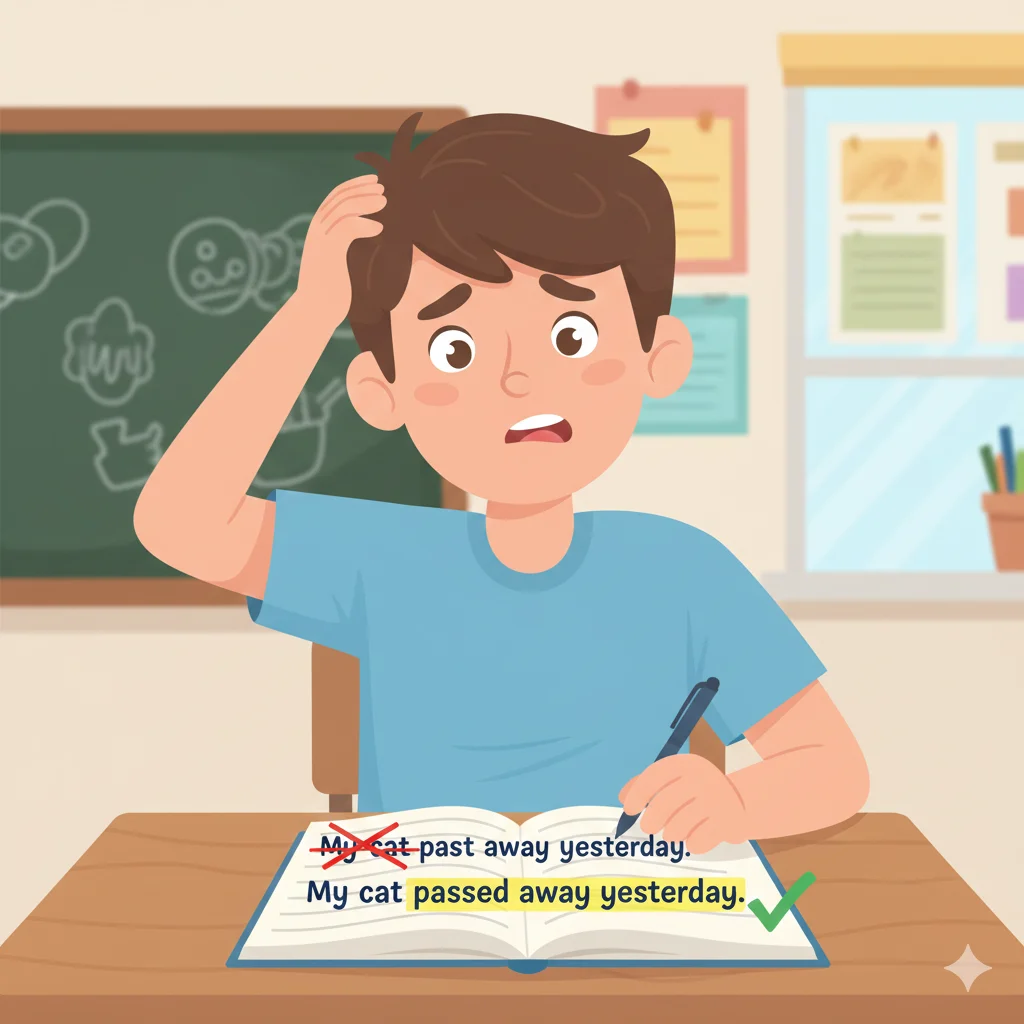
❌ She was crying because her cat past away.
✅ She was crying because her cat passed away.
How to fix it:
Ask yourself: Am I talking about death?
If yes, always choose passed away.
Mistake 3
❌ He past away peacefully in his sleep.
✅ He passed away peacefully in his sleep.
Grammar tip:
Only passed works as a verb here.
When to Use “Passed Away”
Use passed away when talking about someone or something dying.
It is often used in:
- Family talks
- News reports
- Stories
- Formal writing
- Polite conversations
Simple Examples of “Passed Away”
- Her grandmother passed away at the age of 90.
- The famous actor passed away yesterday.
- Our neighbor passed away after a long illness.
- The bird passed away during the night.
- He passed away, but his memories live on.
Real-Life Situations
- At school:
“Our teacher told us that the author passed away many years ago.” - At home:
“Dad said Grandpa passed away peacefully.”
When to Use “Past” (Not “Past Away”)
Use past when talking about time or movement, not death.
Correct Uses of “Past”
- That happened in the past.
- She ran past the house.
- We must learn from the past.
- The car drove past us.
Memory Hack
🧠 Past = time or direction
💔 Passed away = death
If there is no death, do not use passed away.
Quick Recap: Passed Away vs Past Away
- Passed away
- Means someone died
- Correct and polite
- Commonly used in speech and writing
- Past away
- Incorrect phrase
- A grammar mistake
- Should not be used
✔ Always choose passed away when talking about death.
Advanced Tips (Optional)
Word History (Simple)
- Pass comes from old words meaning “to go” or “move.”
- Passed away means “to go away from life.”
Formal Writing and Exams
In essays, letters, and exams:
- Passed away is acceptable and polite.
- “Died” is correct but sounds more direct.
Texting and Online Writing
In fast typing, people often write past away by mistake.
Always double-check spelling when writing sensitive topics.
Mini Quiz: Test Your Understanding
Fill in the blanks with passed away or past.
- My great-grandfather __________ in 2005.
- This story happened in the __________.
- The dog __________ quietly at home.
- Let’s move __________ this mistake.
- The writer __________ many years ago.
Answers
- passed away
- past
- passed away
- past
- passed away
- passed away
FAQs: Passed Away vs Past Away
1. Is “past away” ever correct?
No. Past away is not correct English when talking about death.
2. Why do people confuse passed away and past away?
Because passed and past sound similar when spoken.
3. Is “passed away” formal or informal?
It can be both. It is polite and respectful in all settings.
4. Can I use “died” instead of passed away?
Yes. “Died” is correct, but passed away sounds softer.
5. What is the easiest way to remember the difference?
Remember:
Death = passed away
Time or direction = past
Conclusion
Now you clearly understand the difference between passed away and past away. Passed away is the correct and polite phrase used to talk about death. Past away is simply a common mistake and should be avoided. By remembering that past talks about time and passed away talks about death, you can choose the right words every time. Keep practicing with examples, read carefully, and don’t worry about small mistakes. Improving English is a step-by-step journey, and you are doing great every day.

Rose Tremain is a British novelist known for richly detailed historical fiction, complex characters, and award-winning literary storytelling worldwide.