Do you ever get confused between more than and more then? You are not alone! Many English learners mix these two phrases because they sound almost the same. Using the wrong one can change the meaning of your sentence and make your writing look less professional.
In this guide, we will explain the meanings of more than and more then, show you the key differences, and give plenty of examples to make it easy to understand. By the end, you’ll know exactly when to use each phrase, avoid common mistakes, and write sentences that sound correct. Even beginners will find this simple and practical.
What Does Each Phrase Mean?
1. More Than
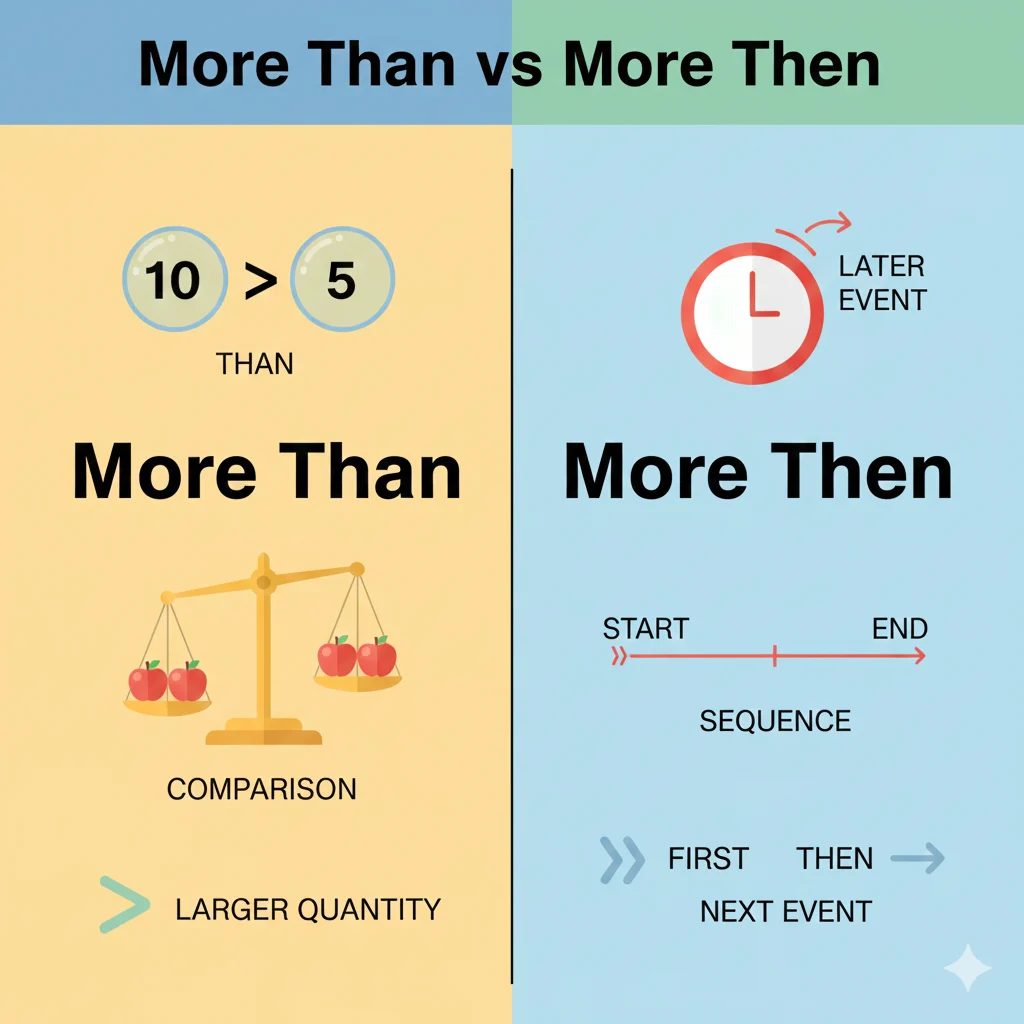
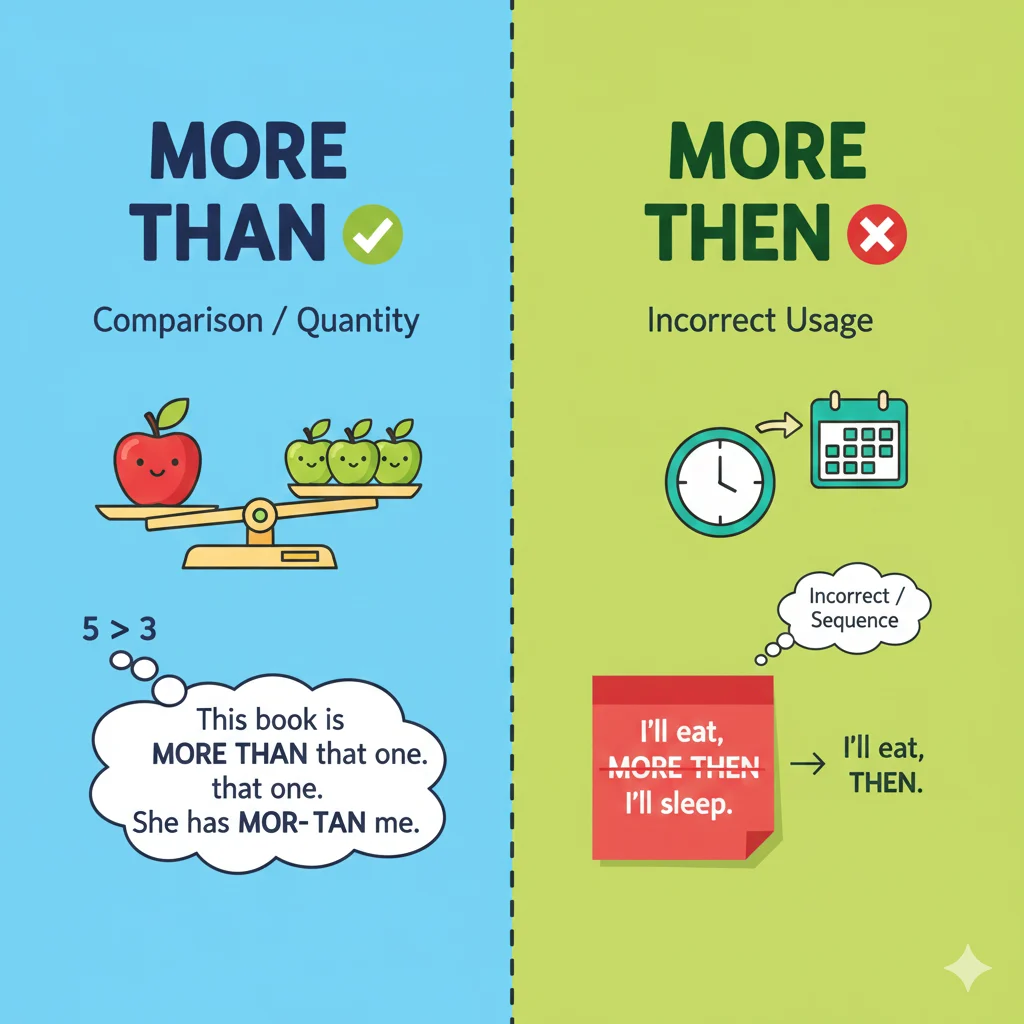
More than is used to compare quantities, amounts, or degrees. It tells us that one thing is bigger, higher, or greater than another.
- Part of Speech: Phrase (usually followed by a number, adjective, or noun)
- Meaning: Greater in number, amount, or degree than something else
Examples:
- I have more than five apples in my basket.
- She is more than happy with her exam results.
- This bag weighs more than ten kilograms.
Tip: Think of more than as “greater than” in a comparison.
2. More Then
More then is much less common and often appears by mistake. It would only make sense in a sentence where then (meaning “after that” or “next”) follows more.
- Part of Speech: Adverb phrase
- Meaning: “After that” or “at a later time” (rarely used in modern English)
Examples:
- We ate lunch and more then went to the park. (incorrect – see common mistakes below)
- I will finish my homework and more then play outside. (better written as “and then”)
- She thought about it, and more then decided to call her friend.
Tip: If you mean comparison, always use more than. If you mean time sequence, use then.
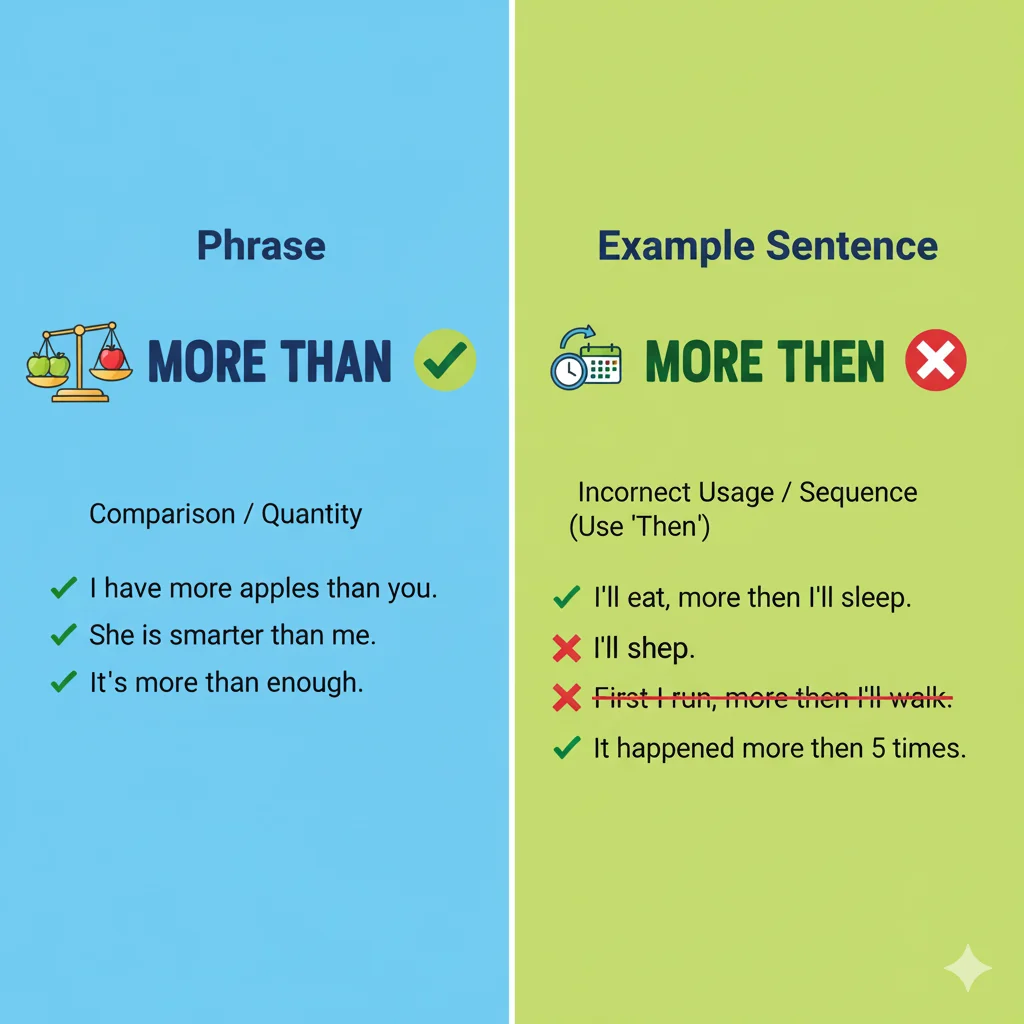
The Key Difference Between More Than and More Then
| Phrase | Meaning | Correct Usage Example | Common Mistake |
|---|---|---|---|
| More Than | Used for comparison | I have more than 10 pencils. | I have more then 10 pencils. |
| More Then | Rarely used, time sequence | (Rarely needed) | I ate lunch, more then went outside. |
Quick Tip:
- More than = comparison → think “greater than.”
- Then = time sequence → think “next or after that.”
Common Mistakes and How to Avoid Them
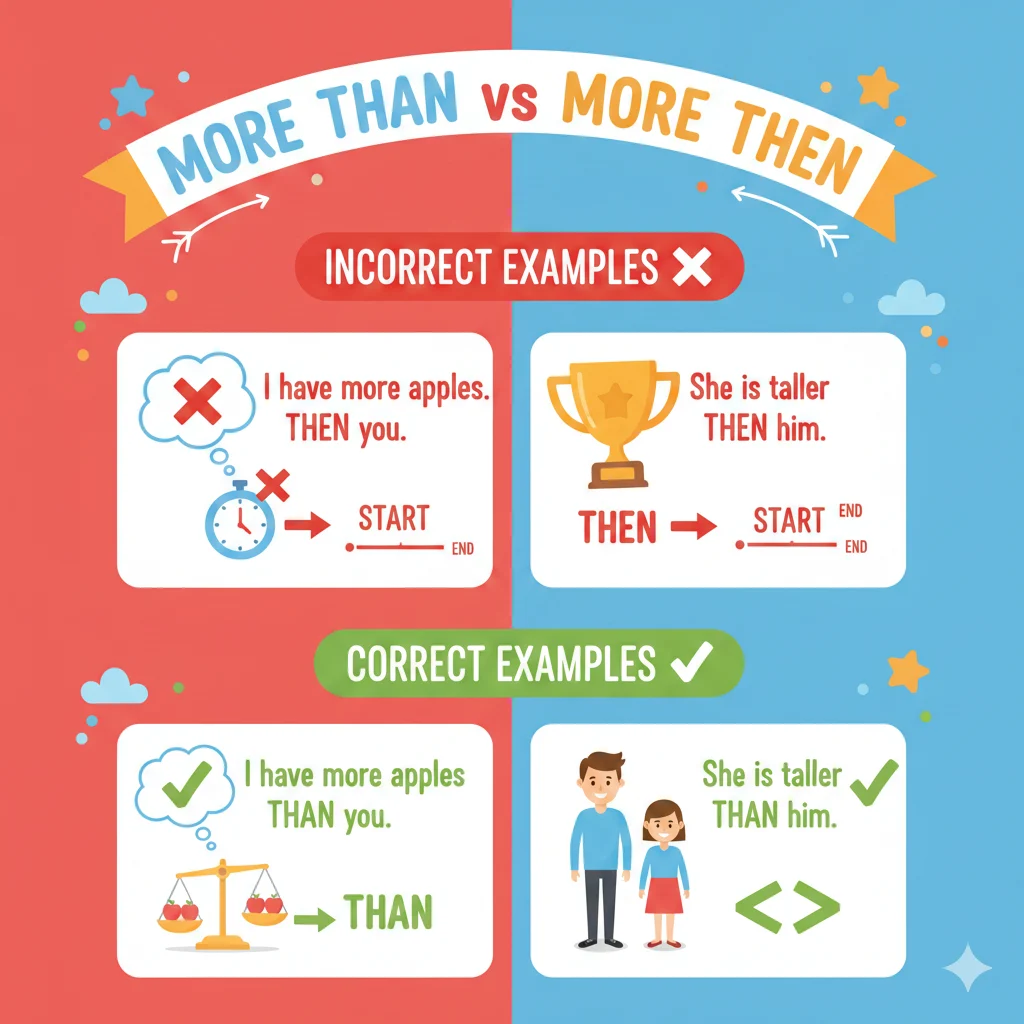
Many English learners accidentally write more then when they mean more than. Let’s see some examples:
Incorrect: I have more then friends than you.
Correct: I have more than friends than you.
Incorrect: She is smarter more then her brother.
Correct: She is smarter more than her brother.
Why This Happens:
People confuse the sound of “than” and “then.” Always remember: comparison = than, sequence = then.
When to Use More Than
Use more than when comparing quantities, degrees, or amounts.
Examples in daily life:
- I spent more than $50 on groceries.
- This movie is more than exciting—it’s amazing!
- He has more than three dogs at home.
- Today, I ran more than five kilometers.
- She ate more than her little brother at lunch.
Memory Hack: Picture a scale – more than always tips toward the bigger side.
When to Use More Then
More then is rarely correct. Usually, you only need then (without “more”) to show sequence.
Correct usage for time sequence:
- I finished my homework, and then I watched TV.
- We ate lunch, and then went to the park.
- She read a book, and then called her friend.
Visual Trick: Imagine a timeline. Then is a dot on the line showing “what comes next.” More then is usually wrong unless you intentionally mean “more at that time,” which is rare.
Quick Recap: More Than vs More Then
- More Than: Use for comparison, amounts, degrees.
- More Then: Rare, often incorrect; usually, use then for time sequence.
- Quick memory: Comparison → than. Sequence → then.
- Avoid confusing the two by thinking about the meaning in context.
Advanced Tips
- Origin: Than comes from Old English þonne (comparison). Then comes from Old English þænne (time sequence).
- Formal writing: Always use more than for numbers and comparisons. Avoid more then unless contextually correct.
- Texting/online writing: Mistyping than as then can confuse readers, especially in exams or work emails.
Mini Quiz
Fill in the blanks with more than or then:
- I have ______ five books in my bag.
- We ate dinner, and ______ watched a movie.
- This car is ______ fast than my old one.
- He wanted to study first and ______ go to the park.
- She has ______ one cat and two dogs.
Answers: 1. more than, 2. then, 3. more than, 4. then, 5. more than
FAQs
- Can I use “more then” in a sentence?
Rarely. Most of the time, you should use more than for comparison. - Why do people confuse “than” and “then”?
They sound similar, but their meanings are different: comparison vs sequence. - Is “more then” ever correct?
Only in very rare cases. Usually, “then” alone is enough. - How can I remember which to use?
Think: “greater than” = than, “after that” = then. - Does this mistake matter in exams or emails?
Yes, it can make your writing look incorrect or careless.
Conclusion
Now you know the difference between more than and more then. More than is for comparisons, and then (not more then) is for sequences. By practicing the examples in this guide, you can avoid common mistakes and write confidently. English is all about small details like this, and every correct sentence helps you get better. Keep practicing, and soon you’ll always know which phrase to use.