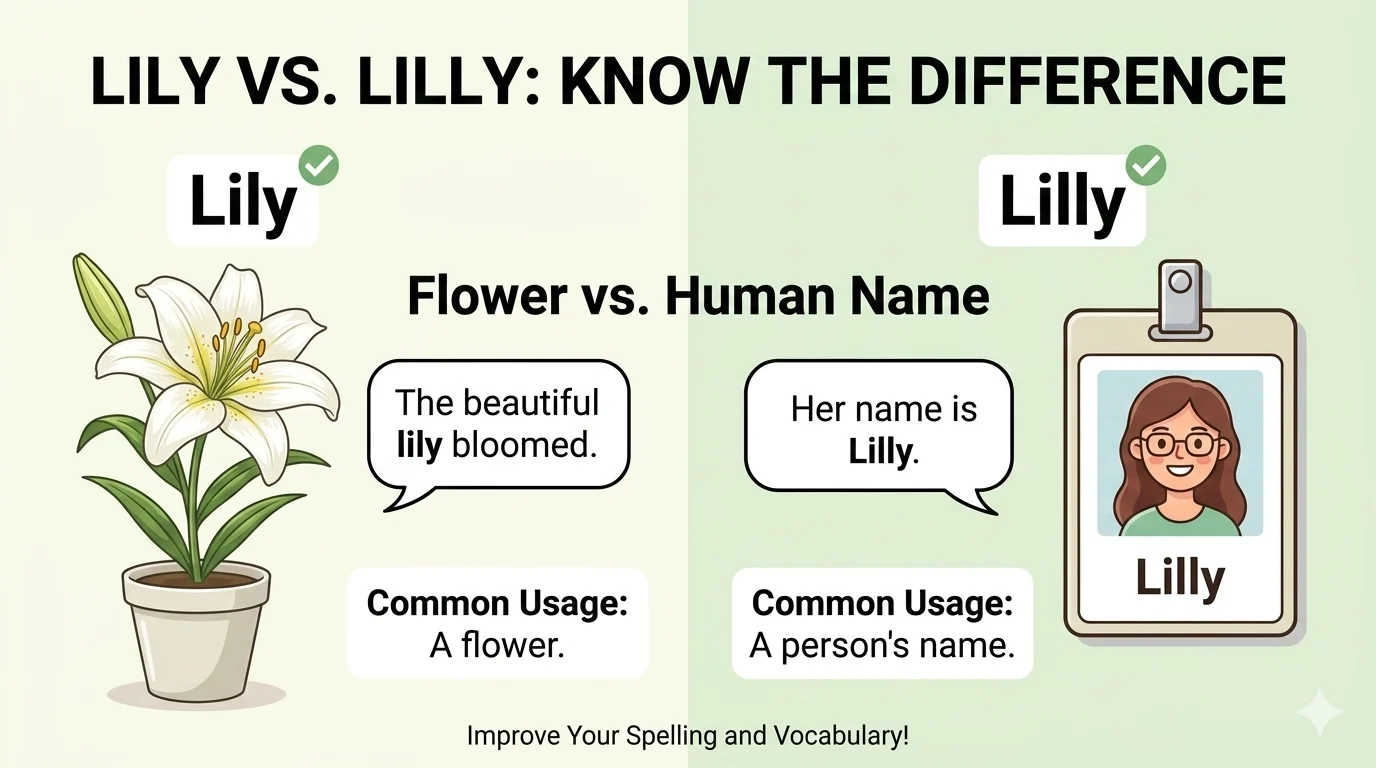
Many people get confused when writing lily or lilly. Both words look almost the same, but they are not always used in the same way. Some people use lily when talking about a flower, while Lilly may appear in names. Because the spelling difference is very small, it is easy to make mistakes.
If you have ever wondered “Is it a lily with two L’s or one?” or “Is Lily or Lilly more common?”, you are not alone. Students, writers, and even native English speakers sometimes mix them up.
In this easy guide, you will learn the meaning, spelling, pronunciation, and correct usage of lily and lilly. The explanations are simple, and the examples are easy to understand. By the end of this article, you will know exactly when to write Lily and when Lilly might appear, and you will never confuse them again.
What Does Each Word Mean?
Meaning of Lily
The word lily is a common English word. It usually refers to a beautiful flower or sometimes a girl’s name.
The lily flower is known for its soft petals and sweet smell. It is often seen in gardens, weddings, and religious art.
Many people also search for the lily name meaning Bible, because lilies are often connected with purity, beauty, and peace.
Part of Speech
- Noun
Examples
- The lily flower in the garden smells wonderful.
- My friend planted white lilies near her house.
- Lily won the school art competition.
How to Spell Lily Flower Plural
Many people ask how to spell lily flower plural.
The correct plural form is:
lily → lilies
Example:
The pond was covered with beautiful water lilies.
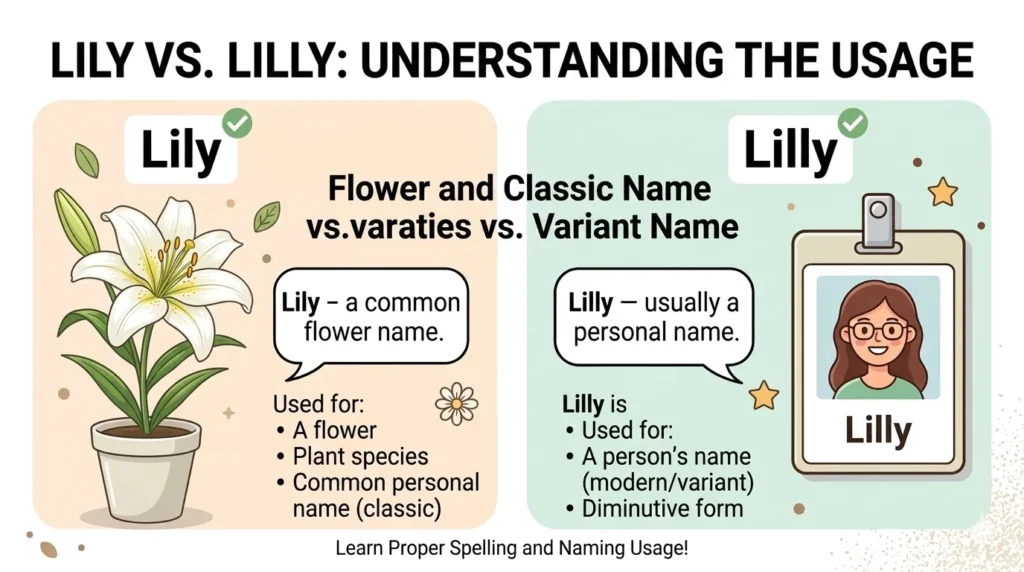
Meaning of Lilly
The spelling Lilly is usually used as a name, not as a flower word.
For example, some people use Lilly as a short form of Lillian or as a family name. That is why some people search for Lily or Lilly for Lillian.
Part of Speech
- Proper noun (a name)
Examples
- Lilly is my cousin’s name.
- My teacher’s daughter is called Lilly.
- Lilly loves reading storybooks.
Important note:
When talking about the flower, the correct spelling is lily, not lilly.
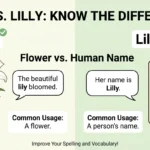
The Key Difference Between Lily and Lilly
Here is a simple comparison to make everything clear.
| Feature | Lily | Lilly |
|---|---|---|
| Meaning | A flower or a common first name | Usually a personal or family name |
| Usage | Used for the flower and many names | Mostly used in names |
| Common spelling | Very common | Less common |
| Example sentence | The garden has a white lily. | Lilly is my neighbor. |
Quick Tip to Remember
Think about this simple rule:
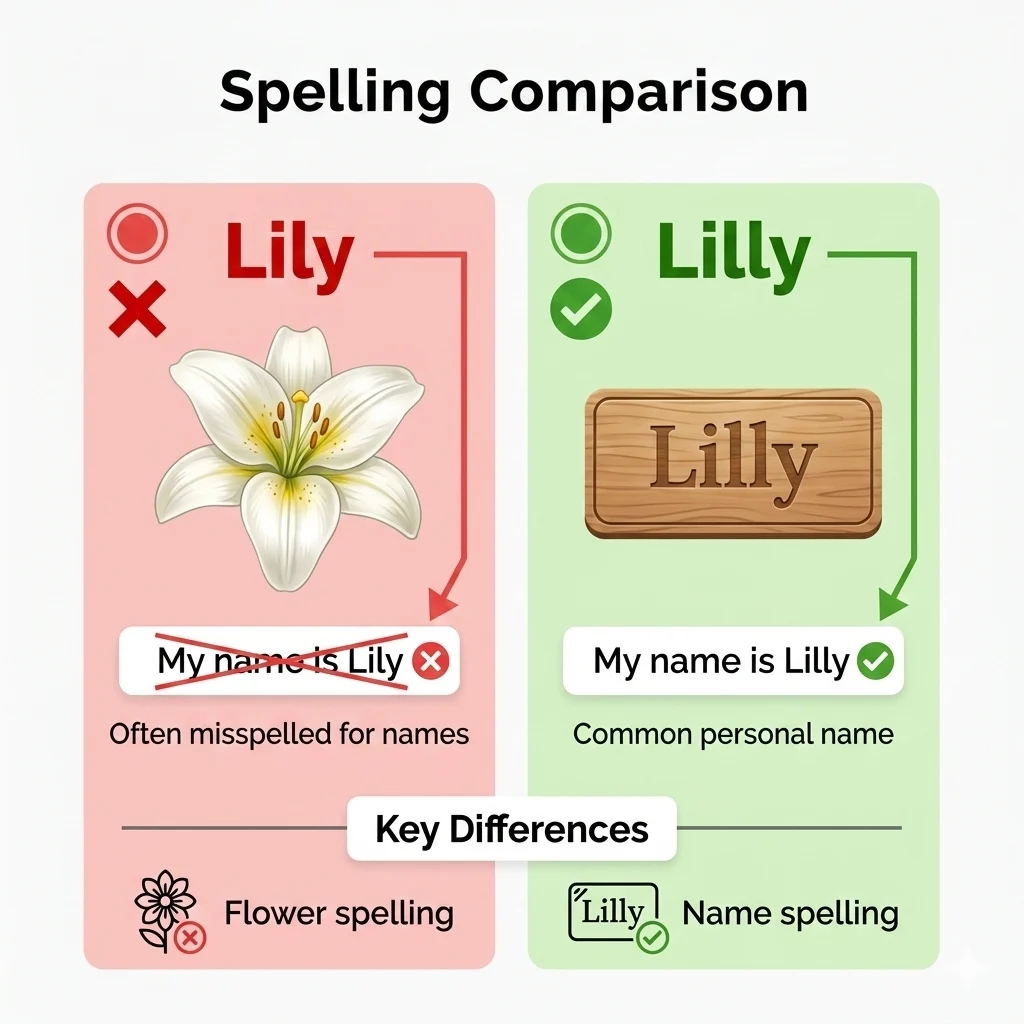
Flower = Lily (one “l” in the middle)
Name variation = Lilly (double “l”)
If you are writing about the flower, always choose lily.
Lily or Lilly Flower Spelling
Many people ask about the lily or lilly flower spelling.
The correct spelling of the flower is:
LILY
Never write lilly when talking about the flower.
Example sentences:
✔ The pink lily looks beautiful.
✔ She bought a bouquet of lilies.
Incorrect example:
✘ The garden has a white lilly.
Lily or Lilly Pronunciation
Another common question is lily or lilly pronunciation.
Both spellings are pronounced the same way.
Pronunciation:
LIL-ee
Example:
- Lily sounds like LIL-ee
- Lilly sounds the same: LIL-ee
This is why many people get confused when writing them.
Even though they sound the same, the spelling depends on the meaning.
Is Lily or Lilly More Common?
Many English learners ask: Is Lily or Lilly more common?
The answer is simple.
Lily is much more common.
Reasons:
- It is the official spelling of the flower.
- It is a very popular girl’s name.
- It appears often in books and dictionaries.
The spelling Lilly appears less often and is mostly used in names or brand names.
Lily or Lilly UK Usage
People also ask about Lily or Lilly UK spelling.
In both British English and American English, the correct spelling for the flower is the same:
Lily
So whether you are writing in the UK, USA, Canada, or Australia, the flower spelling does not change.
Example:
- British garden: white lilies
- American garden: white lilies
Both are correct.
Lily Name Meaning Bible
The lily is not just a flower. It also has special meaning in religion and literature.
In the Bible, the lily often represents:
- purity
- beauty
- peace
- innocence
That is why many parents choose Lily as a baby name.
Example sentence:
Many people love the name Lily because of its beautiful meaning in the Bible.
Is the Name Lily British?
Another common question is “Is the name Lily British?”
The answer is yes and no.
The name Lily is popular in Britain, but it is also widely used in many other countries.
It comes from the lily flower, which has been admired in many cultures.
Today, the name Lily is common in:
- the UK
- the United States
- Australia
- Canada
- Europe
Is It a Lily or Lilly Flower?
Sometimes people write sentences like:
“Is it a lily or lilly flower?”
The correct sentence should be:
✔ Is it a lily flower?
The spelling lilly flower is incorrect.
Always remember:
Flower = lily
Common Mistakes and How to Avoid Them
Here are some mistakes people often make.
Mistake 1
Incorrect:
She picked a beautiful lilly.
Correct:
She picked a beautiful lily.
Reason:
The flower spelling is lily, not lilly.
Mistake 2
Incorrect:
The pond has water lillys.
Correct:
The pond has water lilies.
Reason:
The plural of lily is lilies, not lillys.
Mistake 3
Incorrect:
My favorite flower is lilly.
Correct:
My favorite flower is lily.
When to Use Lily
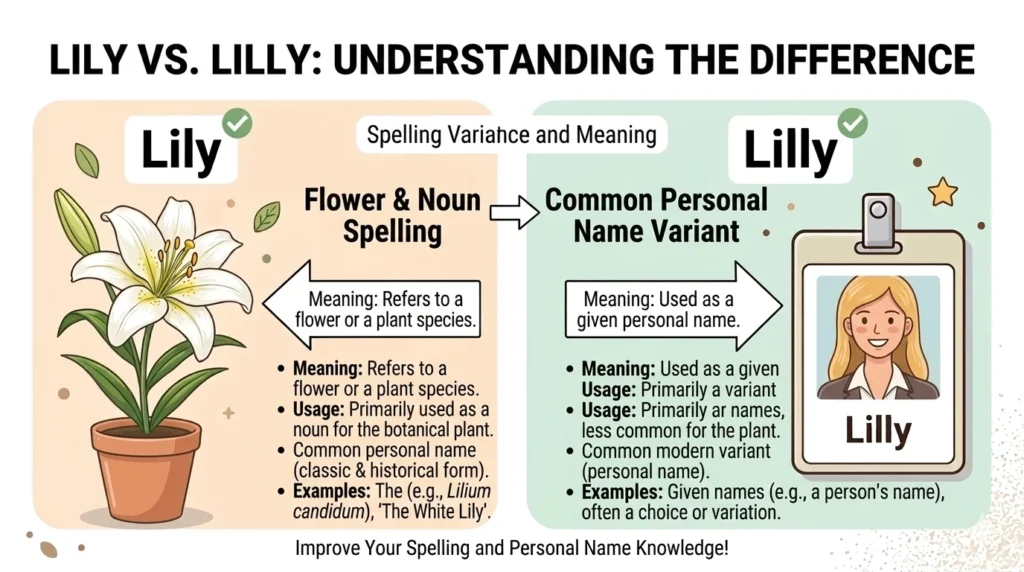
Use lily when talking about:
- the flower
- the plant
- the common girl’s name
Examples
- The white lily smells sweet.
- My grandmother planted yellow lilies.
- Lily is my best friend at school.
- The pond is full of water lilies.
- Lily loves painting flowers.
When to Use Lilly
Use Lilly mainly as a personal name.
Examples
- Lilly is learning to play the piano.
- My classmate Lilly lives near the park.
- Lilly enjoys reading adventure stories.
- Lilly helped me finish my homework.
Memory Trick
If the word refers to a specific person, the spelling Lilly might be used.
But if it is a flower, the correct spelling is always lily.
Quick Recap: Lily vs Lilly
Here is a simple summary.
- Lily is the correct spelling for the flower.
- The plural form is lilies.
- Lily is also a very popular girl’s name.
- Lilly is usually used only as a personal name.
- Both words are pronounced the same way.
- The flower spelling is always lily in both UK and US English.
A Short History of the Word Lily
The word lily comes from an old Greek word called “leirion.”
Over time, it moved into Latin and later into English.
The flower has been admired for thousands of years. In ancient cultures, it was a symbol of:
- beauty
- purity
- love
That is why the name Lily became popular for girls.
Mini Quiz: Test Your Understanding
Fill in the blanks with lily or Lilly.
- The garden has a white ______.
- My friend ______ loves drawing.
- The pond has many water ______.
- ______ won the spelling contest.
- The pink ______ smells
FAQs
Is it a lily with two L’s or one?
The flower spelling is lily, with one “l” in the middle.
Is Lily or Lilly more common?
Lily is much more common because it is used for both the flower and many personal names.
How do you pronounce Lilly?
It is pronounced LIL-ee, the same as Lily.
How to spell lily flower plural?
The plural of lily is lilies.
Example: water lilies.
Is the name Lily British?
The name Lily is popular in the UK, but it is also widely used in many countries around the world.
Conclusion
Understanding the difference between lily and lilly is actually very simple. The word lily is the correct spelling for the beautiful flower and is also a common first name. The spelling Lilly is mostly used as a personal name and rarely refers to the flower.
If you remember just one rule, make it this: the flower is always spelled lily. When you see the double “l” spelling, it is usually someone’s name.
Learning small spelling differences like this can greatly improve your English writing. With practice, you will start recognizing the correct word quickly and confidently.
Keep learning new words every day, and your English will continue to grow stronger.

Elizabeth Gaskell was a Victorian English novelist and biographer, celebrated for social realism, strong female characters, and industrial age themes. era life.