Do you ever wonder whether to use lended or lent in a sentence? You’re not alone! Many people confuse these two words because they sound similar and both relate to giving something temporarily. Choosing the wrong form can make your writing sound awkward or incorrect.
In this guide, we’ll break down the difference between lended and lent in a simple, easy-to-understand way. You’ll learn their meanings, see real-life examples, avoid common mistakes, and even get memory tricks to remember which word to use. By the end, you’ll feel confident using lended or lent correctly in everyday conversation, school, emails, and writing.
What Does Each Word Mean?
Lent
Definition:
“Lent” is the past tense and past participle of the verb lend. It means to give something to someone temporarily, usually expecting it to be returned.
Part of Speech: Verb (past tense)
Examples:
- I lent my friend my favorite book.
- She lent him some money for lunch.
- They lent their tools to the neighbors.
Think of it as a promise: you give something, but you want it back later.
Lended
Definition:
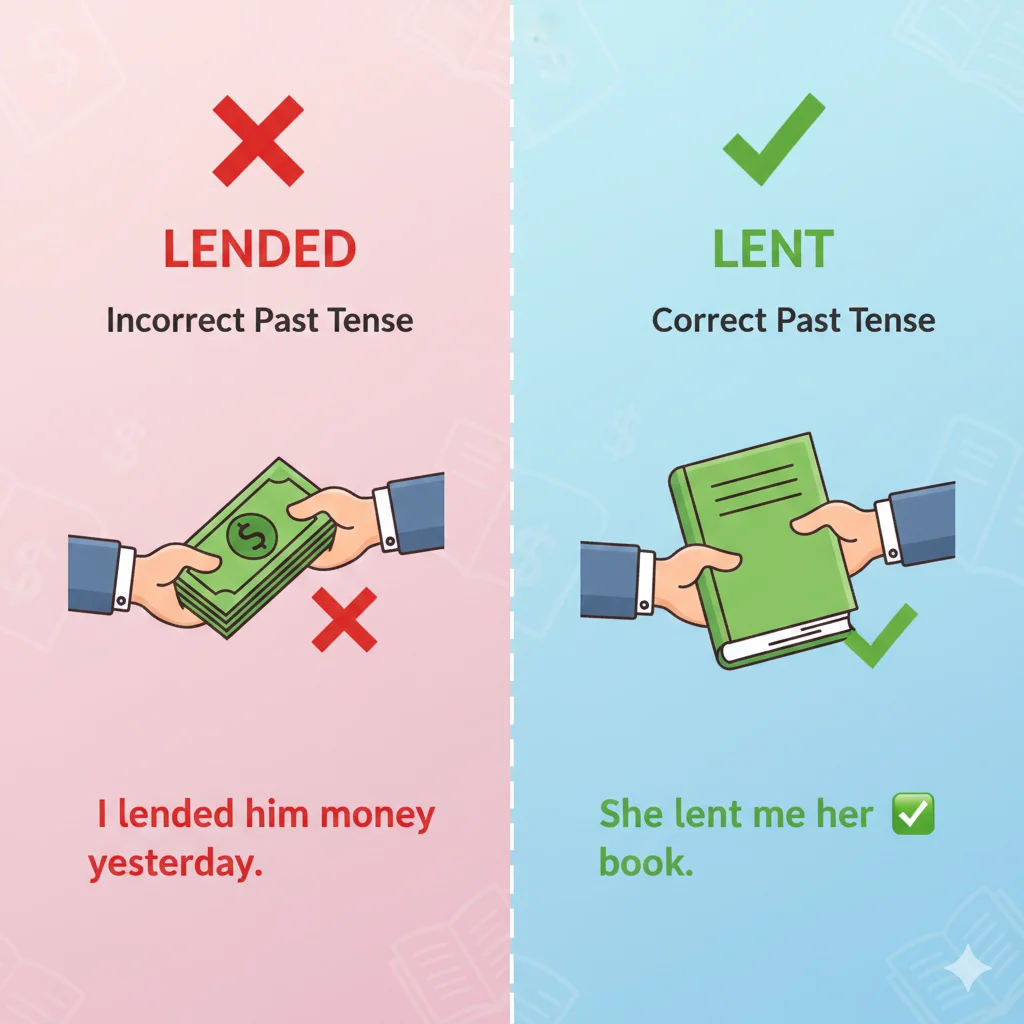
“Lended” is sometimes used incorrectly as the past tense of lend. In modern English, it is considered nonstandard. Native speakers and grammar experts almost always use lent instead.
Part of Speech: Verb (incorrect past tense)
Examples (nonstandard usage, for awareness):
- He lended me his car. ❌ (Correct: He lent me his car.)
- They lended books to the school library. ❌ (Correct: They lent books to the school library.)
Short story: Imagine your grandparent saying, “I lent you this toy when you were little.” Using lended would sound unusual or wrong.
The Key Difference Between Lended and Lent
| Feature | Lent | Lended |
|---|---|---|
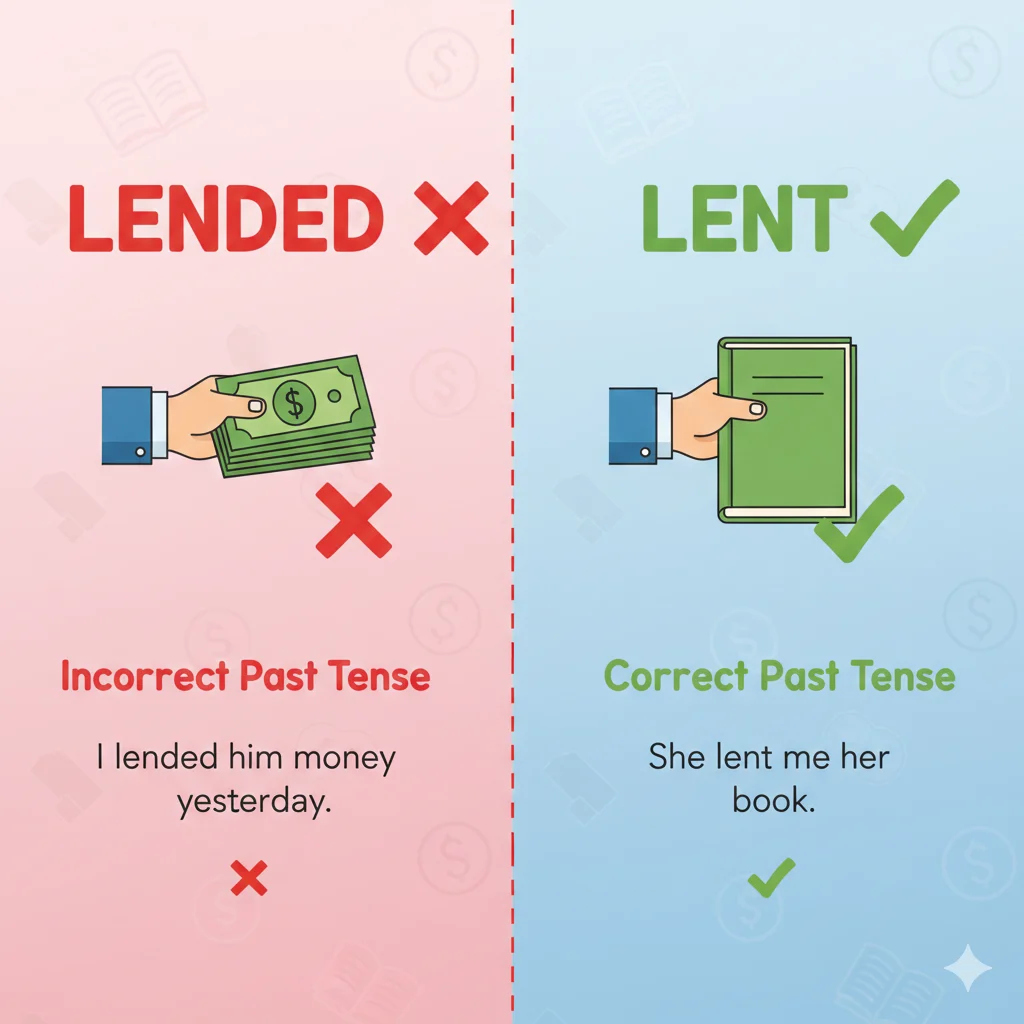
| Meaning | Past tense of “lend”; giving something temporarily | Nonstandard or incorrect past tense |
| Correct Usage | Widely accepted in English writing and speaking | Avoid in formal writing; rarely used |
| Example Sentence | I lent my jacket to my brother. | I lended my jacket to my brother. ❌ |
Quick Tip: If you’re unsure, always use lent. It is correct in every situation.
Common Mistakes and How to Avoid Them
- Incorrect: She lended me her phone.
Correct: She lent me her phone.
Why it happens: People sometimes think “lend” follows the regular pattern like “send → sended,” which is wrong. - Incorrect: I lended money to my cousin.
Correct: I lent money to my cousin.
Fix: Remember, “lend” is irregular, so the past tense is lent, not lended. - Incorrect: They lended their car for the trip.
Correct: They lent their car for the trip.
Tip: Mentally replace “lended” with “gave temporarily.” If it works, use lent.

When to Use Lent
You should use lent whenever you describe giving something temporarily in the past.
Examples in Real Life:
- I lent my notebook to my classmate.
- He lent his bike to his neighbor.
- My mom lent me money for snacks.
- We lent our camping gear to friends.
- She lent her jacket during the cold evening.
Memory Hack: Imagine a small “t” in lent as a “ticket” – you’re giving someone a ticket for a short time and expecting it back.
When to Avoid Lended
You should almost never use lended in modern English. It might appear in old texts or regional dialects, but in school, business writing, or exams, it is incorrect.
Incorrect vs Correct Examples:
- ❌ He lended me his pen. → ✅ He lent me his pen.
- ❌ I lended money to my friend yesterday. → ✅ I lent money to my friend yesterday.
Visual Trick: Think of lent as the “gold standard” for past lending. Anything else looks unusual.
Quick Recap: Lended vs Lent
- Lent = correct past tense of “lend.” Always use this.
- Lended = nonstandard/incorrect in modern English. Avoid it.
- Memory tip: “t” in lent = “ticket” = temporary giving.
- Use lent in school, work, or casual conversation to sound natural.
Advanced Tips
- Origin: “Lend” comes from Old English lǣnan, meaning “to loan or allow to use temporarily.”
- Formal Writing: Always use lent in essays, reports, and exams.
- Online Writing: Avoid lended in texts or social media posts to prevent confusion.
Mini Quiz: Test Your Understanding
Fill in the blanks with lent or lended:
- I ______ my pen to Sara yesterday.
- He ______ his bike to his brother for the weekend.
- They ______ money to the local charity.
- My teacher ______ me a book about space.
- She ______ her umbrella to her friend in the rain.
Answers: 1. lent, 2. lent, 3. lent, 4. lent, 5. lent
FAQs
- Can I use lended in writing?
No, modern English considers it incorrect. Always use lent. - Is lent the past tense or past participle?
Both. You can say, “I lent him my book,” or “I have lent him my book.” - Why do people say lended?
They assume it follows regular verb rules like “send → sended.” - Can I use lent for money and objects?
Yes! You can lend both items and money. - How can I remember the difference?
Use the “t-ticket” trick: lent = temporary giving.
Conclusion
Now you know the difference between lended and lent. Always use lent for past tense, avoid lended, and practice with real-life examples. With a little attention, you can easily sound confident in English writing and speaking. Remember, mastering small words like these makes a big difference in communication. Keep practicing, and your grammar will improve every day

Arthur Machen was a Welsh writer known for supernatural fiction, blending horror, mysticism, and folklore, and influencing modern weird literature worldwide Art