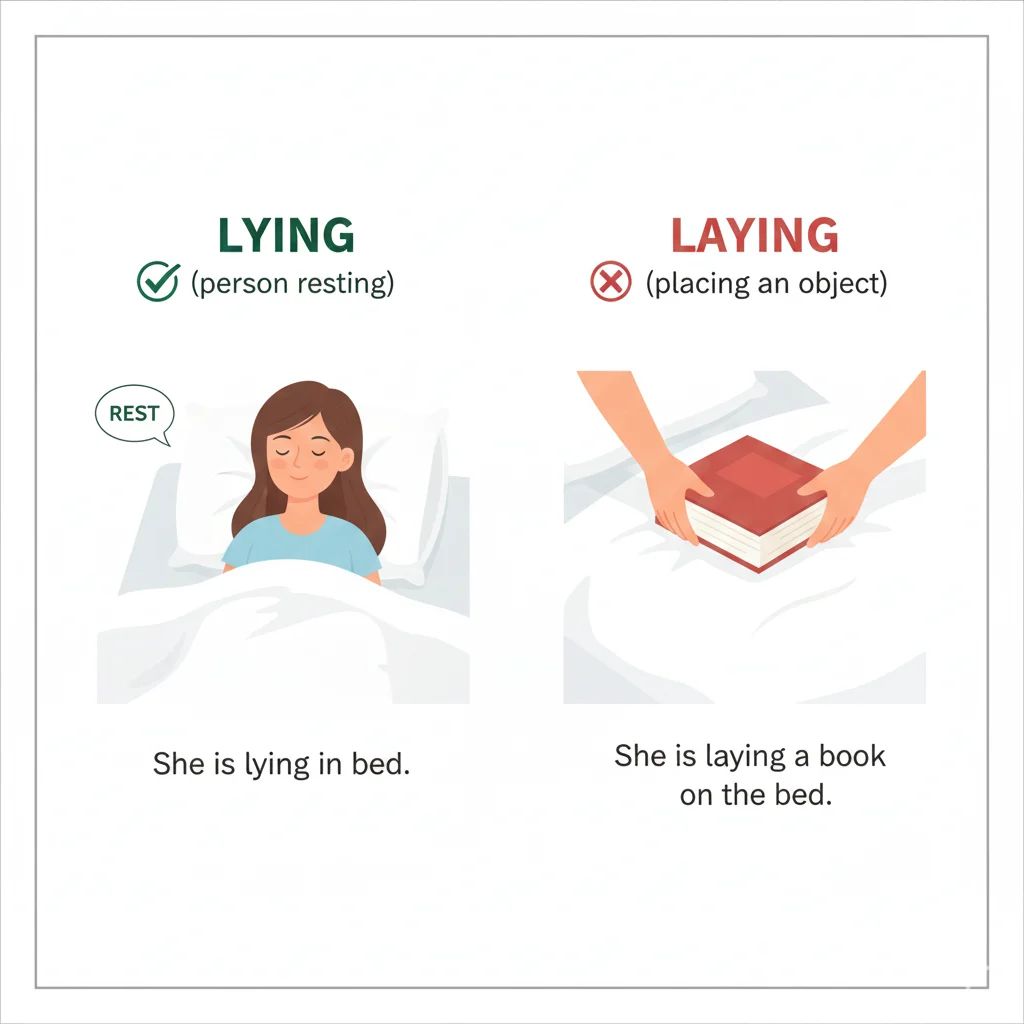
Many people feel confused when choosing between laying or lying in bed. You might have heard both sentences: “I am laying in bed” and “I am lying in bed.” One sounds right, but which one is actually correct? This is one of the most common grammar problems in English. Even adults, writers, and native speakers mix these words up every day.
The reason is simple: lay and lie look similar, sound similar, and are used in daily life. But they do not mean the same thing. This guide will clearly explain the difference between laying and lying in bed, their meanings, correct usage, and easy tricks to remember them.
By the end of this article, you will know exactly which word to use, why it works, and how to avoid common mistakes — even if you are a beginner or a young learner.
What Does Each Word Mean?
Before understanding the difference between laying or lying in bed, let’s look at what each word means in the simplest way.
What Does “Lying” Mean?
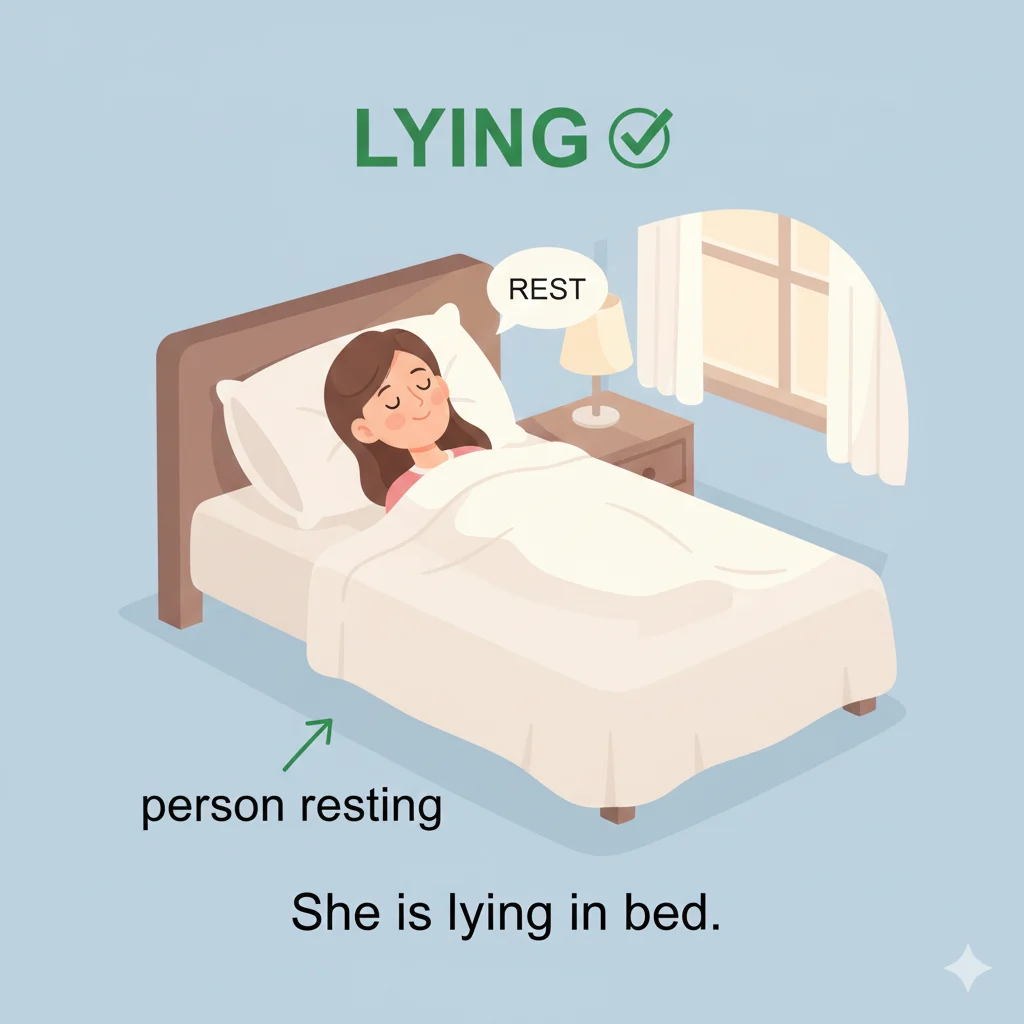
Lying means resting or reclining.
It does not need an object.
When you are resting, you are lying.
Part of speech: Verb
Simple meaning: To rest flat on a surface
Easy Examples:
- I am lying in bed.
- She is lying on the couch.
- The cat is lying on the floor.
👉 If you are resting, you are lying.
What Does “Laying” Mean?
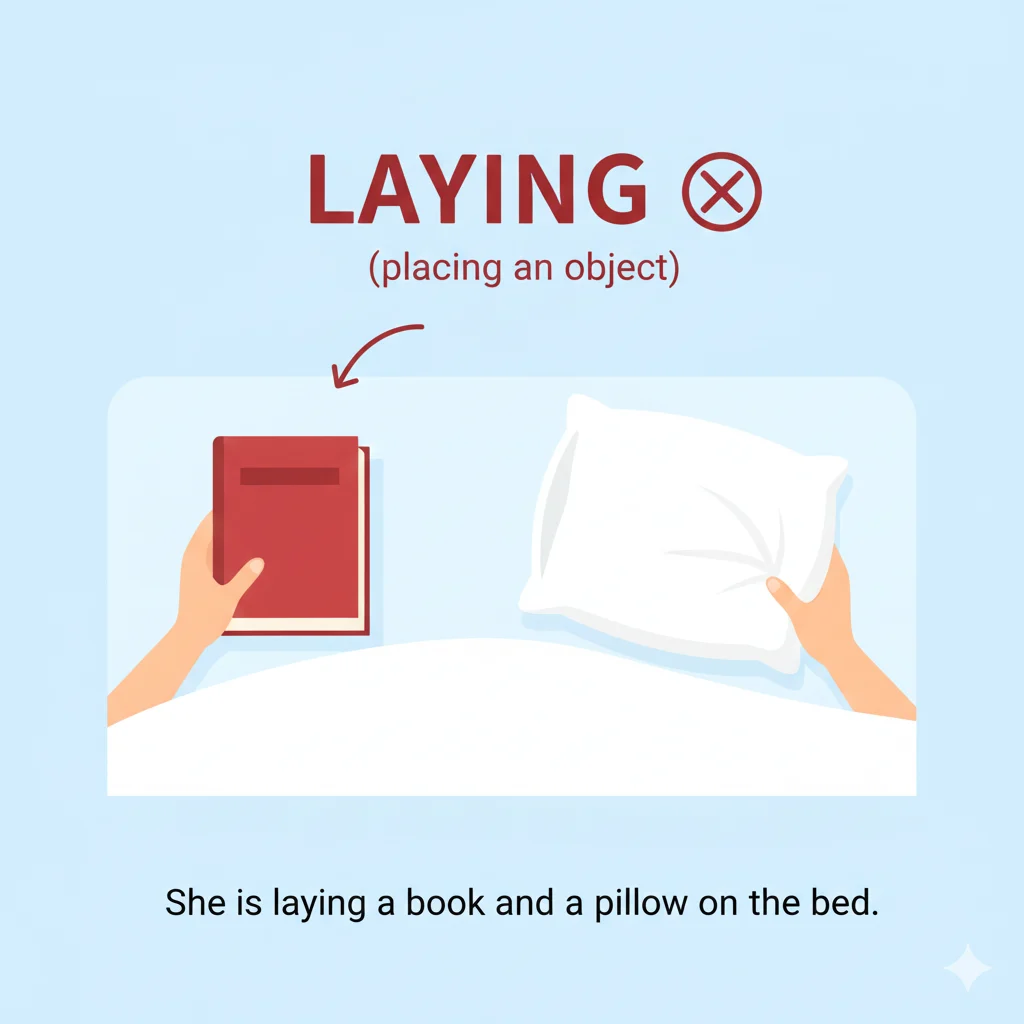
Laying means putting something down.
It always needs an object (something being placed).
Part of speech: Verb
Simple meaning: To put something somewhere
Easy Examples:
- I am laying the book on the table.
- She is laying the baby in the crib.
- He is laying his clothes on the bed.
👉 If you are placing something, you are laying it.
The Key Difference Between Laying and Lying in Bed
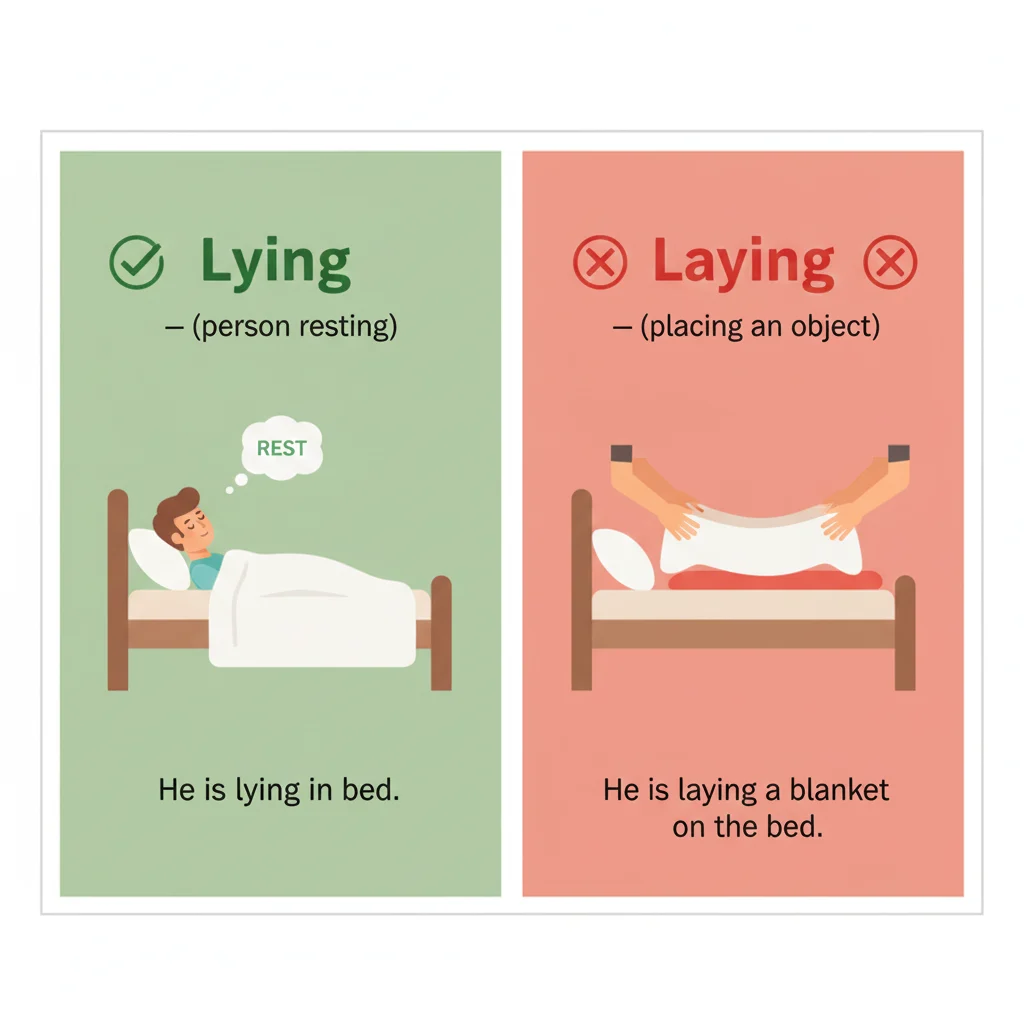
The main difference is whether there is an object.
Simple Rule:
- Lying = You rest
- Laying = You place something
Comparison Table
| Feature | Lying | Laying |
|---|---|---|
| Needs an object? | ❌ No | ✅ Yes |
| Meaning | Resting | Putting something down |
| Correct sentence | I am lying in bed | I am laying a blanket on the bed |
| Common mistake | “I am laying in bed” | Forgetting the object |
Quick Tip to Remember
Ask yourself: “What am I placing?”
- If the answer is nothing, use lying.
- If the answer is something, use laying.
Common Mistakes and How to Avoid Them
Many people make mistakes when using laying or lying in bed. Let’s fix the most common ones.
❌ Mistake 1:
“I am laying in bed.”
✅ Correct:
“I am lying in bed.”
Why?
You are not placing anything. You are resting.
❌ Mistake 2:
“She is lying the baby down.”
✅ Correct:
“She is laying the baby down.”
Why?
The baby is the object being placed.
❌ Mistake 3:
“He laid in bed all day.”
✅ Correct:
“He lay in bed all day.”
Why?
Past tense of lie (rest) is lay, not laid.
How to Avoid These Mistakes
- Remember: People lie. Things get laid.
When to Use Lying
Use lying when someone or something is resting.
Common Situations:
- Sleeping
- Resting
- Relaxing
- Being flat
Easy Examples:
- I am lying in bed after school.
- She was lying on the sofa.
- The dog is lying under the table.
- He likes lying in bed on weekends.
- The phone is lying on the desk.
Real-Life Example:
After a long day at school, you go to your room and rest. You are lying in bed, not laying.
When to Use Laying
Use laying when you put something somewhere.
Common Situations:
- Placing objects
- Putting items down
- Setting something flat
Easy Examples:
- I am laying my bag on the bed.
- She is laying the baby in the crib.
- He was laying books on the table.
- Mom is laying clean clothes on the bed.
- They are laying blankets on the floor.
Memory Hack:
If you can say “it” after the verb, use laying.
Example: I am laying it (the book).
Understanding Verb Forms (Made Easy)
This part helps you avoid confusion in different tenses.
Lie (Rest)
- Present: lie
- Present continuous: lying
- Past: lay
- Past participle: lain
Example:
Yesterday, I lay in bed all day.
Lay (Put Something Down)
- Present: lay
- Present continuous: laying
- Past: laid
- Past participle: laid
Example:
Yesterday, I laid the book on the bed.
👉 This is why people get confused — lay appears in both lists!
Why People Confuse Laying or Lying in Bed
- The words sound similar
- The past tense of lie is lay
- People hear mistakes and repeat them
- Informal speech ignores grammar rules
But once you remember the object rule, the confusion disappears.
Everyday Examples: Laying vs Lying in Bed
Let’s compare correct usage in daily life.
- ✅ I am lying in bed watching TV.
- ❌ I am laying in bed watching TV.
- ✅ I am laying my phone on the bed.
- ❌ I am lying my phone on the bed.
Quick Recap: Laying vs Lying in Bed
- Lying = resting, no object
- Laying = placing something, needs an object
- You lie in bed
- You lay something on the bed
- Ask: What am I placing?
Advanced Tips (Optional)
Word History (Simple)
- Lie comes from old English meaning rest
- Lay comes from old English meaning put
In Exams and Writing
Teachers expect:
- “I was lying in bed”
- “She was laying the book down”
In Texting and Online Writing
Grammar mistakes are common, but correct usage makes you look more confident and professional.
Mini Quiz: Test Yourself
Fill in the blanks:
- I am ____ in bed right now.
- She is ____ the baby in the crib.
- He was ____ on the couch all day.
- They are ____ blankets on the bed.
- Yesterday, I ____ in bed because I was sick.
Answers:
- lying
- laying
- lying
- laying
- lay
- lay
FAQs
1. Is it correct to say “laying in bed”?
No. The correct phrase is “lying in bed” because you are resting, not placing something.
2. Why does “lay” confuse people?
Because lay is the past tense of lie, and it also has its own verb form.
3. Can objects lie?
Yes. Objects can lie if they are resting. Example: The book is lying on the table.
4. What is the easiest rule to remember?
If there is no object, use lying.
5. Is grammar important in casual writing?
Yes. Correct grammar improves clarity and confidence.
Conclusion
Understanding the difference between laying or lying in bed is much easier than it seems. The key is remembering one simple idea: lying is for resting, and laying is for placing something. If you can find an object in the sentence, choose laying. If not, choose lying.
With clear rules, real-life examples, and practice, this common grammar problem becomes easy to fix. Keep practicing in your daily speech and writing, and your English will improve a little every day. Learning grammar step by step builds confidence — and you’re doing great!

Arthur Machen was a Welsh writer known for supernatural fiction, blending horror, mysticism, and folklore, and influencing modern weird literature worldwide Art