Have you ever wondered whether to write humour or humor? You’re not alone! These two words confuse many people, but the good news is that the difference is simple. Understanding it will help you write correctly, whether you are texting, writing an essay, or posting online.
In this guide, we’ll explain the meaning of humour and humor, their correct usage, common mistakes, and practical tips to remember which one fits best. By the end, you’ll be able to use these words confidently in everyday English — no grammar stress, no confusion. Even if you’re a beginner, this guide will make it easy to understand and remember.
What Does Each Word Mean?
Humour
Humour is the British English spelling of the word that means “the ability to make people laugh or see the funny side of things.”
- Part of speech: noun
- Examples:
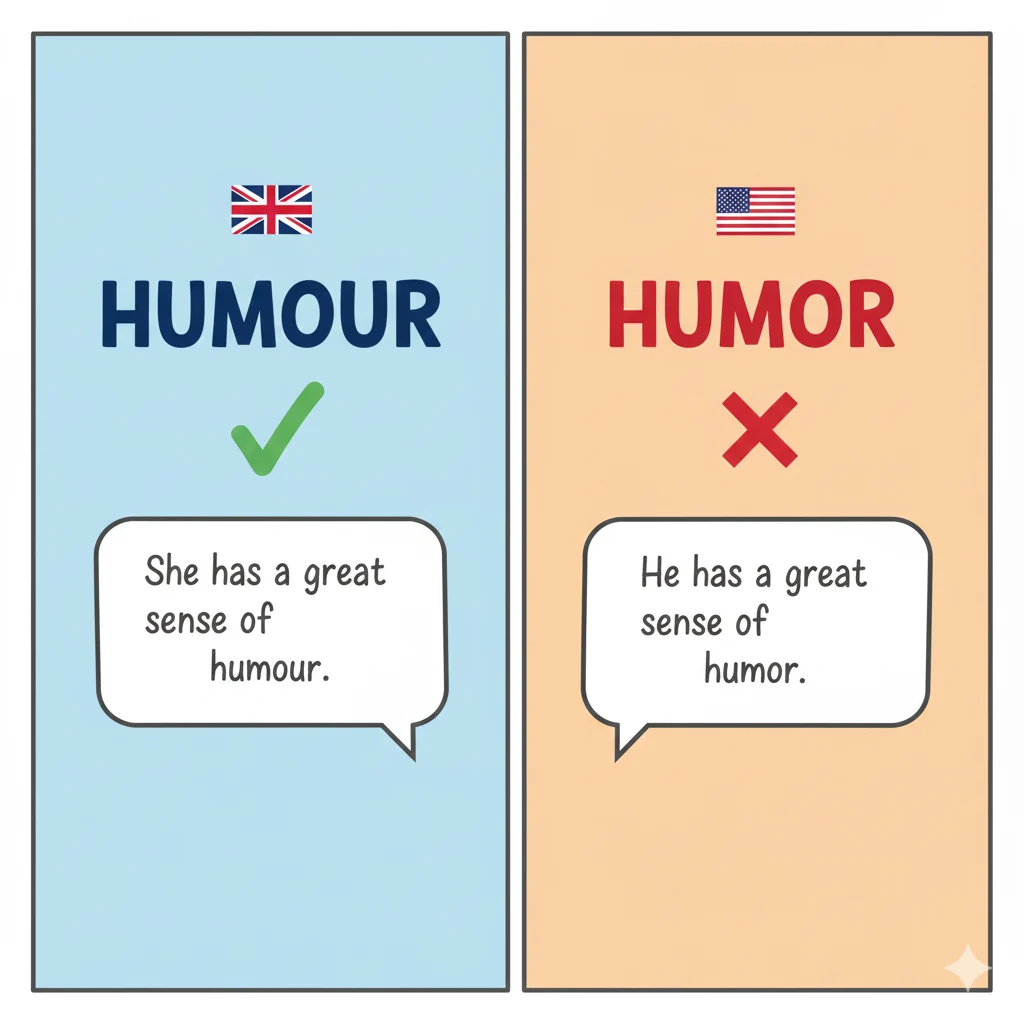
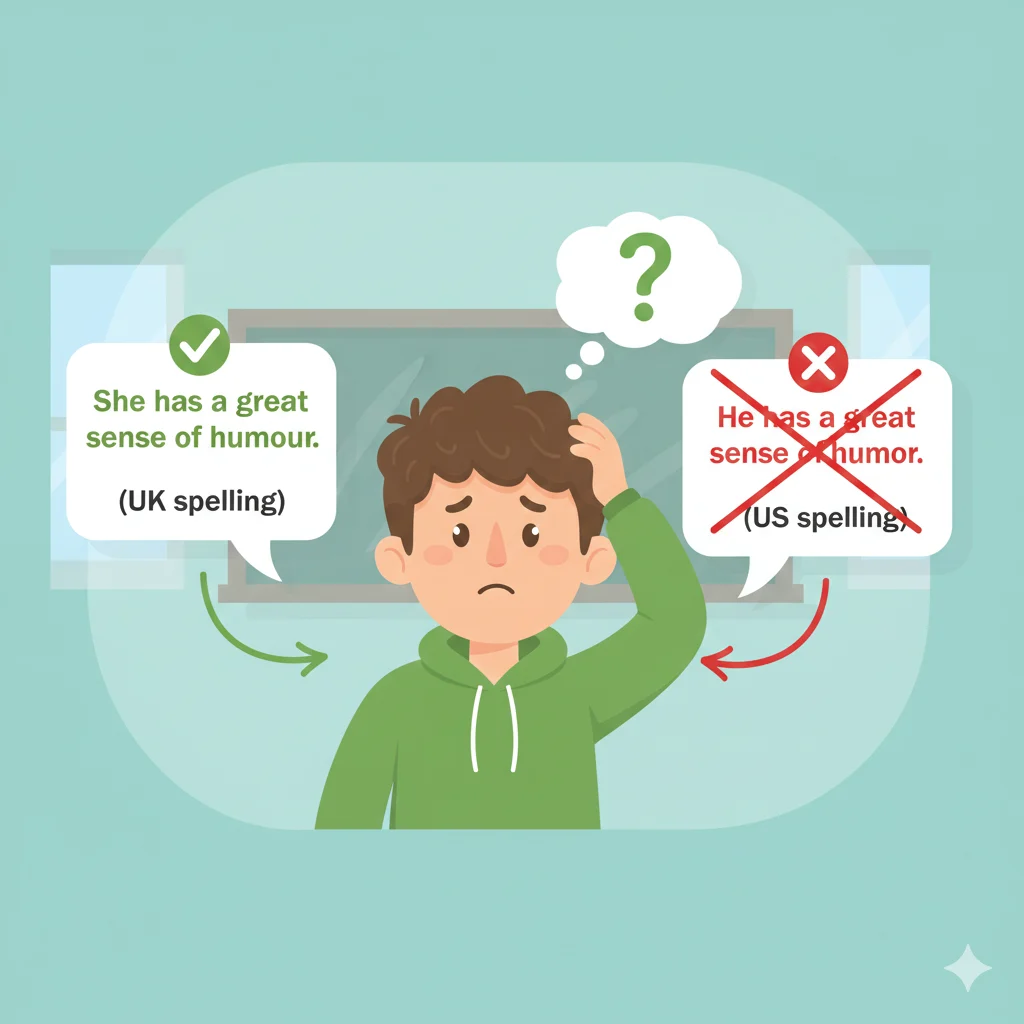
- She has a great sense of humour and always makes her friends laugh.
- His humour is dry, but very clever.
- The movie’s humour made the audience laugh from start to finish.
Think of humour as anything that is funny, amusing, or entertaining — the kind of thing that brightens a dull day.
Humor
Humor is simply the American English spelling of the same word. It has the same meaning and usage as humour.
- Part of speech: noun
- Examples:
- He has a good sense of humor and tells funny stories.
- Her humor is subtle, but it makes everyone smile.
- I love books full of humor and laughter.
So, whether you see humour or humor, the meaning is identical — it just depends on where you are writing.
The Key Difference Between Humour and Humor
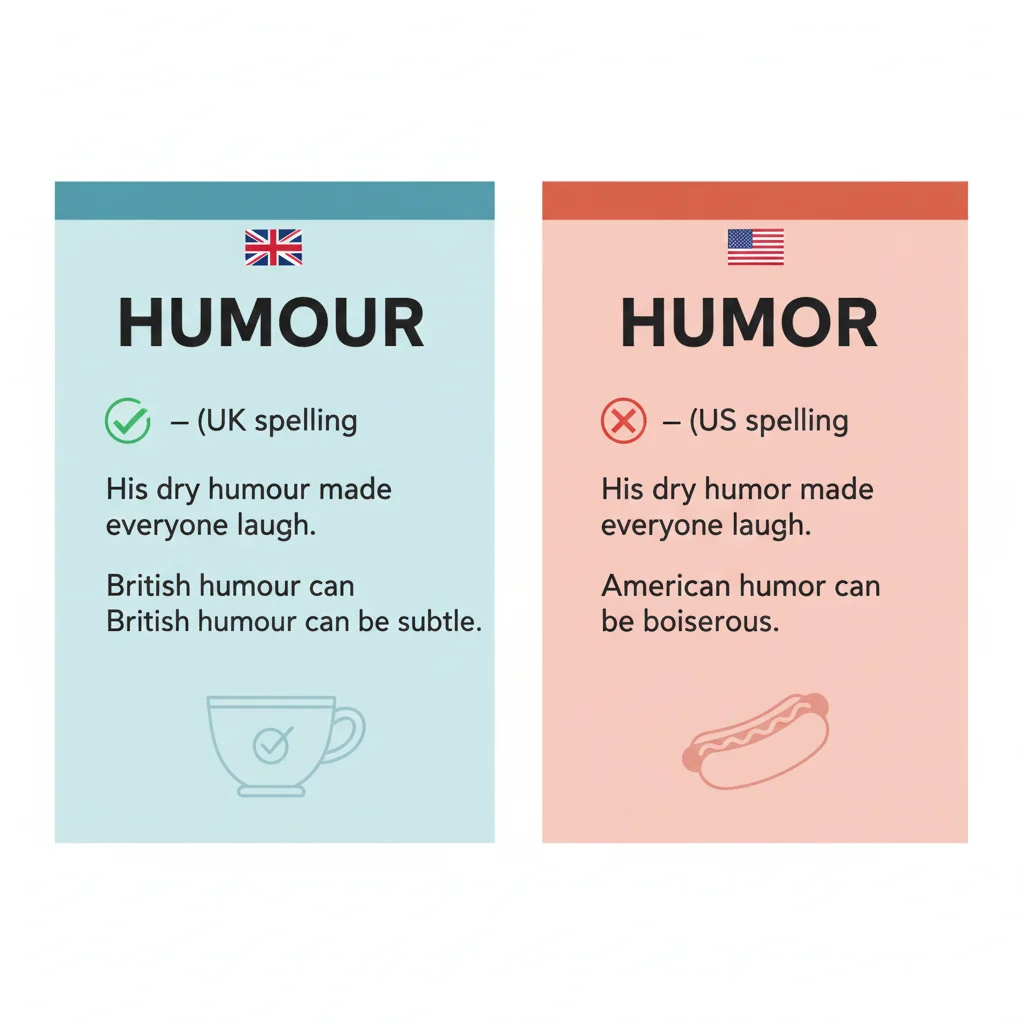
The main difference between humour and humor is regional spelling. British English prefers humour, while American English uses humor.
| Feature | Humour (British) | Humor (American) |
|---|---|---|
| Meaning | The quality of being funny or amusing | The quality of being funny or amusing |
| Spelling | Humour | Humor |
| Common region | UK, Canada, Australia | USA |
| Example sentence | She has a brilliant sense of humour. | He has a brilliant sense of humor. |
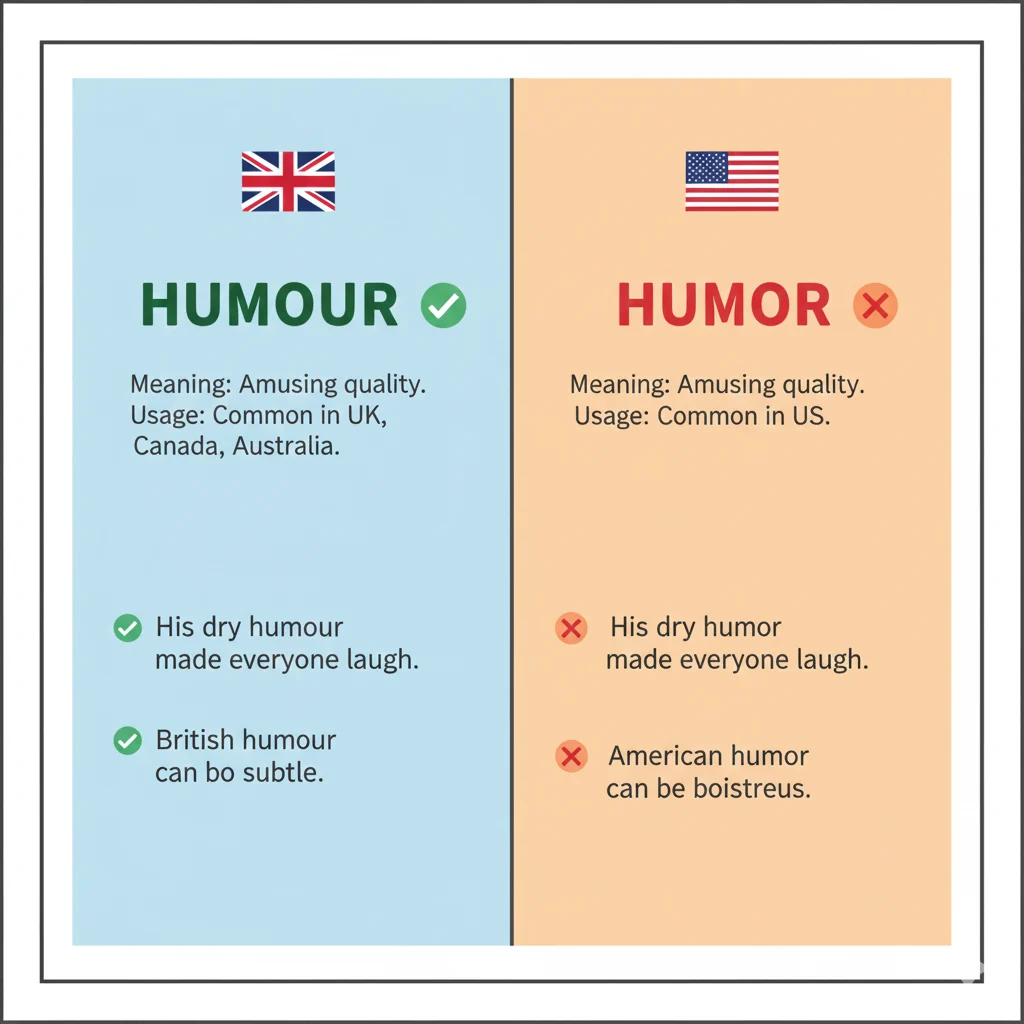
Quick Tip: If you are writing for an American audience, always use humor. For British or Commonwealth audiences, use humour.
Common Mistakes and How to Avoid Them
Mistake 1: Mixing British and American spellings
- ❌ Incorrect: His humour makes everyone laugh. (in American English)
- ✅ Correct: His humor makes everyone laugh.
Why it happens: Writers sometimes mix spellings without thinking about the audience.
Mistake 2: Using humour/humor as an adjective incorrectly
- ❌ Incorrect: That was a very humor joke.
- ✅ Correct: That was a very funny joke.
Fix: Remember, humour/humor is a noun, not an adjective.
Mistake 3: Assuming meaning changes
- ❌ Incorrect: Humor and humour have different meanings.
- ✅ Correct: Humor and humour are the same; only spelling differs.
When to Use Humour
Use humour in British English contexts. It works in essays, letters, emails, books, and everyday speech in the UK, Australia, and Canada.
Examples:
- Her humour lightened the mood in the classroom.
- He is known for his dark humour.
- The politician’s humour surprised everyone.
- We laughed at the comedian’s clever humour.
- Humour is an important part of storytelling.
Memory hack: Think of the “u” in humour as UK — it helps you remember the British spelling.
When to Use Humor
Use humor in American English contexts. It is correct in schools, writing, novels, emails, and online content in the USA.
Examples:
- His humor made the whole office laugh.
- Humor is essential in teaching to keep students engaged.
- I enjoy novels full of humor and wit.
- The comedian’s humor was loved by everyone.
- Even serious topics can have humor.
Memory hack: Drop the “u” when writing for Americans — simpler, shorter, just like American English spelling!
Quick Recap: Humour vs Humor
- Humour: British spelling, noun, means the ability to be funny.
- Humor: American spelling, noun, same meaning as humour.
- Both words are correct; choose based on your audience.
- Never use humour/humor as an adjective.
- Always remember: UK = humour, US = humor.
Advanced Tips
- Origin: The word comes from the Latin “humor,” meaning liquid or fluid, which ancient medicine linked to personality and mood.
- Formal writing: Use the spelling consistent with your audience — essays, letters, and publications must match regional English.
- Texting & online: Spelling usually follows personal preference, but in professional or school work, correct spelling matters.
Mini Quiz
Fill in the blanks with humour or humor:
- I love British sitcoms for their dry ______.
- His ______ made everyone laugh at the meeting.
- Teachers often use ______ to make lessons fun.
- The book’s ______ is very clever.
- You should always adapt your writing to your audience’s ______.
Answers:
- humour
- humor
- humour
- humor
- humour (or humor depending on audience)
FAQs
- Q: Are humour and humor the same?
A: Yes, they are identical in meaning. The only difference is British vs. American spelling. - Q: Can I use humour in American English?
A: It’s not wrong, but American readers expect humor. - Q: Is humour a noun or adjective?
A: Noun only. The adjective form is “funny.” - Q: Which spelling is used in Canada?
A: Canada mainly follows British English, so humour is preferred. - Q: Does the meaning ever change between humour and humor?
A: No, the meaning is always about being funny or amusing.
Conclusion
Now you know the difference between humour and humor, how to use them correctly, and how to avoid common mistakes. Whether you’re writing for a British or American audience, following these simple rules will make your English more accurate and professional.
Remember, the key is consistency and knowing your audience. Keep practicing by spotting humour or humor in books, movies, and conversations — and soon it will feel completely natural. Every small step improves your English, and even mastering these small words makes a big difference!

Elizabeth Gaskell was a Victorian English novelist and biographer, celebrated for social realism, strong female characters, and industrial age themes. era life.