Do you often wonder whether to use flakey or flaky in a sentence? You are not alone! Many people mix these two words because they sound the same and are often used in casual writing. But knowing which one is correct can make your English clearer and more professional.
In this guide, we will explain the meanings of both words, highlight their differences, and show you the correct usage with easy-to-understand examples. You’ll also learn common mistakes to avoid, practical tips for remembering which spelling to use, and even a mini quiz to test your knowledge. By the end of this article, using flakey and flaky correctly will feel simple, natural, and stress-free — even if you are a beginner in English.
What Does Each Word Mean?
Flakey
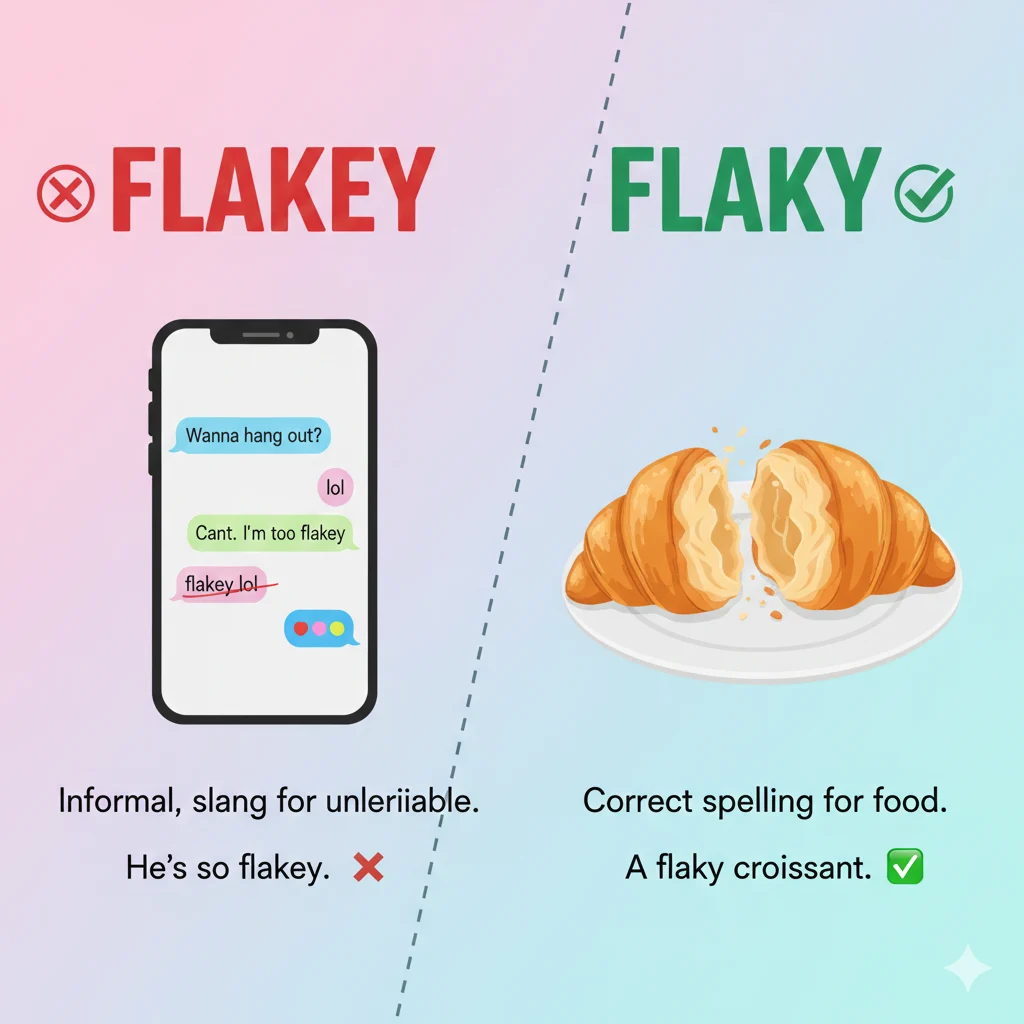
Meaning: The word flakey is often used as an informal, alternative spelling of “flaky.” It is sometimes used in casual conversations but is considered nonstandard in formal writing. People may also use it to describe someone unreliable or forgetful.
Part of Speech: Adjective
Examples:
- My friend is a little flakey — she cancels plans a lot.
- That dough is flakey and soft; it will bake nicely.
- He’s too flakey to trust with important tasks.
Mini Story: Imagine you’re meeting a friend for ice cream, but they cancel three times in a week. You might say, “She’s so flakey!” This helps you remember the casual, informal vibe of the word.
Flaky
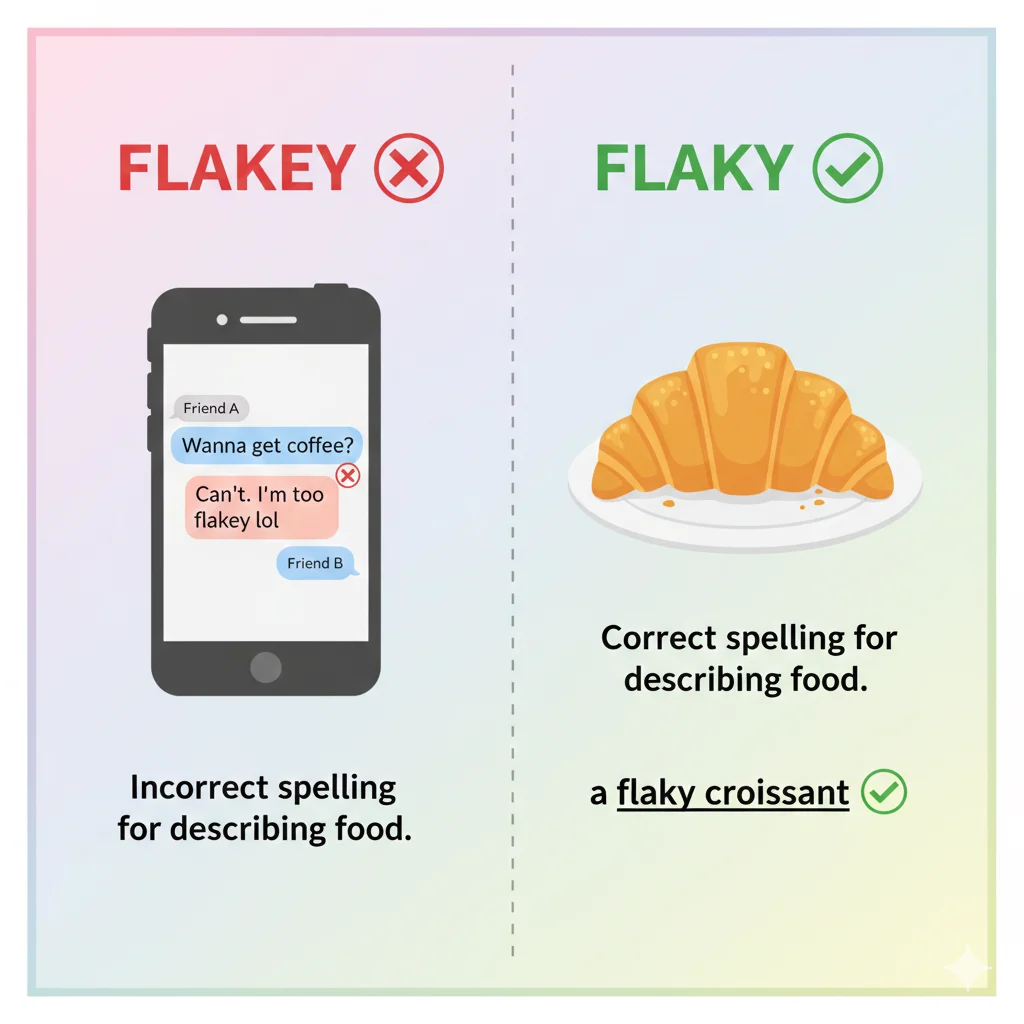
Meaning: Flaky is the standard, correct spelling in English. It is used to describe things that break or come apart in small pieces, or people who are unreliable.
Part of Speech: Adjective
Examples:
- The croissant was golden and flaky.
- He can be a bit flaky when it comes to deadlines.
- The paint on the old wall is flaky and needs scraping.
Mini Story: Think of a croissant that literally falls apart in your hands. That’s the perfect image for flaky — solid and standard in English.
The Key Difference Between Flakey and Flaky
| Feature | Flakey | Flaky |
|---|---|---|
| Spelling | Informal, nonstandard | Standard, correct spelling |
| Meaning | Unreliable or “falling apart” | Breaks into pieces; unreliable |
| Usage | Casual writing or texting | Everyday writing, formal & casual |
| Example | My coworker is flakey. | The pastry is flaky and soft. |
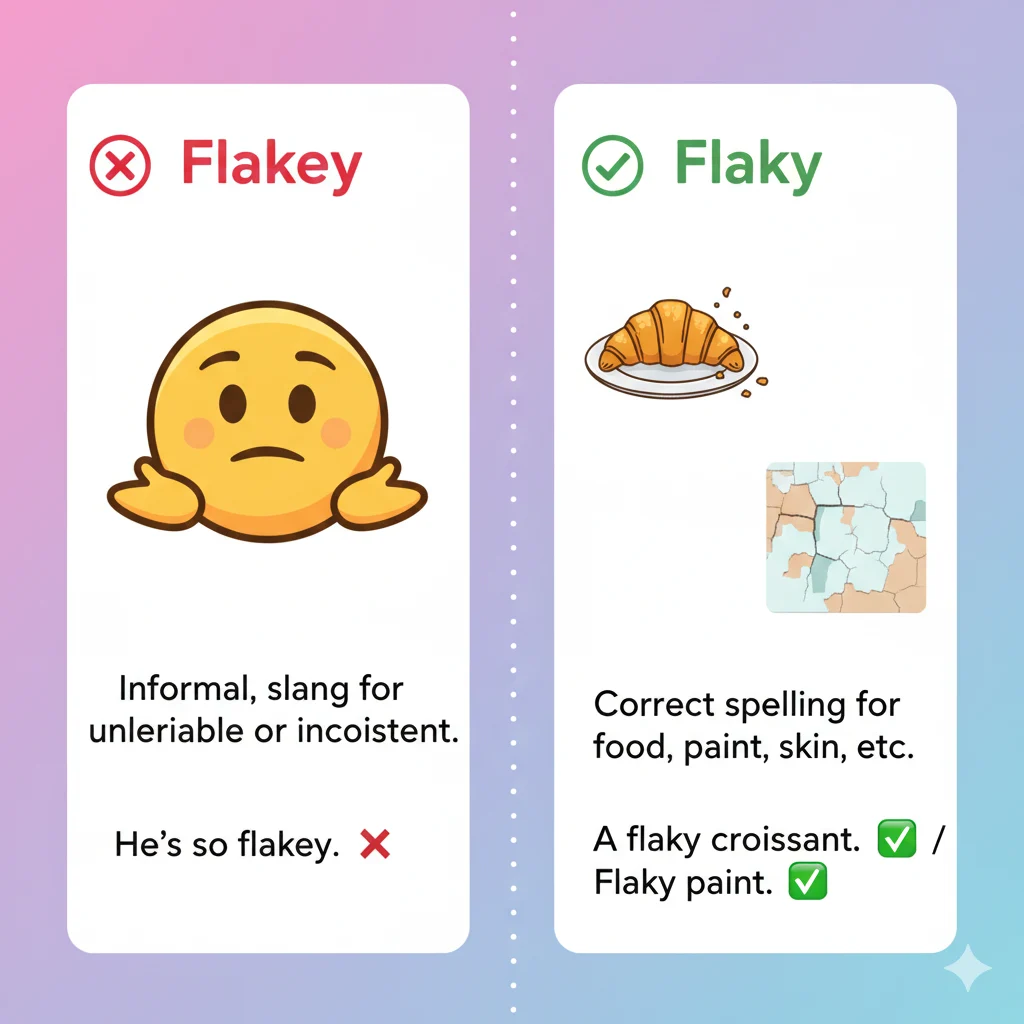
Quick Tip: Always use flaky in formal writing or when you want to be correct. Use flakey only in casual texts if you like a playful tone.
Feening or Feigning: The Spelling Mistake Everyone Makes
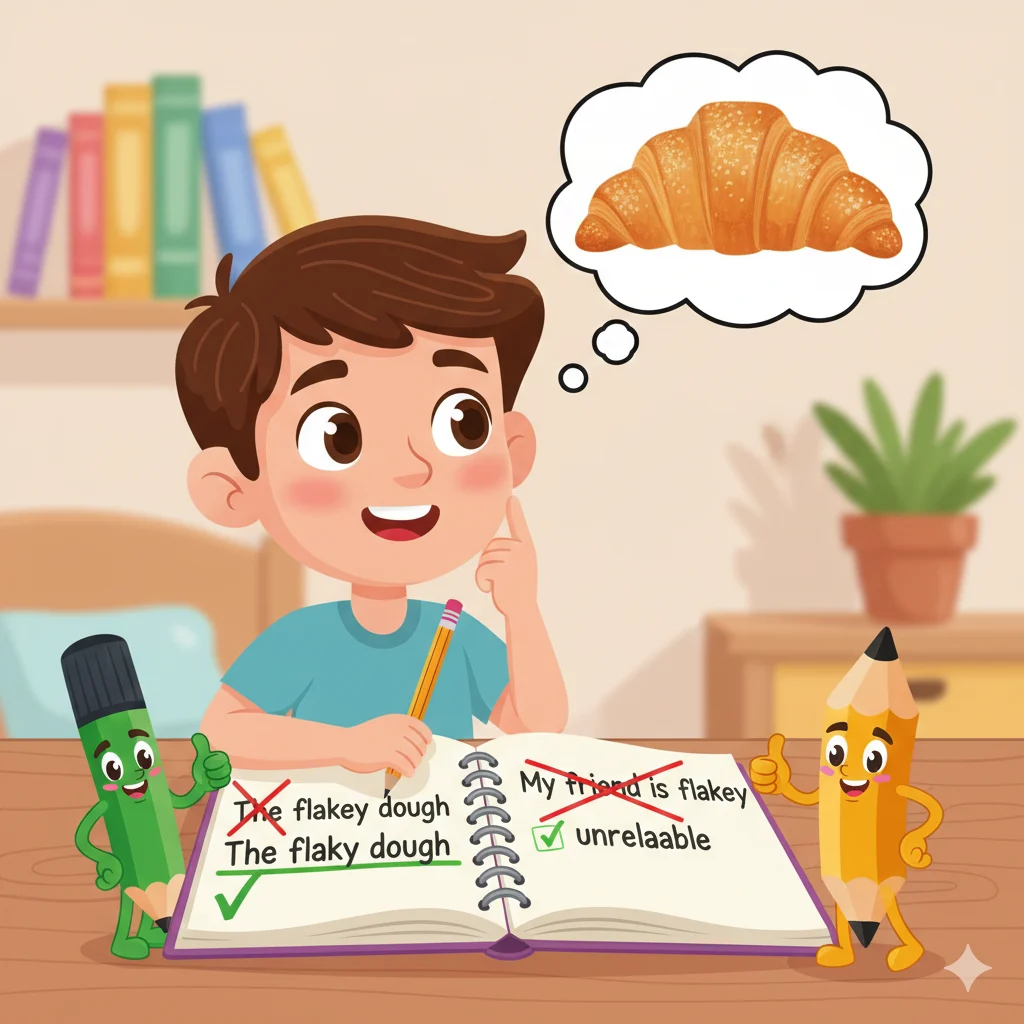
Common Mistakes and How to Avoid Them
- Incorrect: My dough is flakey.
Correct: My dough is flaky. - Incorrect: Don’t be so flaky all the time.
Correct: Don’t be so flakey all the time. (Casual text OK) - Why Mistakes Happen: People often confuse the informal flakey with the correct flaky, especially in writing or online messages.
How to Fix It: Remember: flaky = standard, flakey = informal. If unsure, default to flaky.
When to Use Flakey
Situations:
- Casual texting with friends
- Informal emails
- Social media captions
Examples:
- She’s a bit flakey, but I like her anyway.
- Don’t be flakey — meet me at 5!
- That flakey weather makes me want to stay inside.
- He’s flakey about paying back borrowed money.
Memory Hack: Think of flakey as “friendly casual” — it’s like texting a friend.
When to Use Flaky
Situations:
- Describing pastries, food, or materials
- Formal writing and essays
- Daily conversations about people or things
Examples:
- The pie crust was perfectly flaky.
- The old paint is flaky and peeling.
- She is a flaky friend sometimes.
- A flaky texture in the bread makes it delicious.
Visual Trick: Picture a croissant or a painted wall breaking into pieces. That’s flaky!
Quick Recap: Flakey vs Flaky
- Flakey: Informal, casual, sometimes used for people who are unreliable.
- Flaky: Standard spelling, correct for food, textures, or unreliable behavior.
- Tip: When in doubt, always use flaky — it’s safe and correct.
Advanced Tips
- Origin: “Flaky” comes from the word “flake,” meaning a small piece breaking off. “Flakey” appeared later as an informal variation.
- Formal Writing: Always use flaky in essays, exams, and professional emails.
- Texting & Online Use: Flakey is more playful; it won’t look wrong in social media posts.
Mini Quiz
Fill in the blanks with flakey or flaky:
- The croissant was _______ and delicious.
- Don’t be so _______ — we had plans!
- The old wall’s paint is _______ and falling off.
- He’s a little _______ about deadlines.
- This pie crust feels _______ to touch.
Answers: 1. flaky | 2. flakey | 3. flaky | 4. flakey | 5. flaky
FAQs
- Is “flakey” correct?
Only in casual or informal writing. The standard spelling is flaky. - Can I use “flaky” for people?
Yes, to describe someone unreliable or forgetful. - Which word is used for food?
Always flaky. - Is it a big mistake to use “flakey”?
In formal writing, yes. In casual texts, it’s fine. - How can I remember the difference?
Think: flaky = correct, flakey = casual/fun.
Conclusion
Now you know the difference between flakey and flaky. Flaky is the correct spelling for formal writing, describing food, textures, or unreliable behavior. Flakey is informal and often used in casual texts or social media. By practicing these examples, paying attention to the context, and using the memory tricks in this guide, you can avoid common mistakes and write with confidence. Remember, everyone makes small errors, but understanding the rules is the key to improvement. Keep practicing, read more, and try using flaky and flakey correctly in daily life. Your English will become clearer and more polished every day

Elizabeth Gaskell was a Victorian English novelist and biographer, celebrated for social realism, strong female characters, and industrial age themes. era life.