Have you ever come across the words feening and feigning and wondered why they sound so similar but seem to mean different things? You’re not alone! Many English learners, and even native speakers, mix them up because of their pronunciation.
In this guide, we’ll break down the meanings, correct usage, and differences between these two confusing words. By the end, you’ll know exactly when to use feening and feigning in your sentences. You’ll also get easy examples, memory tricks, and even a mini quiz to practice what you’ve learned. This guide is perfect for beginners, students, or anyone who wants to sound confident in English.
What Does Each Word Mean?
Feening
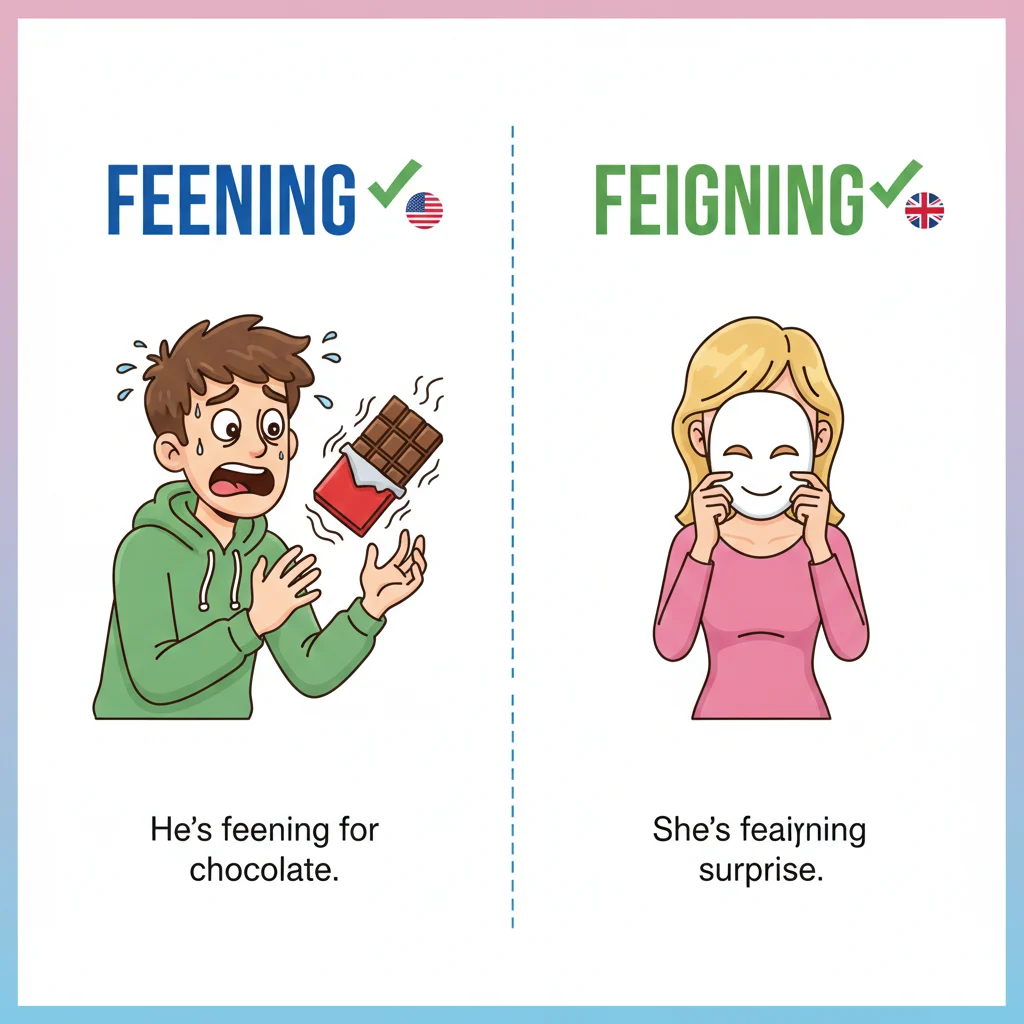
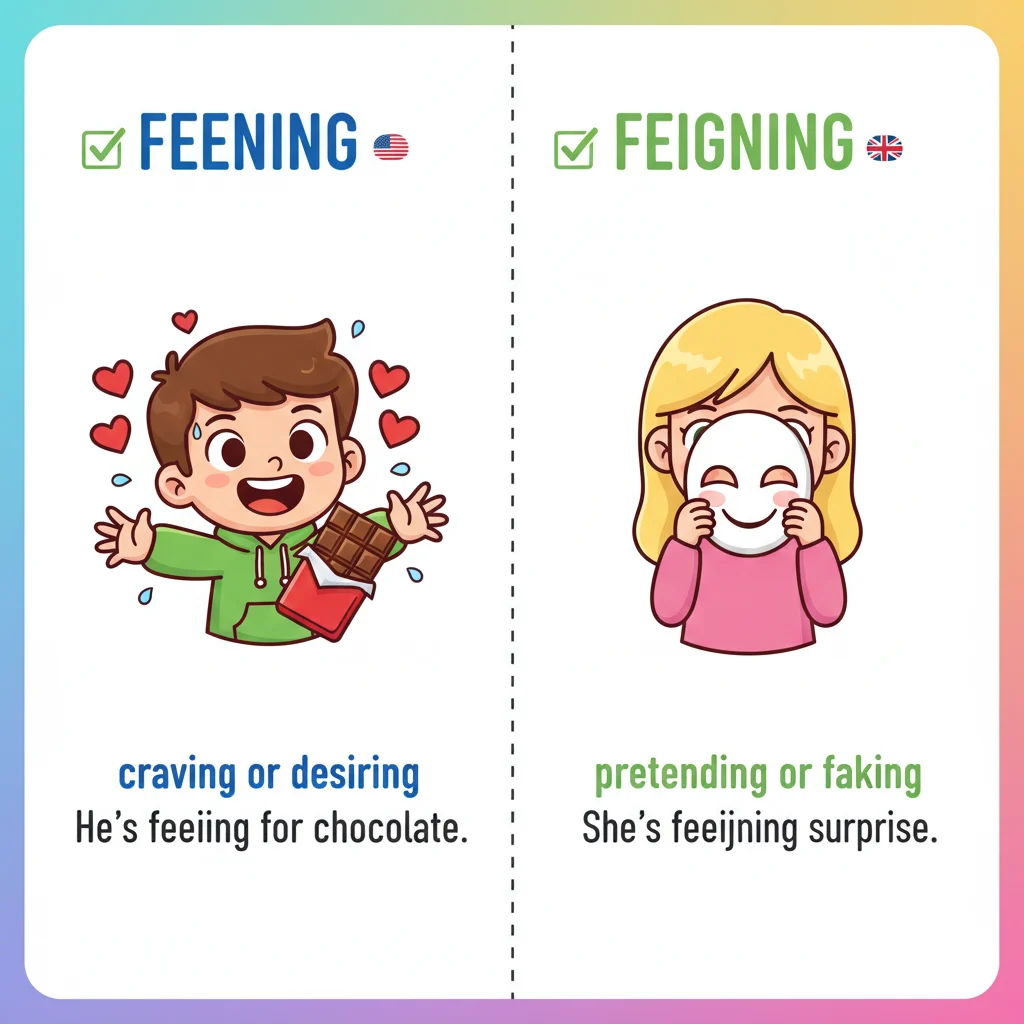
Meaning: “Feening” is a slang term derived from “fiend.” It usually means craving or desiring something intensely, often used informally to describe addiction or strong desire.
Part of Speech: Verb (informal)
Examples:
- I’m feening for some chocolate after dinner.
- He’s feening to play video games all night.
- She was feening for a new phone when the sale started.
Mini Story to Remember: Imagine a person staring longingly at a giant ice cream. That craving is “feening.”
Feigning
Meaning: “Feigning” means pretending or faking something. It is often used when someone acts as if they feel something or have a quality that they do not really possess.
Part of Speech: Verb (formal/informal)
Examples:
- She was feigning surprise when she opened the gift.
- He feigned illness to skip school.
- The actor feigned fear perfectly in the play.
Mini Story to Remember: Picture a child pretending to be asleep to avoid chores. That act of pretending is “feigning.”
The Key Difference Between Feening and Feigning
| Word | Meaning | Usage | Example Sentence | Quick Tip |
|---|---|---|---|---|
| Feening | Craving or desiring intensely | Informal, slang | I’m feening for pizza after school. | Think fiend → craving |
| Feigning | Pretending or faking | Formal or informal | He was feigning illness to avoid homework. | Think fake → feign |
Quick Tip to Remember:
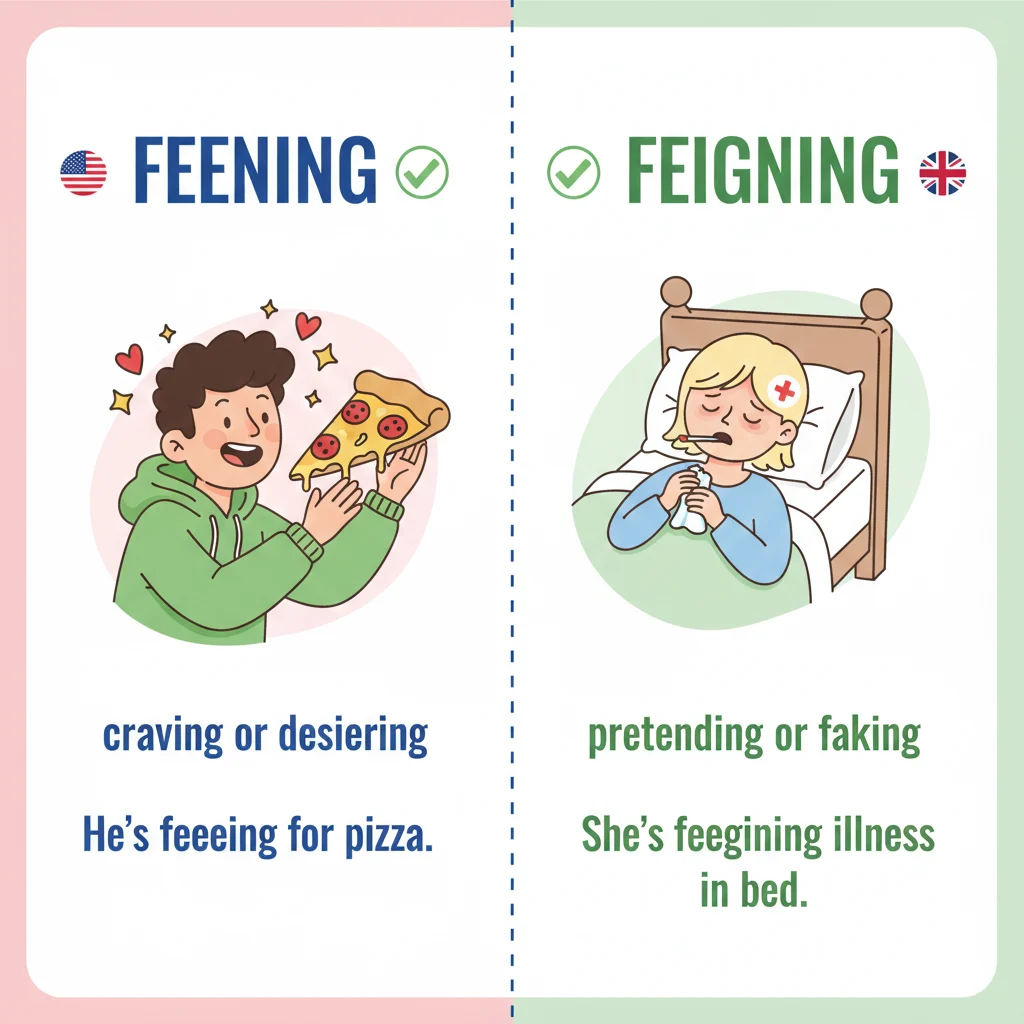
- Feening → desire something badly
- Feigning → pretend or fake it
Common Mistakes and How to Avoid Them
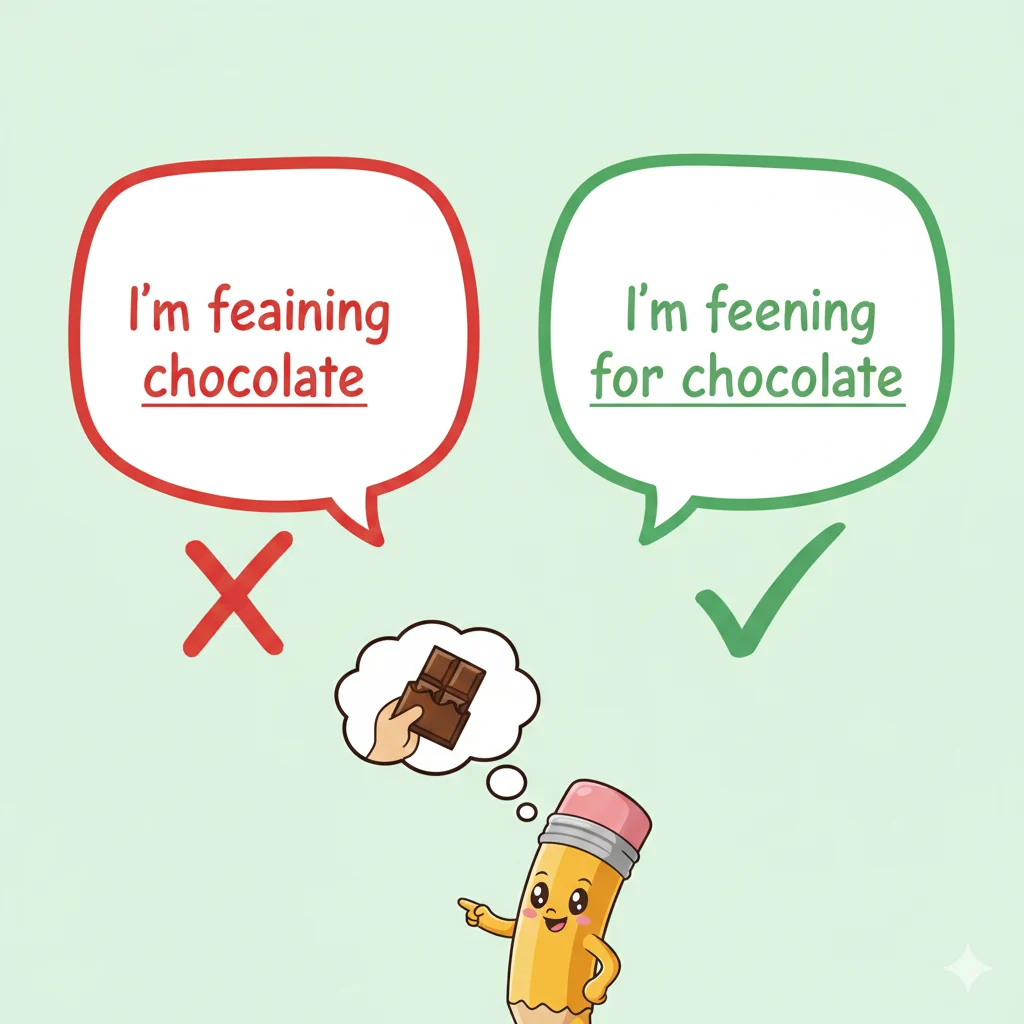
- Incorrect: I’m feigning a chocolate bar.
Correct: I’m feening for a chocolate bar.
Why: “Feening” is about craving, not pretending. - Incorrect: She was feening surprise at the party.
Correct: She was feigning surprise at the party.
Why: You can’t crave surprise; you can only pretend it. - Incorrect: He feigned for a game all day.
Correct: He was feening for a game all day.
Why: Desiring something intensely uses “feening,” not “feigning.”
When to Use Feening
Use feening when you want to describe:
- Craving food, drinks, or treats
- Wanting to do something badly
- Feeling addicted or extremely eager
Examples in Real Life:
- I’m feening for a cup of coffee this morning.
- She was feening to watch the new movie.
- He’s feening for some relaxation after a long day.
- The kids were feening for candy on Halloween.
- We’re feening to travel this summer.
Memory Hack: Picture someone as a “fiend” for chocolate, games, or fun. That’s “feening.”
When to Use Feigning
Use feigning when you want to describe:
- Pretending emotions (happiness, sadness, surprise)
- Faking actions or qualities
- Acting in a play, story, or everyday situations
Examples in Real Life:
- She was feigning confidence even though she was nervous.
- He feigned a headache to leave early.
- They feigned interest in the boring lecture.
- I’m just feigning sleep so my siblings stop bothering me.
- The teacher noticed him feigning ignorance.
Memory Trick: Imagine a mask. Feigning is like wearing a mask to hide what’s real.
Quick Recap: Feening vs Feigning
- Feening: craving or desiring; informal; think “fiend.”
- Feigning: pretending or faking; formal or informal; think “fake.”
- Common Mistake: Using “feigning” when craving is meant.
Visual Memory Tip:
- Feening → hungry hands reaching for food
- Feigning → acting with a mask
Advanced Tips
- Origin:
- Feening comes from “fiend,” meaning someone obsessed or addicted.
- Feigning comes from Old French feindre, meaning to pretend.
- Formal Writing: Feigning is common in essays, literature, or exams; feening is slang and less formal.
- Online/Texts: Misusing these words can confuse readers. “Feening” in texts could be misread as a typo for “feigning,” so context is key.
Mini Quiz
Fill in the blanks with feening or feigning:
- She was _______ excitement when she saw the surprise gift.
- I’m _______ for a slice of cake right now.
- He was _______ sick to avoid the test.
- The puppy was _______ for attention from its owner.
- They were _______ joy even though they were disappointed.
Answers:
- feigning
- feening
- feigning
- feening
- feigning
FAQs
1. Can “feening” be used in formal writing?
No, it’s informal slang. Use it in casual conversations.
2. Is “feigning” only about emotions?
No, it can describe pretending any action, not just feelings.
3. How do I remember the difference?
Think: Feening → craving, Feigning → faking.
4. Are there other similar words to “feign”?
Yes, pretend, simulate, act, or fake.
5. Can you use both words in the same sentence?
Yes! Example: He was feening for candy while feigning boredom.
Conclusion
Now you know the difference between feening and feigning, their meanings, and correct usage. You’ve learned simple examples, common mistakes, and memory tricks to help you remember them. By practicing these tips, you can confidently use both words in daily life, school, or writing. Remember, improving your English is a step-by-step journey, and small habits like mastering tricky words make a big difference. Keep practicing, and soon you’ll never mix them up again!

Rose Tremain is a British novelist known for richly detailed historical fiction, complex characters, and award-winning literary storytelling worldwide.