Many English learners get confused between elses and else’s. Even native speakers sometimes pause when writing these words. Why? Because they sound almost identical, but their meanings and uses are very different.
In simple terms, elses is a plural form used when talking about multiple “other” people or things. On the other hand, else’s is a contraction of “else is” or “else has,” or sometimes shows possession — like something belonging to someone else. Mixing them up can make your sentences unclear or even grammatically incorrect.
In this guide, you’ll learn: the meaning of each word, the key differences, practical usage tips, common mistakes, and plenty of examples. By the end, you’ll be confident using elses and else’s correctly in your writing and everyday English conversations.
What Does Each Word Mean?
Elses
- Meaning: Eelses is used to refer to additional people or things — basically “other ones.”
- Part of Speech: Plural noun.
- Examples:
- “We invited our friends, and the Smiths and the Browns were among the elses.”
- “If the red shirts are sold out, check if the blue ones or other colors are available; the elses are in the next row.”
- “He asked for all the desserts, but the chocolate cake and the pies were the elses he wanted.”
Mini Story to Remember: Imagine a classroom. You have your friends, and there are elses — other students you also know.
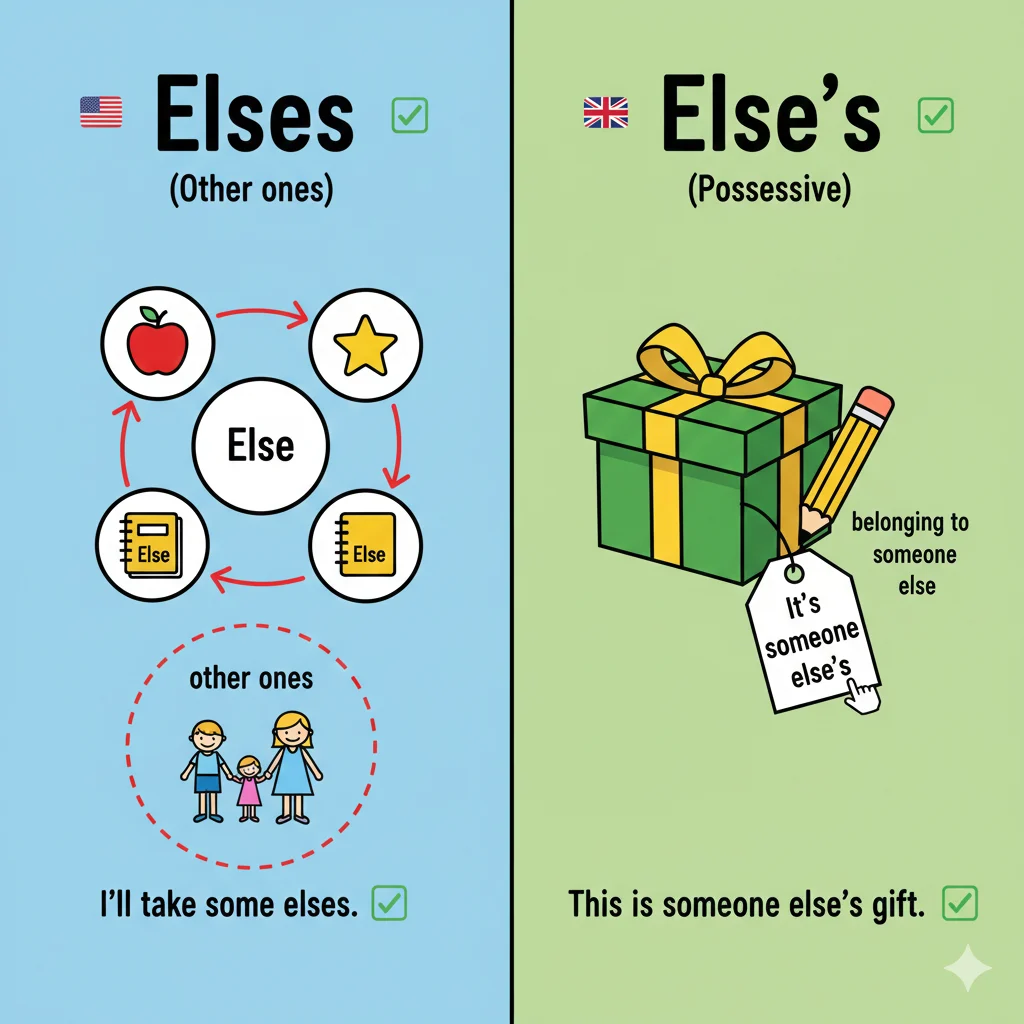
Else’s
- Meaning: Else’s shows possession (something belonging to someone else) or acts as a contraction for “else is” or “else has.”
- Part of Speech: Possessive form or contraction.
- Examples:
- “That backpack is someone else’s; don’t take it.”
- “I think this chair is your friend’s, not mine — it must be else’s.”
- “There’s no one else’s responsibility to clean the room but yours.”
Mini Story to Remember: Think of borrowing a toy. If it’s not yours, it’s someone else’s.
The Key Difference Between Elses and Else’s
| Word | Meaning | Usage Example | Quick Tip |
|---|---|---|---|
| elses | Other people or things (plural noun) | “We invited John, Mary, and the elses.” | Think: “more than one other thing.” |
| else’s | Possessive of someone else or contraction | “This book is someone else’s.” | Think: “belongs to someone else” or “else is/has.” |
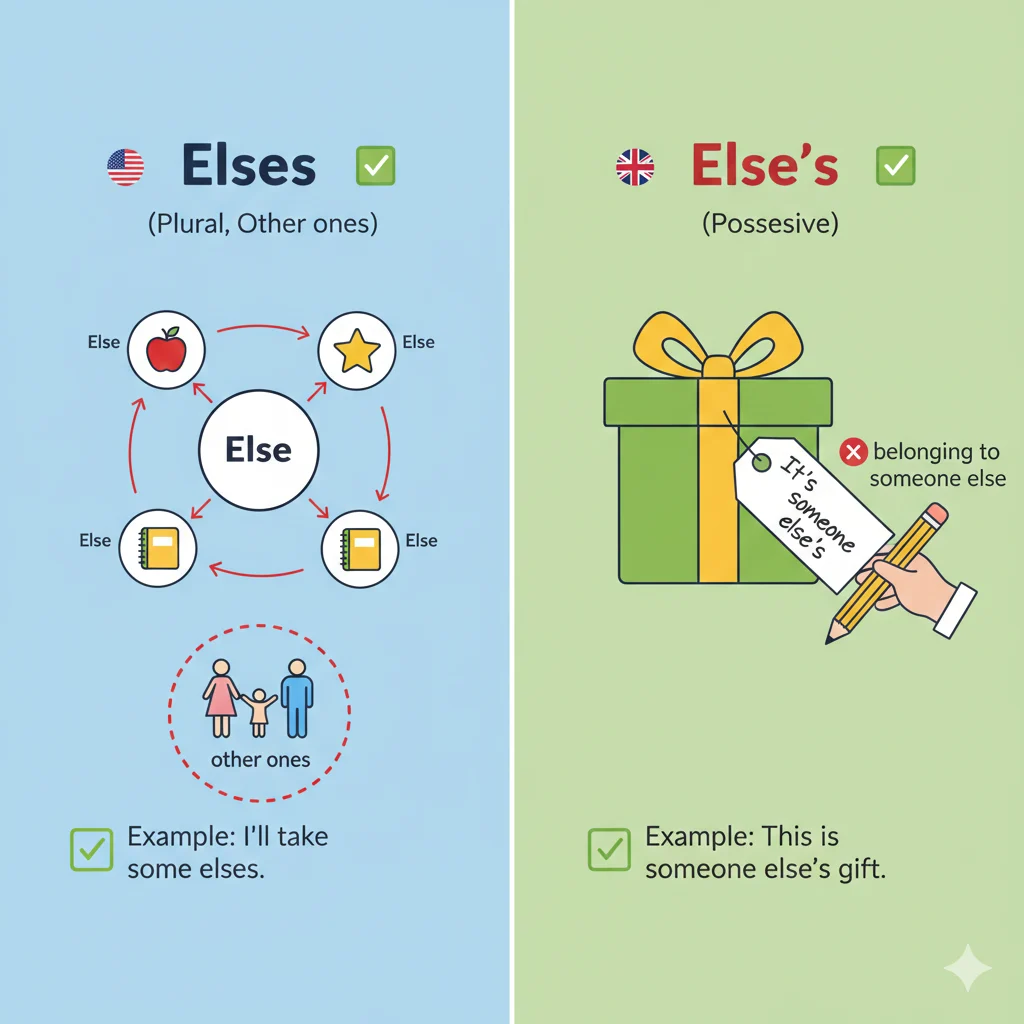
Quick Tip: If you can replace the word with “other ones,” use elses. If you mean “belongs to someone else,” use else’s.
Common Mistakes and How to Avoid Them
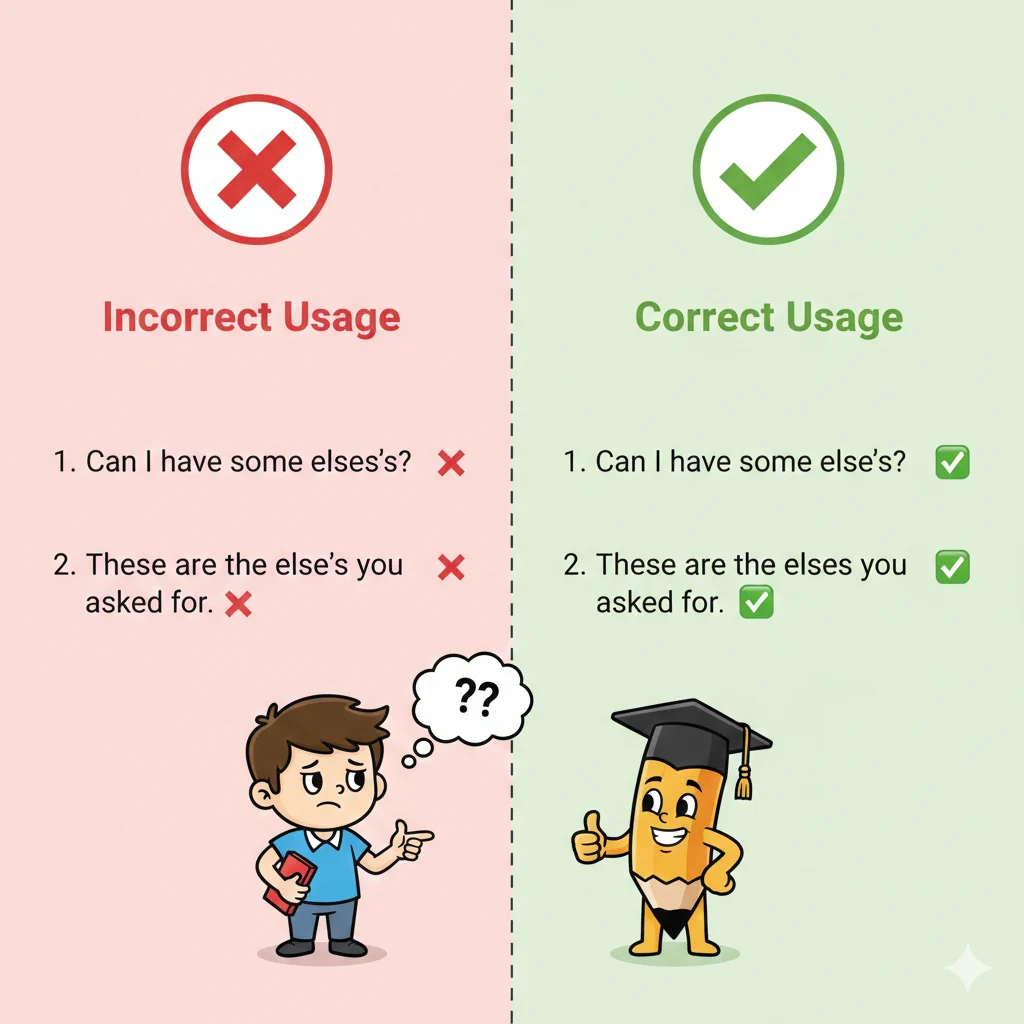
- Incorrect: “That pencil is someone elses.”
Correct: “That pencil is someone else’s.”
Reason: Possession needs the apostrophe. - Incorrect: “We invited John and Mary, and else’s came too.”
Correct: “We invited John and Mary, and the elses came too.”
Reason: Referring to other people requires elses, not else’s. - Incorrect: “It’s not yours, it’s elses.”
Correct: “It’s not yours, it’s else’s.”
Reason: Use the possessive form for ownership.
Tip: Always ask yourself: “Am I talking about other things, or something belonging to someone else?”
When to Use Elses
Use elses in situations where you want to refer to multiple other people, objects, or options.
Examples in Real Life:
- “There were apples, bananas, and the elses on the table.”
- “She called her friends, and the elses joined the party later.”
- “If this team wins, we’ll cheer for the elses next.”
- “I packed my pencils, pens, and the elses for school.”
- “They sold the jackets, shoes, and the elses at the store.”
Memory Hack: Think of elses as “more than one ‘other’.”
When to Use Else’s
Use else’s when talking about possession or contractions.
Examples in Real Life:
- “This phone is someone else’s.”
- “It’s not my notebook; it’s else’s.”
- “Someone else’s opinion matters here.”
- “I can’t wear this jacket — it’s clearly else’s.”
- “Check if the seat is taken; it might be someone else’s.”
Memory Trick: Picture an arrow pointing to the owner — that’s else’s.
Quick Recap: Elses vs Else’s
- Elses: Refers to additional people or things. Think “other ones.”
- Else’s: Shows possession or acts as a contraction for “else is/has.”
- Rule of Thumb: Other → elses. Belongs to → else’s.
Advanced Tips
- The word else’s has its origin in older English possessive forms.
- In formal writing or essays, proper usage of elses and else’s avoids confusion.
- In texting or online posts, confusing these can make sentences unclear.
- Both words are common in spoken English, but writing them correctly shows professionalism.
Ambience or Ambiance: Meaning, Difference, and Correct Usage
Mini Quiz
Fill in the blanks with the correct word (elses or else’s):
- This jacket isn’t mine; it’s ______.
- We invited Sam, Jane, and the ______ to the picnic.
- Someone ______ book is on the table.
- I brought pencils, erasers, and the ______.
- That phone must be someone ______.
Answers: 1. else’s | 2. elses | 3. else’s | 4. elses | 5. else’s
FAQs
- Q: Can I use elses for just one person or thing?
A: No, elses is plural. For one person or thing, use “someone else.” - Q: Is else’s always possessive?
A: Mostly yes, but it can also be a contraction for “else is” or “else has.” - Q: Are elses and else’s pronounced differently?
A: They sound almost the same, which is why they’re confusing. Context matters. - Q: Can I replace else’s with “belongs to someone else”?
A: Yes, that’s a good way to check if it’s correct. - Q: Do I need an apostrophe for elses?
A: No, only else’s has an apostrophe because it’s possessive.
Conclusion
Now you know the clear difference between elses and else’s. Elses refers to multiple other people or things, while else’s shows possession or acts as a contraction. Remember the simple tip: “Other → elses, belongs to someone else → else’s.” By practicing these words in sentences about school, friends, or everyday life, you’ll quickly gain confidence.
English can be tricky, but with small, clear rules and plenty of examples, anyone can master it. Start noticing these words in books, messages, and conversations. The more you practice, the easier it becomes to use them correctly — and soon, confusing elses and else’s will be a thing of the past!

Arthur Machen was a Welsh writer known for supernatural fiction, blending horror, mysticism, and folklore, and influencing modern weird literature worldwide Art