Have you ever paused while writing and thought, “Should I write dove or dived?” If yes, you are not alone. Thousands of English learners — and even native speakers — feel confused about these two words.
Both dove and dived are used in English. Both describe something that happened in the past. Both sound correct. So what is the real difference between dove and dived?
The confusion happens because English has both regular and irregular verbs. Some verbs change in special ways. Others follow simple rules. The verb dive is special because it has two correct past forms — dove and dived.
In this complete guide, you will learn:
- The meaning of dive, dove, and dived
- The difference between dove and dived
- When to use dove
- When to use dived
- Common grammar mistakes
- Simple real-life examples
- Advanced tips for exams and writing
- A mini quiz to test yourself
Everything is explained in easy, clear English. Even a young student can understand it.
Let’s make this simple once and for all.
What Does “Dive” Mean?
Before we compare dove or dived, we must understand the base verb: dive.
Dive is a verb. A verb is an action word.
Dive means:
- To jump into water headfirst
- To go down quickly
- To move suddenly downward
- To push your body forward or downward
Simple Examples of Dive
- I will dive into the swimming pool.
- The bird will dive to catch a fish.
- She loves to dive in the ocean.
- The player will dive to stop the ball.
Now let’s talk about the past tense.
What Does “Dove” Mean?
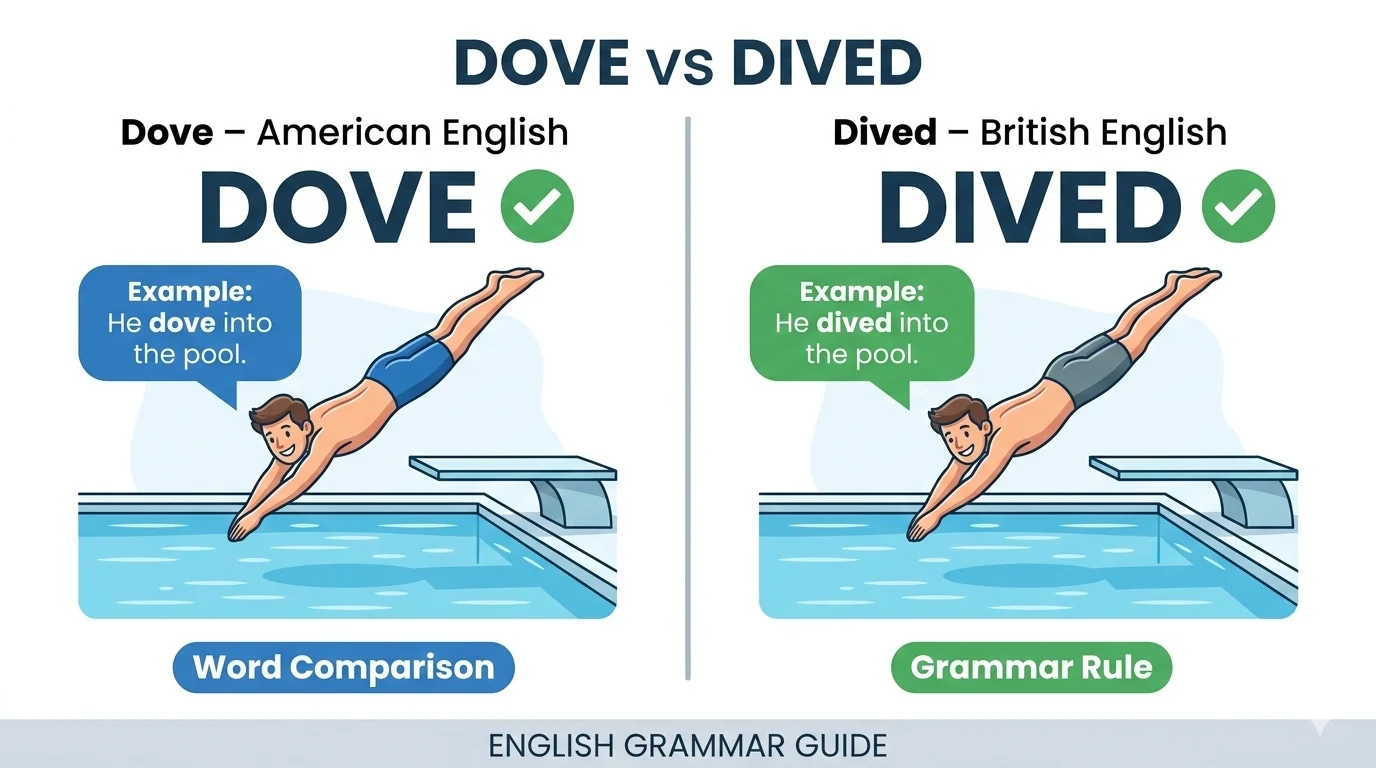
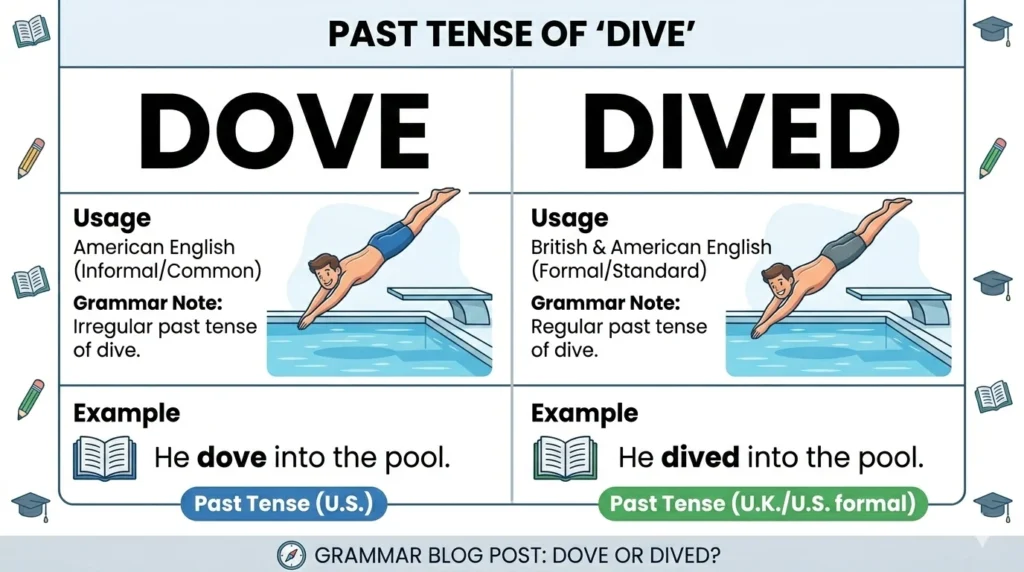
Dove is the past tense of dive. It is mostly used in American English.
When someone says “dove,” they are talking about an action that already happened.
Examples of Dove in Sentences
- He dove into the river yesterday.
- The dog dove into the pond to catch a stick.
- She dove under the water to find her ring.
- The goalkeeper dove to save the goal.
- The child dove behind the sofa when scared.
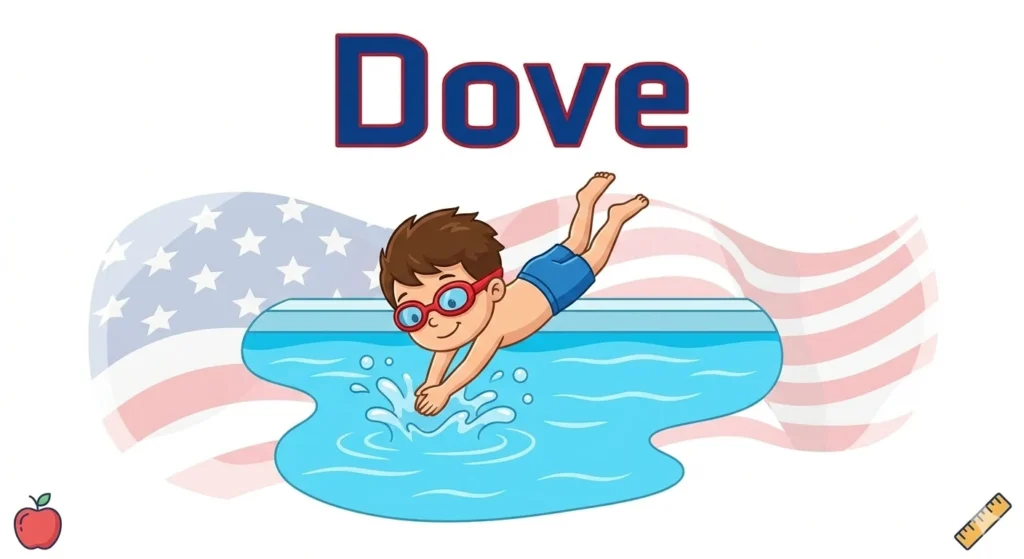
In American English, people commonly say:
“He dove into the pool.”
It sounds natural and normal in the United States.
What Does “Dived” Mean?
Dived is also the past tense of dive. It is more common in British English and formal writing.
The meaning is exactly the same as dove.
Examples of Dived in Sentences
- He dived into the lake yesterday.
- The swimmer dived into the pool at the start of the race.
- She dived under the table to pick up her pen.
- The bird dived from the sky.
- The boy dived into the sea happily.
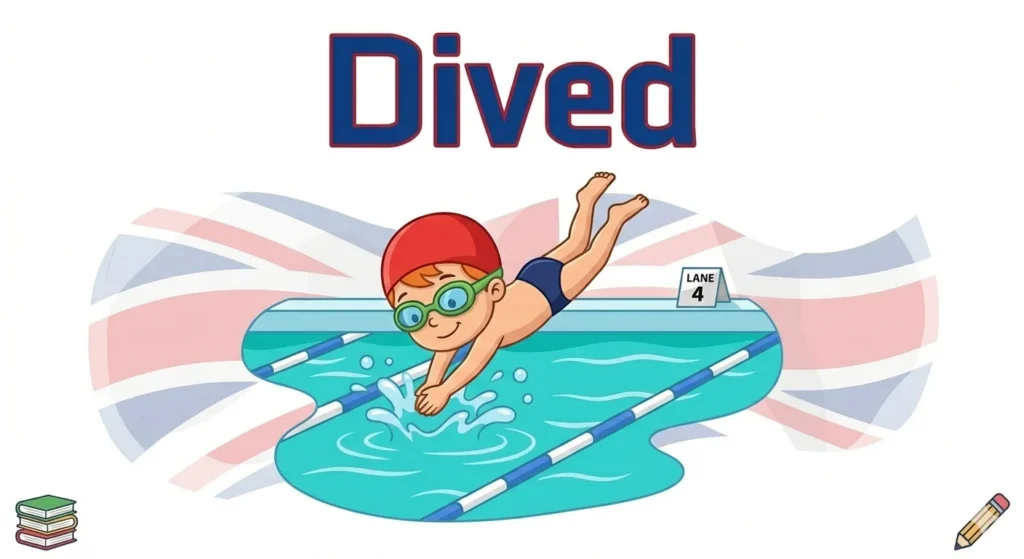
In the United Kingdom, people usually say:
“He dived into the pool.”
The Key Difference Between Dove and Dived
Many students ask about the difference between dove and dived. Here is the simple truth:
There is no difference in meaning.
The difference is about:
- Region (America vs Britain)
- Formal vs informal usage
- Grammar form in perfect tenses
Easy Comparison Table
| Feature | Dove | Dived |
|---|---|---|
| Meaning | Past of dive | Past of dive |
| Common In | American English | British English |
| Formal Writing | Less common | More common |
| After “has/have/had” | Not preferred | Correct form |
Important Grammar Rule
When using:
- has
- have
- had
The correct form is usually dived.
Correct:
- He has dived into the pool.
- She had dived before the rain started.
Not recommended in formal writing:
- He has dove into the pool.
This is one of the biggest grammar tips you must remember.
Why Do Both Words Exist?
Long ago, “dived” was the only correct past form.
It followed the regular verb rule:
Dive → Dived
Later, Americans changed it to “dove” because it sounded like other verbs:
- Drive → Drove
- Ride → Rode
- Write → Wrote
People liked the sound pattern. Over time, “dove” became popular in American English.
Language changes. That is why today both forms are accepted.
When to Use Dove
Use dove when:
- You are writing in American English
- You are speaking casually
- You are telling a story
Everyday Examples
- The boy dove into the pool after school.
- She dove onto her bed because she was tired.
- The cat dove under the table.
- The player dove to catch the ball.
- He dove into the ocean during vacation.
In American movies and TV shows, you will hear dove very often.
When to Use Dived
Use dived when:
- You are writing in British English
- You are writing essays or exams
- You are using has/have/had
- You want safer grammar
Clear Examples
- The swimmer dived into the pool.
- She has dived many times before.
- He had dived before anyone noticed.
- The child dived under the desk.
- The bird dived quickly to catch food.
Memory Trick
Think: Regular verbs end in -ed.
So:
Dive → Dived
If confused, choose dived. It works everywhere.
Common Mistakes and How to Avoid Them
Understanding common mistakes helps you improve faster.
Mistake 1
❌ He has dove into the lake.
✅ He has dived into the lake.
Why? Because after “has,” we use the past participle. Dived is correct.
Mistake 2
❌ Yesterday, she has dived into the pool.
✅ Yesterday, she dived into the pool.
We do not use “has” with yesterday.
Mistake 3
❌ He doven into the water.
✅ He dived into the water.
“Doven” is not a real word.
Real-Life Situations to Understand Better
Let’s imagine different situations.
At School
The teacher writes:
“The swimmer dived into the pool.”
This is formal writing. So dived is better.
Watching an American Movie
The actor says:
“He dove to save the child!”
That is normal in American English.
Writing an Exam
It is safer to write:
“He dived into the river.”
Teachers prefer standard forms.
Dove or Dived in Sports
Sports commentators in America often say:
“The goalkeeper dove to his left!”
In British football commentary, you may hear:
“The goalkeeper dived to his left!”
Both are correct. Just different styles.
Quick Recap: Dove vs Dived
Here is a short summary:
- Both mean the past of dive
- Both are correct
- Dove is common in America
- Dived is common in Britain
- Dived is safer in exams
- After has/have/had → use dived
Advanced Tip for Writers
If you are writing for an international audience, consistency is important.
Choose one form and use it throughout your article.
Do not mix dove and dived randomly.
Consistency makes your writing look professional.
Mini Quiz: Test Yourself
Fill in the blanks with dove or dived.
- The boy ______ into the pool yesterday.
- She has ______ under the water many times.
- The goalkeeper ______ to stop the ball.
- The child ______ behind the sofa.
- He had ______ before the teacher came.
- The bird ______ from the sky.
- The dog ______ into the pond.
Answers:
- dove/dived
- dived
- dove (US) / dived (UK)
- dove (US) / dived (UK)
- dived
- dove/dived
- dove/dived
Frequently Asked Questions
1. What is the difference between dove and dived?
There is no difference in meaning. The difference is mainly American vs British English usage.
2. Is dove grammatically correct?
Yes. Dove is correct in American English.
3. Is dived more formal?
Yes. Dived is preferred in British English and formal writing.
4. Can I say “has dove”?
In formal grammar, it is better to say “has dived.”
5. Which form should students use in exams?
Students should use dived to stay safe.
Conclusion
Now you fully understand dove or dived. Both words are correct past forms of dive. The difference is mainly about region and grammar style.
Use dove in American English conversation.
Use dived in British English and formal writing.
After has, have, or had, always choose dived.
English becomes easier when you understand small differences like this. Practice writing sentences daily. Read carefully. Stay consistent. Small grammar improvements create big confidence. Keep learning. Keep growing. Your English is improving every day.

Rose Tremain is a British novelist known for richly detailed historical fiction, complex characters, and award-winning literary storytelling worldwide.