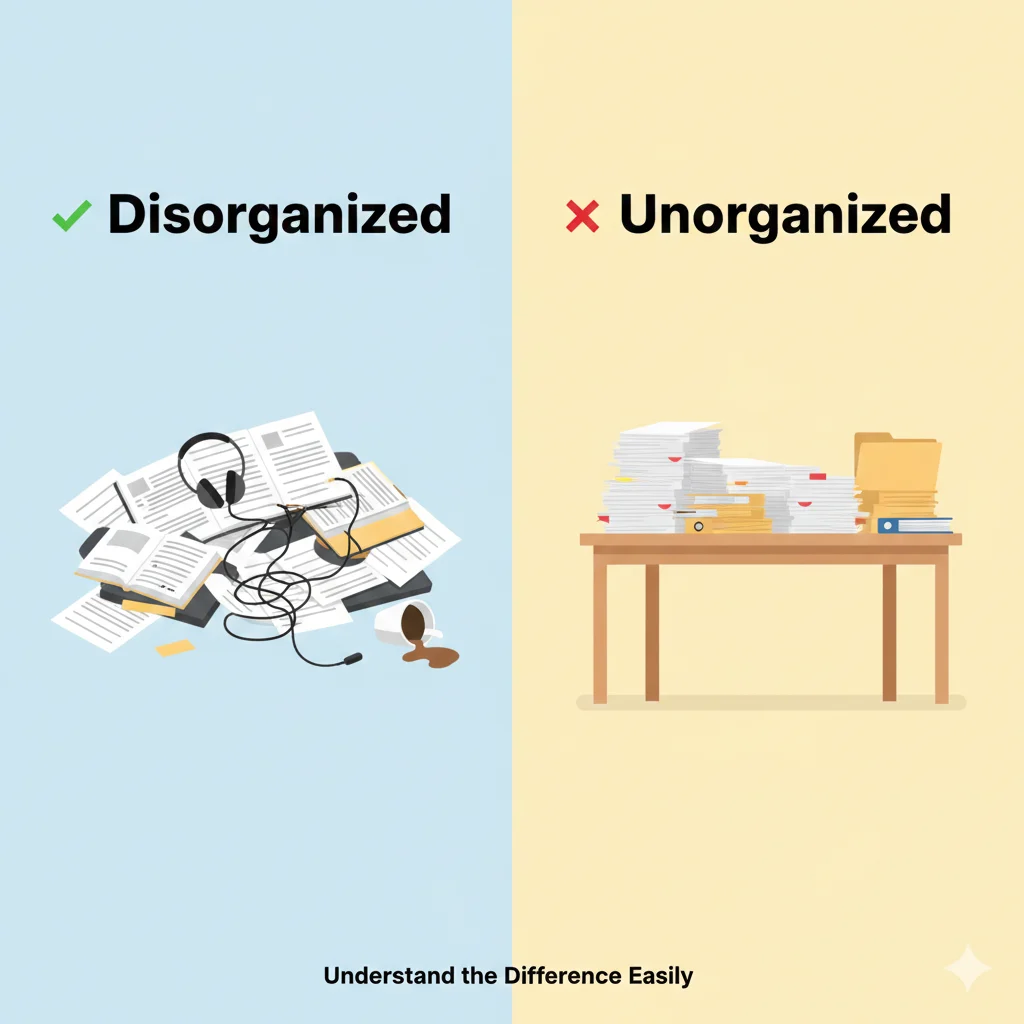
Have you ever wondered about disorganized or unorganized? Many people mix up these two words. They look similar. They sound similar. But are they the same?
Some people ask, Is a person disorganized or unorganized? Others search for Disorganized or unorganized meaning or Is disorganized or unorganized correct? This guide will answer all these questions in simple English.
In this article, you will learn:
- The meaning of both words
- The difference between disorganized and unorganized
- Correct usage with easy examples
- Common mistakes and how to fix them
- Simple grammar tips anyone can understand
By the end, even a 4th-grade student will clearly know when to use each word.
What Does “Disorganized” Mean?
Let’s start with the first word.
What is being disorganized?
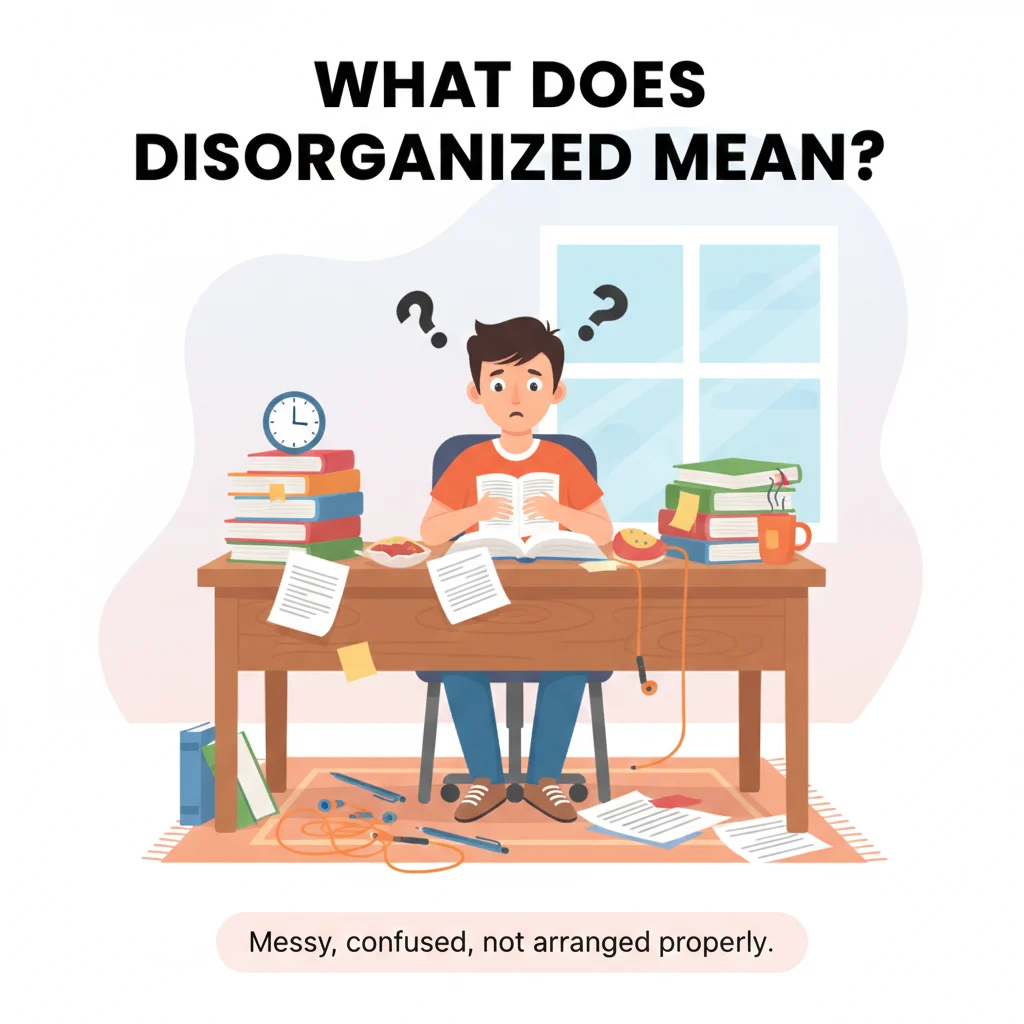
Disorganized means something is messy, confused, or not arranged properly. It often describes something that was organized before, but now it is not.
It can describe:
- A messy room
- A confused plan
- A person who cannot manage time
Part of Speech
“Disorganized” is usually an adjective. It describes a noun (person, place, or thing).
Disorganized in a Sentence – Easy Examples
- My desk is disorganized because papers are everywhere.
- The meeting was disorganized and hard to follow.
- She feels disorganized when she forgets her homework.
Short Story Example
Imagine Ali cleaned his room yesterday. Today, clothes are on the floor, books are open, and toys are everywhere. His room was neat before, but now it is messy. That is disorganized.
What Does “Unorganized” Mean?
Now let’s understand the second word.
What does “unorganized” mean?
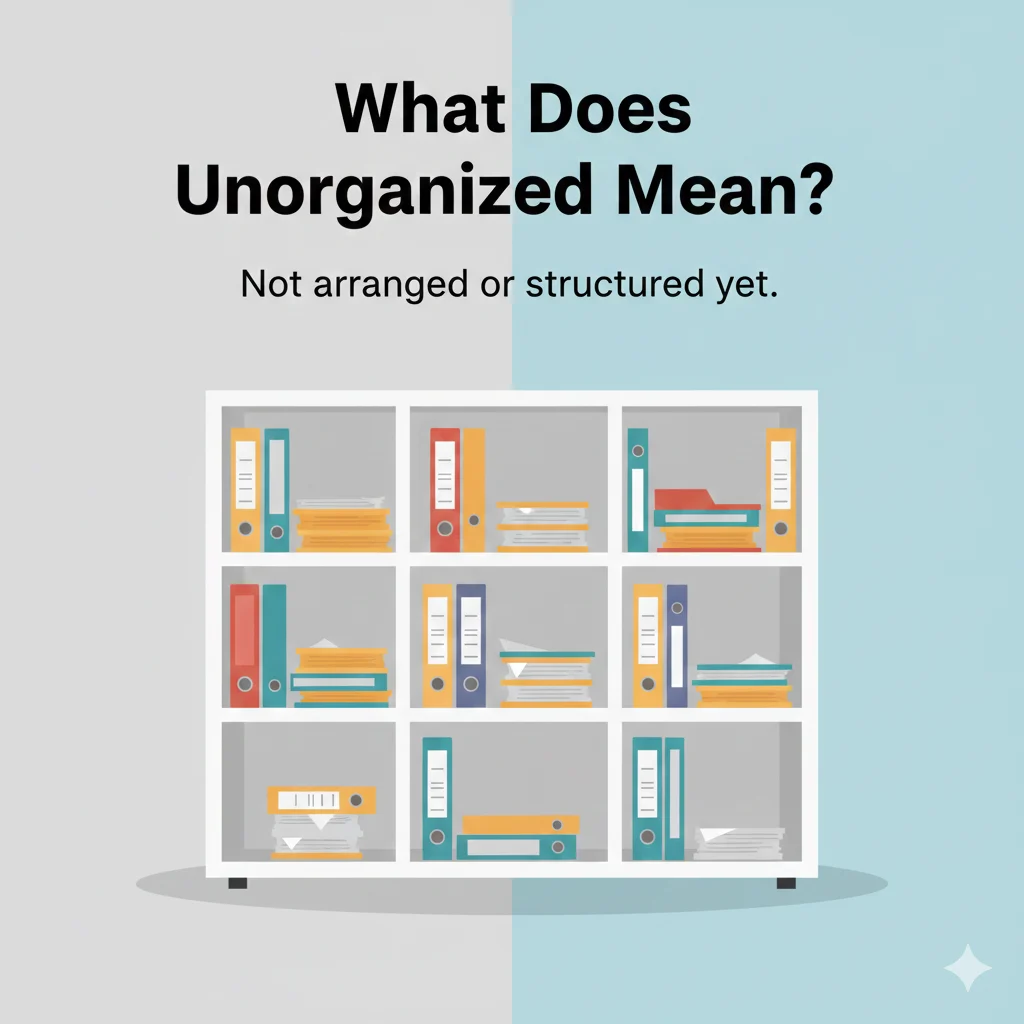
Unorganized means something has never been arranged or formed into a system. It can also mean not officially structured.
For example:
- A group without a leader
- Papers that were never sorted
- A place without structure
What is the meaning of unorganized person?
An unorganized person is someone who does not plan well or does not arrange things properly. But often, “disorganized” is more common for describing people.
Part of Speech
“Unorganized” is also an adjective.
Unorganized in a Sentence – Easy Examples
- The new club is still unorganized.
- His notes are unorganized because he never sorted them.
- The event felt unorganized from the start.
Simple Comparison Story
If a team has never made a plan, it is unorganized.
If the team had a plan but lost it and became messy, it is disorganized.
The Key Difference Between Disorganized and Unorganized
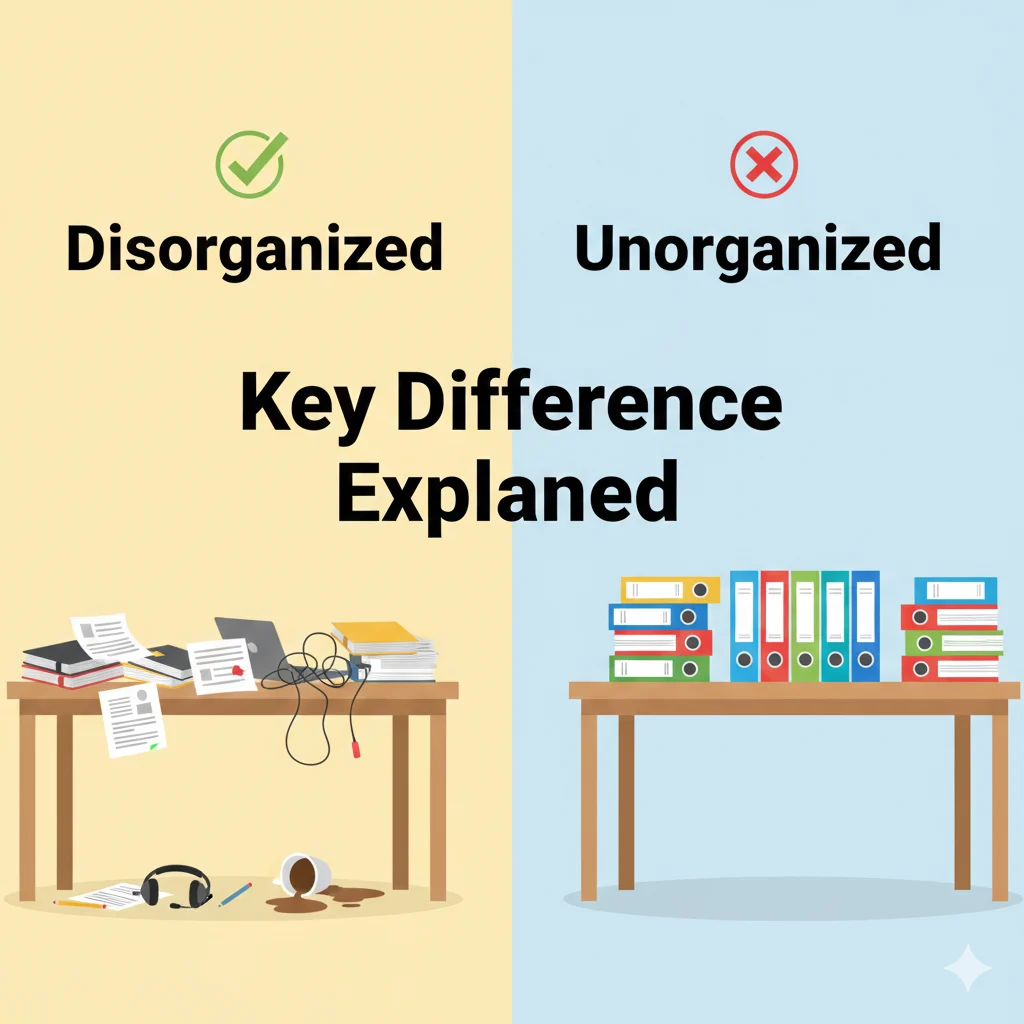
Many learners search for the difference between disorganized and unorganized. Here is a simple table to make it clear.
| Feature | Disorganized | Unorganized |
|---|---|---|
| Basic Meaning | Messy or confused | Not arranged or not formed |
| Before State | Was organized before | May never have been organized |
| Common Use | People, plans, rooms | Groups, systems, structures |
| Example | My bag is disorganized. | The group is unorganized. |
Quick Tip to Remember
- If something became messy, use disorganized.
- If something was never arranged, use unorganized.
This is the easiest grammar rule to remember.
Disorganized or Unorganized Grammar: Is Both Correct?
Many people ask, Is disorganized or unorganized correct?
The answer is: Both are correct.
But they are used in slightly different ways.
In American English, you will often see:
- Disorganized
- Unorganized
In British English, spelling changes:
- Unorganised or disorganised UK
According to dictionaries like Oxford, both spellings are correct depending on the region. In the UK, they use “s” instead of “z.”
So:
- American: disorganized / unorganized
- British: disorganised / unorganised
Common Mistakes and How to Avoid Them
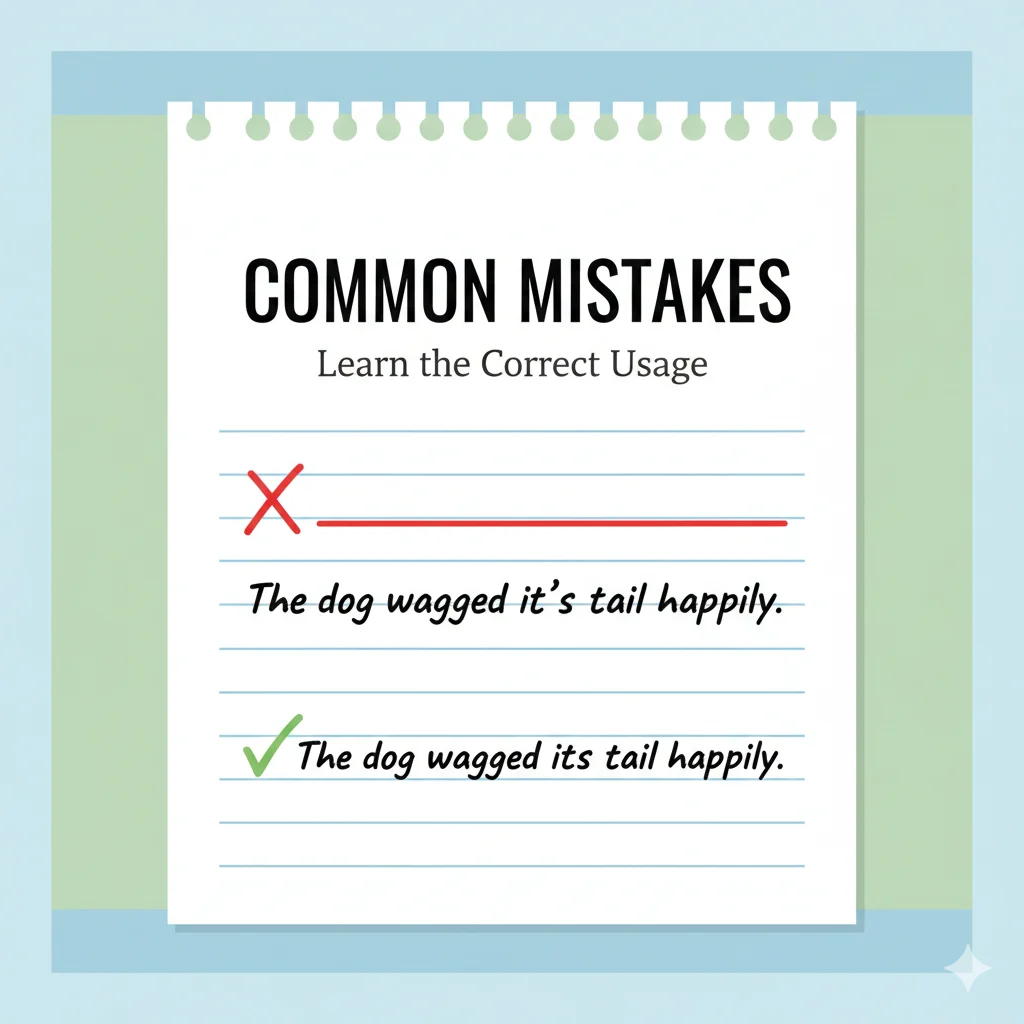
Even native speakers confuse these words. Let’s look at common mistakes.
Mistake 1
❌ He is unorganized because he lost his schedule.
✔ He is disorganized because he lost his schedule.
Why?
He had a schedule before. Now it is messy. So we use disorganized.
Mistake 2
❌ The new club is disorganized.
✔ The new club is unorganized.
Why?
The club was never structured. It is not messy — it just has no system yet.
Mistake 3
❌ My brain feels unorganized before exams.
✔ My thoughts feel disorganized before exams.
Why?
Your thoughts are confused, not just lacking structure.
When to Use “Disorganized”
Use disorganized in these situations:
- A messy room
- A confused speech
- A person who forgets things
- A plan that does not work well
- Thoughts that are unclear
Real-Life Examples
- My school bag is disorganized after a busy week.
- The teacher said my essay was disorganized.
- I feel disorganized when I wake up late.
- His files are disorganized on the computer.
- The party was disorganized and chaotic.
Is a Person Disorganized or Unorganized?
Usually, we say a person is disorganized.
Example:
She is disorganized because she never plans her day.
This is the more common and natural choice.
When to Use “Unorganized”
Use unorganized when talking about:
- Groups without structure
- Areas without development
- Things that were never sorted
Real-Life Examples
- The workers are unorganized.
- The papers were unorganized from the start.
- The event felt unorganized because there was no leader.
- The area remains unorganized land.
- His ideas are unorganized and need structure.
Memory Hack
Think of the word “un-” as meaning “not yet.”
If something is not yet organized, use unorganized.
If something became messy, use disorganized.
Disorganized or Unorganized Meaning in Simple Words
Let’s explain again in the easiest way:
- Disorganized = messy or confused
- Unorganized = not arranged or not structured
That is the simple explanation.
Disorganized or Unorganized Examples Side by Side
Here are more examples to help you feel confident.
Disorganized examples:
- My closet is disorganized.
- The speech was disorganized.
- His schedule is disorganized.
Unorganized examples:
- The team is unorganized.
- The files are unorganized.
- The company is still unorganized.
Disorganized or Unorganized Synonym
If you want other words with similar meaning:
Synonyms for Disorganized
- Messy
- Chaotic
- Confused
- Cluttered
Synonyms for Unorganized
- Unstructured
- Unarranged
- Unplanned
- Informal
Choosing the right synonym depends on the situation.
Advanced Tips for Better Understanding
If you want deeper knowledge, here are some helpful ideas.
Word History
Both words come from the word organize.
- “Dis-” often means opposite or not working properly.
- “Un-” often means not done yet.
That is why their meanings are slightly different.
Formal Writing and Exams
In school essays or exams:
- Use disorganized when talking about writing quality.
- Use unorganized when talking about structure or systems.
Example:
“The paragraph is disorganized and needs better flow.”
Teachers prefer this usage.
Online and Texting Mistakes
Many people use both words as the same. But in formal writing, it is better to choose carefully.
Quick Recap: Disorganized vs Unorganized
Here is a fast summary:
- Disorganized = messy or confused
- Unorganized = not arranged or structured
- Both are correct English words
- Disorganized is more common for people
- UK spelling uses “s” instead of “z”
If you remember just one thing:
Messy = disorganized
Not structured yet = unorganized
Mini Quiz – Test Yourself!
Fill in the blanks:
- My room is very ________ after the party.
- The new group is still ________.
- Her essay was ________ and hard to understand.
- The files were ________ from the beginning.
- I feel ________ when I forget my homework.
(Answers: disorganized, unorganized, disorganized, unorganized, disorganized)
FAQs
1. Is disorganized or unorganized correct?
Both are correct. The choice depends on the situation.
2. What is being disorganized?
Something that was arranged before but is now messy or confused.
3. What does “unorganized” mean?
It means not arranged or not structured.
4. Is a person disorganized or unorganized?
Usually, we say a person is disorganized.
5. What is the meaning of unorganized person?
It means someone who does not arrange or plan things properly.
Conclusion
Now you clearly understand disorganized or unorganized. Both words are correct. But they are not exactly the same.
Disorganized means messy or confused.
Unorganized means not arranged or not structured.
When you practice using these words in daily life, your English will improve quickly. Try making your own sentences. Notice how books and teachers use them.
Small grammar differences make a big improvement in writing. Keep learning every day, and your English will become stronger and clearer.

Wilkie Collins was a Victorian English novelist and playwright, pioneer of detective fiction and sensation novels, blending mystery, suspense, and social critique.