Many English learners and even native speakers often get confused between crier and cryer. At first glance, the words look almost identical, but their meanings and usage are very different. Mixing them up can change the meaning of a sentence entirely.
In this guide, you will learn what crier and cryer mean, when to use each word, and how to avoid common mistakes. We will provide simple examples from daily life, school, and writing to make these concepts easy to remember.
By the end of this article, even beginners will be able to confidently choose between crier and cryer in their sentences. With practical tips, memory tricks, and a mini quiz, understanding these words will be fun and stress-free.
What Does Each Word Mean?
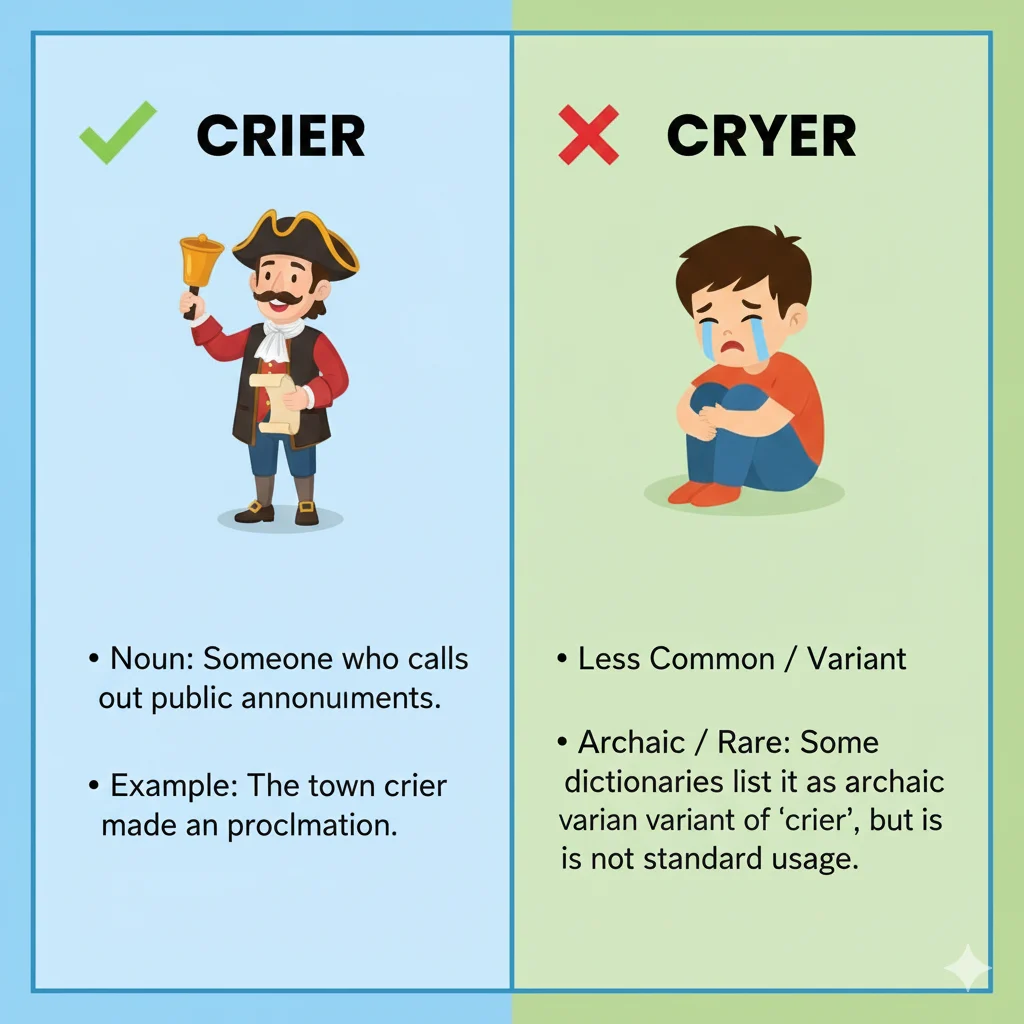
Crier
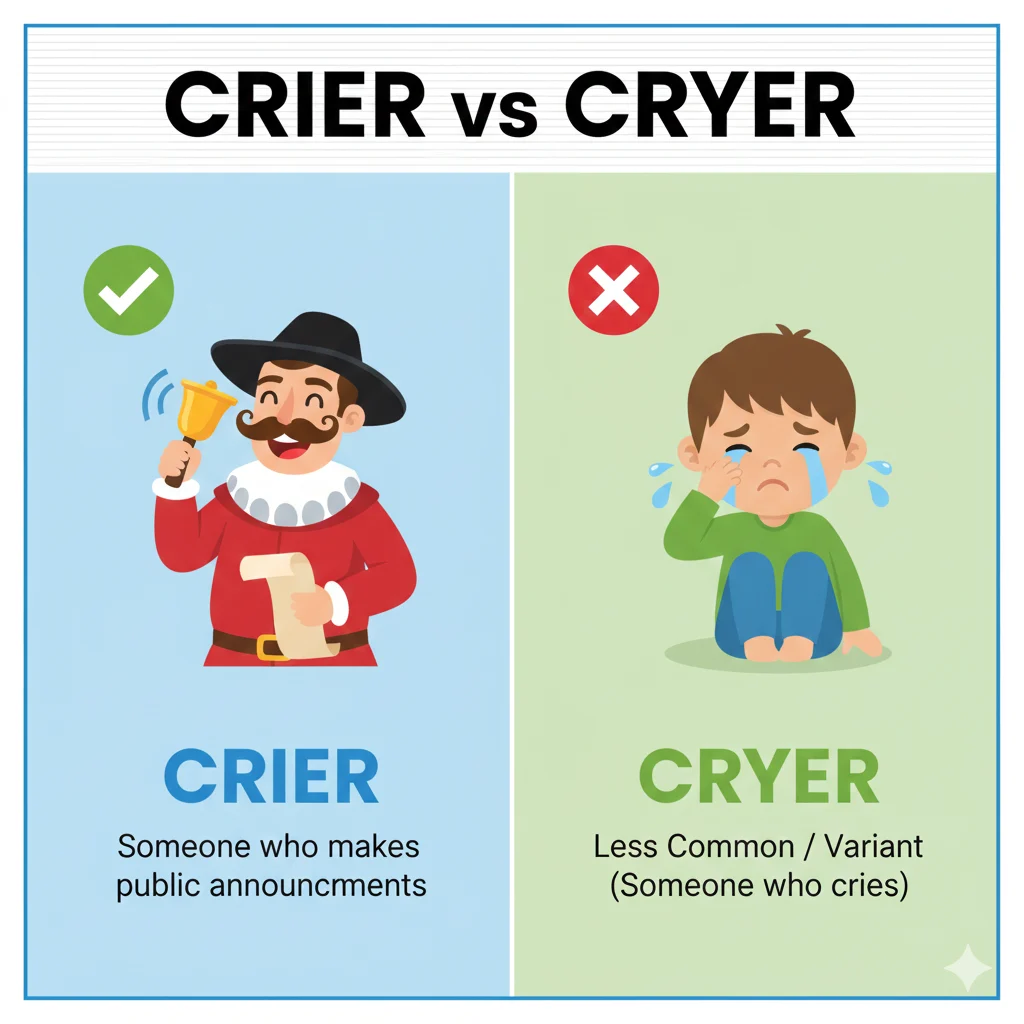
A crier is a noun. It refers to a person whose job is to announce news or make public proclamations, especially in the past.
Examples:
- The town crier shouted, “Hear ye, hear ye! The market opens at nine!”
- During the festival, a crier rang a bell to gather people.
- The old castle had a crier to announce royal events.

Think of a crier as someone who spreads information loudly and publicly.
Cryer
A cryer is also a noun, but it refers to a person who cries, often a child or someone sad.
Examples:
- The baby was a loud cryer all night.
- She has always been a cryer when she watches sad movies.
- In class, a little cryer needed comfort from the teacher.
Imagine a cryer as someone expressing emotion through tears.
The Key Difference Between Crier and Cryer
| Word | Meaning | Part of Speech | Example Sentence | Quick Tip |
|---|---|---|---|---|
| Crier | A person who announces news publicly | Noun | The crier rang his bell in the town square. | News + Loud = Crier |
| Cryer | A person who cries | Noun | The little cryer needed her mother’s hug. | Tears + Sad = Cryer |
Quick Tip:
If it has to do with announcing something, choose crier. If it involves tears or sadness, choose cryer.
Common Mistakes and How to Avoid Them
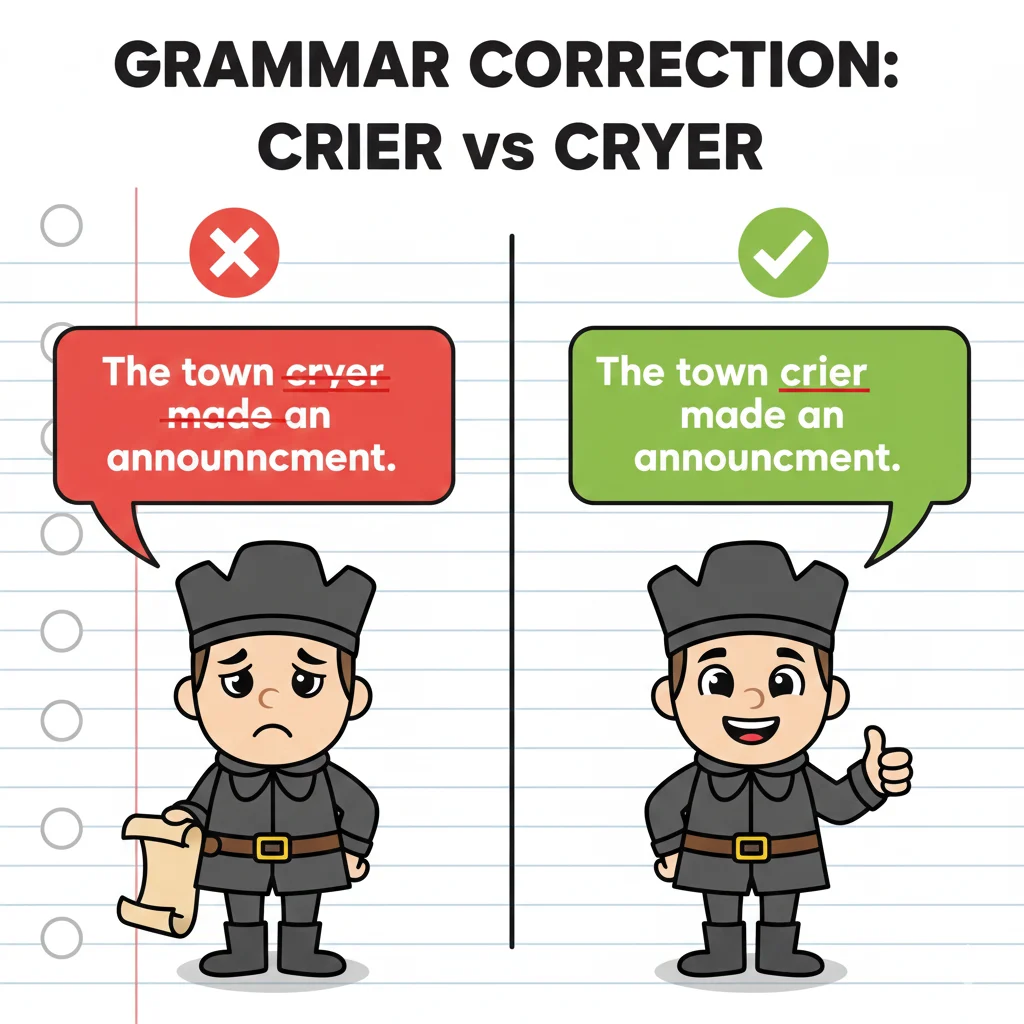
- Incorrect: The town cryer shouted the news.
Correct: The town crier shouted the news.
Why: Announcing news is a public role, not crying. - Incorrect: The baby was a quiet crier.
Correct: The baby was a quiet cryer.
Why: Babies don’t announce news; they cry. - Incorrect: A crier in the playground was upset.
Correct: A cryer in the playground was upset.
Why: Emotional crying, not public announcements.
When to Use Crier
Use crier in historical contexts, public announcements, or official communication.
Examples:
- The medieval crier alerted villagers of the king’s visit.
- At the town square, a crier read the festival rules aloud.
- The crier announced the winning lottery numbers.
- In history class, we learned about the village crier.
- A royal crier rang the bell for the ceremony.
Memory Hack: Think of “Crier = Calling out loud.”
When to Use Cryer
Use cryer when describing someone who cries or expresses sadness.
Examples:
- She was a cryer after losing her favorite toy.
- The little cryer needed a hug from her mom.
- He is such a cryer during emotional movies.
- Don’t be a cryer when facing small challenges.
- Every newborn is a natural cryer at first.
Memory Hack: Picture a tear drop whenever you see “cryer.”
Quick Recap: Crier vs Cryer
- Crier: Announces news publicly, historical role, think “calling out loud.”
- Cryer: Cries or shows sadness, think “tearful person.”
- Avoid swapping them; context decides the correct word.
- Remember: Public = Crier, Tears = Cryer.
Advanced Tips
- Origin:
- Crier comes from Old French crier, meaning “to shout.”
- Cryer is simply “one who cries.”
- Formal Writing: Use crier when writing historical or literary texts about announcements. Use cryer when describing emotions in essays or narratives.
- Modern Texting Mistakes: Typing crier instead of cryer can confuse readers about whether you mean sadness or announcements.
Mini Quiz
Fill in the blanks with crier or cryer:
- The town _______ rang the bell for the festival.
- She is a big _______ when watching sad cartoons.
- A medieval _______ would shout royal news.
- The baby was a loud little _______ all night.
- The _______ read the king’s decree aloud.
Answers:
- crier
- cryer
- crier
- cryer
- crier
FAQs
- Is crier the same as cryer?
No. Crier announces news; cryer cries or is emotional. - Can I use cryer for historical announcements?
No. Crier is the correct term for announcements. - Which is more common in modern English?
Cryer is more common in daily life, crier is mostly historical. - Can ‘cryer’ refer to adults?
Yes, anyone who cries can be called a cryer. - Are there any spelling tricks to remember them?
Yes. “C” in crier = calling; “y” in cryer = tears.
Conclusion
By now, you should clearly understand the difference between crier and cryer. Crier refers to someone who announces news, often in historical or official contexts, while cryer is someone who expresses sadness through tears.
Remembering the context is the key to using these words correctly. Use our memory hacks: “Crier = Calling loudly” and “Cryer = Tearful person.” Practice with real-life examples, mini-quizzes, or writing exercises, and soon choosing the right word will become second nature.
With consistent practice, you can confidently avoid common mistakes and improve your English. Every time you use crier or cryer correctly, you get one step closer to mastering English grammar!
Elizabeth Gaskell was a Victorian English novelist and biographer, celebrated for social realism, strong female characters, and industrial age themes. era life.