Have you ever paused mid-sentence and wondered, “Should I write cancelled or canceled?” You’re not alone. These two spellings look almost identical, sound the same, and confuse even native English speakers. Choosing the wrong version can make your writing look unpolished, especially in school assignments, emails, or articles.
In this guide, we will make it simple. You’ll learn what cancelled and canceled mean, the difference between them, and how to use each correctly in your writing. We’ll also cover common mistakes, grammar tips, and real-life examples to make the rules stick. By the end, you’ll confidently know which one to use — even in tricky situations.
This article is perfect for beginners, students, or anyone who wants clear, easy-to-follow guidance on using these words correctly.
What Does Each Word Mean?
Cancelled
Meaning:
“Cancelled” is the British English spelling of the past tense and past participle of the verb cancel. It means to call off or stop something that was planned.
Part of speech: Verb (past tense / past participle)
Examples:
- The school trip was cancelled because of the storm.
- She cancelled her dentist appointment.
- Our football match was cancelled due to rain.
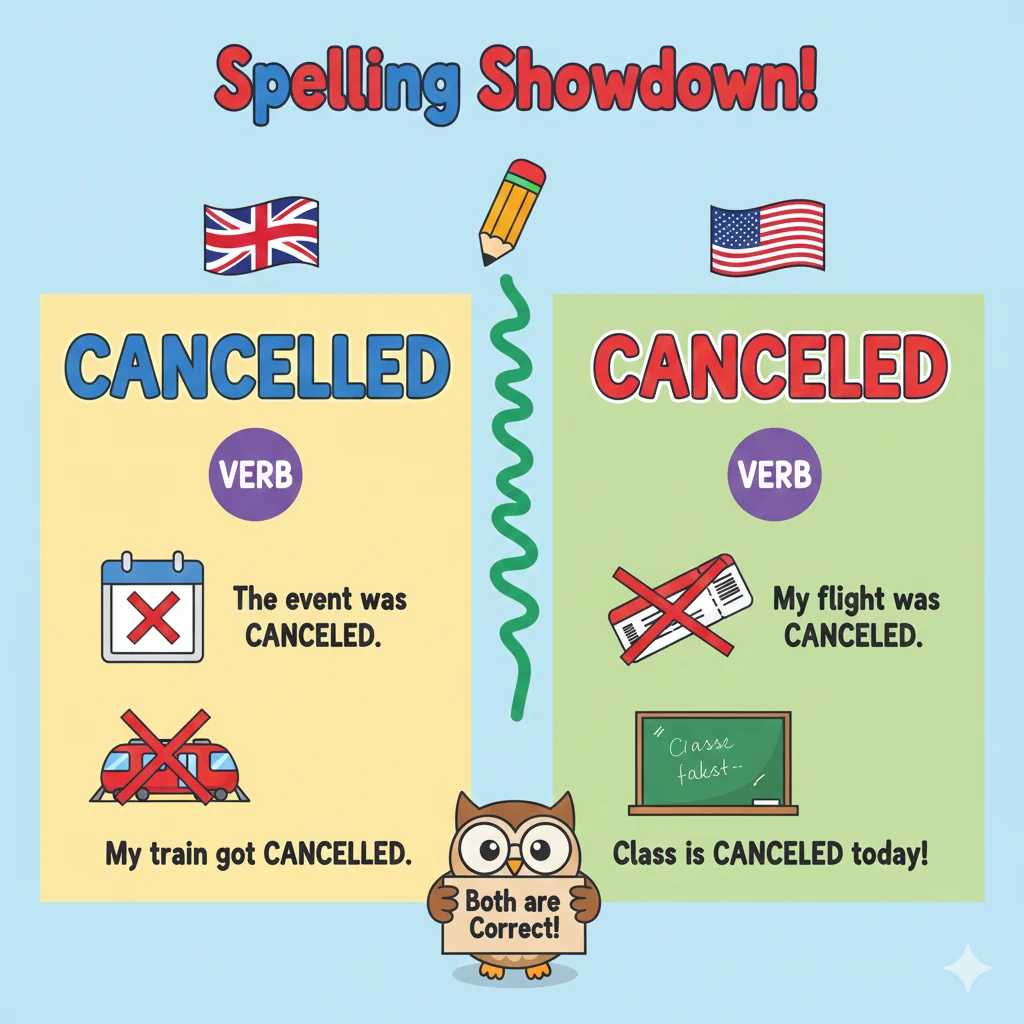
Canceled
Meaning:
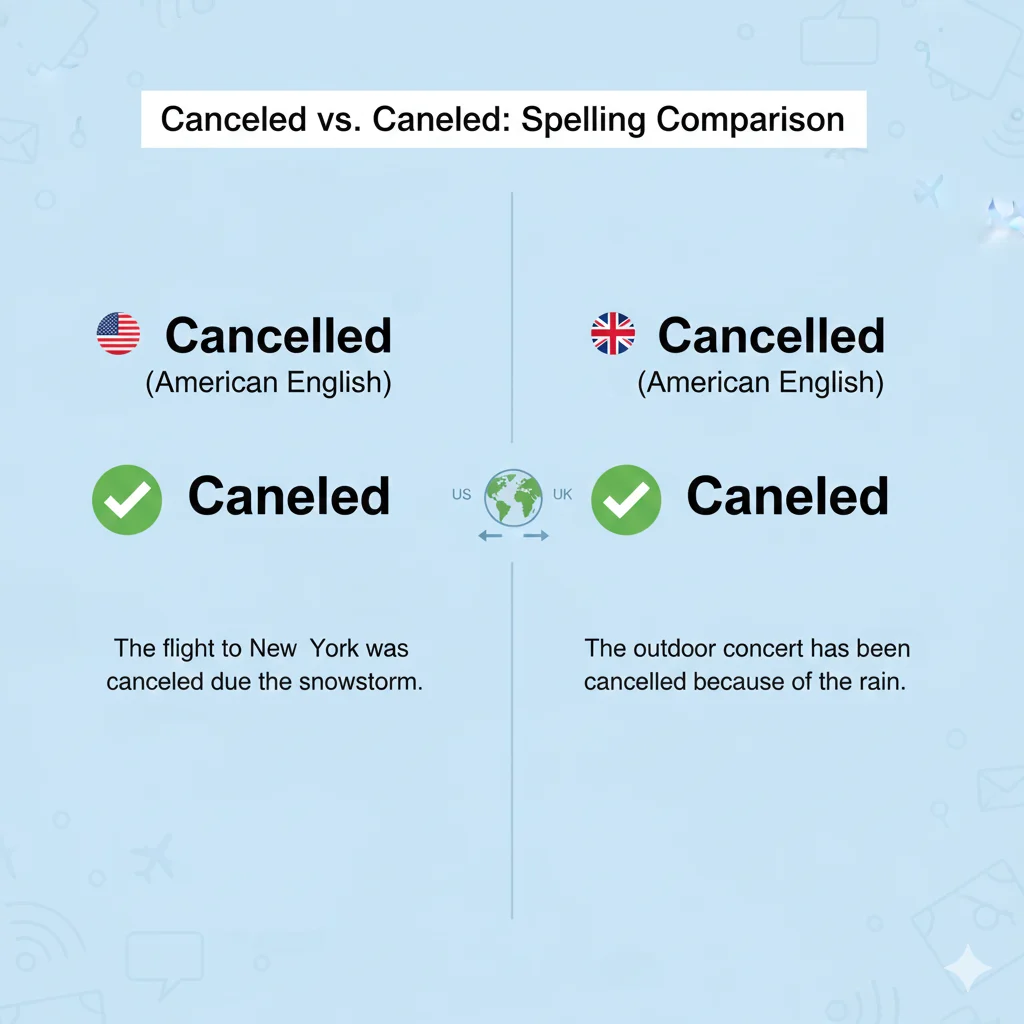
“Canceled” is the American English spelling of the same verb. It has the same meaning — to stop something from happening.
Part of speech: Verb (past tense / past participle)
Examples:
- The concert was canceled at the last minute.
- He canceled his subscription to the magazine.
- My flight was canceled because of snow.
The Key Difference Between Cancelled and Canceled
| Feature | Cancelled | Canceled |
|---|---|---|
| Spelling | British English (double “l”) | American English (single “l”) |
| Meaning | Same as canceled – to stop something | Same as cancelled – to stop something |
| Usage Example | The meeting was cancelled due to bad weather. | The meeting was canceled due to bad weather. |
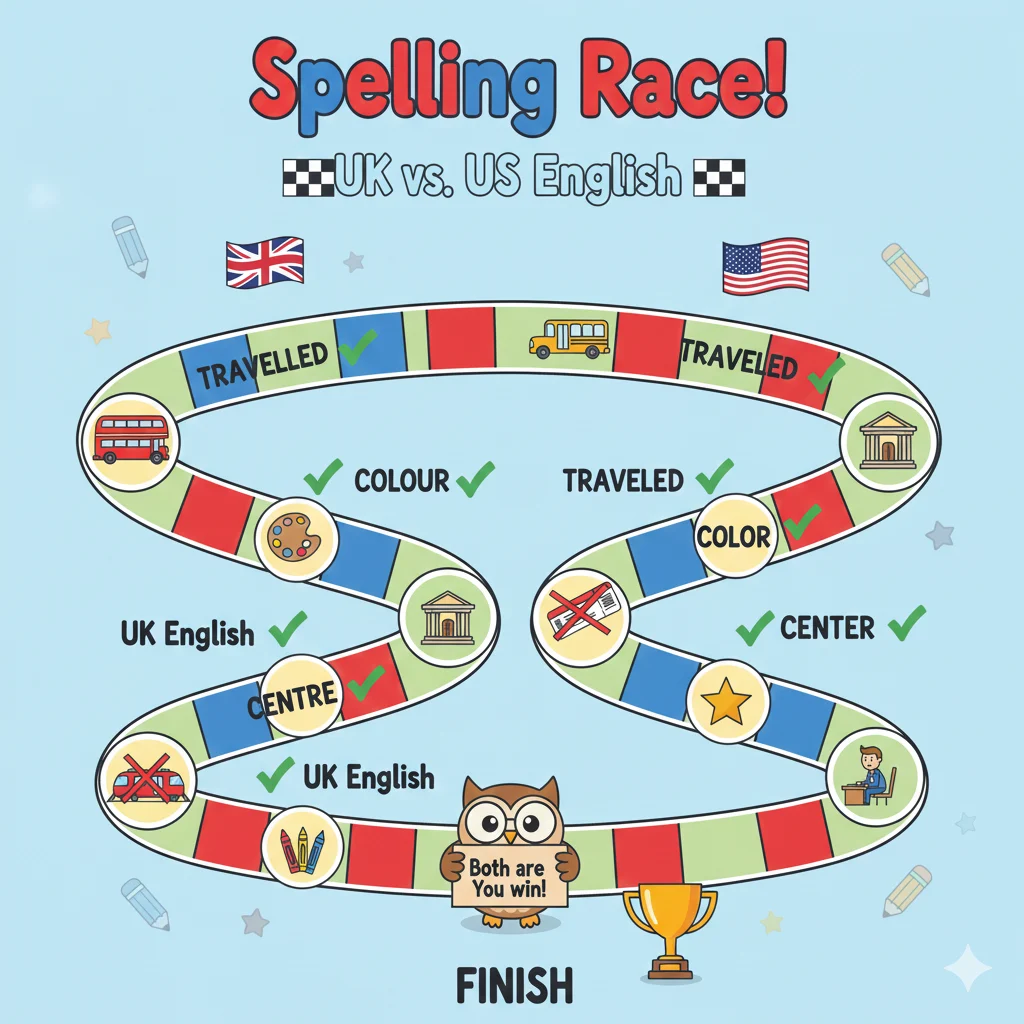
Quick Tip:
- If you are writing for UK readers, use cancelled.
- For US readers, use canceled.
Common Mistakes and How to Avoid Them
Many people mix these up, especially when writing online or on social media. Here are some common errors:
- Incorrect: The show was canceleded.
Correct: The show was canceled (US) / cancelled (UK) - Incorrect: I cancel my subscription yesterday.
Correct: I canceled / cancelled my subscription yesterday. - Incorrect: They had cancelleded the event last week.
Correct: They had canceled / cancelled the event last week.
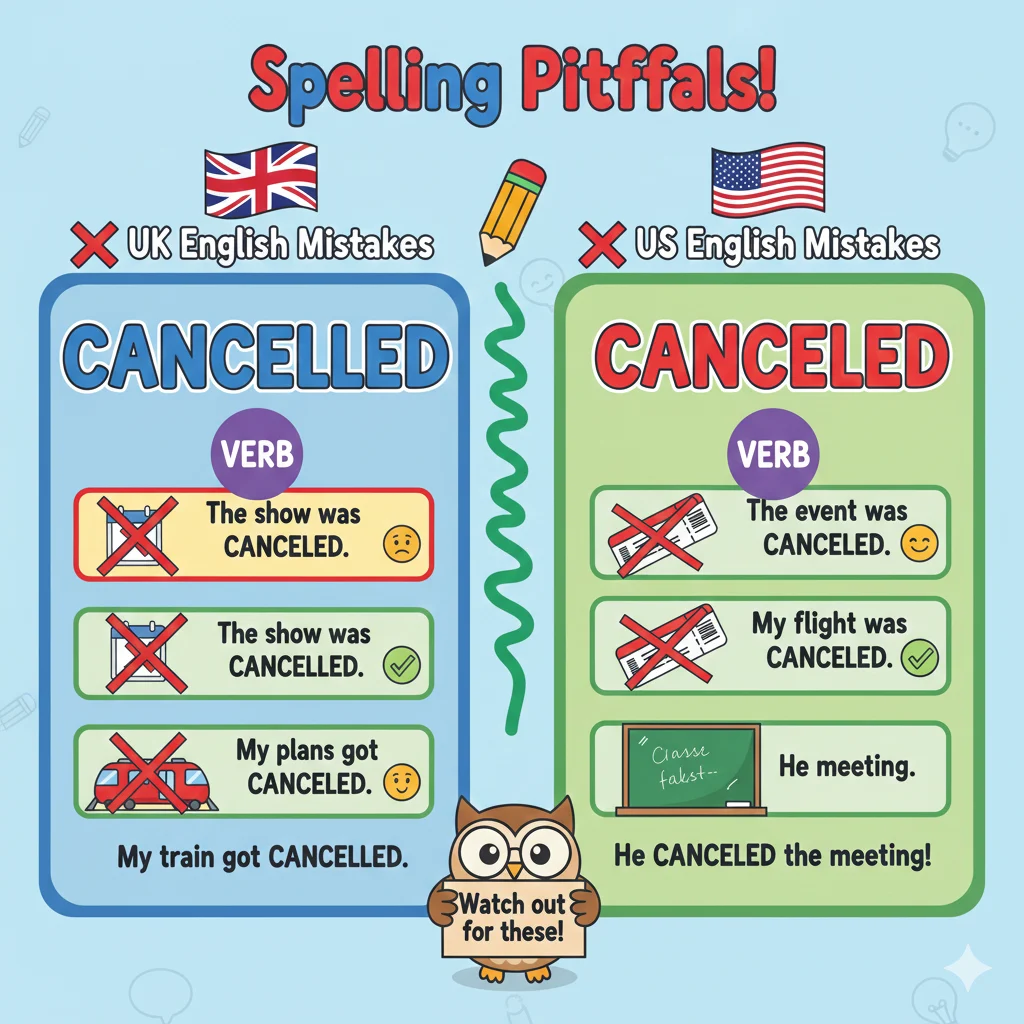
Why these mistakes happen:
- Double “l” is confusing for Americans.
- Forgetting to use the past tense correctly.
Fix: Remember the rule: single “l” for US, double “l” for UK. Always check the verb tense.
When to Use Cancelled
Use cancelled in:
- British English writing
- School essays, emails, letters in the UK
- Publications aimed at UK readers
Examples in real life:
- Our school trip was cancelled due to heavy rain.
- The meeting has been cancelled for tomorrow.
- She cancelled her subscription after reading the reviews.
- The train was cancelled because of track maintenance.
- All public events were cancelled for the holiday.
Memory Hack: Think double “l” = British style. Imagine two red London buses next to each other.
When to Use Canceled
Use canceled in:
- American English writing
- Emails, articles, or messages in the US
- Everyday casual writing for US readers
Examples in real life:
- My dentist appointment was canceled due to a snowstorm.
- The football game was canceled because of rain.
- She canceled her subscription to the streaming service.
- Flights were canceled after the hurricane.
- His credit card was canceled by the bank.
Memory Hack: Single “l” = American English, like the leaning Tower of Pisa — one line.
Quick Recap: Cancelled vs Canceled
- Cancelled: British English, double “l,” past tense of cancel.
- Canceled: American English, single “l,” same meaning.
- Both mean to stop or call off something.
- UK readers → use cancelled, US readers → use canceled.
- Always use the correct past tense form to avoid mistakes.
Advanced Tips (Optional)
- Origin: The word cancel comes from the Latin cancellare, meaning “to cross out.”
- Formal writing: British journals prefer cancelled, while American journals prefer canceled.
- Texting and online: Either is usually understood, but using the correct regional spelling shows attention to detail.
Mini Quiz
Fill in the blanks with the correct word (cancelled or canceled):
- The concert was ________ due to rain.
- She ________ her appointment yesterday.
- All flights have been ________ because of the storm.
- My subscription was ________ last month.
- The school play was ________ because of illness.
Answers: 1. canceled/cancelled, 2. canceled/cancelled, 3. canceled/cancelled, 4. canceled/cancelled, 5. canceled/cancelled
FAQs
- Is it cancelled or canceled?
- Cancelled is British English; canceled is American English. Both mean the same.
- Can I use canceled in the UK?
- Yes, it’s understood, but cancelled is preferred in formal British writing.
- Why do Americans use only one “l”?
- American English simplified many double consonants in past tense verbs in the 19th century.
- Does it change meaning if I use the wrong one?
- The meaning stays the same; only regional correctness changes.
- Is one more correct than the other?
- Both are correct in their respective regions.
Conclusion
Now you know the difference between cancelled and canceled! Remember: double “l” for British English, single “l” for American English. Both words mean the same — to stop or call off something. You also learned when to use each, saw common mistakes, and even got memory hacks to remember them.
Practice by writing simple sentences about your daily activities, school, or events. Soon, choosing between cancelled and canceled will become second nature. Keep reading, practicing, and you’ll improve your English step by step. Even small efforts make a big difference, so don’t worry about mistakes — learning is all about trying!

Elizabeth Gaskell was a Victorian English novelist and biographer, celebrated for social realism, strong female characters, and industrial age themes. era life.