Many English learners often mix up begun and began. These two words sound similar, but they are not interchangeable. Using the wrong word can make your sentences grammatically incorrect.
In this guide, you will learn the exact meaning of begun and began, the difference between them, and how to use each word correctly. We’ll give simple examples, common mistakes, and easy memory tricks so you never confuse them again.
By the end of this article, even beginners will confidently understand begun vs began and know exactly when to use each. Whether you’re writing an essay, chatting with friends, or speaking in class, this guide will make your English stronger and clearer.
What Does Each Word Mean?
Understanding the meaning of begun and began is the first step to using them correctly.
Began
- Part of speech: Verb (past tense of “begin”)
- Meaning: To start or commence something in the past.
- Examples:
- I began my homework at 5 PM yesterday.
- She began learning piano when she was seven.
- They began the race with excitement.
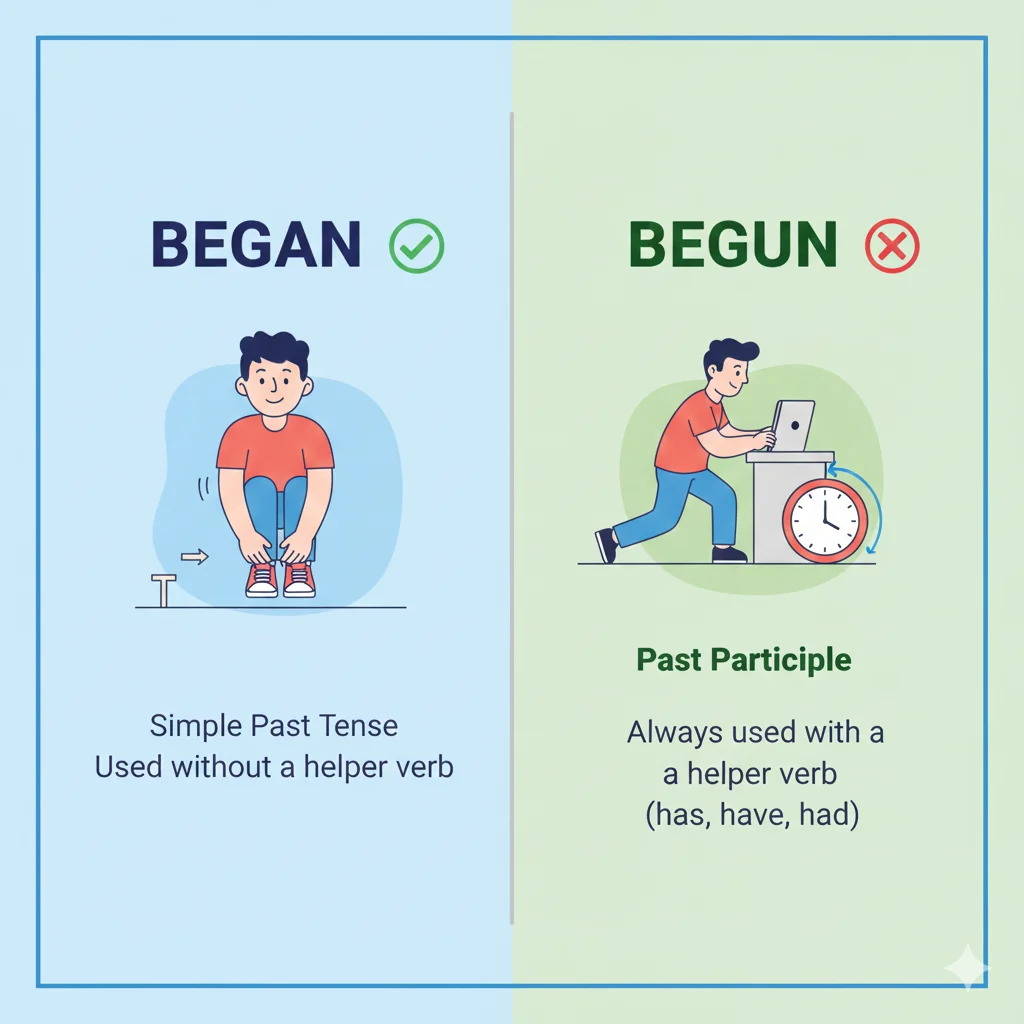
Think of began as the word you use to describe the start of something at a specific time in the past.
Begun
- Part of speech: Verb (past participle of “begin”)
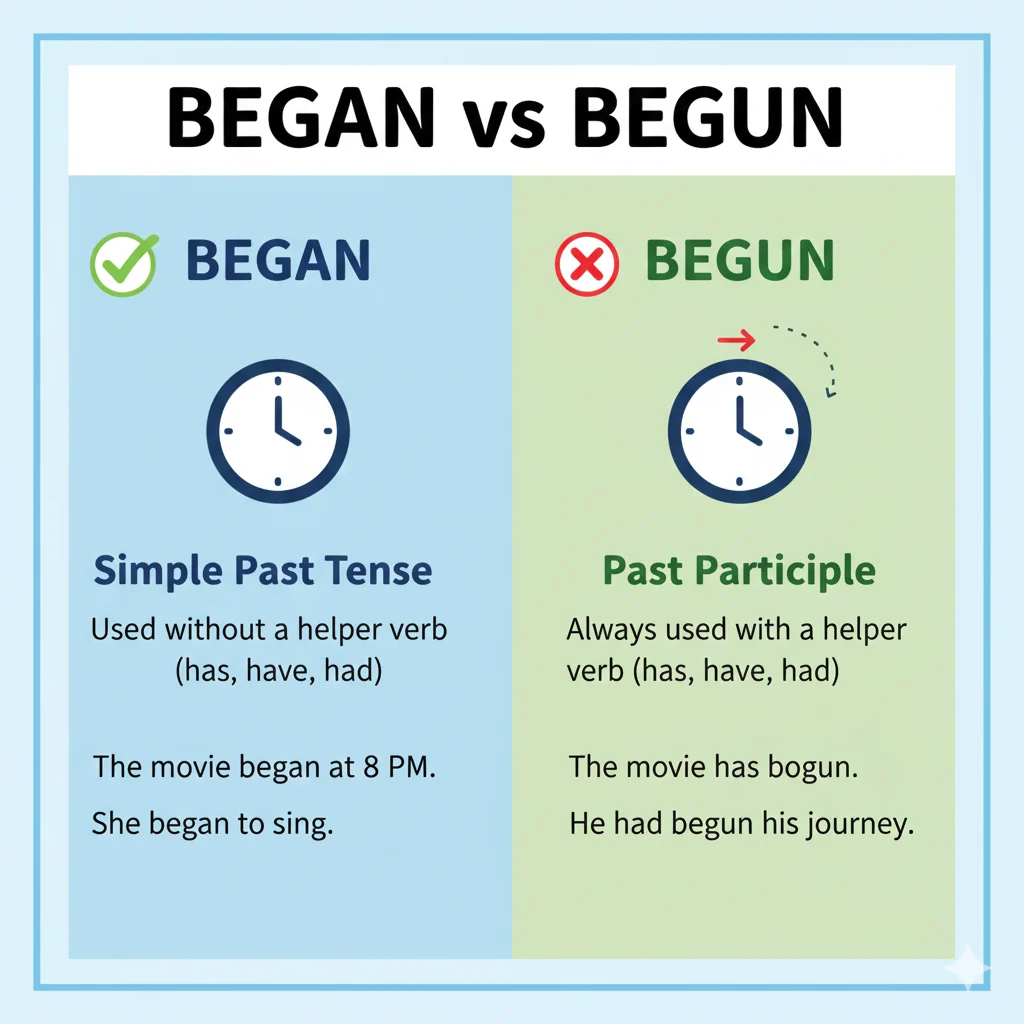
- Meaning: Used with has, have, or had to show an action that started before now and may continue.
- Examples:
- I have begun a new book this week.
- She had begun to understand the lesson before the teacher explained it.
- They have begun preparing for the party.
Remember, begun always comes after has, have, or had. You cannot use it alone without these helping verbs.
The Key Difference Between Begun and Began
Here’s a simple table to make the difference crystal clear:
| Word | Meaning | Usage | Example Sentence |
|---|---|---|---|
| Began | Started in the past | Simple past tense | I began jogging yesterday. |
| Begun | Started in the past and still continuing or completed | Past participle; used with has/have/had | I have begun jogging this month. |
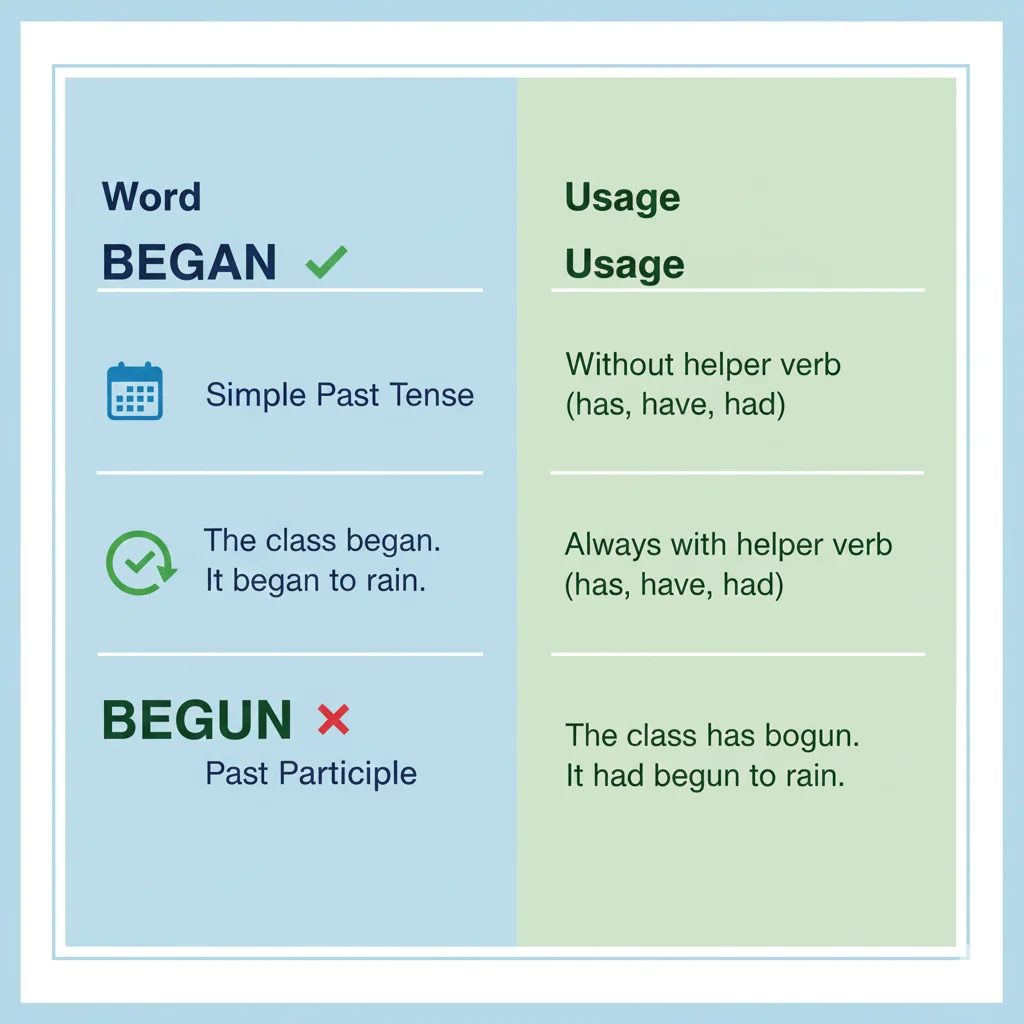
Quick Tip: If you can put have, has, or had before the word, it must be begun. If not, it’s probably began.
Common Mistakes and How to Avoid Them
English learners often make the following mistakes:
- Incorrect: I begun my homework yesterday.
Correct: I began my homework yesterday.- Mistake: Using the past participle “begun” without “have/has/had.”
- Incorrect: She began reading the book already.
Correct: She has begun reading the book already.- Mistake: Forgetting the helping verb “has” with “begun.”
- Incorrect: They have began preparing for the trip.
Correct: They have begun preparing for the trip.- Mistake: Mixing up the simple past “began” with the past participle “begun.”
Tip: Ask yourself: “Can I put ‘have/has/had’ before this word?” If yes, it’s begun. If no, use began.
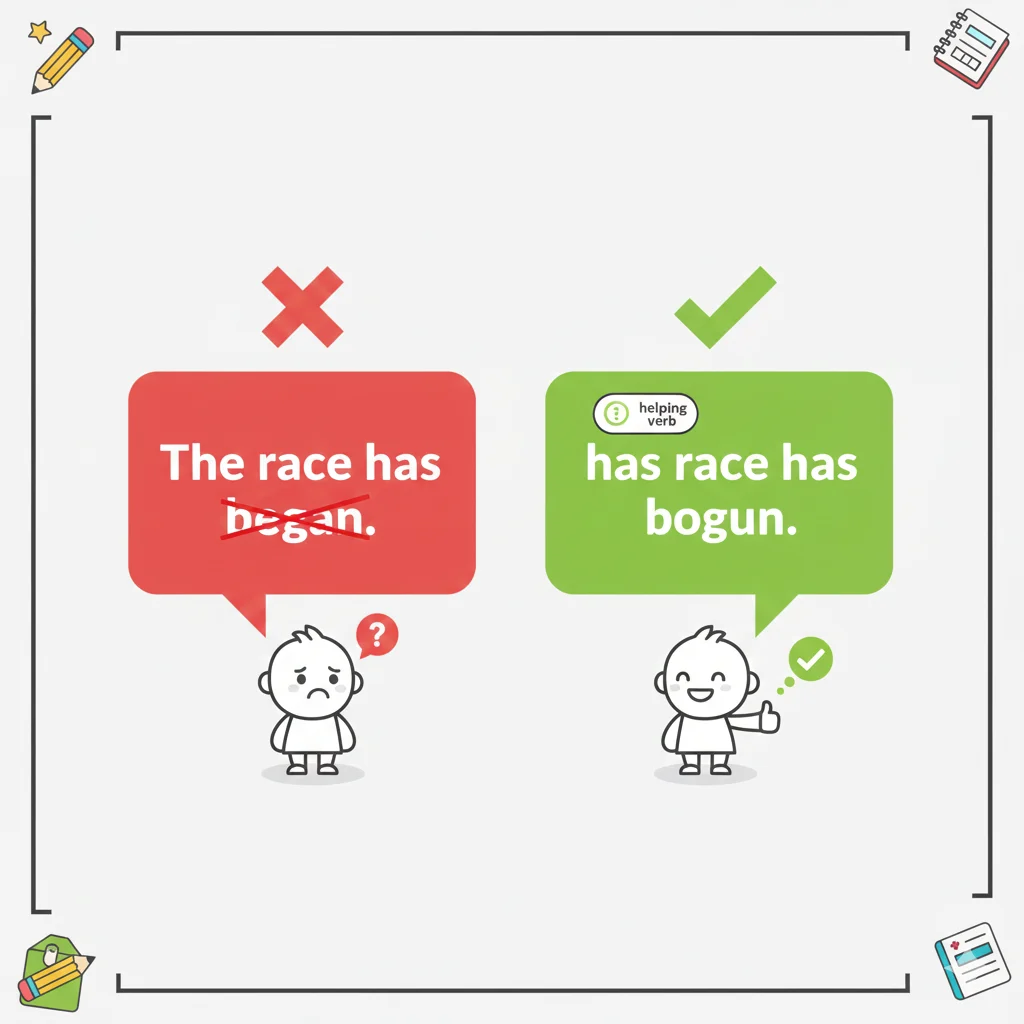
When to Use Began
Use began to talk about a specific past action. It’s simple and direct.
Examples in real life:
- I began learning English in 2015.
- She began her presentation at 10 AM.
- We began our holiday last week.
- He began playing football when he was five.
- The movie began after dinner.
Think of began as your “time-stamped past starter.” It marks when something started and is already finished.
When to Use Begun
Use begun with has, have, or had. It shows actions that started in the past and may still continue.
Examples in daily life:
- I have begun a new diet.
- She has begun practicing yoga.
- We had begun cleaning before the guests arrived.
- He has begun saving money for a new bike.
- They have begun planning the party.
Memory Hack: Think of begun as “begun with helpers” (has, have, had). If it’s alone, it’s not correct.
Quick Recap: Began vs Begun
- Began → simple past, no helper, marks when something started.
- Begun → past participle, needs has/have/had, may continue or completed.
- Use began for specific past events; use begun for actions linked to now or another past moment.
- Tip: “Helper verb? Use begun. No helper? Use began.”
Advanced Tips
- History: “Began” and “begun” come from the old English verb “beginnen.” The forms evolved over centuries, but the rule of simple past vs past participle stayed.
- Formal writing: In essays or exams, using the correct form shows good grammar. “She has begun her research” sounds professional.
- Online writing: Many people mistakenly write “begun” alone in texts. Correct grammar still matters, even in emails or social media.
Mini Quiz
Fill in the blanks with began or begun:
- I have ________ reading a new book.
- She ________ her journey at dawn.
- They have ________ working on the project.
- We ________ playing chess yesterday.
- He has ________ learning French.
Answers: 1. begun 2. began 3. begun 4. began 5. begun
FAQs
- Can I use begun without “have/has/had”?
No. “Begun” always needs a helper verb. - Is began the same as begun?
No. Began is simple past; begun is past participle. - Which one is correct: “I have began” or “I have begun”?
Correct: “I have begun.” - Can I say “She begun to play”?
Incorrect. Correct: “She has begun to play.” - Why do people confuse began and begun?
Because both come from “begin” and sound similar, but their grammar rules are different.
Conclusion
Now you know the difference between began and begun. Began is used for past actions without helpers, while begun needs has, have, or had. With practice, you’ll use them correctly in writing, speaking, and even exams.
Remember, learning English is a journey. Every small step, like mastering begun vs began, brings you closer to fluency. Keep practicing, and soon it will feel natural.

Rose Tremain is a British novelist known for richly detailed historical fiction, complex characters, and award-winning literary storytelling worldwide.