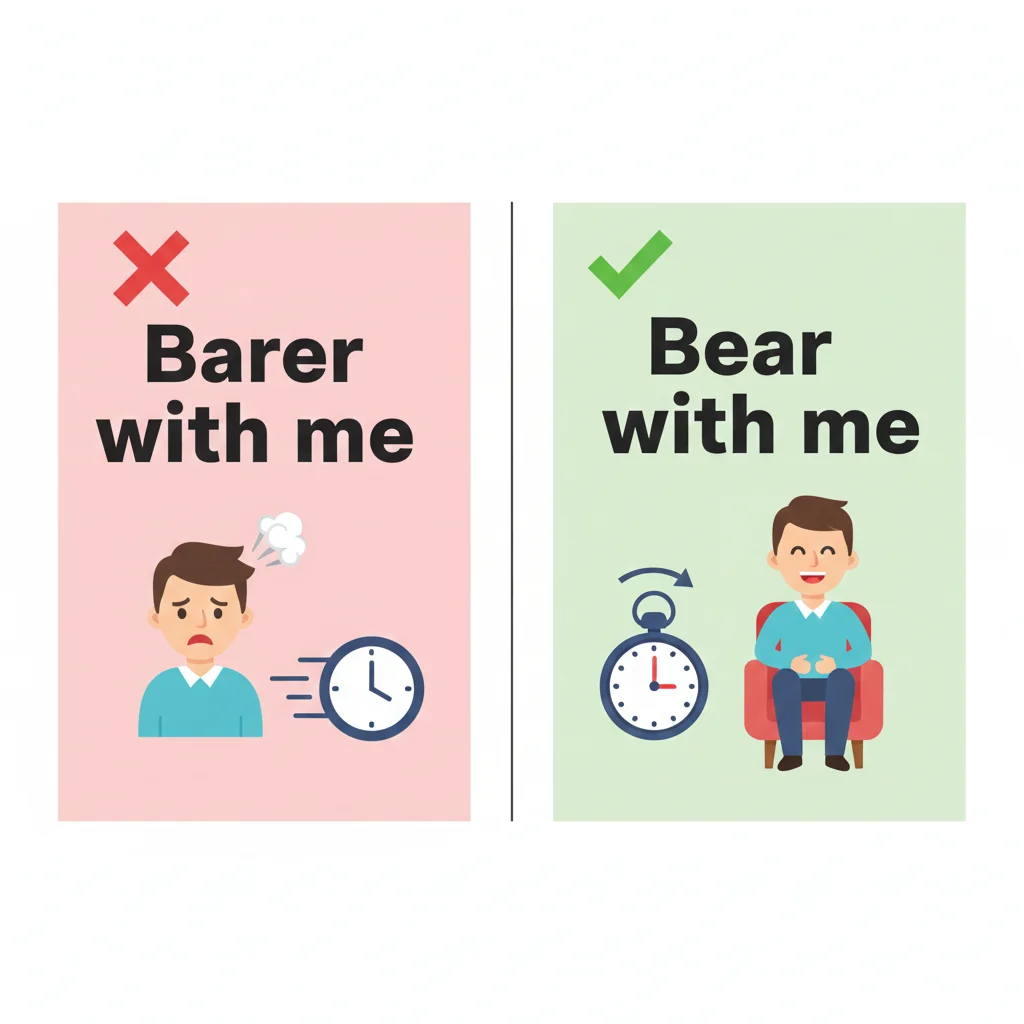
English can be tricky, especially when two words sound similar but mean very different things. One common example is “bear with me” or “barer.” Many learners see or hear these words and feel confused. They may ask: Is it bear with me or barer? What is the correct phrase?
You are not alone. This is a very common English mistake, even among native speakers. People often mix these words up because of pronunciation and spelling confusion.
In this complete guide, you will learn the meaning, difference, and correct usage of bear with me or barer in a very simple way. We will use short sentences, real-life examples, and easy explanations. By the end, even a class 4 student will clearly understand which word is correct, why it is correct, and how to use it with confidence in daily English, school writing, and online messages.
What Does Each Word Mean?
Before we compare bear with me or barer, let’s understand each word separately.
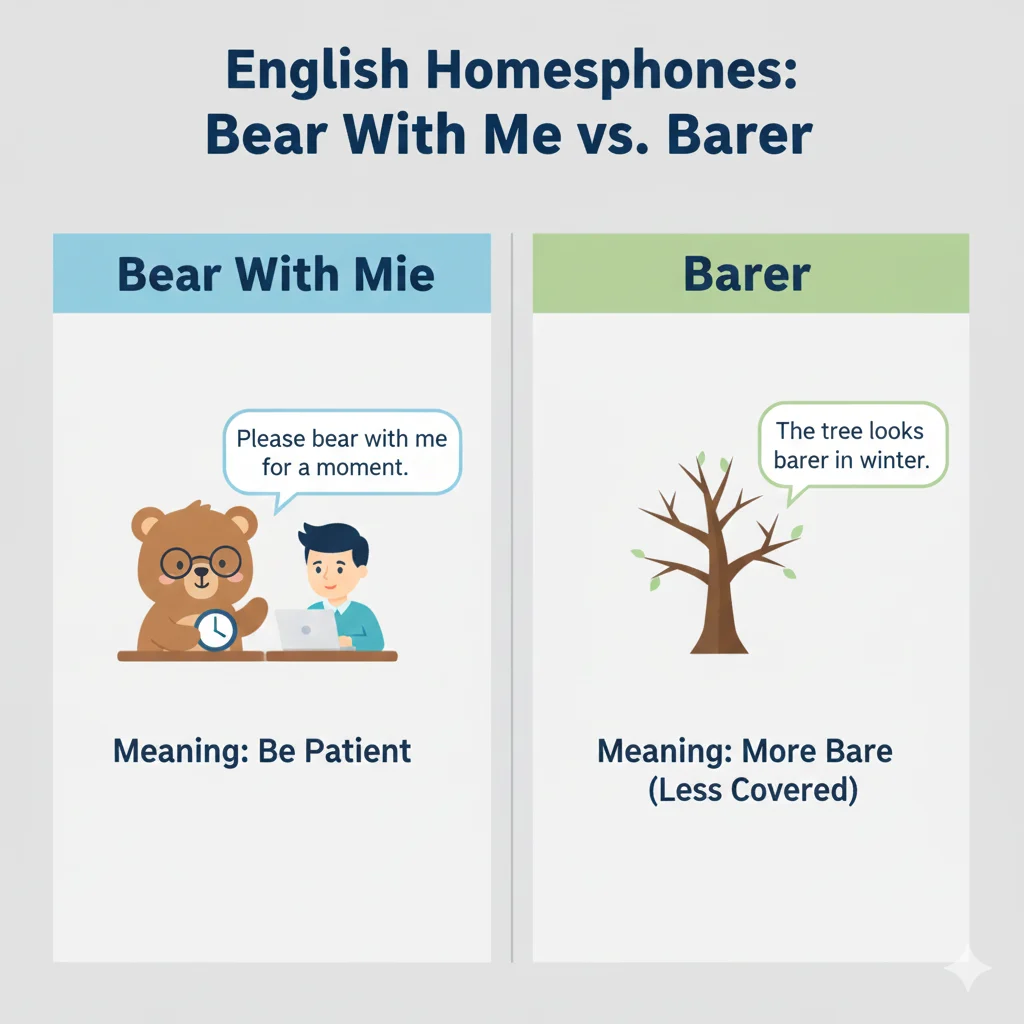
Meaning of Bear (in “Bear With Me”)
The word bear has many meanings in English, but in the phrase “bear with me,” it means:
👉 To be patient
👉 To wait calmly
👉 To tolerate something for a short time
Part of Speech: Verb
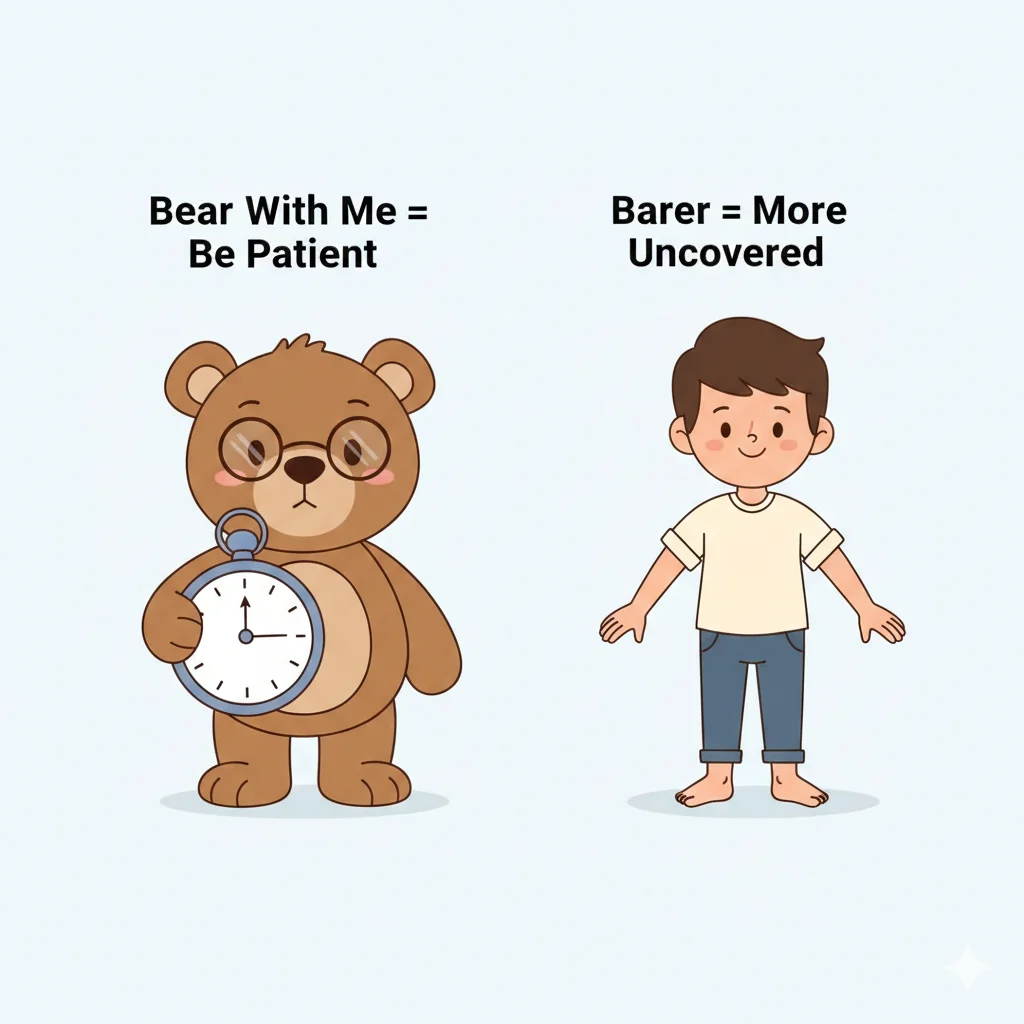
When you say “bear with me,” you are politely asking someone to wait or be patient.
Easy Examples of Bear With Me
- Bear with me, I am still learning.
- Bear with me, the computer is slow.
- Bear with me, I will explain everything soon.
📌 Think of bear here as “please wait.”
Meaning of Barer
The word barer comes from bare, which means:
👉 Not covered
👉 More naked or open
👉 Less clothing or protection
Part of Speech: Adjective (comparative form of bare)
Barer is about physical things, not patience.
Easy Examples of Barer
- His feet were barer than before.
- The room looked barer without furniture.
- Summer clothes are barer than winter clothes.
📌 Barer has nothing to do with waiting or patience.
The Key Difference Between Bear With Me and Barer
Many people search for the difference between bear with me and barer, so let’s make it very clear and simple.
Comparison Table
| Feature | Bear With Me | Barer |
|---|---|---|
| Meaning | Please be patient | More uncovered |
| Usage | Asking someone to wait | Describing appearance |
| Part of Speech | Verb phrase | Adjective |
| Common Use | Speaking or writing politely | Describing clothes or objects |
| Correct Phrase | ✅ Bear with me | ❌ Not used this way |
Quick Tip to Remember
🧠 Memory Trick:
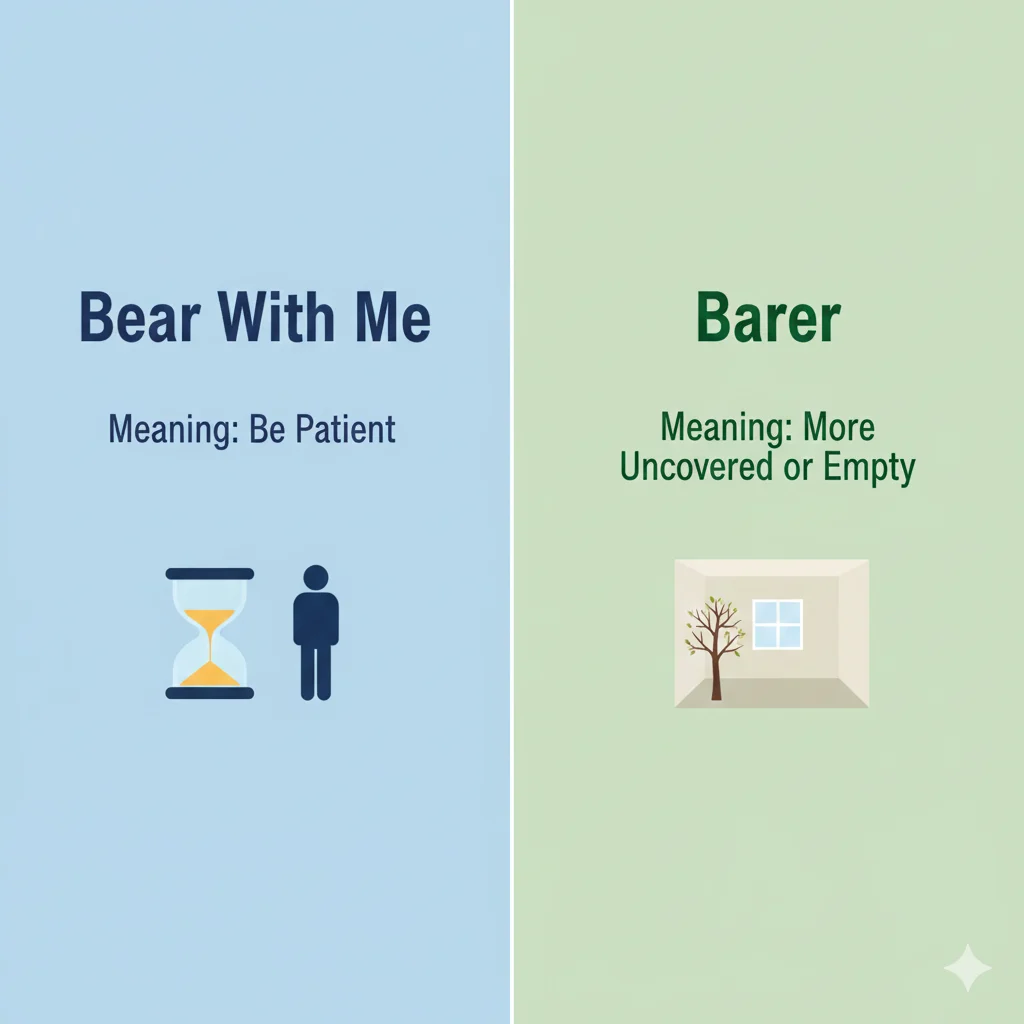
- Bear with me = Be patient
- Barer = Bare body or object
If you are asking someone to wait → Bear with me is always correct.
Common Mistakes and How to Avoid Them
Let’s look at common mistakes people make when using bear with me or barer.
❌ Incorrect Example 1
Barer with me, I am busy.
✅ Correct:
Bear with me, I am busy.
👉 Why? Because you are asking for patience, not talking about clothes.
❌ Incorrect Example 2
Please barer with me while I explain.
✅ Correct:
Please bear with me while I explain.
👉 “Barer” cannot be used for waiting or explaining.
❌ Incorrect Example 3
Barer with me for a moment.
✅ Correct:
Bear with me for a moment.
How to Avoid This Mistake
✔ Ask yourself: Am I asking someone to wait?
✔ If yes, always use bear with me
✔ Never use barer in this situation
When to Use Bear With Me
Use bear with me when you want to be polite, kind, and patient in communication.
Situations to Use Bear With Me
- While explaining something
- When technology is slow
- During learning or teaching
- In emails, meetings, or conversations
Easy Daily-Life Examples
- Bear with me, I will finish my homework.
- Bear with me, the internet is not working.
- Bear with me, English is new for me.
- Bear with me, I need one minute.
- Bear with me, I am trying my best.
📌 This phrase sounds polite and respectful, especially in professional or school settings.
When to Use Barer
Use barer only when you are describing physical things.
Situations to Use Barer
- Talking about clothes
- Describing rooms
- Comparing coverage
- Talking about appearance
Simple Examples of Barer
- His arms looked barer without sleeves.
- The tree looks barer in winter.
- The house felt barer after moving out.
- Her feet were barer on the sand.
- The room became barer and empty.
🧠 Memory Hack:
Barer = Bare + More
Quick Recap: Bear With Me vs Barer
- Bear with me = please be patient
- Barer = more uncovered
- One is a polite phrase, the other is a describing word
- Never replace bear with me with barer
Advanced Tips (Optional)
Word Origin (Simple Explanation)
- Bear comes from Old English meaning to carry or tolerate
- Bare means naked or uncovered
- Barer simply means more bare
Formal Writing Tip
In exams, essays, or professional emails:
- ✅ “Bear with me while I explain.”
- ❌ Never use “barer” in this context
Online & Texting Mistakes
Using barer with me online can:
- Change meaning
- Look unprofessional
- Confuse readers
Mini Quiz: Test Yourself
Fill in the blanks:
- ______ with me, I will reply soon.
- His room looked ______ after moving.
- Please ______ with me during the lesson.
- Summer clothes are ______ than winter clothes.
- ______ with me, I am learning English.
Answers
- Bear
- Barer
- Bear
- Barer
- Bear
FAQs
1. Is it bear with me or barer?
The correct phrase is bear with me.
2. What does bear with me mean?
It means please be patient.
3. Is barer ever correct?
Yes, but only when describing less covered things.
4. Why do people confuse bear with me or barer?
Because they sound similar but have very different meanings.
5. Can I use bear with me in formal writing?
Yes, it is polite and acceptable.
Conclusion
Understanding the difference between bear with me or barer is much easier than it seems. Bear with me is a polite way to ask someone to be patient, while barer only talks about something being more uncovered. They sound similar, but their meanings are completely different.
By learning their meanings, examples, and common mistakes, you can now use both words correctly in daily life, school, and online writing. Keep practicing, read carefully, and don’t be afraid to learn from mistakes. Improving English is a step-by-step journey — and you are doing great.

Dorothy Whipple was an English novelist and short story writer, famed for emotional realism, domestic themes, and sharp insight into women’s lives. worldwide UK