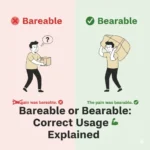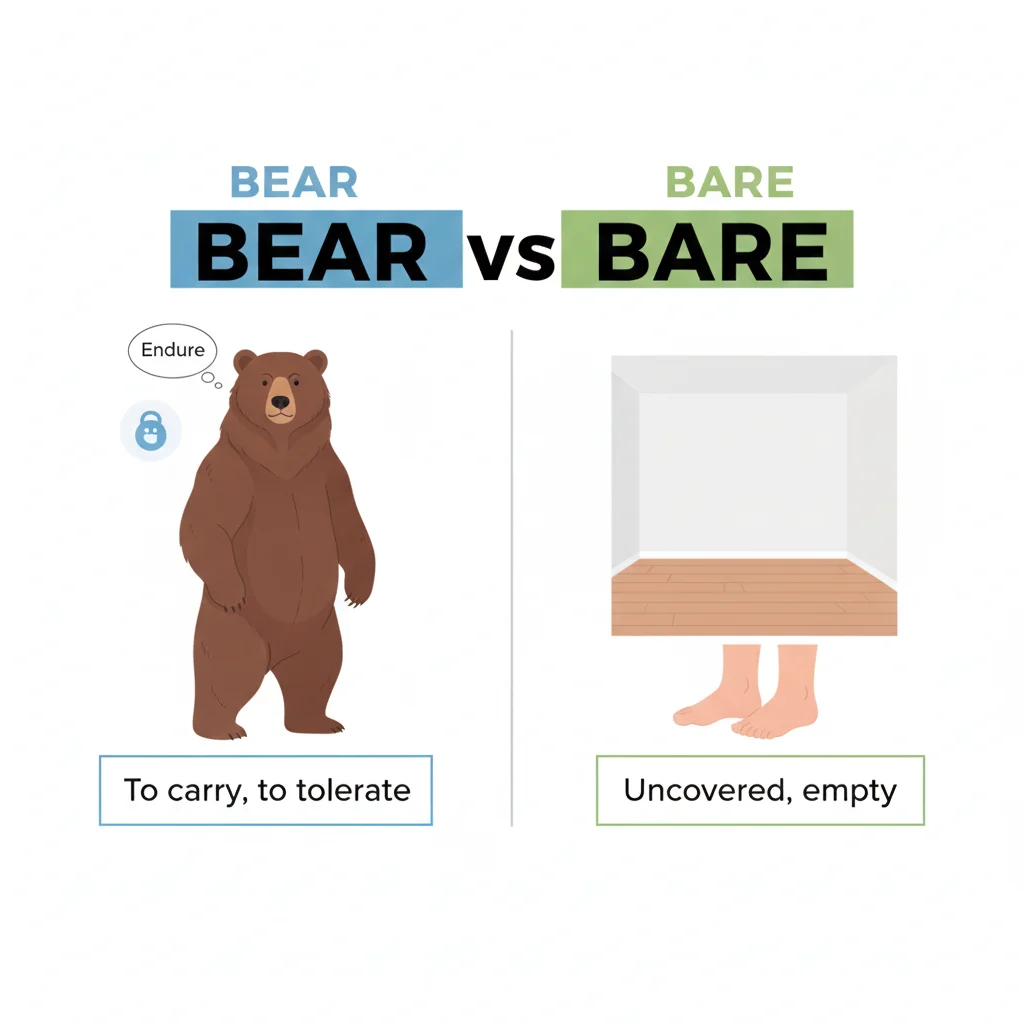
English has many confusing words, and bear or bare is one of the most common pairs that people mix up. They look similar. They sound similar. But their meanings are very different. One small spelling change can completely change your sentence.
Many learners ask: What is the difference between bear and bare?
When should I use bear or bare?
Which one is correct in daily English?
Don’t worry. This guide will make everything easy and clear, even for beginners or a class 4 student. In this article, you will learn the meaning of bear and bare, their correct usage, simple grammar rules, real-life examples, and memory tricks to remember them forever.
By the end, you will never confuse bear vs bare again.
What Does Each Word Mean?
Let’s first understand each word separately in very simple language.
Meaning of “Bear”
The word bear has many meanings. That’s why it confuses people.
Bear can be:
- a noun (an animal)
- a verb (to carry, tolerate, or accept)
Bear as a Noun
A bear is a big, strong animal.
Examples:
- I saw a bear in the zoo.
- The bear is sleeping.
- A polar bear lives in cold places.
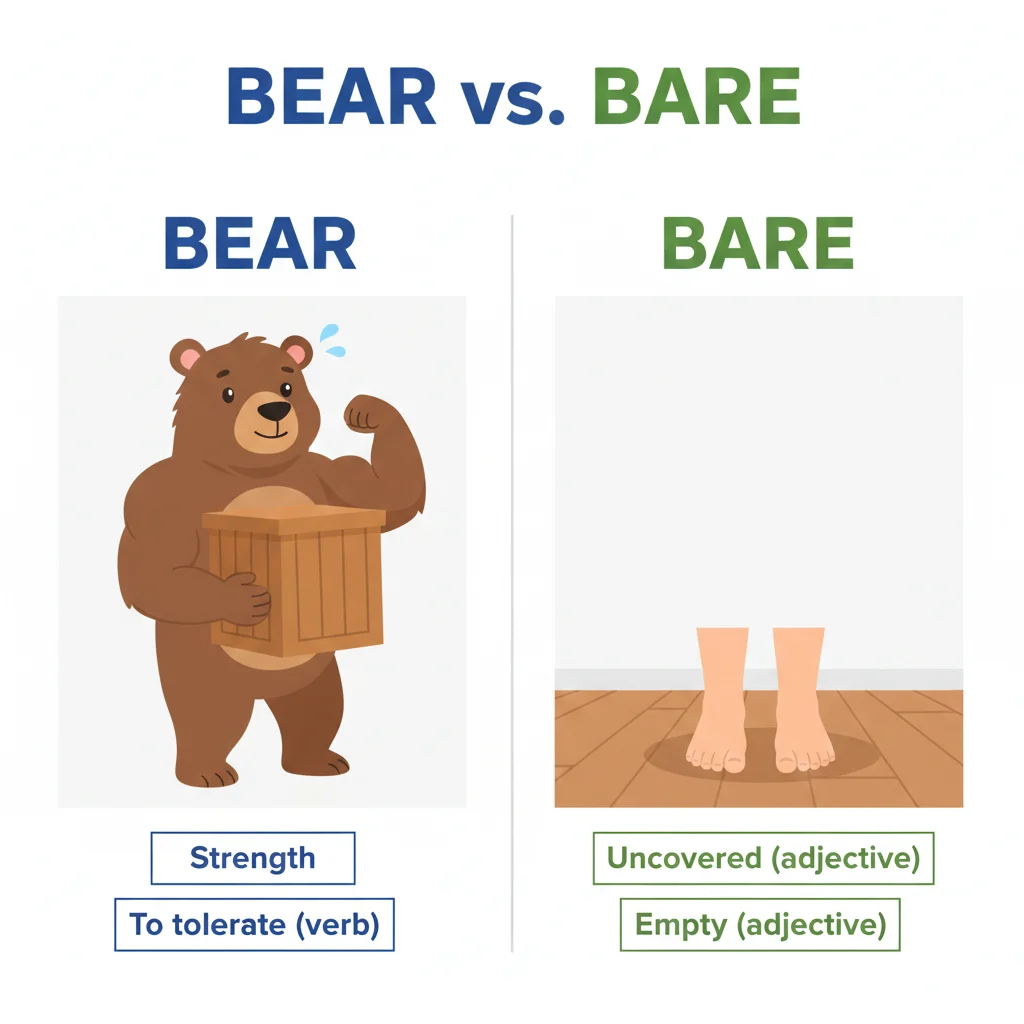
Bear as a Verb
As a verb, bear means:
- to carry
- to tolerate
- to handle
- to give birth
Examples:
- I cannot bear this noise. (I cannot tolerate it)
- This table can bear heavy weight.
- She will bear a child next year.
👉 Story Tip:
Think of a strong bear carrying a heavy bag. That’s bear = carry or tolerate.
Meaning of “Bare”
The word bare usually means without cover or empty.
It is often used as an adjective.
Bare means:
- naked
- uncovered
- empty
- basic or simple
Examples:
- He walked with bare feet.
- The tree has bare branches.
- The room was bare, with no furniture.
👉 Story Tip:
If something has nothing on it, it is bare.
The Key Difference Between Bear and Bare
The difference between bear and bare is about meaning and usage, not spelling.
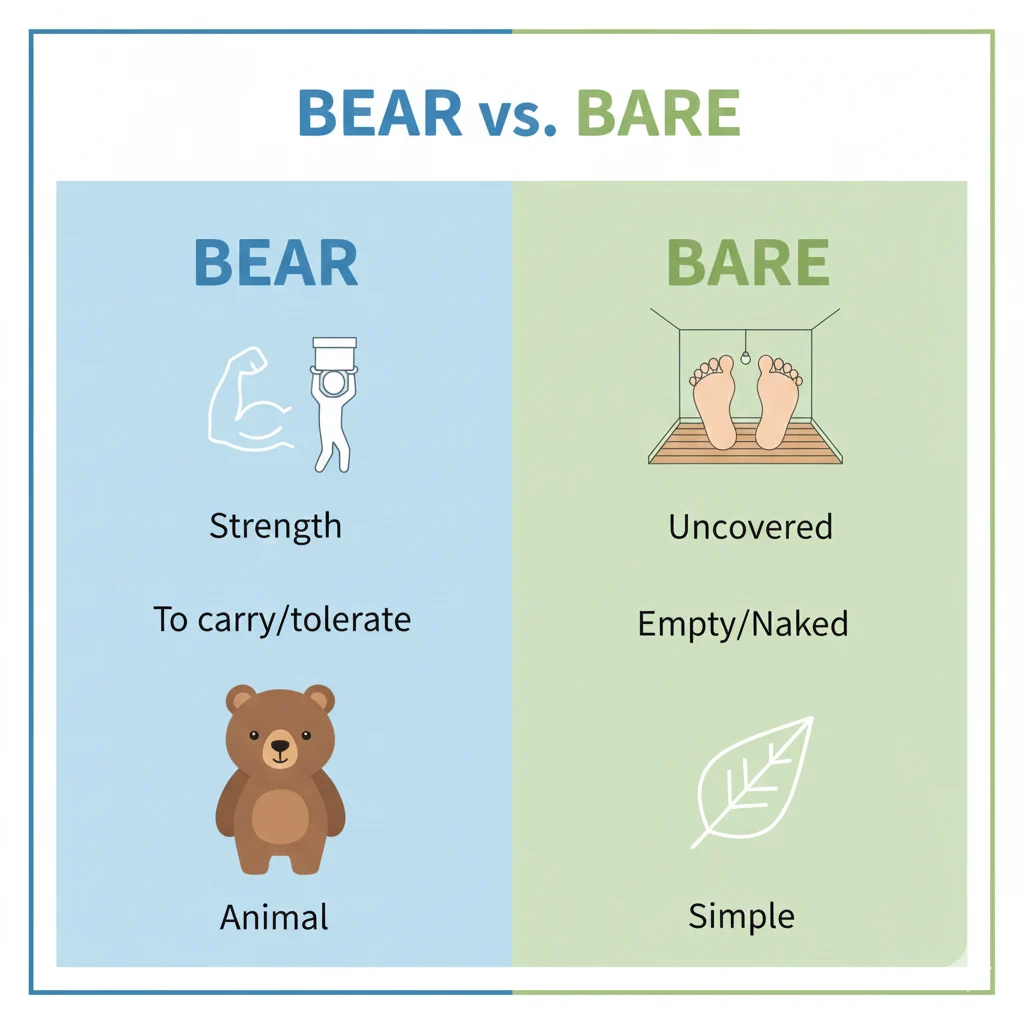
Bear vs Bare Comparison Table
| Feature | Bear | Bare |
|---|---|---|
| Meaning | Carry, tolerate, animal | Uncovered, empty |
| Part of Speech | Noun / Verb | Adjective (mostly) |
| Related Idea | Strength, patience | Nothing on it |
| Example | I can’t bear pain | He has bare feet |
Quick Tip to Remember
- Bear = Strong (can carry pain or weight 🐻)
- Bare = Empty (nothing there 👣)
Common Mistakes and How to Avoid Them
Many learners make these mistakes. Let’s fix them.
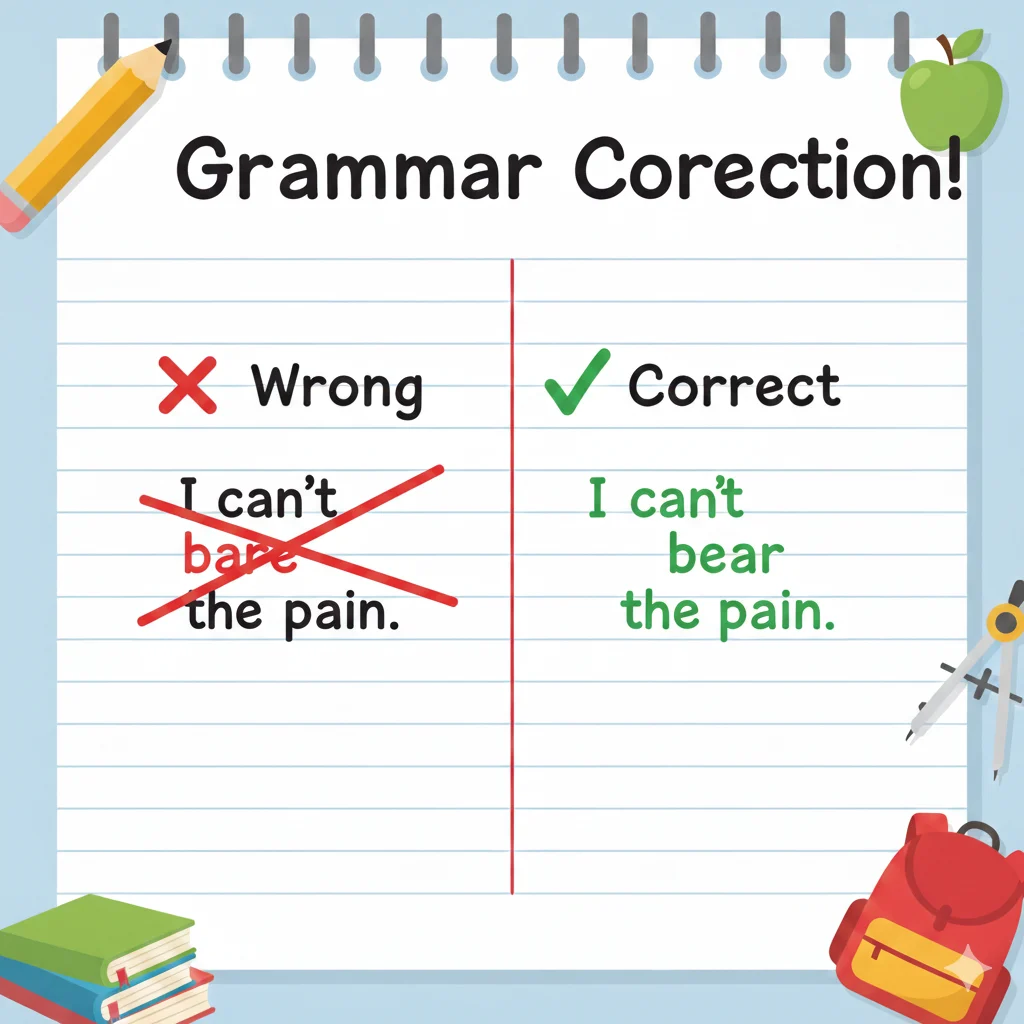
❌ Incorrect:
I can’t bare this heat.
✅ Correct:
I can’t bear this heat.
Why?
Because heat is something you tolerate, not uncover.
❌ Incorrect:
He walked with bear feet.
✅ Correct:
He walked with bare feet.
Why?
Feet are uncovered, not animals or strength.
❌ Incorrect:
She has a bear room.
✅ Correct:
She has a bare room.
Why?
The room is empty, not strong.
👉 Fix Tip:
Ask yourself: Is it about strength or carrying? → Bear
Is it about empty or uncovered? → Bare
When to Use “Bear”
Use bear when you talk about strength, carrying, patience, or animals.
Situations to Use Bear
- Feelings and pain
- Responsibility
- Weight or load
- Animals
Easy Examples
- I can’t bear loud music.
- This bridge can bear heavy trucks.
- She had to bear the responsibility.
- A bear lives in the forest.
- Please bear with me.
👉 Daily Life Tip:
If you can replace the word with handle or carry, use bear.
When to Use “Bare”
Use bare when something is not covered, empty, or simple.
Situations to Use Bare
- Body parts
- Rooms or places
- Nature (trees, land)
- Simple facts
Easy Examples
- He stood on the floor with bare feet.
- The wall is bare.
- The trees look bare in winter.
- She told the bare truth.
- The shelf is bare now.
Memory Hack
👉 Bare sounds like “wear”
If you are not wearing anything → bare
Quick Recap: Bear vs Bare
- Bear
- Means carry, tolerate, or animal
- Shows strength
- Example: I can’t bear the pain
- Bare
- Means empty or uncovered
- Shows nothing is there
- Example: He has bare feet
Advanced Tips (Optional)
Word History
- Bear comes from Old English meaning to carry.
- Bare comes from words meaning naked or open.
In Exams & Formal Writing
Using the wrong word can change meaning:
- “I can’t bare it” ❌
- “I can’t bear it” ✅
In Texting & Social Media
Wrong usage can confuse readers and look unprofessional.
Mini Quiz: Test Yourself
Fill in the blanks:
- I can’t ___ this noise.
- He walked with ___ feet.
- The tree is ___ in winter.
- This bag can ___ a lot of weight.
- The room looks ___ without furniture.
Answers
- bear
- bare
- bare
- bear
- bare
FAQs: Bear or Bare
1. What is the main difference between bear and bare?
Bear means to carry or tolerate. Bare means uncovered or empty.
2. Is bear always an animal?
No. Bear can also be a verb meaning tolerate or carry.
3. Can bare be used as a verb?
Rarely. Bare is mostly an adjective.
4. Which is correct: bear with me or bare with me?
Correct: bear with me.
5. How can I remember bear vs bare easily?
Bear = strong 🐻, Bare = nothing on it 👣
Conclusion
Now you clearly understand the difference between bear and bare. You learned their meanings, grammar usage, real-life examples, and easy tricks to remember them. Bear is about strength and tolerance, while bare is about nothing or uncovered.
The best way to improve English is practice. Try using bear and bare in your daily sentences. Read more. Write more. Small steps make big progress.
English becomes easy when you learn it the right way—simple, clear, and friendly.

Elizabeth Gaskell was a Victorian English novelist and biographer, celebrated for social realism, strong female characters, and industrial age themes. era life.