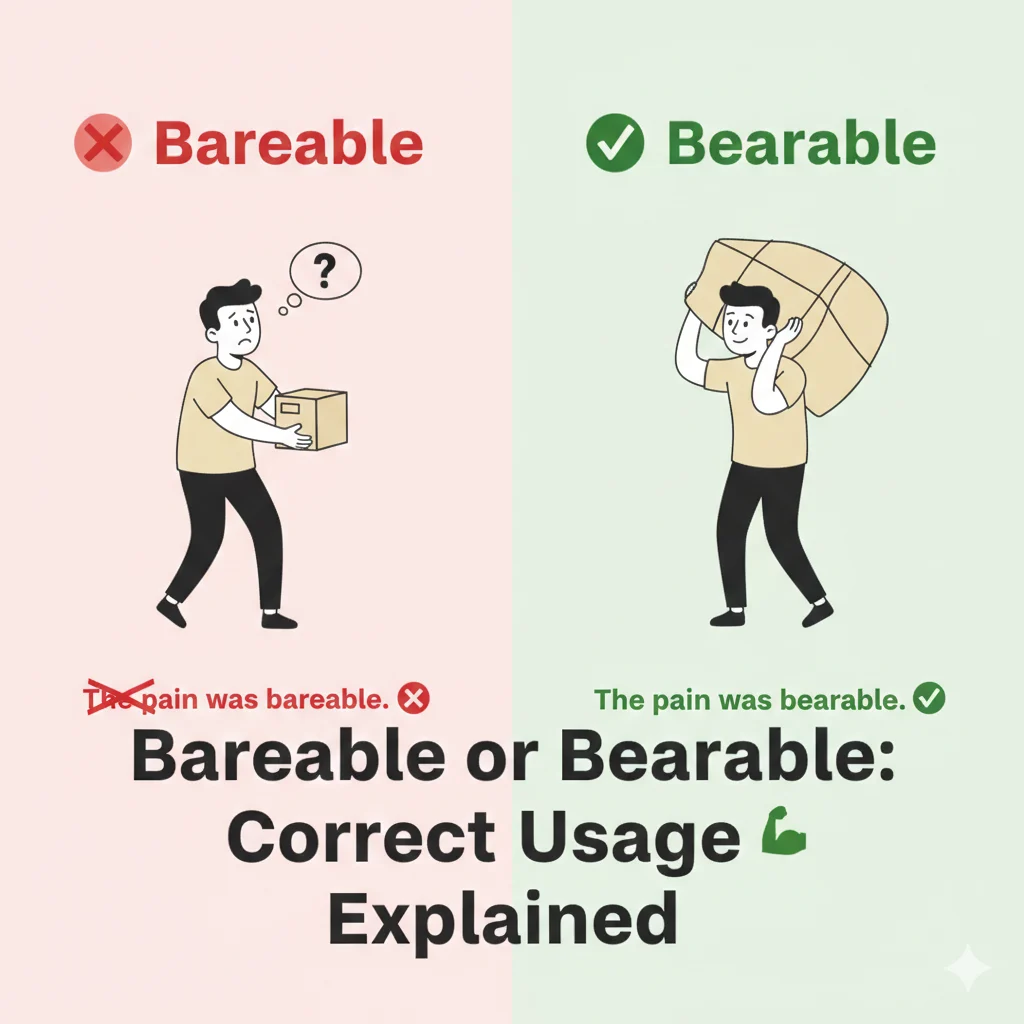
English can be tricky, especially when two words sound very similar. One of the most common confusions is bareable or bearable. Many people are unsure which one is correct or how to use it in sentences. Sometimes even experienced writers make this mistake.
In this guide, we will explain everything clearly. You will learn:
- The bareable or bearable meaning in Urdu
- Correct usage in sentences and real-life examples
- Common mistakes and how to avoid them
- Synonyms and memory tips to remember the correct word
By the end, even beginners will confidently use bearable correctly. We’ll make it simple, practical, and fun to read so that you’ll never forget it!
What Does Each Word Mean?
Bearable
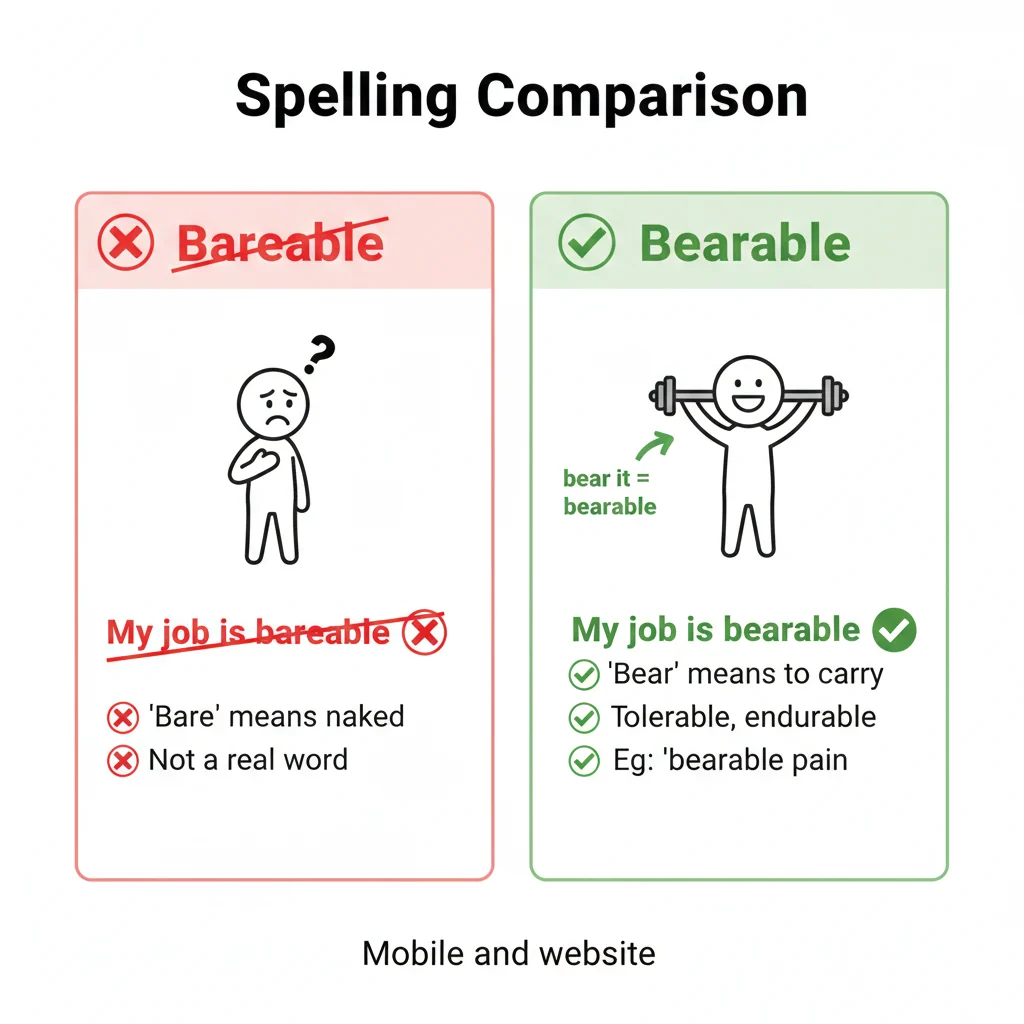
Meaning: Something that is bearable is something you can tolerate, endure, or handle. We often use it to talk about difficult situations, pain, discomfort, or stress.
Bearable meaning in Urdu: برداشت کے قابل (Bardasht ke qabil)
Part of Speech: Adjective
Examples:
- The heat in the classroom was bearable because the fan was on.
- Waiting for two hours in the line was bearable since I had a book to read.
- Her sadness became bearable after she shared her feelings with a friend.
Bearable person meaning: A person whose attitude or behavior is easy to tolerate.
Bearable synonym: tolerable, manageable, endurable, acceptable
Bareable
Meaning: The word bareable is often used incorrectly instead of bearable. It is not correct in standard English. People sometimes write it because it sounds similar, but it has no official meaning.
Bareable or bearable meaning: Only bearable is correct; bareable is a common mistake.
Bareable or bearable in Urdu: Incorrect — use bearable instead.
Examples (Incorrect):
- ❌ The noise from the road was bareable. → ✅ Correct: The noise from the road was bearable
- ❌ The situation was bareable with patience. → ✅ Correct: The situation was bearable
The Key Difference Between Bareable and Bearable
| Word | Meaning | Example Sentence | Correct? |
|---|---|---|---|
| Bearable | Tolerable, something you can endure | The pain was bearable after taking medicine | ✅ Yes |
| Bareable | Incorrect spelling, often a mistake | The pain was bareable | ❌ No |
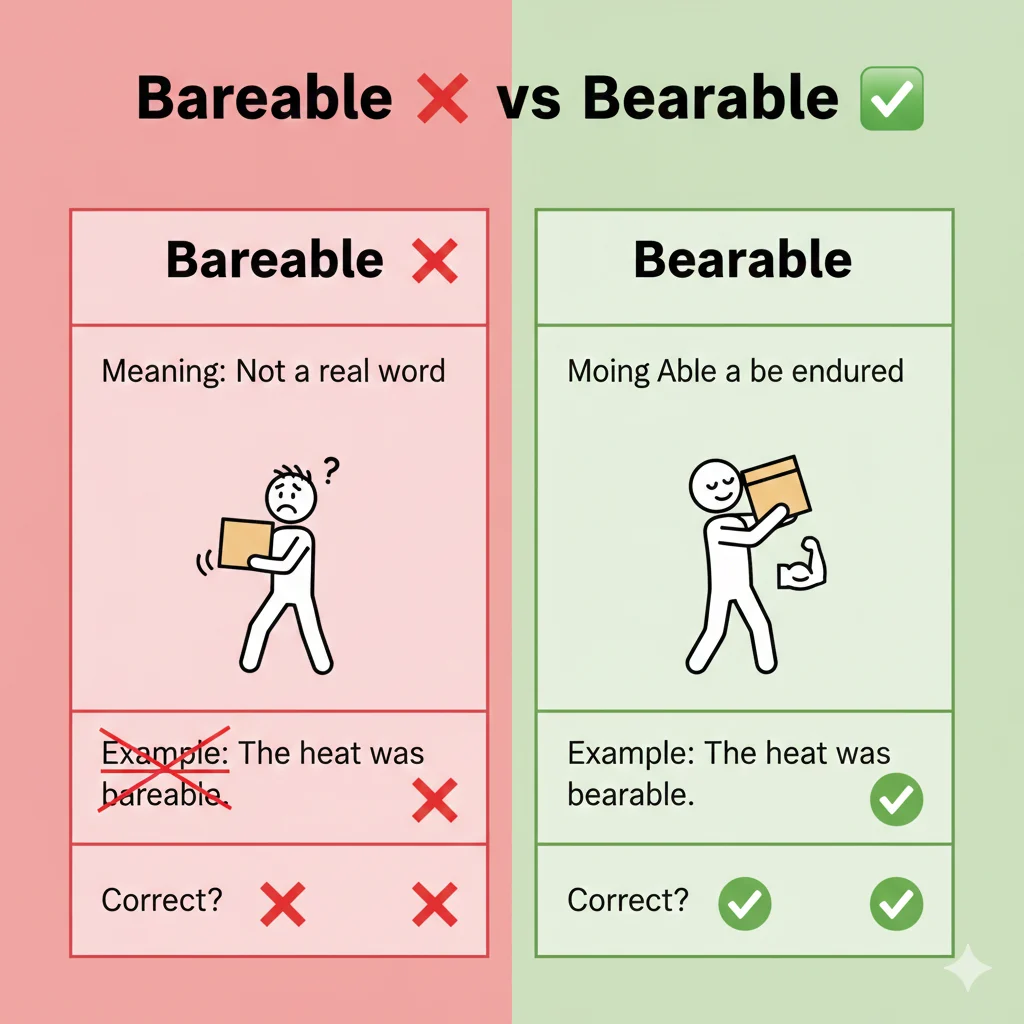
Quick Tip: Think of the verb “bear”. If you can bear it, it’s bearable.
Common Mistakes and How to Avoid Them
Here are some common mistakes:
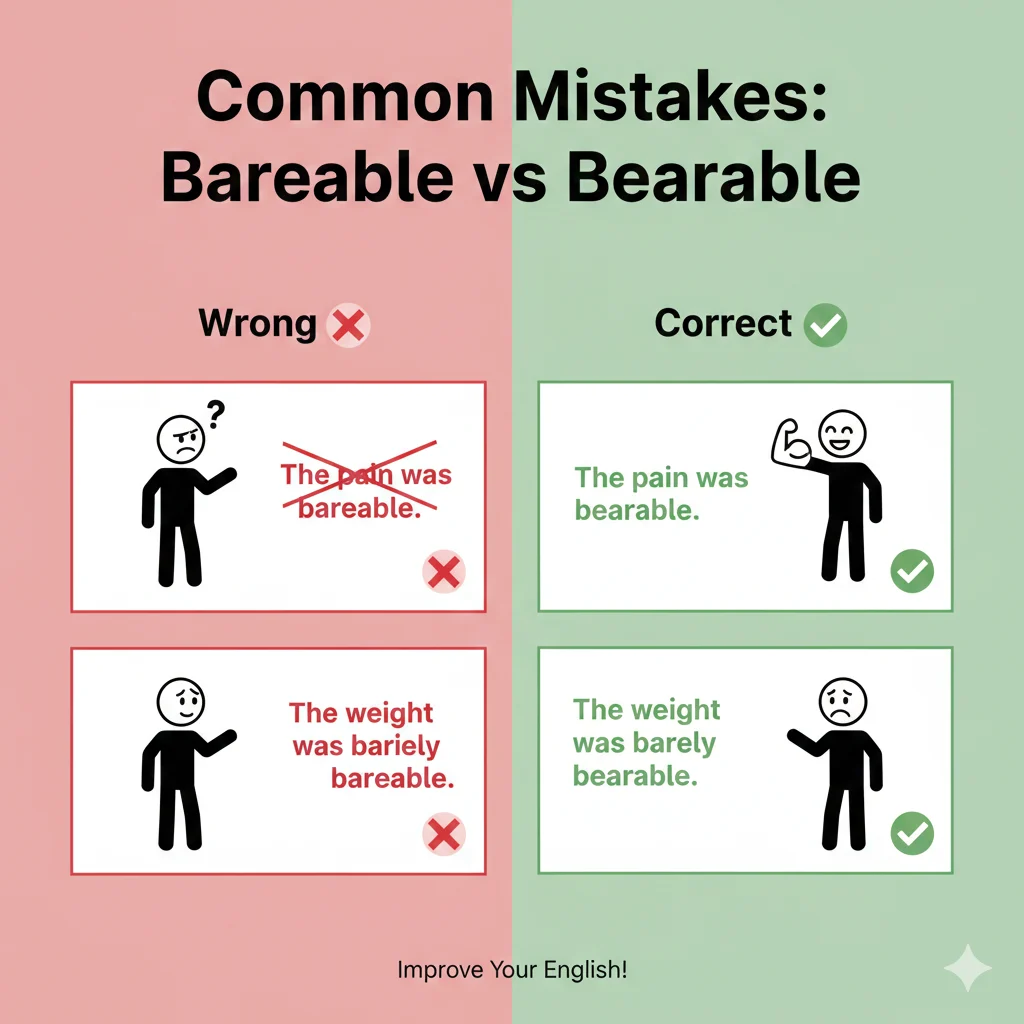
Incorrect: The long wait was bareable.
Correct: The long wait was bearable.
Incorrect: This situation is barely bareable.
Correct: This situation is barely bearable.
Incorrect: Her anger was more bareable than before.
Correct: Her anger was more bearable than before.
Why mistakes happen: People spell the word the way it sounds. Remember, bearable comes from bear, which means to endure.
When to Use Bearable
Use bearable whenever something can be tolerated, endured, or handled. It works for situations, emotions, or even physical pain.
Bareable or bearable examples:
- The headache became bearable after taking medicine.
- Walking for two hours was bearable with short breaks.
- Studying for exams became bearable when I listened to music.
- Waiting in line was bearable because I was with friends.
- Cold weather is bearable with a warm jacket.
Memory Hack: Picture a bear carrying a heavy load. If you can bear it, it’s bearable!
When to Avoid Using Bareable
Bareable is almost always incorrect. Avoid it in:
- Essays
- Emails
- Social media posts
- Official writing
Bareable or bearable examples:
- ❌ This pain is bareable → ✅ Correct: This pain is bearable
- ❌ His behavior is barely bareable → ✅ Correct: His behavior is barely bearable
Advanced Tips
- Origin: “Bearable” comes from the verb bear, meaning “to endure.”
- Formal Writing: Use bearable in essays, reports, exams, and professional emails.
- Online Writing: Using bareable can confuse readers and make your English look incorrect.
- Synonyms: tolerable, manageable, endurable, acceptable
- Is more bearable correct? ✅ Yes, for comparisons: “This version is more bearable than the last one.”
- Is ‘bearable’ a positive or negative word? Usually neutral; slightly negative because it implies discomfort that can be endured.
Bareable or Bearable Meaning in Urdu
- Bearable meaning in Urdu: برداشت کے قابل (Bardasht ke qabil)
- Bareable in Urdu: Incorrect spelling; no official meaning
Bareable or bearable synonyms: tolerable, manageable, endurable, acceptable
Bearable person meaning: Someone whose behavior or attitude is easy to tolerate
Bareable or bearable examples in Urdu:
- یہ درد برداشت کے قابل ہے۔ (This pain is bearable.)
- لمبی قطار میں انتظار کرنا برداشت کے قابل تھا۔ (Waiting in a long line was bearable.)
Related Grammar Questions
- What is correct, unsellable or unsaleable? ✅ Unsellable
- Is it improbable or unprobable? ✅ Improbable
Quick Recap: Bareable vs Bearable
- Bearable: Correct, something you can endure or tolerate
- Bareable: Incorrect, common misspelling
- Tip: Can you “bear” it? Then it’s bearable!
- Use in real-life situations like school, work, daily conversations
Mini Quiz: Test Yourself
Fill in the blanks with bearable or correct the wrong usage:
- The pain during the hike was ______.
- His behavior became ______ after he apologized.
- ❌ The long wait was ______. Correct it.
- Listening to loud music all day is ______.
- ❌ The workload is ______. Fix it.
- The temperature in the room was surprisingly ______.
- Traveling without rest can be difficult but ______.
Answers: 1. bearable, 2. bearable, 3. bearable, 4. bearable, 5. bearable, 6. bearable, 7. bearable
FAQs
1. What is the correct word: bareable or bearable?
- Bearable is correct; bareable is wrong.
2. Can I use bareable in formal writing?
- No, always use bearable.
3. How do I remember bearable?
- Think: “bear it.” If you can endure it, it’s bearable.
4. Is ‘bearable’ positive or negative?
- Neutral, sometimes slightly negative because it implies discomfort.
5. What are some synonyms of bearable?
- Tolerable, manageable, endurable, acceptable
Conclusion
Now you know the difference between bareable or bearable. Always use bearable when something can be tolerated or endured. Avoid bareable, which is a common mistake.
Practice using bearable in daily life, school, work, and writing. With consistent use, your English will improve, and you will sound confident and professional. Remember the bear trick — if you can bear it, it’s bearable!

Elizabeth Gaskell was a Victorian English novelist and biographer, celebrated for social realism, strong female characters, and industrial age themes. era life.